Chart patterns in cryptocurrency trading: how to find formations and use them for trading
Chart patterns in the cryptocurrency market: pattern types, finding and confirming breakouts, entry points, stop-losses, position sizing, and risk management.


How to recognize the Batman pattern on a chart: bullish and bearish patterns, reversal confirmation, entry after a breakout and retest, stop-loss, and targets.
How to recognize bullish and inverted Dragon patterns, confirm a breakout, and determine the entry, stop-loss, and targets. Features of the pattern and the risks of false signals.
Main technical analysis patterns: reversal patterns and trend continuation formations. Breakout confirmation, retest entries, stop-loss placement and risk calculation.
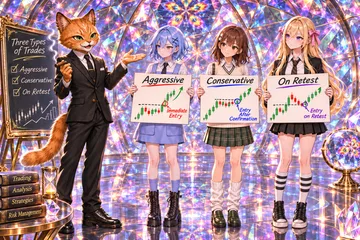
How aggressive entries, breakout confirmation entries, and retest entries differ: trade conditions, stop-losses, risk and reward, beginner mistakes, and checklists.
What is swing trading, and why is it called that? Strategies, market selection, position holding periods, position sizing, and risk management.

What binary options are, how they differ from conventional options and bets, how they are regulated in Russia, and why making a profit requires taking payout mathematics into account.
How to identify a liquidity zone in trading using the order book, stops, Volume Profile, Market Profile, Order Flow, and liquidations. A step-by-step analysis algorithm.
What MVRV Bitcoin is, how the indicator is calculated, what Realized Cap is, and how to use MVRV to analyze BTC market cycles.
What Bitcoin halving is, why it is needed, and how it affects the BTC price, mining, and trading. The history of the 2012, 2016, 2020, and 2024 halvings.
What NUPL is in Bitcoin: the Net Unrealized Profit/Loss formula, its origin, relationship with Realized Cap and MVRV, NUPL zones, and use of the indicator in BTC analysis and trading.
Bitcoin SOPR (Spent Output Profit Ratio): what the indicator shows, how the 1 level works, its history, aSOPR, STH-SOPR and LTH-SOPR, and its use in BTC analysis.
What is the Pi Cycle Top indicator, and why is it associated with pi? Its history, the 111DMA and 350DMA formula, and its use in trading.
A detailed guide to divergence in technical analysis: how it arises, classic and hidden forms, finding signals with RSI, MACD, Stochastic, CCI, volume, and CVD. Covers confirmation methods, trading strategies, market examples, common mistakes, and risk-management rules.
Why are historical quotes needed in trading? Volatility, volumes, sessions, news, correlations, algorithm testing, and strategy optimization.
Learn how to assess trade risk before opening a position. Calculate lot size, pip value, margin, profit and loss, Risk/Reward, Risk of Ruin, and deposit growth using trading calculators.
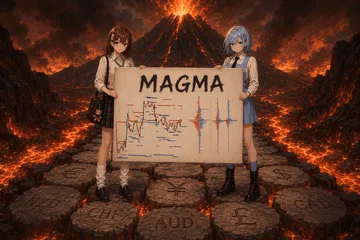
Review of the MAGMA indicator from TLAP. It analyzes order distribution in the Forex order book, finds support, resistance, and counter-levels, evaluates their strength, and helps filter trading signals in trends and consolidation.
Sooner or later, a moment comes when a trader outgrows the level of “just entered by a signal” and begins to see the market through liquidity flows.
When a trader first comes to the financial markets, they are overwhelmed by a flow of quotes, indicators, and other people's “successful success stories.”
Learn what cryptocurrency staking is, how to choose a reliable project, assess risks, and calculate potential returns using a calculator.
What Funding Rate is in cryptocurrency futures | where to view it and how to use funding to find entry and exit points.
Forex and trading knowledge base with guides, articles, strategy notes and practical materials for learning market analysis.