
Can Crypto Stabilize After $505.2 Million in ETF Outflows?

Intro
Who is supporting crypto prices while money leaves US spot ETFs? The supplied November 6 figures show combined net withdrawals of $505.2 million, yet Bitcoin and Ether are modestly higher in the supplied market snapshot. That apparent mismatch raises a useful weekend question: can prices stabilize without fresh ETF demand, or does the pause merely postpone another test when fund trading resumes?
What the figures establish
The supplied figures, attributed to the Farside tables, put November 6 net outflows at $411.9 million for US spot Bitcoin ETFs and $93.3 million for spot Ether ETFs. Together, that is $505.2 million leaving the two fund categories. These are the session figures provided for this analysis; the research context does not independently establish whether every fund entry was final. Meanwhile, the supplied Binance snapshot places Bitcoin at 76,195 USDT, up 0.46% for the day, and Ether at 2,251 USDT, up 0.53%. The observable contrast is net ETF withdrawals alongside modestly positive daily price changes. It is a comparison between different measurements, however: a completed fund session and a moving daily price window need not cover identical hours. That timing distinction matters because the figures cannot establish that buyers immediately absorbed each dollar of ETF redemptions. Nor do net withdrawals reveal every purchase and sale within the fund category. The narrower, defensible conclusion is that the reported outflows have not prevented the supplied price snapshot from showing gains; their precise contribution to the price path remains uncertain.
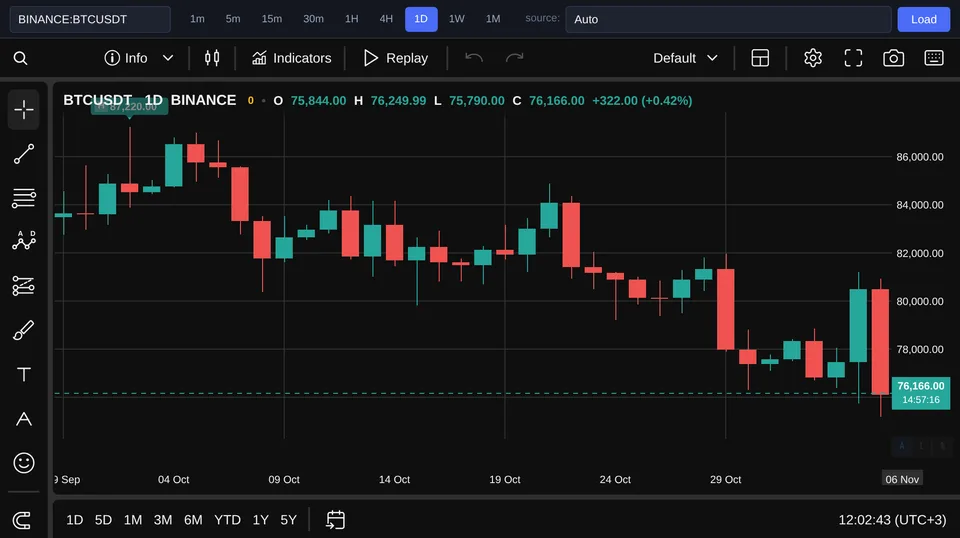
Three explanations for the apparent resilience
The first possibility is that demand outside US spot ETFs is absorbing available supply. Buyers can participate directly through crypto exchanges or other trading arrangements, so ETF subscriptions are only one route into the market. Demand outside the funds could support prices, but the supplied figures do not demonstrate that this is happening. Evidence would require actual spot activity rather than an inference drawn solely from rising quotes. The second possibility is short covering. Traders closing bearish positions must buy back exposure, which can lift prices even without a broader change in investment appetite. A recovery accompanied by falling open interest and short liquidations would be consistent with that explanation, although those indicators would still need interpretation together. No such measurements are supplied here, so calling this a short squeeze would outrun the evidence. The third possibility is a temporary reduction in selling pressure. If sellers become less active, even limited buying can move prices higher, particularly when available liquidity is thin. Whether liquidity is actually thin this weekend remains unverified; it is a condition to investigate, not an established fact. A quiet order book can make a small purchase sound louder than its wallet suggests.
The strongest working hypothesis is temporary balance
The most defensible working hypothesis is that prices can stabilize temporarily without renewed ETF inflows, while a durable recovery remains unproven. This is an editorial assessment of the available evidence, not a confirmed account of who is buying. It requires fewer unsupported assumptions than declaring either strong accumulation or an imminent continuation of the decline. The reasoning starts with the distinction between a flow and a price. ETF withdrawals describe net movement through a particular investment channel, while the market price reflects transactions across a wider trading system. A negative reading in that channel can coexist with stable prices when other buying is sufficient, selling elsewhere subsides, or positioning changes. The supplied snapshot cannot tell us which combination is doing the work. It also cannot justify the broad claim that institutional investors refused to buy the dip. Institutions use multiple instruments and venues, and a net ETF outflow does not identify the motives or identities behind every transaction. Weekend silence from US fund-flow reports supplies no fresh verdict either: the funds follow their trading schedule while crypto continues trading. An unchanged flow table is therefore not evidence that demand has vanished.
What would confirm or overturn that view?
The first test is whether price stability comes with sustained spot trading activity. Repeated buying that absorbs renewed selling would strengthen the case for demand beyond ETFs, especially if the recovery survives after any burst of short covering fades. Price behavior, spot volume and derivatives positioning must be assessed together. Volume alone is insufficient because heavy trading can accompany either accumulation or distribution. The second test concerns dependence on leverage. If gains coincide mainly with declining open interest and short liquidations, then stall once those closures subside, the recovery would look more mechanical than persistent. A continued advance supported by spot activity without rapidly expanding leverage would give the stabilization hypothesis firmer support. Funding rates would add context, but no current values are available in the supplied material. The next ETF session provides a separate test. Smaller outflows or renewed inflows would strengthen the broader demand picture, although neither would explain the weekend retrospectively on its own. Renewed price declines alongside spot selling would challenge the idea that available demand can maintain balance; a recovery that disappears after short covering would weaken it too. Persistent ETF withdrawals with steady prices would instead make demand outside the funds a more credible explanation.
Conclusion
Yes, crypto can stabilize without an immediate return of US spot ETF inflows, because those funds represent only part of market demand. The supplied Bitcoin and Ether gains are consistent with that possibility, but they do not establish a lasting reversal or identify its cause. Sustained spot buying, resilience after positioning adjustments and the next ETF session will determine whether this is durable support or a temporary pause.