
Bitcoin's Four-Month Low: Testing the ETF and Anthropic IPO Explanations

Intro
Bitcoin's latest slide raises a specific question: are ETF withdrawals part of a broader retreat from risk, or are investors selling to fund an Anthropic IPO allocation? Both stories can fit a falling price, but they require different evidence. The useful task is to trace the mechanism, separate reported facts from interpretation, and identify what would change the answer.
What the price and flow reports establish
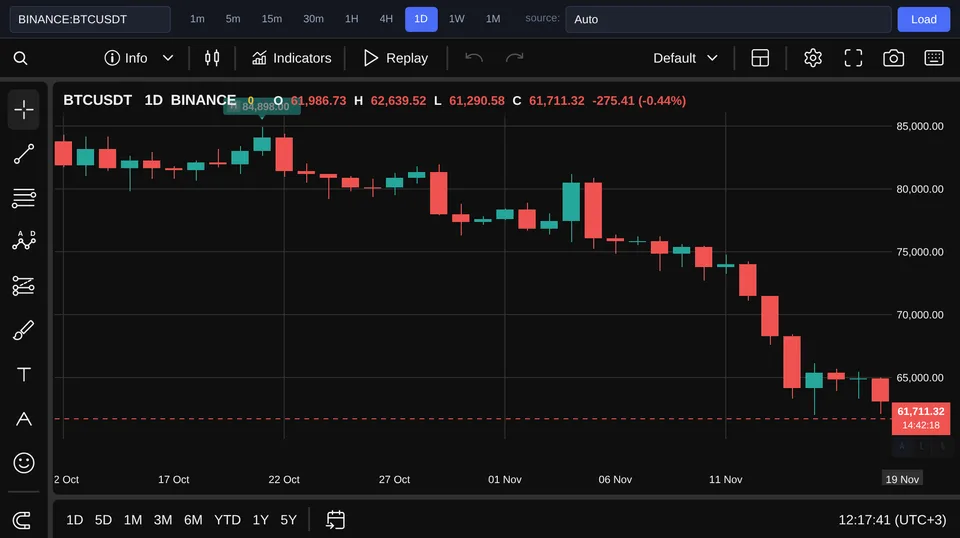
Reuters reported that bitcoin reached a four-month low on 19 November, falling to about $61,985 amid a retreat from risk. At the time of writing, BINANCE:BTCUSDT is quoted at 61,833 USDT, with a daily change of -0.25%. These are separate observations: the current percentage move is not calculated from the low cited by Reuters. The reporting also describes continuing outflows from bitcoin ETFs. Those withdrawals are observable; their cause and destination remain open questions. A fund outflow tells us that money left that investment channel, but cannot establish whether investors abandoned bitcoin altogether or shifted their exposure elsewhere. That distinction matters because a price decline and an outflow can influence each other. Investors may redeem after losses, while weaker fund demand can add pressure to an already fragile market. ETF flows provide evidence of changing demand, not a complete explanation of the selloff. Without a sequence of flows and prices over matching periods, assigning the entire move to ETF investors would go beyond the available facts.
How weaker risk appetite can reach bitcoin
The first explanation puts ETF withdrawals at the center: less demand through that channel leaves bitcoin more vulnerable to selling. This is plausible, especially if withdrawals consistently precede further price weakness. Establishing the size of that effect would require flow amounts and a clear sequence of withdrawals and price moves. Even a confirmed withdrawal amount would need context: the same sale can have different effects depending on available buyers and market liquidity. The second explanation starts with a broader reduction in appetite for risk. Investors cut exposure to risky assets, bitcoin falls, and ETF redemptions become one expression of the same decision. In that scenario, treating outflows as an independent shock would confuse a transmission channel with the underlying motive. The strongest working hypothesis combines the two: risk appetite weakens, and ETF withdrawals help transmit that weakness. This is an editorial inference from the reported backdrop, not a demonstrated chain of causation. It explains why the price and fund flows could deteriorate together without requiring a separate destination for every dollar withdrawn. A comparison with other risky assets over the same period would help test whether the pressure is shared.
What the Anthropic IPO theory would need
The competing explanation is more specific: investors may be freeing money for an Anthropic IPO allocation. A Kraken economist has raised that possibility, while representatives of HashKey and 10x Research consider the connection unproven. The IPO link is a proposed funding mechanism, not an established capital transfer. To make this explanation persuasive, the timing must connect actual funding needs with identifiable crypto sales. Investors interested in an offering could use existing cash or sell other assets, so enthusiasm for Anthropic alone does not establish a drain from bitcoin. The size of an offering would also need to be separated from the share financed by sales of crypto, since those are different quantities. The story has a plausible destination; the money still needs a paper trail. The cited reporting does not establish that the offering has taken place or that bitcoin sales financed participation. A verified fundraising or allocation timetable would narrow the relevant window, but it would still leave the source of funds unresolved. Evidence of connected transactions would matter more than a coincidence of headlines. A documented sale to fund an allocation could also occur through an ETF, so the two channels need not be mutually exclusive.
The observations that could change the answer
The first test is persistence across matching periods. Repeated ETF outflows alongside bitcoin weakness and declines in other risky assets would support the shared retreat from risk. The comparison should align the period covered by each flow report with the relevant price moves, so a later publication time is not mistaken for a later investor decision. The second test is divergence after conditions improve. If ETF inflows return sustainably and demand for risky assets recovers while bitcoin continues falling, the working hypothesis loses explanatory power. That would justify looking for a bitcoin-specific source of selling rather than continuing to attribute every decline to the same broad mood. The third test concerns the proposed destination of capital. The IPO explanation would gain weight from verified funding dates and evidence that investors sold crypto to finance participation. Until that link is documented, coincident weakness in bitcoin cannot establish an IPO-driven transfer. These tests need a sequence of observations, because one positive flow report or one market rebound can be temporary. Weakening the leading explanation would not automatically validate the IPO theory, because each mechanism needs its own evidence. The aim is to compare explanations against the same evidence and revise their ranking when the pattern changes.
Conclusion
The best-supported answer is a weakening of demand during a retreat from risk, with ETF outflows providing an observable channel. The Anthropic IPO explanation remains unproven until evidence connects crypto sales with funding needs. That ranking is provisional: sustained fund inflows and stronger appetite for risk alongside further bitcoin losses would require it to be reconsidered.