
Binance Reopens Bitcoin Withdrawals: A First Test of Trust

Intro
Does reopening Bitcoin withdrawals mean Binance is beginning to regain customer trust after the reported hack? It creates an opportunity to rebuild confidence, but the reopening alone cannot establish that confidence has returned. The useful question is narrower: does this first route become the start of reliable access across the exchange, or remain an isolated improvement? Answering it requires separating reported operational changes, the exchange's statements and what market prices can actually tell us.
What the reopening establishes
According to the November 1 update published by Kriptometa, Binance restored withdrawals through the Bitcoin network first, while other routes are reopening only after checks, with possible delays. These details come from the selected report; the supplied context contains no independent confirmation of completed customer withdrawals. The reported change concerns one withdrawal route, not demonstrated normal service across every supported network. That distinction matters because access has several stages. A route can appear available while individual requests still encounter processing delays, and a completed Bitcoin withdrawal says little about a separate network undergoing checks. The practical evidence is therefore whether customers can submit requests, receive transaction confirmations and obtain their funds without renewed interruptions. Starting with Bitcoin is consistent with a staged operational recovery, although the available information does not establish why that network came first. It would be premature to interpret the sequence as proof that all remaining problems are resolved. An open door is encouraging; customers still need to see that the corridor beyond it is clear.
Replenishment and recovery answer different questions
The report also attributes to Binance a statement that it has replenished about 95% of affected assets using its own resources. This is a claim about replacing assets, not evidence that the attacker returned stolen funds. Those processes can have different implications: replenishment concerns the exchange's ability to cover the affected assets, while recovery concerns obtaining the stolen assets back. The percentage also needs its proper boundary. It refers to affected assets as described in the statement, rather than establishing anything about all customer holdings or every withdrawal obligation. Without supporting detail in the supplied context, it cannot independently demonstrate the completeness, availability or verification of that replacement. For the trust question, replacement and access must eventually meet. Customers need both credible evidence that the relevant assets have been replenished and reliable execution when they request withdrawals. A funding statement can support reassurance, but its practical significance remains conditional until the stated resources translate into dependable access.
Three explanations, with different evidential weight
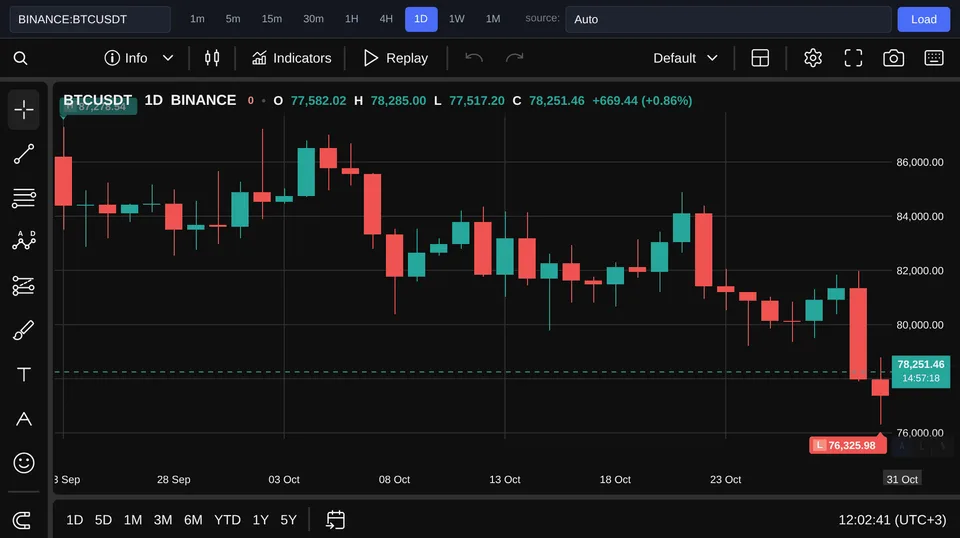
The first explanation is that the reopening marks the beginning of recovering confidence. Restored access gives customers a concrete reason to reassess the exchange, and successful withdrawals could make subsequent assurances more credible. This is plausible as a mechanism, but it remains an editorial hypothesis: the supplied information does not show whether customers are becoming more willing to leave assets on the platform. The second explanation is more limited: Binance is restoring technical functionality in stages, while customer confidence remains unresolved. This is the strongest working hypothesis because it requires the fewest assumptions beyond the reported reopening. It accommodates the checks on other routes and possible delays without treating either as automatic proof of failure or success. The third explanation concerns the market response. At the supplied snapshot, Bitcoin, BINANCE:BTCUSDT, is at 78,285 USDT, up +0.91% for the day, while BINANCE:BNBUSDT is at 714.9 USDT, up +1.55%. Both moves are positive, but neither establishes that the withdrawal update caused the gains; broader market trading could also explain some or all of the movement. BNB's stronger daily percentage gain may invite an exchange-specific interpretation, but this snapshot cannot distinguish that explanation from other influences. Bitcoin's price likewise reflects trading beyond this single operational development. Prices can accompany a recovery narrative without verifying it, so the better evidence must come from withdrawal performance and customer behaviour.
What would strengthen or weaken the hypothesis
The operational hypothesis becomes stronger if other withdrawal routes reopen sequentially and remain available. Completed requests, shorter processing delays and fewer unresolved queues would matter more than repeated availability announcements. Sustained execution across networks is the clearest observable test of normalisation. Evidence supporting the claimed replenishment would address a separate part of the problem. Useful confirmation would make clear what assets were affected, what has been replaced and whether those resources are available for the obligations described. Repeated restrictions, growing delays or discrepancies between statements and customer outcomes would weaken the case for a durable recovery. Customer flows require careful interpretation, too. An initial burst of withdrawals could represent requests accumulated during the interruption, rather than a fresh deterioration in confidence. Conversely, a quiet period would not establish trust if customers still faced practical barriers to moving funds. The more informative pattern would emerge after the accumulated requests have cleared and access has stabilised. Continued heavy departures under functioning withdrawal conditions would be consistent with lingering concern, while more settled flows alongside reliable execution would support improving confidence. The supplied context contains no such flow evidence, so this remains a framework for testing the hypothesis rather than a description of observed behaviour.
Conclusion
The reported return of Bitcoin withdrawals is a meaningful first operational step, but it does not yet establish restored trust in Binance. The strongest current interpretation is limited functionality returning through a staged process. A broader conclusion requires reliable withdrawals across more networks, substantiation of the replenishment claim and customer behaviour observed after delayed requests have cleared.