
Why AI Slowdown Calls Hit Nvidia and the Nasdaq Before the Fed

Intro
Why did calls to slow AI development hurt semiconductor shares so sharply just before a Federal Reserve decision? The timing matters because chip valuations depend not only on expectations for extraordinary AI demand, but also on the interest rate used to value profits expected far into the future. The market was therefore hit at its most sensitive point: investors were questioning both the size of tomorrow’s earnings and the price they should pay for those earnings today.
What the market actually did
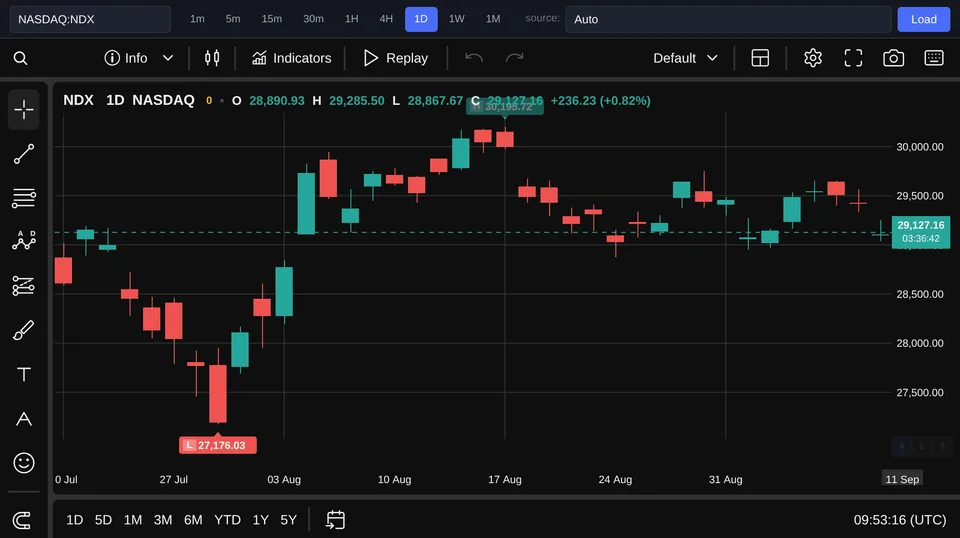
The confirmed market facts show a concentrated technology selloff rather than a demonstrated collapse in the AI business. The Nasdaq 100 stood at 29,127, down 0.82% for the day, after losing as much as 1.3% intraday. Nvidia traded at $211.0, falling 3.36%, and was identified as the largest negative contributor to the major indexes. Nvidia’s decline was roughly four times the Nasdaq 100’s percentage loss, revealing that the pressure was strongest in the stock most closely associated with AI infrastructure spending. Another confirmed element was the rise in bond yields, which increased pressure on richly valued technology companies ahead of the Fed decision. Higher yields offer investors a more attractive return from safer assets and raise the discount rate applied to future corporate cash flows. That mechanism is especially important for companies whose market value assumes many years of rapid expansion. The simultaneous weakness in chips and rise in yields is therefore more informative than the headline about AI slowdown calls alone. What is not yet confirmed is an actual reduction in orders for accelerators, data-center construction, or AI-related capital expenditure. Public appeals to slow development may affect sentiment and regulatory expectations, but they are not equivalent to cancelled purchases or weaker reported revenue. For now, the observable event is a repricing in financial markets, not verified deterioration in semiconductor demand.
Explanation one: investors marked down the AI growth path
The first explanation is the most direct: calls to slow AI development made investors consider a world in which deployment proceeds more cautiously. Slower model development, tighter safety requirements, or delayed data-center projects could eventually reduce demand for advanced processors. Because Nvidia represents the clearest listed-market expression of the AI investment cycle, even a modest reduction in expected growth can produce an outsized move in its shares. This interpretation explains why Nvidia fell more sharply than the broad technology index. It also explains why semiconductor companies can react before any change appears in quarterly results: equity prices discount expectations, and expectations do not politely wait for an earnings call. The industry statements may have introduced a new probability of slower deployment, even without providing evidence that customers had already cut spending. Yet this explanation is incomplete on its own. If investors had received convincing evidence of structurally weaker chip demand, the relevant signal would be persistent, industry-specific selling supported by weaker guidance, order reductions, or cancelled infrastructure plans. The supplied facts establish concern about the pace of AI development, but they do not establish such commercial changes. Sentiment can explain the direction and concentration of the move, but it does not fully explain why the reaction became acute immediately before the Fed.
Explanation two: higher yields reduced the value of distant profits
The second explanation focuses on valuation rather than physical demand. When bond yields rise, future earnings are discounted at a higher rate, lowering their present value. The effect is greatest for expensive growth companies because a larger share of their valuation rests on profits expected many years from now, rather than cash already being generated today. Nvidia sits directly in this sensitivity channel. Its valuation depends on the assumption that AI infrastructure spending will remain exceptionally strong and that the company will preserve substantial economic value as the market develops. A higher discount rate makes that distant stream of profits worth less, while debate about slowing AI simultaneously makes the stream appear less certain. One factor lowered the assumed reliability of future growth, while the other lowered the price investors were willing to pay for it. This combined mechanism fits the observed pattern better than a pure industry-news explanation. The Nasdaq 100’s fall to 29,127, a daily decline of 0.82%, shows broader pressure on growth assets, while Nvidia’s 3.36% slide to $211.0 shows additional company and sector sensitivity. The market did not treat every technology business equally; it penalized the security carrying the largest bundle of long-duration AI expectations. Rising yields were likely the transmission mechanism that turned an industry concern into index-level pressure.
Explanation three, the working hypothesis, and how to test it
A third explanation is ordinary risk reduction before the Federal Reserve decision. Investors holding profitable or crowded technology positions may trim exposure when the near-term path of rates is uncertain, particularly if bond yields are already moving upward. Under this interpretation, the AI debate supplied a convenient catalyst, while positioning and profit-taking supplied much of the selling power. The strongest working hypothesis combines the interest-rate and positioning explanations, with the AI statements acting as an amplifier. The fundamental pressure came from the cost of money and reluctance to carry highly valued positions through a central-bank event; the industry debate then focused that pressure on Nvidia and related semiconductor shares. A crowded trade can resemble a narrow doorway when many investors decide to leave together, but the metaphor should not be mistaken for evidence of a broken business. The current move is best read as a reassessment of the price and durability of future growth, not as proof that the AI investment cycle has ended.
Conclusion
The short answer is that Nvidia and the Nasdaq fell because two uncertainties arrived together: investors questioned the uninterrupted pace of AI growth while higher yields reduced the present value of that growth. Pre-Fed risk reduction probably intensified the move, helping turn Nvidia into the largest drag on the indexes. The evidence currently supports a valuation and positioning reset, with AI slowdown calls as the catalyst, rather than a demonstrated break in semiconductor demand.