
Russian Stocks and the Ruble Rise: How Durable Is the Energy Ceasefire Rally?

Intro
Can expectations support a market rally before the event behind it has been confirmed? Russian stocks and the ruble are posing that question on October 12, 2026. The apparent mismatch is understandable: investors can change the price they will pay for an asset as soon as the probability of a favourable outcome changes. The harder question is whether this move reflects a durable reassessment of risk or buying that will fade when expectations meet the facts.
What the price moves actually establish
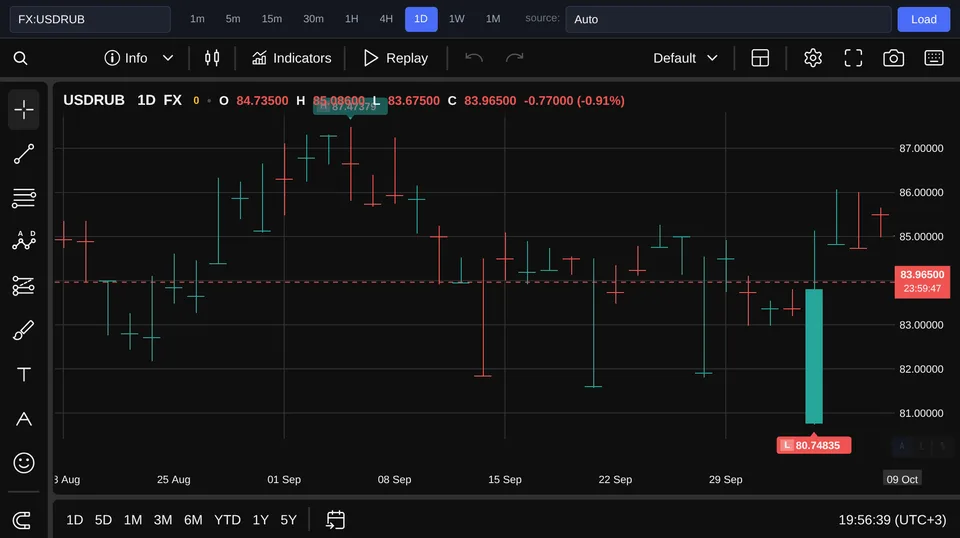
In its evening review on October 12, Finam reports a 3.1% rise in the Moscow Exchange index against a backdrop of expectations for an energy ceasefire and new contacts with the United States. It identifies 2420 points as the index's nearest target. That figure is an analyst target, not a reported current index level. Treating it as an achieved price would turn an assessment of possible movement into a fact the supplied information does not establish. The supplied currency quote puts USD/RUB at 83.96 RUB, down 1.24% on the day. Because this pair measures the ruble cost of a dollar, its decline means the ruble has strengthened against the dollar. Shares and the currency therefore point in a similar direction, although their matching daily moves do not establish that the same buyers or forces drove both markets. The uncertainty concerns the event used to explain this optimism. RBC relays an analyst's warning that statements from the parties are contradictory and a sustained halt to strikes on energy infrastructure has not been confirmed. The documented picture is a positive market reaction alongside an unresolved underlying event. Finam's account links the rally to expectations; the available information does not prove how much of either price move those expectations caused.
Why an unconfirmed event can change prices
The first explanation is a reduction in the premium investors demand for holding Russian assets under uncertainty. A risk premium is the additional expected return required to compensate for an uncertain outlook. If investors see a greater chance of diplomatic progress, they may accept a lower premium and pay more for shares before any agreement has demonstrated its durability. Prices can respond to a change in probability without assuming that success is certain. A ceasefire that remains unconfirmed can still matter if participants believe it has become more plausible. In that reading, the rally reflects a shift in the balance of possible outcomes, rather than a collective declaration that the favourable outcome has already arrived. The market has pencilled in a better scenario; the ink is still waiting. This mechanism also provides a possible connection between stocks and the ruble. Improved perceptions of risk could support demand for ruble assets or reduce the desire to hold dollars, giving both markets a favourable impulse. However, those flows are a proposed mechanism, not an observed fact in the supplied context. There are no position or transaction data here that would allow us to identify who bought, what they sold, or why. The phrase 'already priced in' therefore needs care. Some improvement in expectations may be reflected in prices, but the daily gains cannot tell us whether investors have incorporated a limited diplomatic opening or a much broader improvement. The scale of the rally does not measure the probability of a lasting ceasefire. It also cannot reveal how much further prices could respond to concrete confirmation.
Two alternatives that could explain the same pattern
A second explanation is short covering combined with speculative buying. Investors positioned for falling shares may buy them back when encouraging headlines appear, while other traders join the upward move in anticipation of further gains. Such activity can produce a strong rally without a lasting revision to the outlook. Short covering is a plausible alternative, but it is not established by the available evidence. Testing that explanation would require information about positions, trading activity and how the market behaves after the initial reaction. None of those measurements is supplied here. A 3.1% advance alone cannot distinguish fresh confidence from the unwinding of bearish trades, and both mechanisms could operate together. The absence of position data leaves the explanation open rather than making it the default answer.
What would confirm or weaken the working hypothesis
The clearest support would come from consistent statements followed by observable adherence to the arrangements. These would address the gap highlighted in RBC's warning: whether encouraging language corresponds to a sustained change in practice. Concrete follow-through would give the reassessment of risk a firmer foundation. Headlines alone leave the central uncertainty unresolved. The market response to that evidence would provide another test. If shares and the ruble retain their gains after specific confirmation, the case for a more durable reassessment becomes stronger. Further gains would be consistent with that interpretation, although they would still need to be assessed alongside other drivers. A muted response would not automatically disprove it, because some improvement may already have entered prices. The hypothesis would weaken if practical confirmation fails to emerge, statements become more contradictory, or the assets reverse their initial reaction. A return towards verified levels from before the news would be relevant evidence, but those levels are not supplied and should not be invented. Persistent divergence between stocks and the ruble would also weaken the claim that one common catalyst adequately explains both moves. No single price threshold can settle whether the rally is durable. Reaching Finam's 2420-point target would establish a market outcome, not validate an energy ceasefire. The useful test combines evidence about the event with the persistence and breadth of the price response, while allowing for separate influences on the currency.
Conclusion
Why are Russian shares and the ruble rising without a confirmed energy ceasefire? The strongest working answer is that investors are buying an improved probability of a favourable outcome and accepting less compensation for risk. That interpretation fits the reported backdrop, but matching price moves do not prove causality or reveal how much optimism is already reflected. The rally's durability depends on consistent statements, observable follow-through and a market response that survives the transition from expectations to evidence.