
Price Action: Market Maker Traps

How many times have you thought the trend had changed, only for the price to reverse sharply afterward? How many times have you followed a move that turned out to be false?
There is no fault of yours here. And no fault of your strategy. It is all about the traps that market makers draw you into to knock out your stops or trigger pending orders. Today we will talk about how to recognize these traps, their types, and most importantly, how we can profit from them.
Traps are places where the market tries to make you believe in a false move, that it really exists and will continue.
Defining a Trap

Let us look at the chart below. Tell me, where do you see an opportunity for profit here? As a rule, traders first of all pay attention to the area with the largest move, but that is not quite right. After all, such moves do not happen often and they are far from always easy to catch. In fact, forex traders should pay attention to the areas marked with green circles.
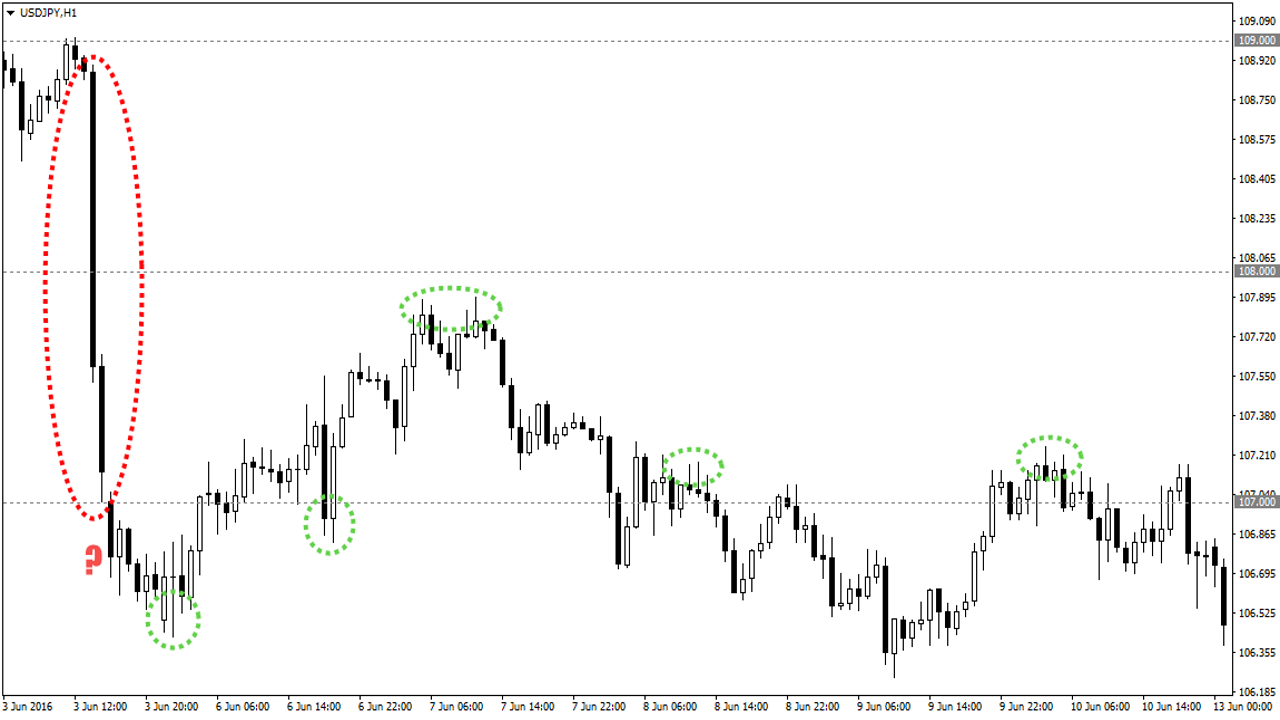
Traps are most often characterized by a false breakout of a level. As a rule, in these places stop-losses and stop orders of other traders are collected. This happens to gather liquidity (to open or close large positions) and also, of course, to make money.
A level breakout is usually noticeable, at least several candles in size, but not necessarily on the same timeframe that you trade on.
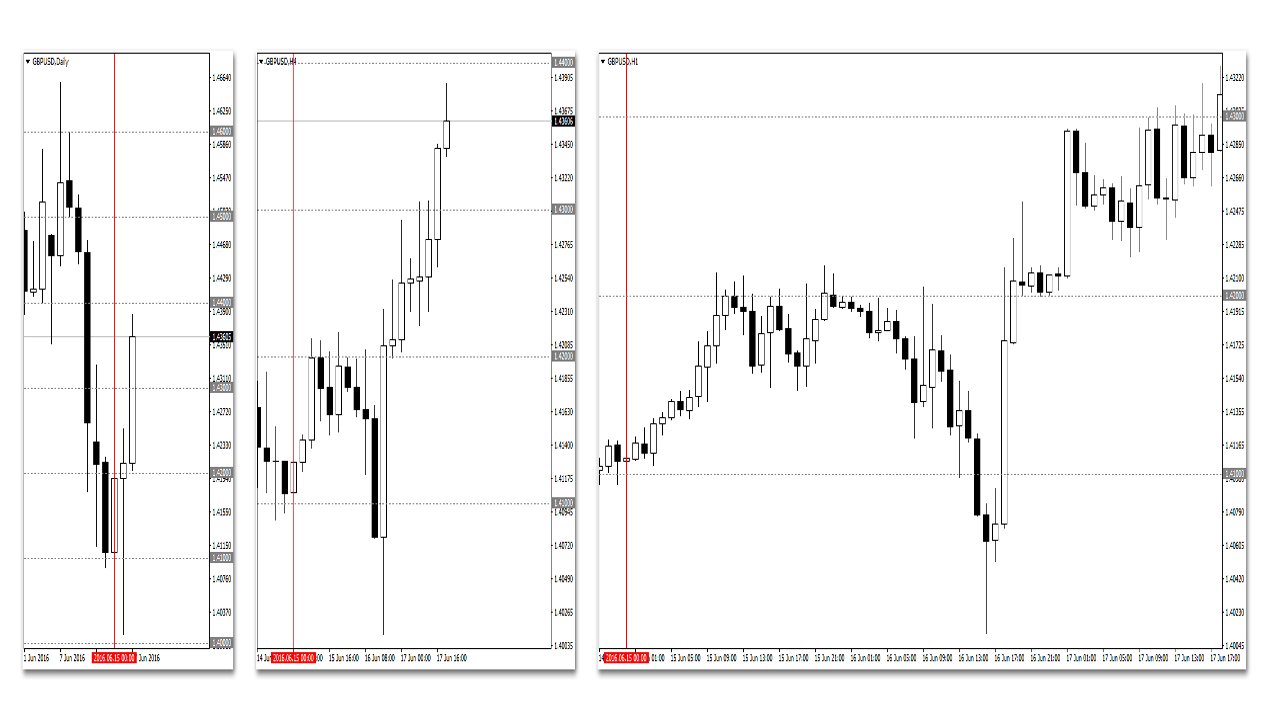
Pay attention to the long pin bar on the GBPUSD daily chart (the one after the red line) in the screenshot below. At the same time, as we move to a lower timeframe, the picture becomes more and more detailed. On the H4 and H1 charts we see the same pin bar.
Moving to the lower timeframe (M30), we notice that no pin bar is visible anymore. In fact, this is where the deception took place. We see quite normal bars that then break through the round level, and around the red level the price reverses.
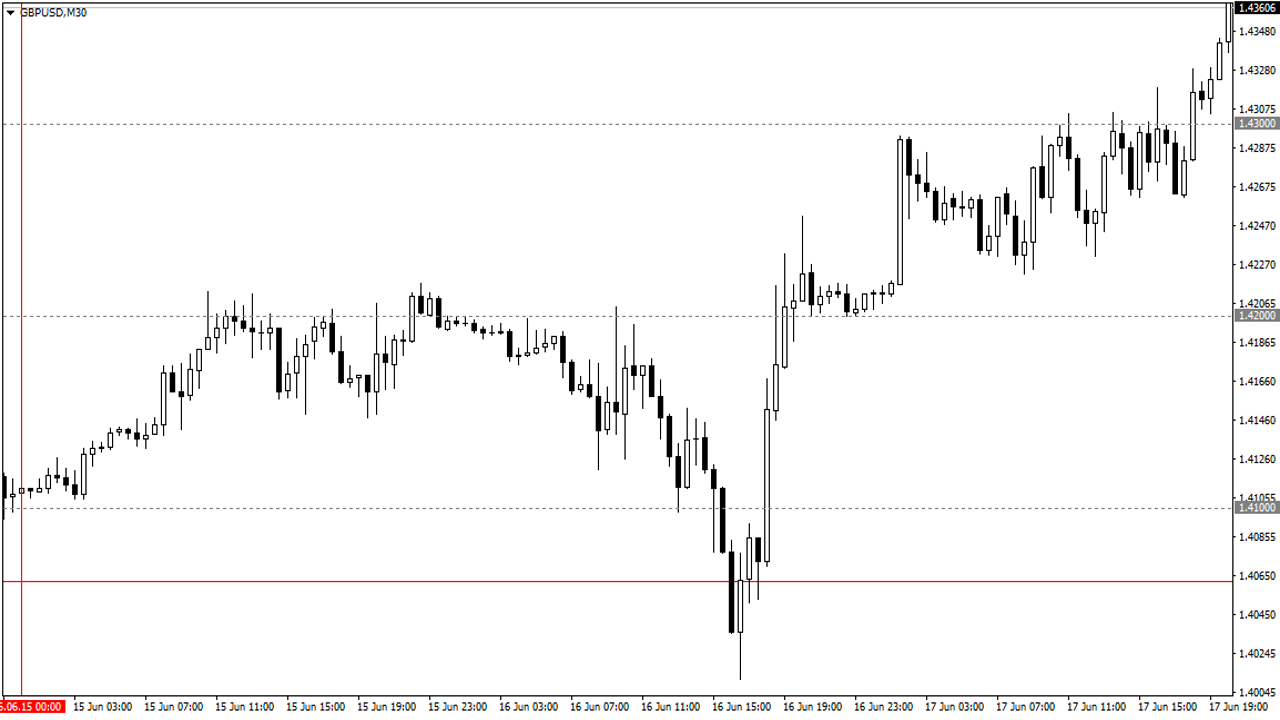
On the higher timeframe, where we saw a large pin bar and a clear bounce from the level, we of course would not enter in the breakout direction. On M30, on the contrary, over several candles the price tries to break an obvious level (which is already the first sign of a trap) and after the breakout everything about it says that you should sell. It lures you in, the little devil)
Types of Traps

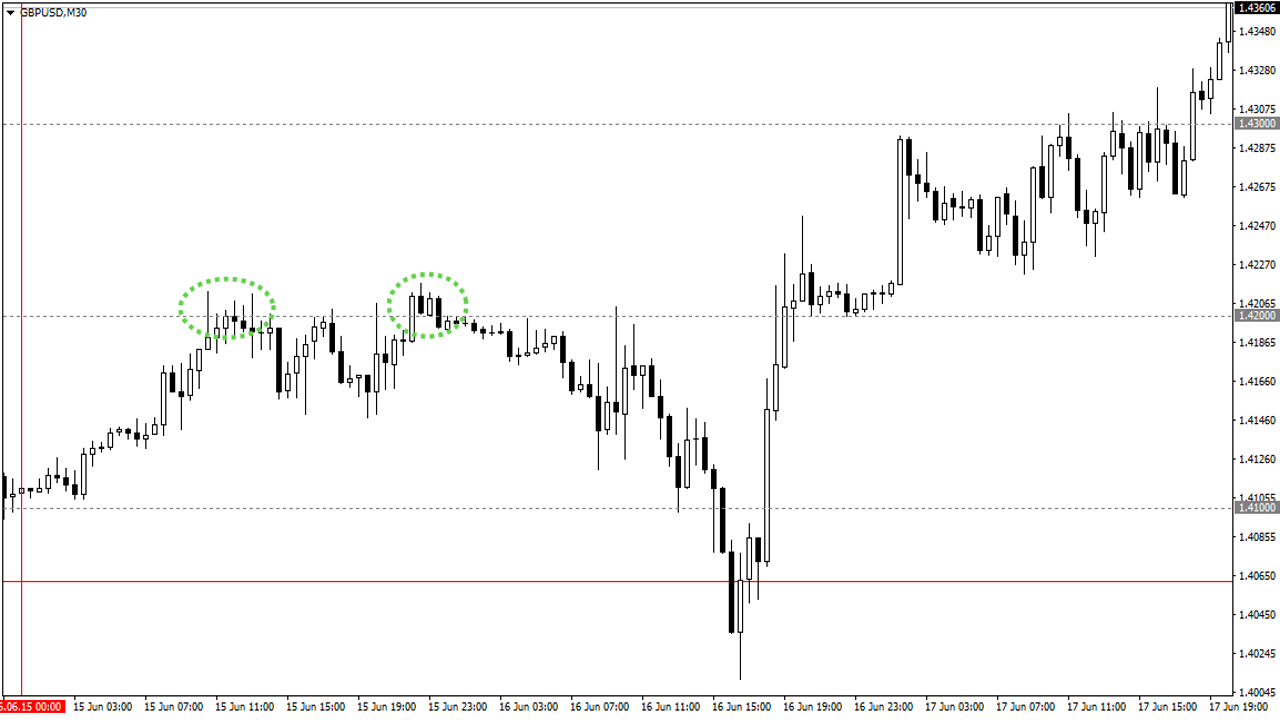
- In general, almost any trap is a false breakout of some level. The first such trap is the classic Double Top/Double Bottom pattern. Surely, those of you who have tried trading a double bottom or double top have noticed that quite often the second top is slightly higher than the previous one, just as the second bottom is slightly lower than the previous one. Although, the original idea of the pattern implies that the second top will be slightly lower than the previous one, thereby showing that the market does not have enough strength to continue the movement.
In reality, at the level of the first top we have traders' stop-losses and stop orders, and large players trigger all these orders, gather liquidity, and as a result the market reverses.
- The next trap is probably the most frustrating of all. As we know, the classic definition of a bearish trend implies a sequence of successively lower highs and successively lower lows. That is, we have an established trend, and as soon as one of the highs is broken, the bearish trend is considered over.
But what often happens in reality? The price breaks the obvious level of the previous local high, while at the same time collecting the stop orders of other players, and after that the trend continues moving in the same direction (down) and does not reverse. This trap is clearly visible on smaller timeframes, such as M30 or H1, where the entire breakout move takes several candles.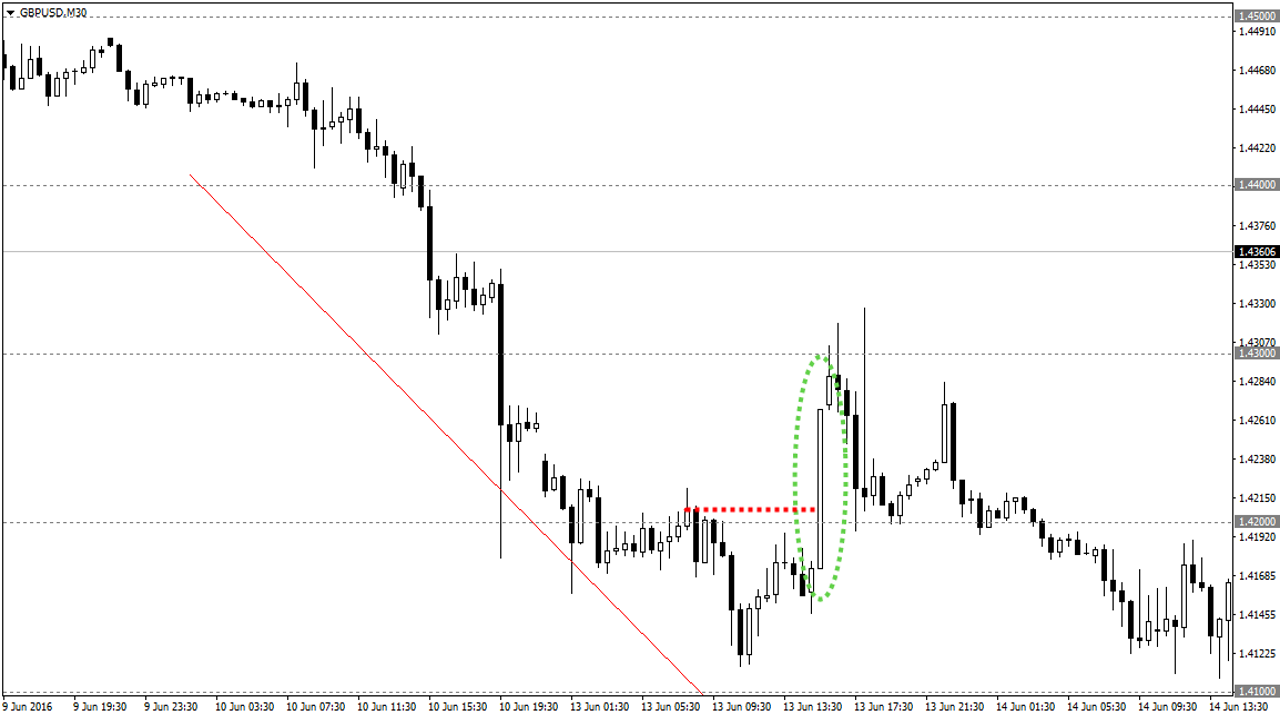
That is, this trap is a breakout of a local high or low during a trend correction. Together with the breakout of the local top, everyone expects a trend change, but in fact that does not happen. First of all, because classical technical analysis teaches us that a breakout of a high in a bearish trend means that the trend has changed.
The logic of the decision is that if you see a breakout against an established trend, then most likely it is a false breakout, and such an entry should be treated with greater caution. If, on the other hand, the market is quiet, sideways, then you should look for bounces from the boundaries of the price structure, that is, from the upper and lower boundaries of the channel.
- The next type of trap is news traps. I think everyone has encountered this, when the price first flies in one direction, breaks some obvious level, and then reverses. As you have probably already guessed, to identify traps we need to go down one or several timeframes lower and, accordingly, go up one or several timeframes higher than our main trading timeframe, because we do not know where exactly the trap was formed. At the same time, usually, the higher the timeframe, the fewer the traps.
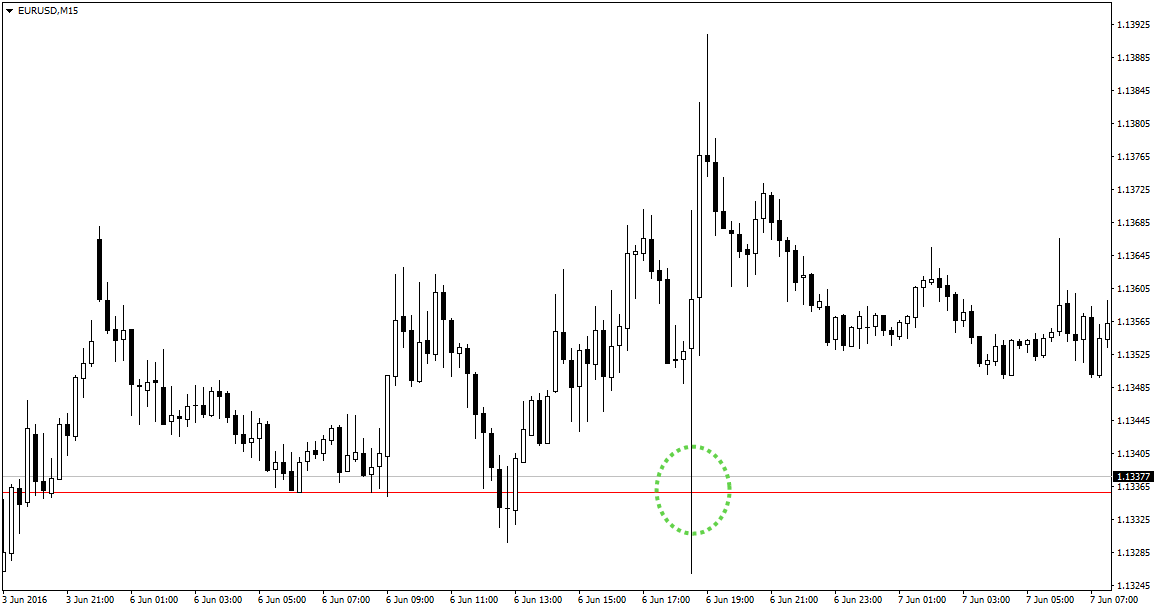
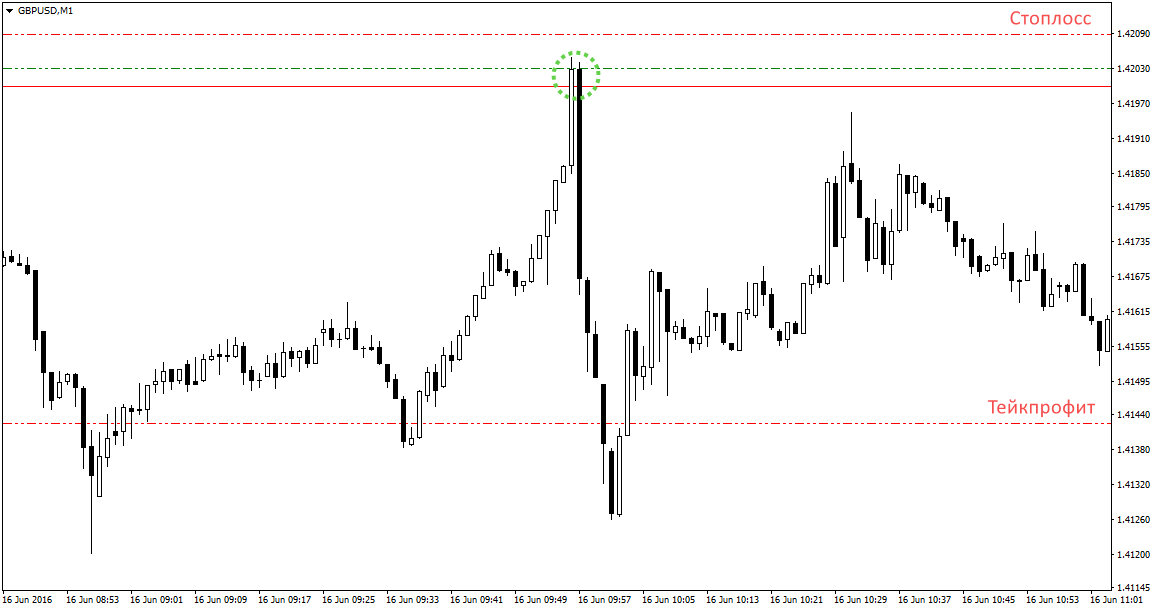
- Next, let us look at traps at the session open. Surely, this is a familiar example to everyone, when before London we have one move, and at the London open another, which can later reverse as well. Classic strategies such as "London Blast", "Quantum", and many others are based on this. Again, in this case too, stops are collected at important levels, and only after that does the price reverse.
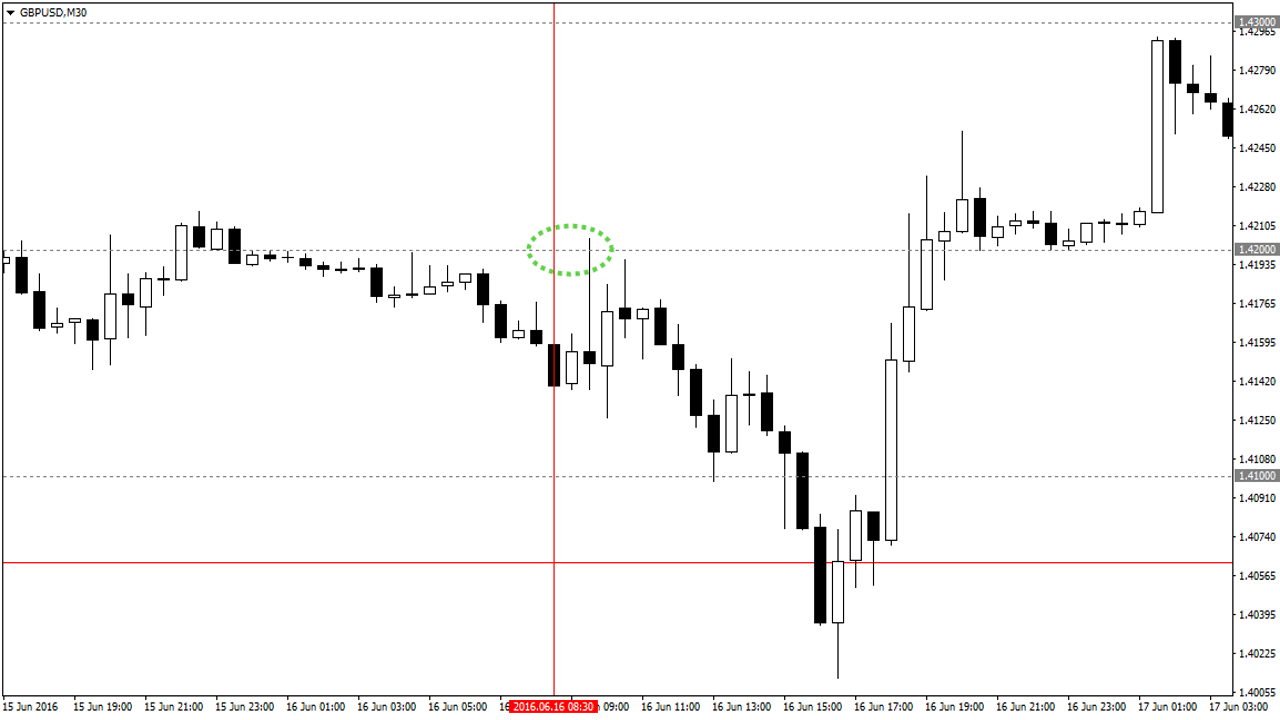
In this case, in order to see what exactly happened, we had to go all the way down to the M1 timeframe, where the movement looks the most "plausible". Here we see how the price was rising, and we also see a clear bounce from the 1.4200 level
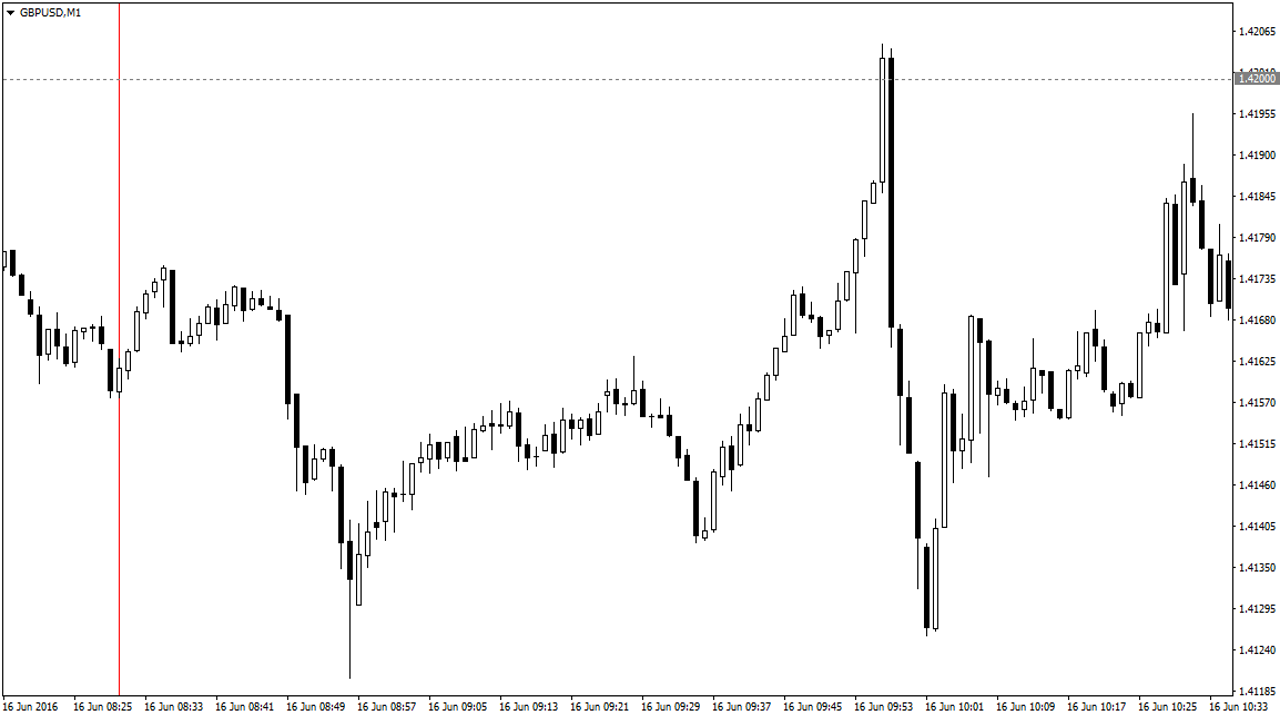
So, when a breakout of some level occurs, whether it is a horizontal round level or the level of a local maximum/minimum during a trend correction, we assume that, most likely, this breakout is false. That is, we immediately assume that it is a false breakout and a trap whose purpose is to collect the stops of other traders. Until the price has established itself in the new zone, until there is confirmation, we regard this movement as false. In general, when working with levels, a bounce from a level is always more likely than its breakout.
Trading Traps

- When working with traps, we will need several timeframes. As soon as we find on the chart a breakout of one of the obvious levels, we move to the timeframe where the movement looks the most confident and plausible.
2. At the first signs that the price is ready to reverse, we enter, placing a small stop (this is important), as there may be additional spikes where we can easily get knocked out of the market. Working with traps requires some preparation, and at first your stops will most likely be triggered. Therefore, so that they do not eat up your deposit, try to place stops of a small size. As for takes, they can easily be set 10 times larger than the stops.
3. We enter, place a small stop-loss, and at the first opportunity move the position to break-even.
Summary

Traps are very difficult to trade, and the strategy is, in fact, very complex. Therefore, to begin with, it would not hurt to familiarize yourself with Lance Beggs articles from the "Help for the Trader" section on our forum. He is probably the best trader today trading by this method. Let me remind you once again, traps are not easy to trade, but if you learn at least to recognize them on the chart, this will give you a huge advantage over other traders.
Respectfully, Pavel Vlasov TradeLikeaPro.ru
