
Payrolls Versus 5%: What the Treasury Market Is Really Asking

Intro
Why is the 10-year US Treasury yield holding near 5.24% when the consensus for the September employment report is relatively restrained: about 90,000 new jobs and unemployment at 4.1%? At first glance, the bond market seems to be preparing for a much hotter economy than economists expect. Yet the apparent contradiction becomes less dramatic once the yield is separated into its main ingredients: expectations for Federal Reserve policy, confidence in economic resilience, and the extra compensation investors demand for holding long-dated debt. The payroll report matters because it can change the probability assigned to a December rate increase, not because it single-handedly determines the entire 10-year yield. The more useful question, therefore, is not whether employment will “move the market.” It almost certainly will. The question is which part of the market’s current pricing the report can credibly confirm or overturn.
The confirmed facts: a mild forecast meets a severe yield
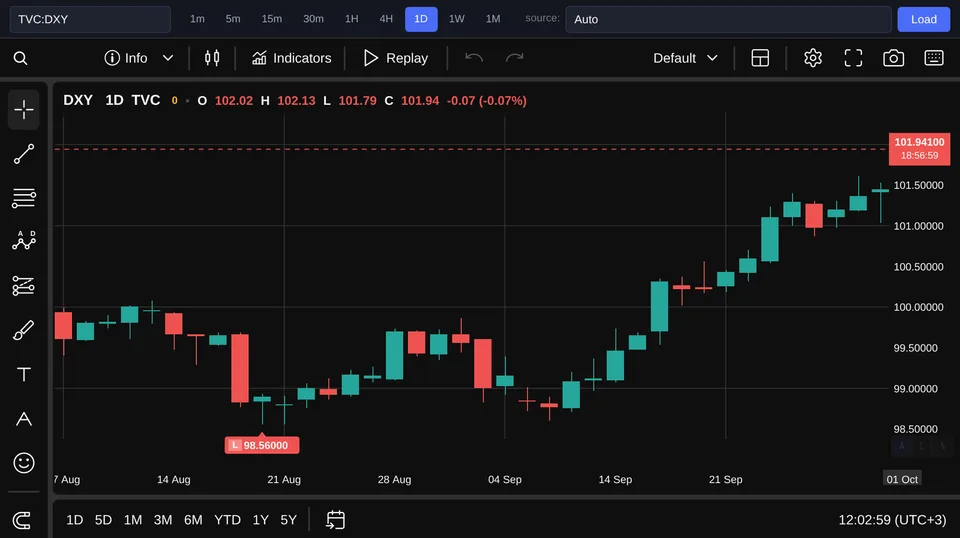
The starting facts are clear. The consensus expects roughly 90,000 additional jobs in September and an unemployment rate of 4.1%, while the 10-year Treasury yield stands near 5.24%, its highest territory since 2002. Those figures create the anomaly: a moderate employment forecast is sitting beside a long-term borrowing cost normally associated with a forceful reassessment of inflation, policy, or fiscal risk. The dollar offers a secondary clue rather than a verdict. The TVC:DXY index is at 102.0, down 0.14% on the day. A softer dollar on the day does not confirm that investors are making a fresh, broad bet on another Fed increase. If the Treasury move were driven only by an immediate burst of monetary-policy anxiety, simultaneous dollar strength would make that interpretation cleaner. This does not mean the bond signal is false. It means different markets can emphasize different time horizons: the dollar may react to near-term positioning and relative policy expectations, while a 10-year bond must also price years of inflation uncertainty, debt supply, and duration risk. Markets, like committees, can reach the same meeting with different folders.
Three explanations are competing for the same yield
The first explanation is straightforward: investors are insuring themselves against payrolls beating the roughly 90,000 consensus estimate. A clearly stronger report, especially if unemployment falls below 4.1%, would support the view that demand remains firm enough for the Fed to consider another increase in December. Under that interpretation, the 5.24% yield is partly a premium for the risk that policy must become tighter than currently assumed. The second explanation is a higher term premium. Investors buying a 10-year Treasury lock up money across many future policy cycles, so they require compensation for uncertainty about inflation, government borrowing, and the future supply of bonds. If the term premium has risen, the 10-year yield can remain elevated even without a large increase in the expected peak policy rate. This explanation fits the scale and persistence of the move better than a story built exclusively around one employment release. The third explanation is “higher for longer” without another increase. A labor market can cool gradually while the economy remains resilient enough to prevent rapid rate cuts. In that case, approximately 90,000 new jobs would not necessarily be weak: its meaning would depend on unemployment, wage pressure, revisions, and whether the broader pattern suggests orderly rebalancing rather than contraction. These explanations are not mutually exclusive. The market can price some probability of a December increase, demand more compensation for duration, and simultaneously remove expectations of early easing. The analytical task is to determine which component does most of the work.
The strongest hypothesis: duration risk plus higher for longer
Our editorial conclusion is that the 5.24% yield is best explained by a combination of a higher term premium and confidence that restrictive policy will persist, with the December decision acting as an additional risk rather than the sole cause. This is a probabilistic interpretation, not a confirmed fact. It is stronger than the single-cause payroll explanation because a 10-year instrument should not normally be reduced to one data release or one meeting. The consensus itself supports this distinction.
What would confirm or disprove the hypothesis
The first confirmation test is a strong payroll report followed by only a proportionate rise in the 10-year yield. Employment materially above the roughly 90,000 consensus, unemployment below 4.1%, a yield moving higher from 5.24%, and DXY strengthening above 102.0 would show that the December-rate channel is active. If the dollar and shorter policy expectations react more forcefully than the long end, however, that would imply the existing 10-year level already contained substantial non-payroll risk. A second confirmation would come from a roughly consensus report that fails to pull the 10-year yield sustainably lower. If employment is near 90,000 and unemployment remains around 4.1%, yet long yields stay elevated, the market would be demonstrating that its concern extends beyond another Fed increase. Persistence near the current yield after an ordinary report would strengthen the term-premium and higher-for-longer explanation. The hypothesis would be challenged by the opposite pattern. Weak payrolls, unemployment above 4.1%, and a sustained fall in the 10-year yield from 5.24% would indicate that labor data and the December decision had been doing more of the pricing work than assumed. A subdued dollar response, with DXY failing to recover from 102.0 after its 0.14% daily decline, would reinforce the interpretation that tightening expectations were being removed. The word “sustained” matters. The first market reaction can reflect positioning, automated trading, or relief that the number was not worse. A durable move after investors examine unemployment and the report’s broader composition is more informative than the opening fluctuation.
Conclusion
The brief answer is that payrolls are a potential verdict on the December meeting, but not a complete explanation for a 10-year Treasury yield near 5.24%. A strong report would reinforce the risk of another increase; a weak one would give bonds room to recover. The more persuasive working view is that the yield also embeds a longer period of restrictive policy and greater compensation for owning long-duration debt. The hypothesis survives if yields remain high after an ordinary jobs report and fails if clearly weak labor data produce a sustained reversal.