
Gold Between Geopolitical Risk and a Hawkish Fed: What Could Break the Deadlock?

Intro
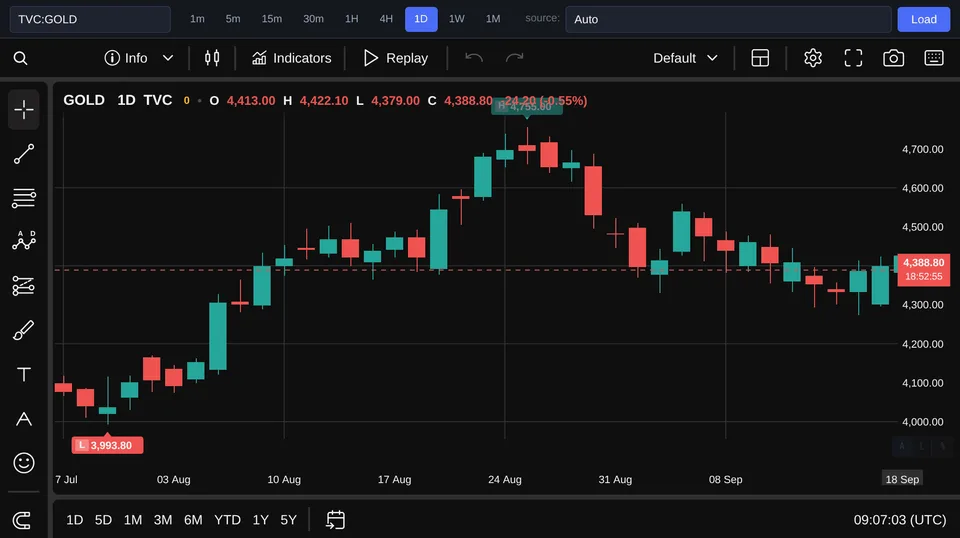
Gold is behaving in a way that looks contradictory only at first glance. Middle East tensions are supporting demand for defensive assets, yet gold is trading at 4,392 USD and is down 0.75% for the day. If geopolitical uncertainty normally helps the metal, why is it falling rather than beginning another clear rally? The answer lies in a contest between two different pricing mechanisms. Geopolitical risk encourages investors to buy protection, while a hawkish Federal Reserve, elevated bond yields, and the prospect of further tightening raise the cost of holding an asset that pays no interest. Oil adds another layer: when energy remains expensive, inflation concerns can keep monetary policy restrictive for longer. The central question is therefore not whether geopolitical demand exists, but whether it is powerful enough to overcome the cost of money.
The confirmed anomaly: safe-haven demand is present, but momentum is absent
The observable facts are straightforward. Gold stands at 4,392 USD, with a daily change of -0.75%, even though heightened uncertainty in the Middle East would ordinarily be expected to support traditional safe havens. The metal has also pulled back from the 4,360–4,370 area cited during the session, showing that defensive demand has not translated into an uninterrupted upward move. This does not mean the geopolitical premium has disappeared. A decline can occur even when one supportive factor remains active, provided that another factor exerts greater pressure. Markets are scales, not light switches: several forces can operate simultaneously, and the price records their net effect rather than issuing a neat verdict on each one. A useful distinction is between support and acceleration. Geopolitical concern may persuade existing holders not to sell aggressively and may attract buyers during declines, thereby creating a floor beneath the market. It does not automatically create the marginal wave of demand required for a sustained breakout. The current price action suggests that geopolitical risk is cushioning gold, not controlling its direction.
Three competing explanations for the decline
The first explanation is that safe-haven demand is weaker than the headlines imply. Investors may regard the current uncertainty as serious enough to justify some protection but not serious enough to reorganize portfolios around it. Under this interpretation, gold’s decline reflects a limited geopolitical premium that has already been incorporated into the price. This is plausible, although it does not fully explain why the metal remains comparatively supported rather than suffering a deeper retreat. The second explanation is the interest-rate channel. A hawkish Fed and the prospect of additional tightening tend to lift nominal and real bond yields, making interest-bearing assets more attractive relative to gold. Higher yields also often support the dollar, which can make dollar-priced bullion more expensive for buyers using other currencies. This mechanism directly affects the opportunity cost of owning gold and operates across the entire investor base. The third explanation runs through oil. Expensive energy can preserve inflation pressure, complicating any shift toward easier monetary policy. That does not necessarily hurt gold in isolation, because the metal is also used as an inflation hedge; the problem is the policy response. If markets believe persistent energy inflation will keep rates higher for longer, the resulting yield pressure can outweigh the appeal of inflation protection. These explanations are not mutually exclusive. The relevant comparison is their current strength. Limited safe-haven buying explains why geopolitical tension has not produced a surge, while the rates-and-oil combination explains why sellers retain enough influence to push the market down 0.75% despite that support.
The strongest working hypothesis: the cost of money is winning
The strongest working hypothesis is that the interest-rate channel currently outweighs the geopolitical premium. It fits both sides of the price action: gold is not collapsing because uncertainty sustains defensive demand, but it cannot establish a new upward impulse because restrictive policy expectations keep the opportunity cost of holding it elevated. In other words, geopolitics is building the floor while monetary conditions are pressing on the ceiling. The decisive variable is not fear by itself, but whether fear produces buying large enough to overcome bond yields and the dollar. A geopolitical headline may cause a brief jump, yet that move can fade if investors still expect tighter policy or persistently high real returns elsewhere. By contrast, falling yields would improve gold’s relative attractiveness continuously rather than only at moments of acute concern. Oil matters because it can reinforce the same monetary constraint. If energy prices remain firm, inflation expectations may resist moderation, leaving the Fed with less room to soften its stance. A meaningful decline in oil could therefore help gold indirectly: it would reduce one source of inflation pressure and make lower bond yields or less hawkish policy expectations easier to sustain. This hypothesis is probabilistic, not a confirmed law. Gold can sometimes rise alongside yields when demand for protection becomes exceptionally strong. For now, however, the observed combination of a 4,392 USD price and a -0.75% daily move indicates that ordinary safe-haven flows are not strong enough to dominate the macroeconomic headwind.
What would confirm or invalidate the hypothesis?
Several observable conditions would confirm the argument. The clearest would be a sustained decline in government bond yields accompanied by improving gold performance. A softer market assessment of future Fed policy would provide similar evidence, especially if the metal began holding gains across several sessions rather than reacting briefly to individual headlines.
Conclusion
Gold is falling despite Middle East tension because geopolitical demand is currently acting as support rather than as the dominant price-setting force. The more powerful influence is the cost of money: hawkish Fed expectations and elevated yields reduce the relative appeal of a non-yielding asset, while expensive oil can prolong that pressure through inflation expectations. The concise answer is that geopolitics is helping to establish a floor, but the next durable rally will probably require relief from the monetary side. Lower bond yields, softer expectations for Fed policy, or an oil decline that eases inflation pressure would provide the clearest route upward. If gold instead rises sustainably while those headwinds intensify, the working hypothesis should be rejected.