
Global Markets in a Period of Turbulence. Part 5.

The biggest news of the outgoing week reached us on Friday evening. That is, in Moscow time.
Let us give D. Trump the floor on TruthSocial: “Russia will immediately supply more than 300,000 metric tons of diesel fuel to the US and global markets, another 500,000 metric tons during November, and 1 million metric tons immediately afterward. In addition, depending on the condition of its oil refineries, Russia will supply 3 million metric tons of diesel fuel within a short period.”
A little later, a statement by V. V. Putin appeared on the Kremlin website: “While discussing the state of affairs in the global energy sector, the Russian side confirmed its readiness to supply oil and petroleum products to the US and global markets. I am confident that this will have a positive effect on the entire global economy.”
Quotes are quotes, but here is what is interesting.
Immediately after Trump's words, OFAC (the US Treasury Department's Office of Foreign Assets Control) issues a license for transactions involving Russian diesel fuel. Now—oh, miracle!—everyone in the world can safely work with Russian fuel, but only until April 7, 2027.
And right away, Russian Deputy Prime Minister Alexander Novak says that Russia is already beginning to lift restrictions on diesel exports. Miracles never cease.
Joking aside, over six months (until April 7, 2027), Russia will supply the markets with approximately 4.8 million metric tons of diesel, i.e., 0.2 million barrels daily.
Is that a lot or a little? In 2025, for example, Russia supplied 0.8–0.85 million barrels of diesel fuel daily. In other words, this amounts to ≈25% of last year's normal supply. Not much, but it will improve the situation somewhat.
And what about the Ukrainian attacks on oil refineries? Trump said for a reason that supplies depend on the condition of Russian refineries. Many different conclusions can be drawn from these words, including this one: the US is no longer responsible for those it has tamed. And if it is already “not responsible,” this could change a great deal in the very near future.
Nothing personal, just business.
Let us look at the chart of the retail price of diesel fuel in the US, as well as the chart of the US HO futures contract (heating oil). Unfortunately, I could not find an exchange-traded chart specifically for diesel fuel, but heating oil is also in short supply now, so the charts can be overlaid.
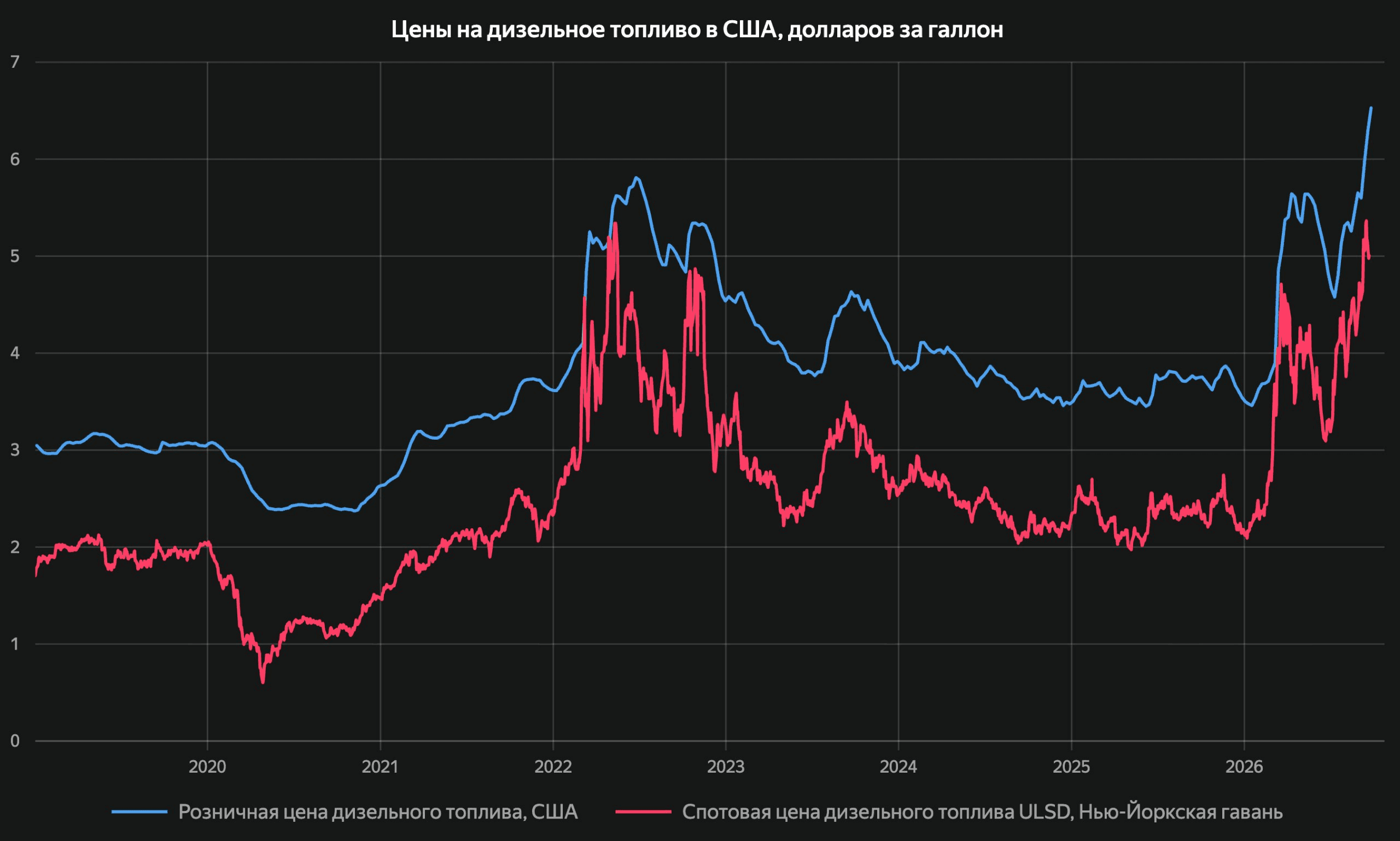
The next chart shows the exchange price of diesel fuel in the EU.
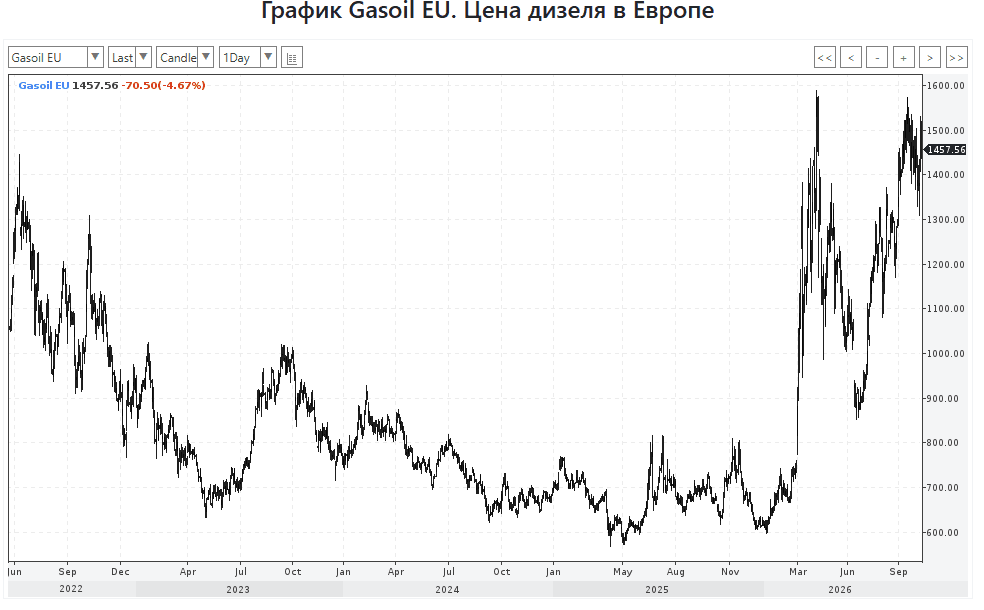
I think everything is clear without further words. I will only note that the peak values of 2022 are now somewhere behind us.
Of course, if inflation is added to this, the real price may not be much higher, but the shortage has not gone away. And a supply shortage must be resolved either by a price increase or by a decline in demand.
But let us return to the HO (heating oil) futures contract (NYMEX).
First, just a chart starting from January 1, 2026. We will simply draw a trend line.
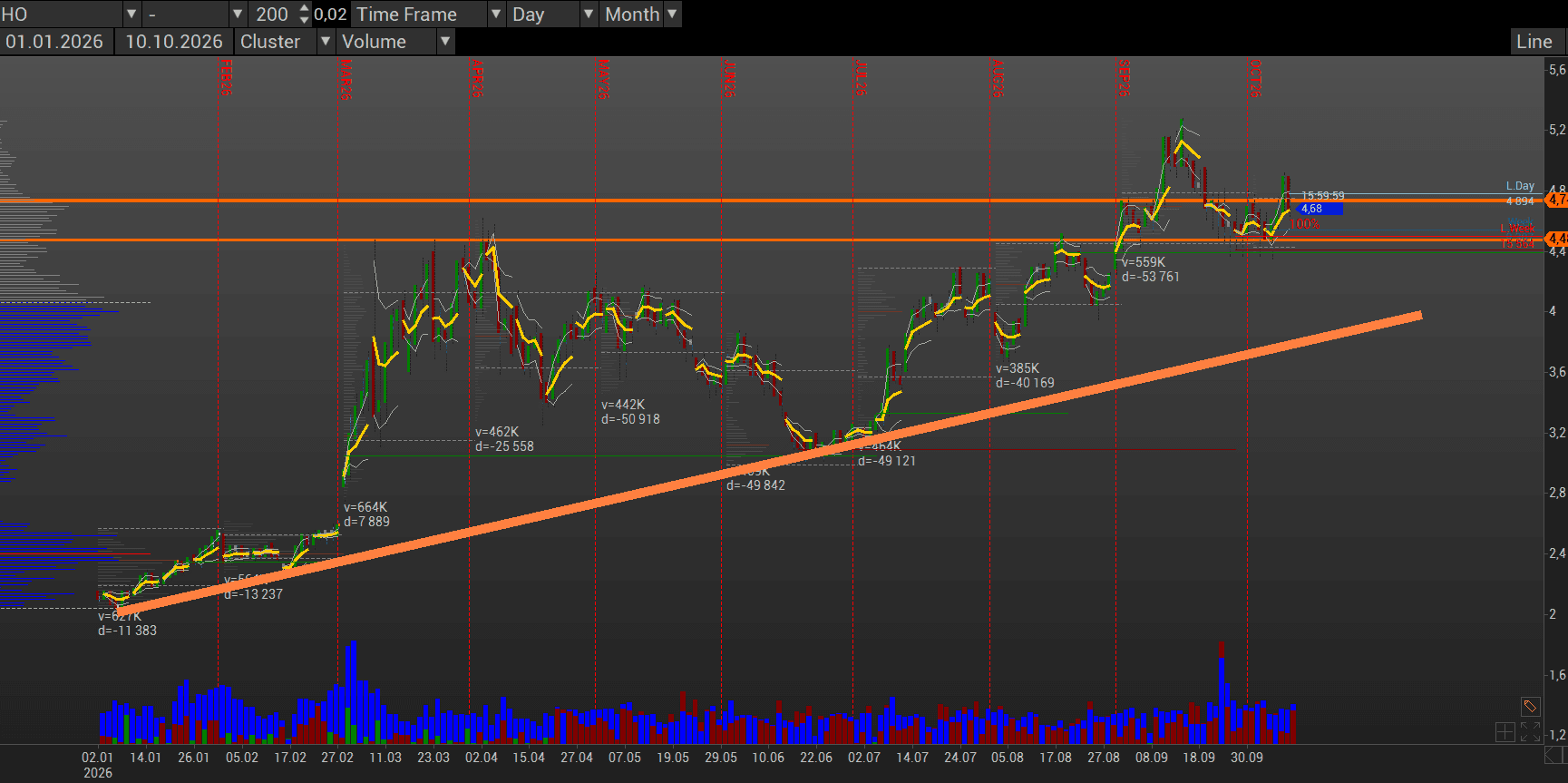
The situation is more than clear: one can consider looking for HO futures purchases at levels around 4 bucks.
If we zoom in slightly and look at how the price crossed the $4-buck mark, it is easy to see a high-volume zone in the 4.0–4.18 range, where liquidity was briefly accumulated for the breakout.
Why was the repositioning precisely here? Simply because this is exactly where traders went short in April–May.
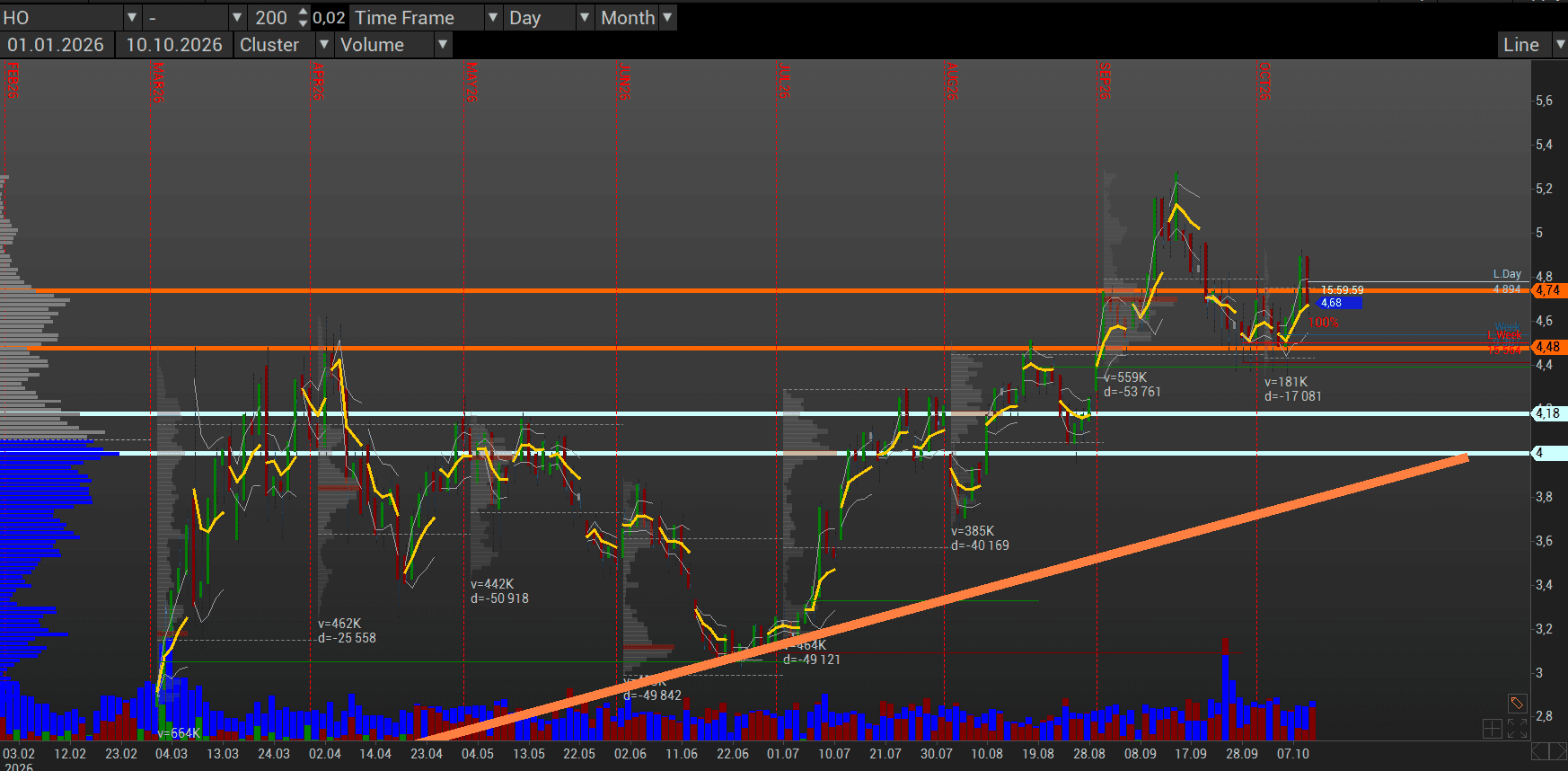
First, a few words about the impulse. It began on July 1 from the 3.20–3.30 range, and its latest extreme appeared on September 15 near 5.25, where someone aggressively added liquidity, returning the quote to the 4.5–4.75 range.
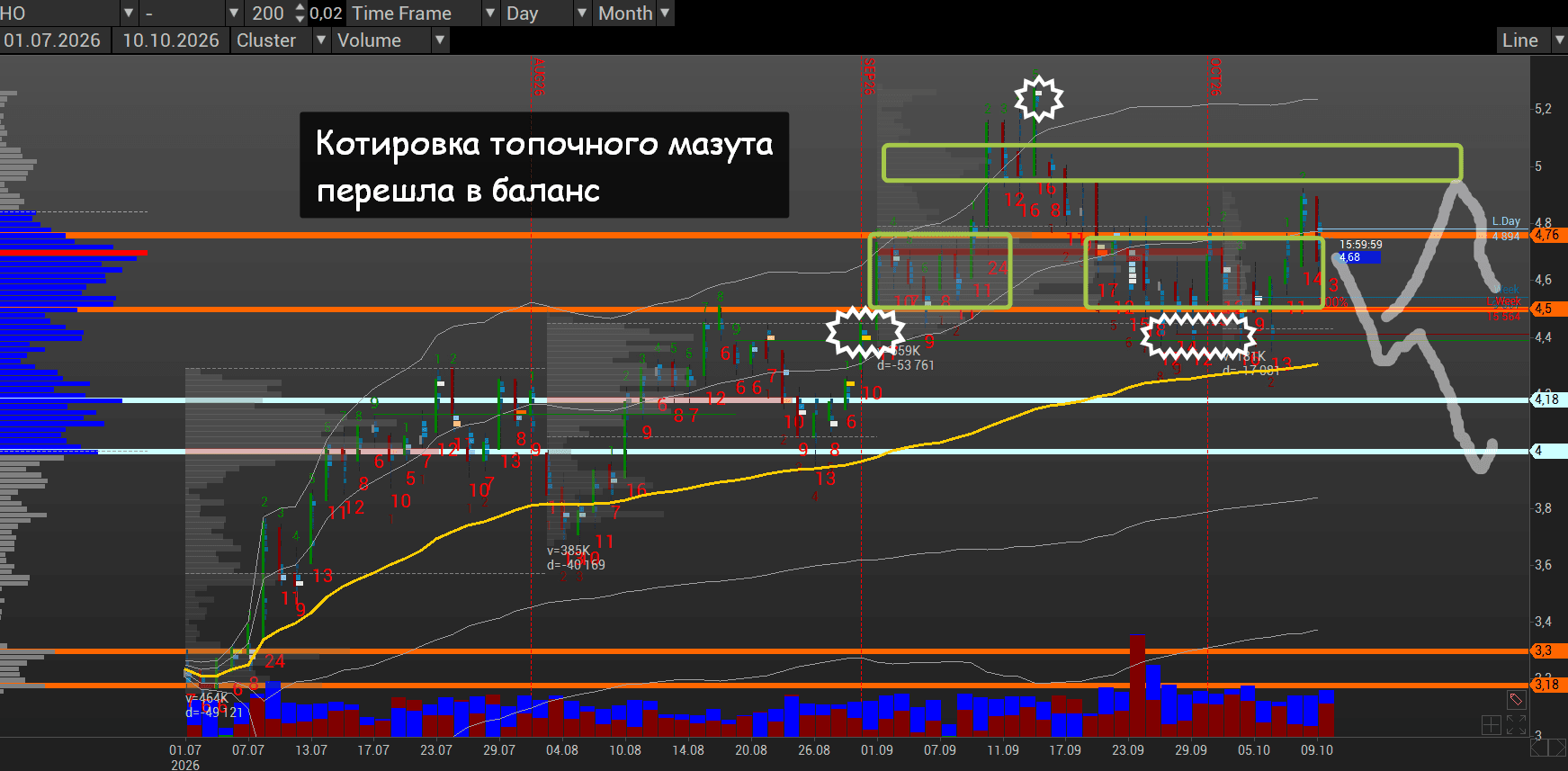
What is the 4.5–4.75 range? It is clearly a medium-term consolidation zone. There are several signs here:
the contract's first volumes appear here;
the quote returns here and, in effect, remains here;
the quote effectively touched the impulse VWAP and the liquidity used to push it through in the 4.4–4.42 range: after that, one should expect either a sharp reversal upward or—if 4.8–4.9 holds—a balance with probable repositioning;
market participants did not accept prices above 4.9–5.0—just before the conversation between Putin and Trump.
I will separately show that participants formed a local short reversal pattern on the daily charts. Yes, for now this is more of an upper-boundary defense pattern. But often such a pattern precedes downward movement.
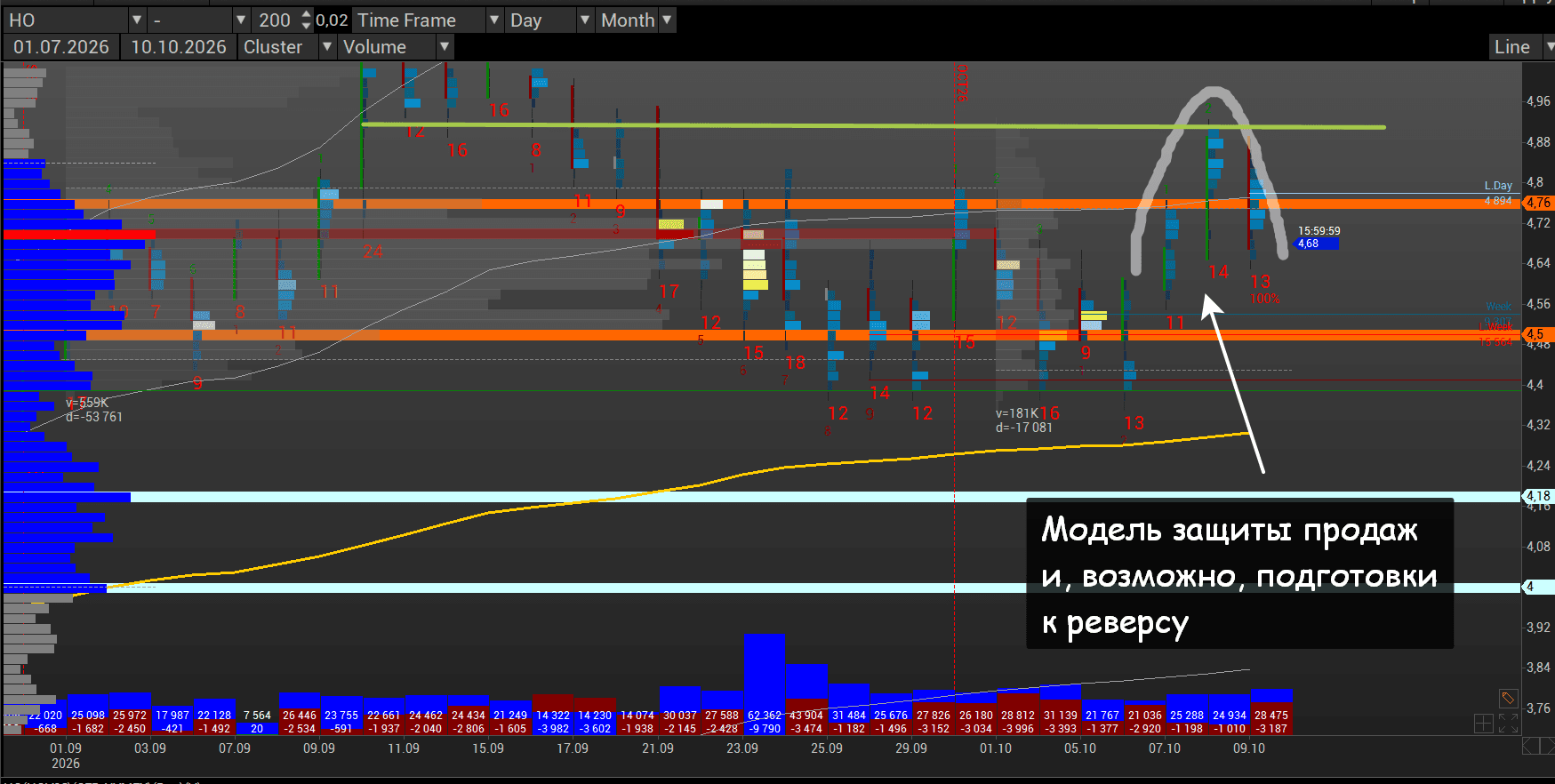
Thus, for now we can say that medium-term consolidation in the 4.50–4.75 range can be expected.
If the price moves and consolidates below 4.4, the way opens toward 4.0 and even 3.80.
This is the optimistic scenario: tankers carrying diesel fuel proceed calmly to the US without delays, meaning that the market becomes saturated.If 4.8 / 5.0 is broken, a double top or continuation of the trend is possible.
The first scenario is simply trading within a speculative game. There may be some supply disruptions, but overall the situation is under control.
The second scenario, however, implies problems with fuel supplies and a growing shortage in the US and worldwide.
All the reasoning above is entirely in the spirit of ordinary analysis, but let us look again at the chart from July 1—the start of another wave of the medium-term impulse—and try to dig a little deeper.
The cluster chart shows something that has always surprised and even slightly frightened me.
The last time Steve Witkoff and Jared Kushner were in Moscow was Saturday, September 5, 2026. That was precisely when the quote entered what was then the range of its future consolidation.
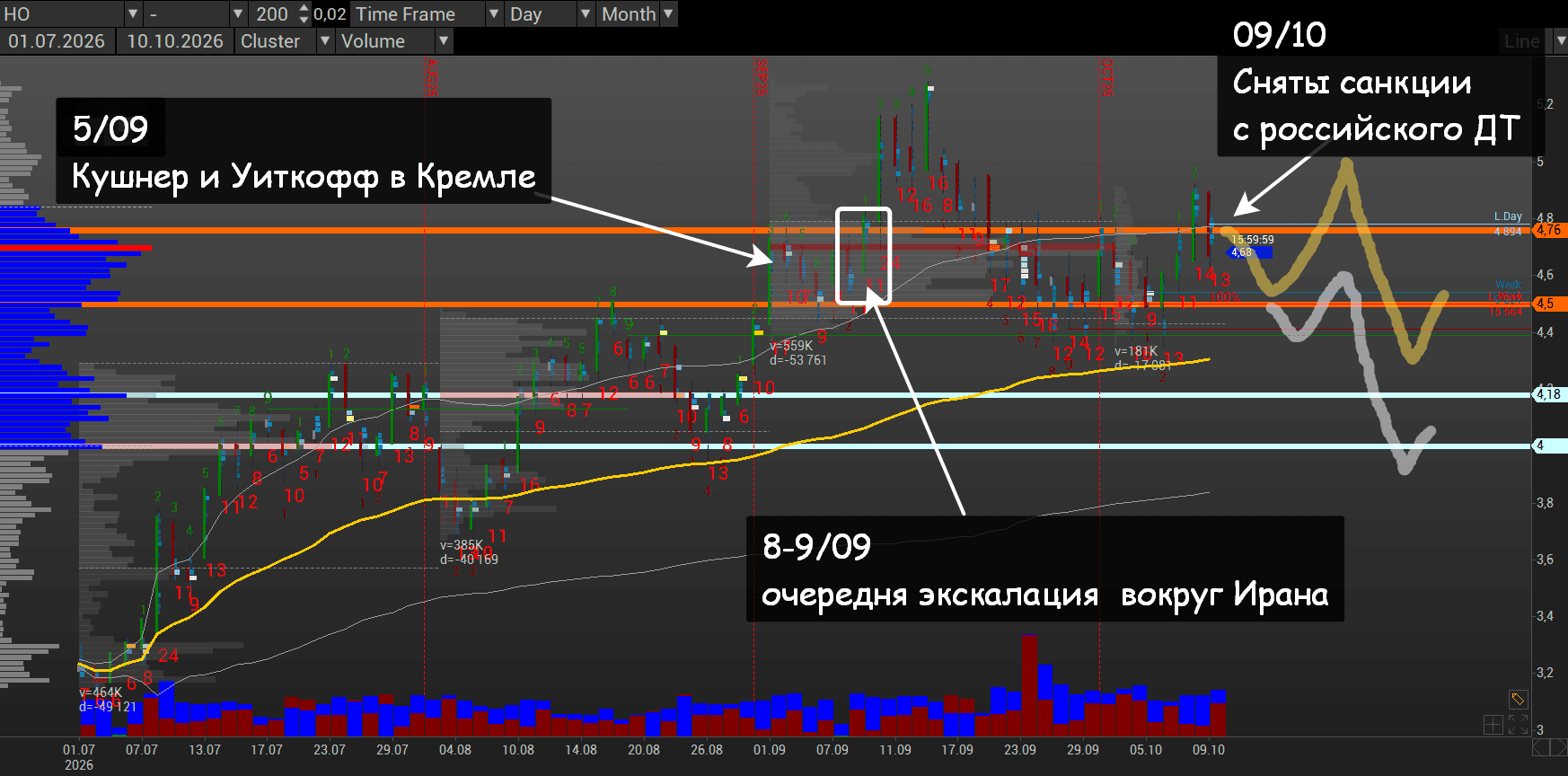
On September 8–9, more news emerges that the situation surrounding Iran is heating up. At the same time, specialized media increasingly report that tankers are passing through Hormuz: by early October, an alleged 50% to 75% of prewar oil supplies had been restored, but not fuel supplies.
The arrangement is complicated but familiar: it is loaded into a small tanker, then transferred to a large one. This increases the delivery cost.
Meanwhile, the Arabs probably also have to pay bribes to the Iranians so that they “do not see” the tankers. And probably to the Americans as well, so that they do not escalate matters excessively.
But the escalation theme died very quickly. The quote moved into balance. On September 9, Trump announced that Russian diesel would be going to the US, and the quote was returned to the consolidation zone.
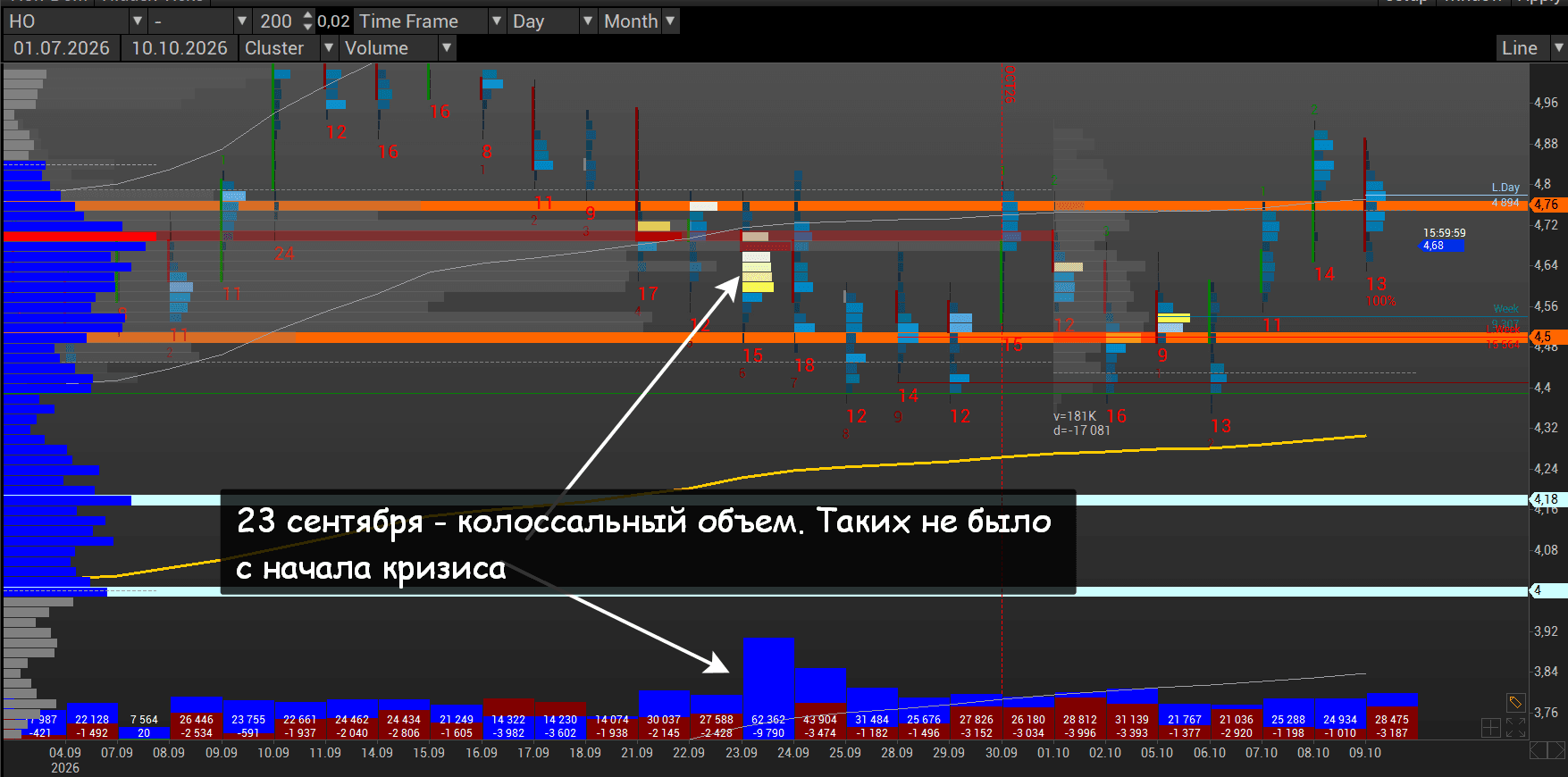
September 23 deserves separate attention. On that day, a UN session took place where Lavrov and Rubio met behind closed doors. Witkoff also reported that negotiations with Iran were progressing.
And, remarkably, 62,000 contracts were traded in HO futures on that very day—the highest figure since the beginning of the Iranian crisis. Moreover, this money turned over within a very narrow range, i.e., the average volume was simply colossal. This is how very smart money operates.
A Few More Aspects
I have described an overall classic auction model that works on all timeframes. But I overlaid the news on the daily auction and obtained this result.
The fuel problem is obvious. Including for us. Let us recall the key points in the context of Russian diesel exports.
On July 30, 2026, Russia banned diesel-fuel exports until September 1.
On August 28, the ban was extended until September 30.
On September 14, the ban was extended until October 31.
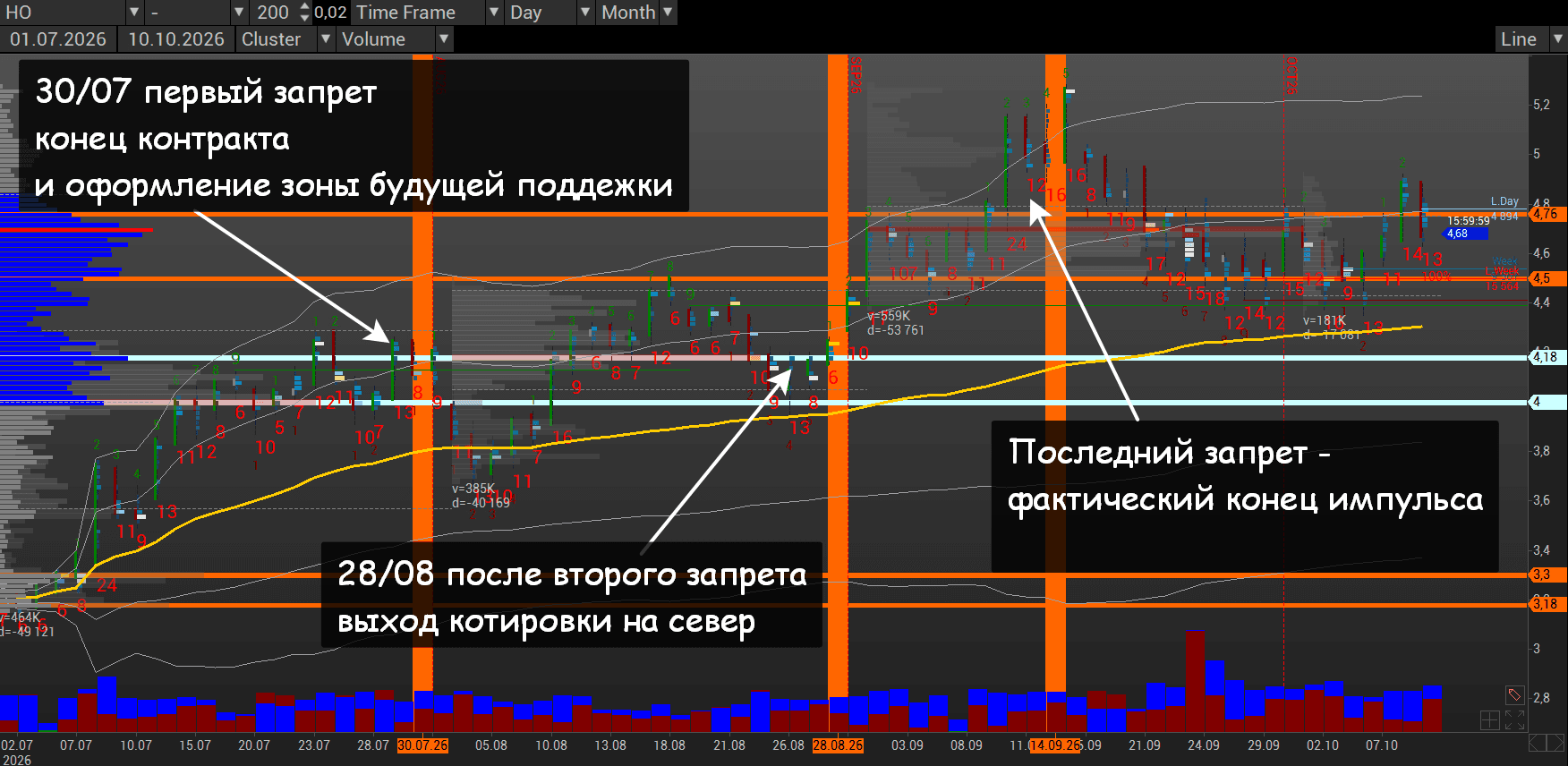
Russia experienced its greatest fuel problems in July–August. By that same time, it had also become definitively clear that the situation with Iran would last a long time and that its negative impact on the entire global economy would steadily grow.
Even then, Russian officials said that the fuel situation would normalize by September–October. But they prudently introduced the export ban on July 30.
By and large, the authorities indicated the stabilization timeframe quite clearly. There is a small gasoline shortage, which Novak himself acknowledges. But the diesel-fuel situation has indeed leveled out.
The diesel export ban was extended on August 28. The HO quote soared by 30%. Incidentally, before that, those who knew where things were headed had accumulated volume for 3 days.
It became known literally a couple of days before the visit itself that Kushner and Witkoff would arrive in Moscow on September 5. They probably had something besides Ukraine to discuss.
And then September 14 arrives—the day of another extension of the diesel export ban. The quote is somewhere very high at this point.
And immediately, on September 15, discussion of the so-called “Lindsey Graham sanctions” sharply accelerated in the US Congress. On September 16, the House of Congress approves the bill, and on September 18, Trump signs the paper.
Among other things, after signing the document, Trump gained the authority to:
impose a tariff of up to 500% on goods imported directly from Russia into the US.
impose secondary tariffs of up to 100% on the 5 largest importers of Russian oil, 5 importers of gas, and 5 countries that help circumvent oil-export sanctions more actively than others.
Trump obtained a very substantial argument in negotiations not only with Russia but also with China and India, which are the key buyers of Russian oil. And the potential of these sanctions was such that the diesel price should have continued rising briskly.
But nothing happened—the quote froze in the 4.5–4.75 range.
5 days pass, and September 23 arrives: the day when Lavrov and Rubio discussed something behind closed doors. Let me remind you what the situation was at this point.
There is a shortage of petroleum products in the US and worldwide, and it continues to grow. The “whole world” is looking at the US and waiting to see what “Uncle Sam” will do to solve the problem it created itself.
By this time, Russia had managed, on the one hand, to strengthen air defenses around its refineries and, on the other, had begun accumulating diesel fuel. At the same time, by this point Russia had already intensified pressure on Ukraine's key infrastructure to a previously unseen level.
As of this date, the US has a document in hand that allows it to sharply worsen Russia's financial position, albeit to a significant degree at the expense of at the expense of: everyone will suffer, but it is clear who will be hurt first. And we will discuss what comes afterward when it comes.
As of the same date, Russia has a document in hand restricting diesel-fuel exports. Including to the US, which was a major buyer of Russian diesel. And certain other arguments that there is no desire to discuss now.
And so one gets the impression that the basic framework for the diesel-fuel decision was discussed then, on September 23, in one of the UN meeting rooms. Incidentally, was the UN not created long ago precisely to discuss difficult situations?
This impression also arises because the highest volumes in NYMEX HO heating-oil futures were traded that day.
And then another three difficult weeks pass, leading to the conversation between Trump and Putin. Meanwhile, despite mounting problems in the physical fuel market, the exchange quote stands still. Strange, do you not think?
Believe it or not, I personally have a strong impression that this very smart money does not necessarily know something; it simply reads what the serious men are actually discussing behind closed doors. It reads this because it knows what serious men should be discussing behind closed doors.
As for the exchange auction, it may be traded short if the fuel problem is resolved.
Instead of an Afterword
After the decision on diesel-fuel supplies, the head of the Ukrainian regime was rude to Trump live on air, and Trump could not let it pass.
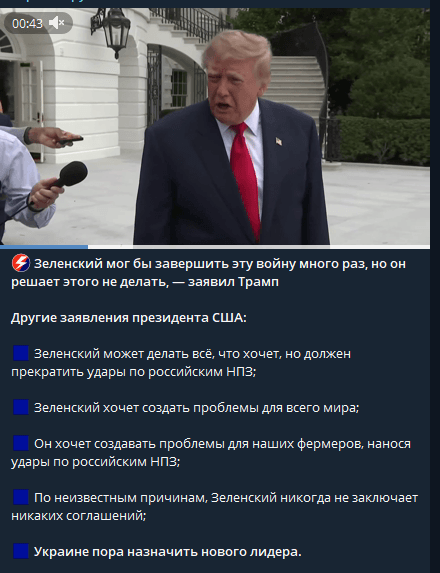
What comes next is not the subject of our discussion. We have simply shown how problems in one place intersect with problems elsewhere, as well as how smart money uses every opportunity to make money.