
The Fed’s October Reprieve: Why December Is Still in Play

Intro
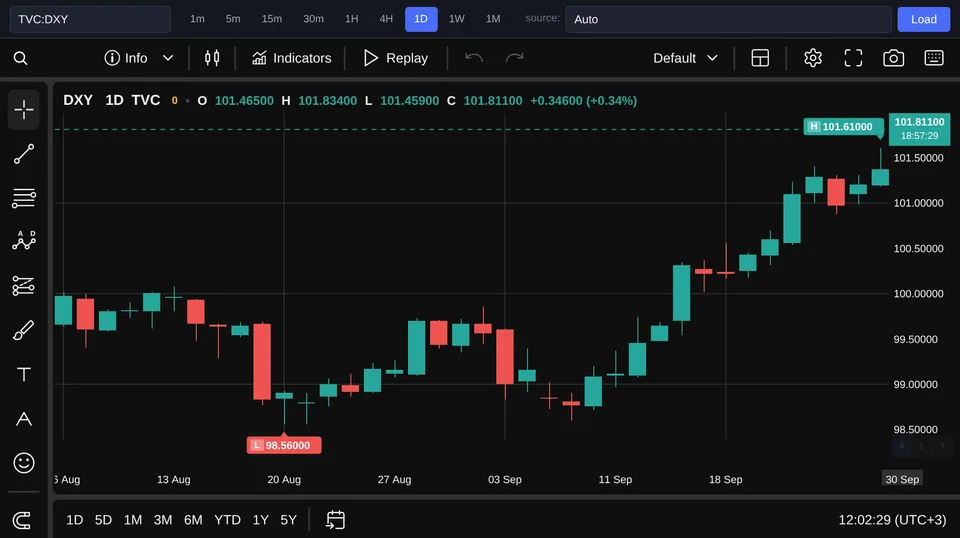
A softer-than-expected core PCE reading for August produced an unusually precise change in the rates debate. The market-implied probability of a Federal Reserve increase in October fell from roughly 51% to 37–39%, having stood near 70% only a week earlier. Yet traders continued to price an additional increase by December almost fully. Meanwhile, the dollar index was not behaving as though the tightening story had vanished: TVC:DXY stood at 101.8 USD and was up 0.36% for the day. That combination creates the question worth examining. Why did one inflation report substantially weaken the case for an immediate move without also dismantling expectations for December or pushing the dollar decisively lower? The central distinction is between changing the destination of monetary policy and changing the date on which the Fed might arrive there. The evidence currently points more strongly to a postponement than to a reversal, although the next employment report can still rewrite the market’s timetable.
What the market actually changed
The confirmed facts are narrower than the headlines may suggest. Core PCE for August was softer than expected, the implied chance of an October increase dropped to 37–39% from about 51%, and that probability had been near 70% a week earlier. Expectations for another increase by December nevertheless remained close to fully priced, while DXY rose 0.36% during the day to 101.8 USD. These figures do not show that investors suddenly expect easier monetary policy. They show that confidence in the earliest available date has weakened much more than confidence in the broader possibility of another increase. The market removed urgency from October while preserving the option of action in December. That distinction matters because meeting-by-meeting probabilities are conditional, not independent forecasts sealed in separate envelopes. If the Fed pauses in October, it gains additional time to examine inflation, employment and demand before deciding in December. A lower October probability can therefore coexist logically with a high December probability: the anticipated move has been shifted along the calendar rather than deleted from it.
Three explanations for the October retreat
The first explanation is the most direct: softer underlying inflation gives the Fed room to wait. If price pressure is moderating, an immediate increase becomes less necessary, especially when policymakers can observe another round of data before committing themselves. Under this interpretation, the PCE report genuinely changed the policy calculation, but only for the next meeting. The second explanation is that investors do not yet regard one softer report as proof of durable disinflation. Inflation can improve unevenly, and policymakers care about whether moderation persists rather than whether a single release supplies a pleasant morning. A softer monthly signal can justify patience without establishing that the inflation problem has been solved. That would explain why December remains priced as the more plausible point for action. The third explanation concerns market positioning. The earlier probability near 70% may have reflected an overly aggressive concentration of bets on October, leaving those positions vulnerable to any data that challenged immediate tightening. The fall first to roughly 51% and then to 37–39% may therefore include a technical correction as well as a fresh economic judgment. In other words, part of the move may be traders moving the furniture after discovering that everyone had placed the same chair by the October door. These explanations are not mutually exclusive. Softer inflation can improve the case for a pause while simultaneously forcing crowded positions to adjust. The unresolved issue is whether the repricing marks the beginning of a broader dovish turn or merely a more cautious route toward the same potential rate increase.
Why the dollar is not confirming a dovish turn
The behavior of the dollar helps separate those possibilities. If the PCE release had convinced markets that further tightening was broadly off the table, a sustained weakening of the currency would have been a more natural response.
The employment report is the practical test
The next employment report matters because it can test the part of the economy that the softer PCE release did not settle. Evidence of persistent labor demand and wage pressure would support the view that inflation could remain difficult to contain, even after a favorable monthly reading. A clearly weaker labor picture would instead strengthen the argument that existing policy restraint is already working and that another increase may be unnecessary. Several observable outcomes can confirm the calendar-shift hypothesis. The October probability would remain near its reduced 37–39% range, the December expectation would stay high, and the dollar would avoid sustained weakness after the labor data. That combination would indicate that investors still see tightening risk but prefer to place it later. The hypothesis would be challenged in either direction. If a strong employment report quickly drove the October probability materially higher, the PCE-driven reprieve would look temporary and highly data-dependent. If weak labor evidence reduced December expectations as well as October expectations, the market would be moving beyond a postponement toward a genuine reassessment of whether another increase is needed at all. The dollar provides a useful secondary check, but it should not be treated as a one-instrument referendum on the Fed. A lasting decline alongside falling probabilities for both meetings would reinforce the broader dovish interpretation. Continued resilience, especially if December remained heavily priced, would fit the view that the market had revised timing rather than direction.
Conclusion
The softer core PCE reading lowered the perceived need for the Fed to act in October, which explains the sharp fall in the meeting’s implied increase probability from roughly 51% to 37–39%, after about 70% a week earlier. It did not establish that inflation had moderated durably enough to remove the prospect of a later move. The near-fully priced December increase and a dollar index at 101.8 USD, up 0.36% for the day, both fit that distinction. The concise answer is that the Fed received a reprieve on timing, not a definitive all-clear on further tightening. The employment report will show whether October merely lost its place in the queue or whether the market should also reconsider December. Until then, postponement is the stronger explanation than reversal.