
Why Higher Inflation Is Not Lifting the Euro: The French Risk Premium Matters More

Intro
Eurozone inflation would normally provide a straightforward argument for a stronger currency: faster price growth can delay interest-rate cuts, lift expected yields and attract capital. Yet the latest figures produced an awkward result. September inflation reached 3.8%, slightly above the 3.7% forecast, while the euro merely edged higher against the dollar and fell against the Swiss franc. The question is therefore not whether inflation matters, but why it mattered so little this time. Three explanations deserve attention: expectations for European Central Bank policy, the broader movement of the dollar and the repricing of French sovereign risk. The central anomaly is that the euro received supportive inflation data but failed to turn that support into convincing strength.
The confirmed facts: a headline surprise without a currency rally
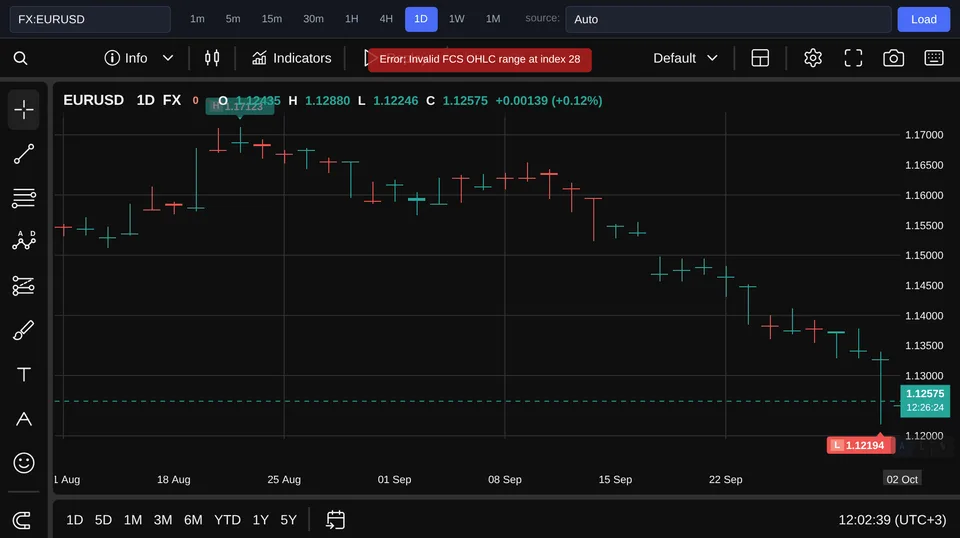
The inflation release contained one modest surprise and one important non-surprise. Headline eurozone inflation accelerated to 3.8%, exceeding the 3.7% consensus estimate, but core inflation was 2.5%, exactly as expected. That distinction matters because central banks and currency traders usually look through volatile headline components when judging whether price pressure is persistent. The market response was restrained. EUR/USD stood at 1.13 USD, up only 0.07% on the day. Meanwhile, EUR/CHF traded at 0.9321 CHF and fell 0.22%. These moves do not prove why the euro was weak, but they establish that the small inflation surprise did not trigger broad demand for the currency. At the same time, the yield spread between ten-year French and German government bonds moved above 150 basis points. This is a direct market measure of the additional compensation investors require to hold French debt rather than benchmark German bonds. The confirmed picture is unusually clear: headline inflation beat expectations, core inflation did not, and French sovereign-risk pricing deteriorated while the euro’s response remained weak.
Explanation one: inflation was not strong enough to change the ECB story
The first explanation is that higher headline inflation should encourage a more restrictive ECB stance. If investors expect rates to remain elevated for longer, euro-denominated assets become relatively more attractive. On its own, the 3.8% reading therefore appears positive for the currency. The weakness in this argument is the composition of the surprise. Core inflation at 2.5% matched the forecast, so the release offered limited evidence that underlying price pressure was stronger than markets had already assumed. A one-tenth percentage-point headline beat is unlikely to force a major reassessment of the future policy path when the more persistent measure lands precisely on consensus. This does not make inflation irrelevant. It may reduce the scope for an immediate dovish shift and place a floor under rate expectations. But it is better understood as a modest support than as a new bullish catalyst. The data gave the euro a policy cushion, not a powerful reason to rally. The distinction is less glamorous than a dramatic inflation headline, but markets are often annoyingly fond of the fine print.
Explanation two: dollar weakness helped, but exposed the euro’s own problem
A second possibility is that EUR/USD is primarily reflecting the dollar rather than developments inside the eurozone. A softer US backdrop can weaken expectations of Federal Reserve tightening and push the dollar lower. Under those conditions, EUR/USD may rise even if investors have not become more enthusiastic about the euro itself. That interpretation fits the direction of the pair but not the strength of the move. EUR/USD gained just 0.07% to 1.13 USD, an extremely limited advance given a potentially favorable dollar environment and an upside surprise in eurozone headline inflation. The euro caught a tailwind, but barely moved its sails. This suggests that an internal European drag was offsetting at least part of the external support. EUR/CHF provides a useful cross-check because it removes the dollar from the comparison. Its 0.22% decline to 0.9321 CHF points to demand for the Swiss franc relative to the euro, a pattern consistent with concern about European risk. No single currency pair is a perfect laboratory, and the franc has its own drivers, but the contrast is informative. If EUR/USD is slightly positive while EUR/CHF is clearly negative, the dollar alone cannot fully explain the euro’s lack of momentum.
The strongest hypothesis: French risk is becoming a euro-area risk
The third explanation is that the widening French-German bond spread is raising the risk premium attached to the eurozone itself. A spread above 150 basis points means investors are demanding substantially more yield from France than from Germany at the ten-year maturity. The mechanism affecting the currency is not simply that French bonds have become cheaper; it is that a large member state is being treated as a more distinct source of fiscal and political risk. That can weaken the euro through several channels. International investors may reduce exposure to regional assets, demand greater compensation for holding them or favor safer European instruments, including Swiss-franc assets. A wider spread can also revive questions about fragmentation: the ECB sets one monetary policy, but financing conditions increasingly differ among member states. Higher French yields therefore need not be interpreted as helpful monetary tightening. They may instead represent a risk premium that discourages capital inflows. This is still an editorial inference, not a confirmed causal verdict.
Conclusion
This hypothesis can be tested with observable conditions rather than protected by vague forecasting. It would gain support if the French-German ten-year spread remains above 150 basis points or widens further, EUR/CHF continues to fall, and the euro keeps lagging even when the dollar backdrop is favorable. The combination matters more than any isolated daily move. It would be weakened or rejected if the spread narrows materially, EUR/CHF stabilizes or rises, and EUR/USD begins responding more strongly to supportive eurozone data. A euro recovery accompanied only by broad dollar weakness would be less decisive, because it would not demonstrate that the internal risk premium had faded. The short answer is that higher inflation is not rescuing the euro because the surprise was confined to the headline rate, while core inflation matched expectations and French debt risk is affecting confidence in the wider currency area. For now, the French-German spread and EUR/CHF are the more revealing indicators: one measures the internal risk premium, and the other shows whether that premium is spilling into the currency beyond the dollar pair.