
Brent’s Opening Gap: Supply Risk or a Weekend Premium?

Intro
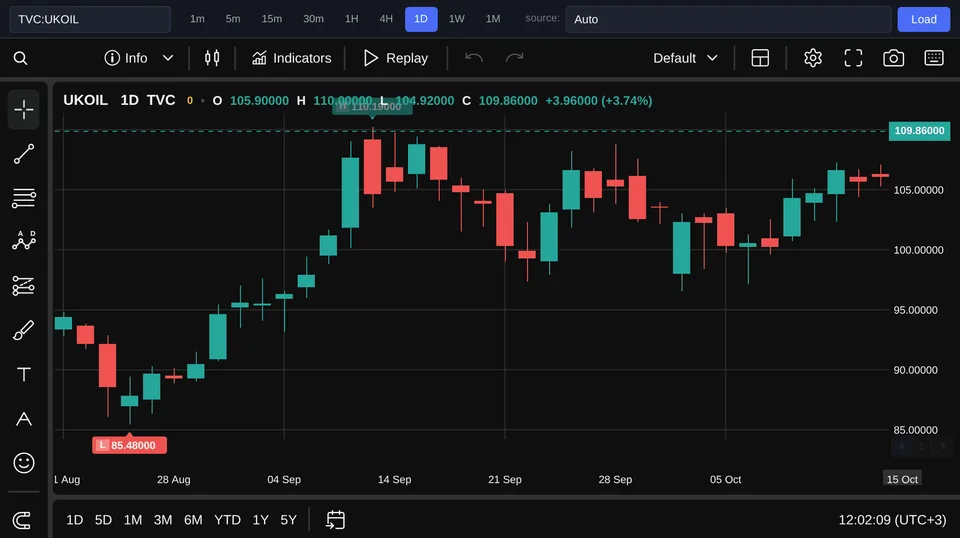
Does Brent have a solid reason to jump when trading resumes, or has weekend anxiety moved ahead of the evidence? The question follows a Friday close described in the supplied context as around $109.86 and a lively discussion of risks to shipments through Hormuz. An opening gap would show that the price of holding oil exposure has changed while the market was closed. It would not, by itself, establish that fewer barrels are reaching buyers.
What the price snapshot actually establishes
The supplied market snapshot puts Brent (TVC:UKOIL) at 109.9 USD, up +3.72% for the day, and WTI (TVC:USOIL) at 99.02 USD, up +1.07%. Brent therefore shows the stronger daily advance in these observations. That difference is a reason to investigate seaborne supply risk, not proof that a disruption has occurred. The timestamps, daily comparison windows and construction of these quotations would need checking before treating their relative performance as a clean market signal. The October 17 discussion on r/oil adds a different kind of evidence: participants are debating a Hormuz premium, inventory rebuilding and the possibility of a gap at the next opening. Some mention $150 oil, but that is an expression of individual expectations, not a consensus forecast or a valuation supported by this brief. Reports circulating about new strikes remain unconfirmed within the supplied material. The distinction matters because a discussion can establish that traders are worried without establishing that the event they fear has happened.
Three explanations can produce a similar opening move
The first explanation is an emerging physical shortage. If passage through Hormuz becomes less reliable, delayed shipments or reduced loadings could force buyers to compete more urgently for available cargoes. A price increase would then reflect a change in expected availability, potentially before the disruption appears in inventory statistics. This explanation requires evidence about shipping and deliveries that the supplied context does not yet provide. The second explanation is a higher premium for uncertainty: traders may pay more for oil exposure because the probability or potential cost of disruption appears to have increased, even while shipments continue. The third is positioning, as participants reduce short exposure or seek protection against an opening jump. These mechanisms can reinforce each other, but positioning alone cannot establish a lasting shortage. Weekend expectations can become a crowded departure lounge: everyone wants priority boarding, although the flight schedule has not yet changed.
The strongest working hypothesis is a repricing of risk
The best-supported editorial hypothesis is a higher premium for possible disruption, with positioning potentially amplifying the move. The reason is evidential: the supplied material contains elevated prices and anxious expectations, but no verified reduction in physical supply. This does not establish that flows are normal; it limits what can responsibly be inferred. A risk premium can be economically rational before losses materialise, because buyers and sellers must make decisions under uncertainty. Inventory rebuilding is the main counterargument raised in the discussion, but it also needs verification. If accessible stocks are rising where buyers need them, those buffers could make a temporary shipping delay easier to absorb and reduce the urgency of bidding for replacement cargoes. Yet an expectation of rebuilding is not an observed stock increase, and a headline total cannot show whether the relevant crude is available in the right location. The working hypothesis therefore remains conditional: uncertainty currently explains the evidence better than a demonstrated shortage, while verified inventory relief would weaken the case for a persistent premium.
What would confirm or overturn that explanation?
The first test is verified shipping and loading activity: persistent delays, cancellations or reduced departures would strengthen the physical-disruption explanation, especially if corroborated across reliable observations. Freight and insurance costs provide a related test of whether moving cargoes has become more expensive or difficult, although higher charges can themselves reflect precaution. Brent’s nearest calendar spreads add another dimension: a stronger premium for prompt delivery over later delivery would be consistent with greater urgency for available barrels. Agreement between flows, transport costs and prompt pricing would carry more weight than the size of the opening gap alone. Official inventory releases should then show whether stocks are cushioning the market or being drawn down, with attention to location and the period covered. Finally, watch whether the opening move persists as trading develops: sustained gains alongside verified supply friction would strengthen the case for a durable premium and shift the explanation toward physical constraints. A gap that closes while shipping remains normal and prompt spreads show little strain would instead support a temporary expectations or positioning effect. Mixed signals would leave the hypothesis unresolved; price strength alone would still be insufficient to declare a shortage.
Conclusion
The expected Brent gap is currently better explained as a repricing of disruption risk than as evidence of an established physical deficit. The supplied quotations show strong price movement, while the community discussion shows concern rather than confirmation. Shipping, transport costs, prompt spreads and inventories will determine whether that concern becomes a sustained supply premium. Until those observations align, neither an opening jump nor talk of $150 provides a defensible price target.