
Bitcoin ETF Inflows Slow as Ether Funds Leak Capital: Is “Uptober” Stalling?

Intro
October arrived with its usual crypto-market promise: a catchy seasonal label, bullish expectations, and the quiet assumption that institutional money would help turn the calendar effect into an actual rally. The first ETF-flow figures complicate that story. Bitcoin funds remained in positive territory, but their weekly inflow slowed dramatically, while Ethereum funds lost capital. The central question is therefore not whether one disappointing week can cancel “Uptober.” It cannot. The useful question is whether the divergence between Bitcoin and Ethereum reveals a temporary reporting wobble, a deliberate institutional preference for Bitcoin, or the beginning of a broader retreat from risk. The evidence currently points to weaker and narrower demand, not to a confirmed collapse of the October thesis.
The confirmed facts: positive does not necessarily mean strong
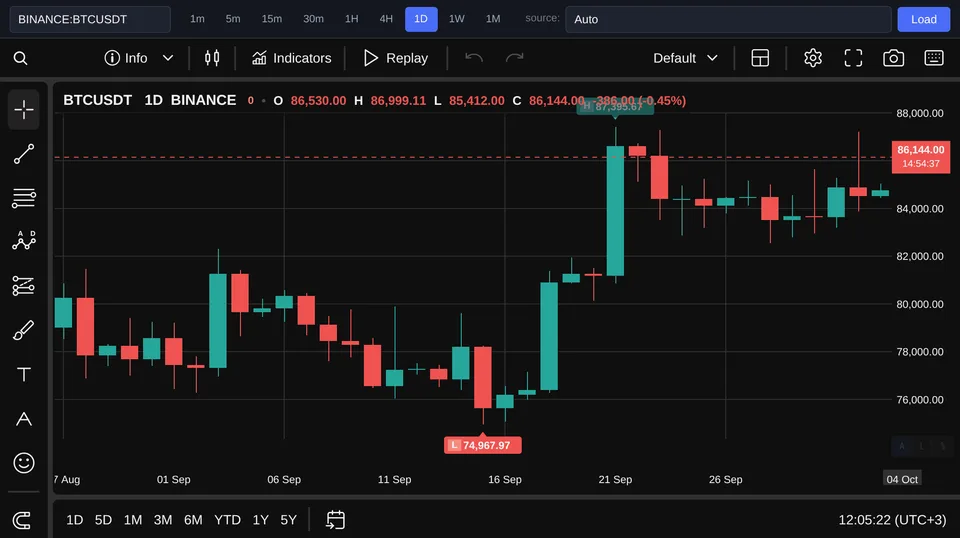
According to the preliminary flow summary published on October 4, spot Bitcoin ETFs attracted a net $82.9 million during the week of September 28 through October 2. Ethereum ETFs, by contrast, posted net outflows of $118 million. The Bitcoin number remained positive, but it followed a much larger $2.39 billion inflow in the preceding week. The direction of Bitcoin flows did not reverse, yet their scale changed substantially. That distinction matters because a small net inflow can conceal considerable movement underneath the headline. Some investors may have continued buying while others took profits or reduced exposure, leaving only a modest positive balance. Weekly totals are snapshots of competing decisions, not a single institutional vote delivered with ceremonial trumpets. There is also an important data limitation: part of BlackRock’s Friday figures was unavailable when the preliminary summary was published. The final total could therefore look better or worse once the missing information is incorporated. This does not make the existing figures useless, but it does mean that conclusions about the entire week should remain provisional. Prices offer context without resolving the issue. Bitcoin traded at 86,211, down 0.37% for the day, while Ether stood at 2,721, down 0.21%. Neither daily move resembles a panic liquidation, but neither confirms a forceful seasonal advance. The market is hesitating rather than delivering a clean verdict.
Three explanations for the split in ETF flows
The first explanation is ordinary weekly volatility amplified by incomplete reporting.
The strongest working hypothesis: demand has narrowed to Bitcoin
For now, the selective-demand explanation fits the available evidence best. Bitcoin ETFs still received net capital, Ethereum ETFs lost it, and spot prices showed only limited daily declines. That combination is more consistent with institutional prioritisation than with an indiscriminate flight from crypto assets. It also explains why Bitcoin can retain support without generating the broad enthusiasm normally associated with the “Uptober” narrative. This is a probabilistic editorial conclusion, not a confirmed fact. One preliminary week cannot establish a durable allocation regime, especially while part of the Friday data remains missing. Yet the dramatic deceleration from the prior week makes it equally unwise to dismiss the result as meaningless noise. The most defensible reading is that institutional demand has weakened and become concentrated, with Bitcoin retaining preference while Ether fails to share the benefit. This distinction changes how October should be judged. A genuine seasonal upswing would normally look healthier if fresh capital reached more than one major asset and if prices responded clearly to the inflows. Here, Bitcoin’s $82.9 million weekly gain in ETF assets sits beside a 0.37% daily price decline, while Ether’s fund outflow accompanies a 0.21% decline to 2,721. Those figures do not prove a bearish turn, but they show that the ETF channel is not yet producing a convincing, market-wide impulse. In other words, “Uptober” is currently running with one shoelace loose. Bitcoin demand has not vanished, but the breadth and acceleration expected from a strong seasonal move are missing. That makes the thesis vulnerable, though not yet invalid.
What would confirm or overturn this interpretation?
The first test is the completed weekly report. If BlackRock’s missing Friday figures lift Bitcoin inflows materially, they would strengthen the case that the apparent slowdown was partly a reporting artifact. If the final total remains close to $82.9 million, the loss of momentum becomes harder to dispute. The revised figure matters most as a measure of degree, not as a magical dividing line between bullish and bearish markets. The second test is persistence over the following weeks. Repeated Bitcoin inflows combined with continued Ethereum outflows would confirm that institutional demand is selective and concentrated. A renewed surge into both groups of funds would instead support the temporary-noise explanation. If Bitcoin ETFs also turn decisively negative, the broader risk-reduction hypothesis would move to the front. The third test is relative price behaviour. The narrowing-demand thesis gains support if Bitcoin holds up better than Ether while the flow gap persists. It weakens if Ether begins outperforming despite continuing ETF outflows, because that would suggest other sources of demand are more important than the US fund channel. Relative strength is more informative here than treating one day’s percentage change as a grand referendum on October. Finally, the market must show that new ETF inflows can still move or support prices. Strong inflows followed by little response would imply that selling elsewhere is absorbing institutional demand. Conversely, sustained inflows accompanied by firmer prices would indicate that the transmission mechanism remains effective. Flows, breadth, relative performance, and price response must align before “Uptober” can be called either restored or broken.
Conclusion
The short answer is that “Uptober” appears to be stalling, but it has not been disproved. Confirmed preliminary data show a sharp slowdown in Bitcoin ETF inflows and outright losses for Ethereum funds, while current price moves remain mild rather than panicked. The strongest working hypothesis is a narrowing of institutional demand toward Bitcoin, not a complete withdrawal from the crypto market. Final BlackRock figures and several subsequent weeks of flows will determine whether that support is durable or merely the last positive headline before a broader cooling.