
Bitcoin Near $86,000: Real ETF Demand Meets Exhausted Short-Squeeze Fuel

Intro
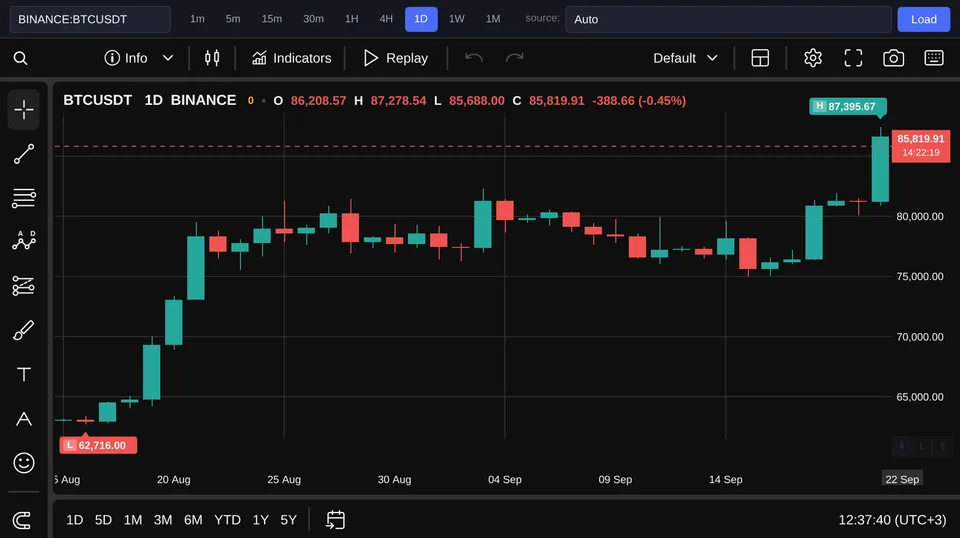
Bitcoin has produced a useful market puzzle. Nearly $2.3 billion reportedly entered spot Bitcoin ETFs over four trading days, including $714.7 million reported for Tuesday, while the rally liquidated roughly $800 million in short positions. Yet Bitcoin is now quoted at $85,846 on Binance, down 0.42% for the day, so the market is no longer strictly holding above $86,000. The question is not whether fresh money appeared, but whether that demand is durable enough to support the price after forced buying has subsided. The distinction matters because ETF purchases and short liquidations can push in the same direction while saying very different things about the rally’s quality. One reflects capital choosing to enter; the other reflects traders being compelled to exit.
The confirmed facts — and what they do not prove
The available facts form a strong but incomplete case. Spot Bitcoin ETFs attracted almost $2.3 billion across four trading sessions, with $714.7 million attributed to Tuesday alone, and approximately $800 million in short positions were liquidated during the advance. Bitcoin recently moved above $86,000, but at the time of writing BTCUSDT is at $85,846 and its daily change is -0.42%. These figures confirm substantial buying pressure and an unusually painful squeeze for bearish traders. They do not establish that ETF demand caused every part of the price increase, that all reported inflows translated into immediate purchases at one price, or that the market has completed a durable breakout. ETF flow totals describe an important source of demand, while liquidation totals describe a feedback mechanism inside derivatives markets. That separation prevents a tempting analytical shortcut: large inflow plus large rally does not automatically equal a permanently higher equilibrium price. Bitcoin still needs to find willing buyers after the urgent buyers—the liquidated shorts—have left the stage. Markets occasionally treat forced buying like an espresso shot: effective, impressive, and not necessarily a balanced breakfast.
Three explanations for the pause near $86,000
The first explanation is constructive: ETF inflows created a dependable demand floor, and the retreat to $85,846 is merely consolidation after a rapid move. A daily decline of 0.42% is modest relative to the size of the preceding impulse, so it does not by itself show that institutional demand has failed. Under this interpretation, the market is digesting gains while available supply catches up with new purchases. The second explanation gives the short squeeze a larger role. As the price rose, bearish positions were closed voluntarily or liquidated, producing additional market purchases and accelerating the move. If much of the rally’s speed came from roughly $800 million of forced exits, momentum would naturally weaken once the most vulnerable shorts had already been removed. The third explanation is that ETF demand is real but is being offset by selling elsewhere. Existing holders may be taking profits, traders may be reducing exposure near a psychologically visible level, or other channels may be supplying coins to the market. No additional number is needed to recognize the mechanism: when billions of dollars in reported inflows do not produce an uninterrupted rise, some combination of opposing supply and reduced marginal urgency must be present.
The strongest working hypothesis is a mixed one
The evidence best supports a combination of the first two explanations, with room for the third. ETF inflows probably strengthened underlying demand, while short liquidations amplified the speed and size of the visible price response. After that mechanical acceleration faded, profit-taking and ordinary sell-side supply became more noticeable, leaving Bitcoin close to—but currently below—the $86,000 line. The demand appears genuine, but the latest rally was probably faster than organic spot buying alone would have produced. This hypothesis explains both sides of the anomaly without pretending that one data series controls the entire market. It accommodates the nearly $2.3 billion of ETF inflows while also explaining why Bitcoin can trade at $85,846 despite such an apparently powerful tailwind. A purely bullish ETF explanation has difficulty accounting for the stall unless it assumes that consolidation is always benign. A squeeze-only explanation has the opposite problem: it understates four consecutive sessions of sizable ETF demand, which cannot sensibly be dismissed as irrelevant. The mixed interpretation requires fewer heroic assumptions and therefore offers the most useful framework until new observations arrive.
What would confirm or overturn the hypothesis
Confirmation requires several conditions to appear together. Net ETF inflows should remain positive across multiple sessions rather than depend on one exceptional day, and Bitcoin should regain and hold above $86,000 without another outsized wave of short liquidations. Price should also respond reasonably well to continued inflows: persistent buying accompanied by stable or rising prices would indicate that available supply is being absorbed. The cleanest bullish signal would be continued ETF demand plus price stability after the liquidation impulse has cooled. That combination would suggest a transition from a squeeze-assisted advance to an organically supported market. A shallow pullback would not invalidate the case if inflows persisted and sellers repeatedly failed to push the price materially away from the current zone. The hypothesis would weaken if ETF flows stalled or reversed while Bitcoin quickly lost the area around its present $85,846 price. It would also deserve skepticism if the next advance occurred mainly alongside another liquidation surge, because that would show continued dependence on forced buying rather than broad demand.
Conclusion
Bitcoin’s pause does not make the ETF inflows fictional, nor does it turn the rally into nothing more than a short squeeze. The more defensible conclusion is that nearly $2.3 billion of ETF inflows improved the demand backdrop, while approximately $800 million of short liquidations supplied temporary acceleration. Bitcoin has demonstrated meaningful demand, but a durable hold above $86,000 has not yet been proved. With BTCUSDT at $85,846 and down 0.42% for the day, the decisive evidence will be persistent ETF inflows and stable price action after forced buying fades. Until those conditions align, the market is testing support rather than confirming a completed breakout.