
Anthropic’s IPO Catalyst Meets Big Tech’s Earnings Test

Intro
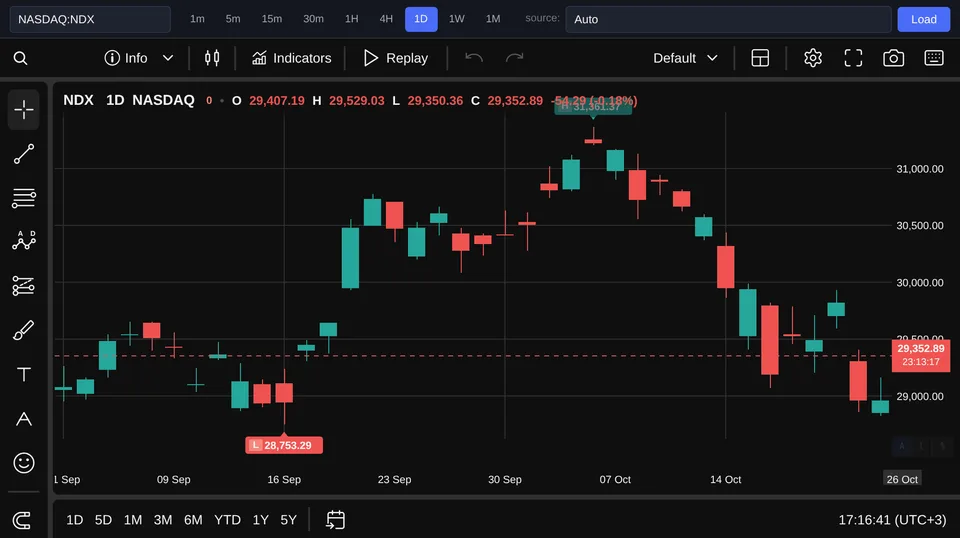
Can the optimism surrounding Anthropic’s IPO filing survive the next earnings reports from Microsoft, Alphabet and Amazon? The supplied market context puts the filing on October 26 and describes support for AI shares despite Anthropic’s disclosure of substantial losses. Yet the accompanying price snapshot is uneven: the Nasdaq 100 stands at 29 368 USD, up +0.32% on the day, while Microsoft trades at 529.2 USD, down -0.63%. That divergence frames the real question: are investors upgrading their expectations for AI profits, or simply becoming more enthusiastic about the opportunity?
What the market snapshot actually establishes
The supplied Reuters context dated October 27 describes expectations of faster cloud growth at Microsoft, Alphabet and Amazon alongside concern about the cost of financing AI investment. These are competing expectations, rather than reported proof that the next spending cycle will earn attractive returns. Anthropic’s losses add a useful complication: enthusiasm for expanding AI adoption can coexist with uncertainty about the economics of supplying it. The index gain and Microsoft’s decline establish uneven performance, not its cause. The Nasdaq 100 aggregates many businesses, so its advance cannot be read as a vote of confidence in every company’s AI strategy. Equally, Microsoft’s daily decline does not establish that investors have rejected its spending plans; positioning, other business developments and broader market conditions could also affect the shares. This distinction limits what the IPO story can explain. The filing may have attracted attention and improved sentiment, but the supplied evidence cannot isolate its contribution to prices. An IPO can ring the opening bell for a debate; it cannot file the earnings reports for everyone else.
Three explanations for the renewed optimism
The first explanation is an attention effect: Anthropic’s proposed listing makes the AI opportunity more visible and encourages investors to revisit related stocks. This would explain enthusiasm without requiring an immediate improvement in expected profits. Its weakness is durability, because increased attention alone provides little basis for assessing future cash generation. The second explanation is a stronger commercial outlook for cloud services. Investors may expect demand for AI training, inference and related services to accelerate revenue at the large providers. This explanation becomes persuasive only when stronger demand translates into revenue on terms that support returns. Busy infrastructure is useful evidence of activity, but it does not establish how much profit remains after operating costs and investment. The third explanation is selective valuation: investors remain interested in AI while distinguishing between companies according to spending requirements, financing exposure and expected cash flow. The divergence between the Nasdaq 100 and Microsoft is compatible with that account, although a single daily observation cannot prove it. These explanations can also overlap: an IPO may draw attention precisely when investors are preparing to discriminate more sharply between business models.
The strongest working hypothesis is about cash returns
Our editorial working hypothesis is that commercial returns will determine the rally’s durability, while the IPO mainly acts as a catalyst for attention. This is an interpretation of the supplied context, not a confirmed account of investor behaviour. It is stronger than the attention explanation because it identifies a mechanism that can support valuations after the initial news interest fades. Cloud revenue is the starting point, but its quality matters alongside its growth. An acceleration accompanied by credible evidence of paid AI usage would strengthen the case that infrastructure spending is meeting commercial demand. General enthusiasm about adoption would provide weaker support if management offered little explanation of how that activity contributes to revenue or earnings. Costs complete the picture because cloud expansion can require substantial spending before the associated revenue arrives. Capital expenditure uses cash, while depreciation and operating expenses affect profitability through different channels and at different times. Consequently, a revenue beat could coexist with pressure on free cash flow; investors would still need to judge whether that pressure reflects productive expansion or a less attractive economic model.
What the earnings reports must show
The first test is cloud revenue against the expectations prevailing before each report, together with management’s explanation of the drivers. Stronger results attributed to paying AI customers would support the commercial-demand explanation more directly than broad statements about interest. Microsoft, Alphabet and Amazon should be assessed individually, since their business mixes and disclosures do not provide identical measures of AI performance. The second test combines capital expenditure, margins and free cash flow with the outlook management provides. Confirmation requires improving evidence of monetisation and a credible path from spending to cash returns. Spending increases would not automatically invalidate the hypothesis, but weaker demand, deteriorating margins and a less convincing cash outlook would undermine the claim that the rally reflects improving business economics. The third test is the market response after investors have absorbed the results and guidance. Sustained gains concentrated in companies showing stronger commercial performance would support our interpretation; sustained gains despite broadly disappointing monetisation and worsening cash prospects would challenge it and favour a sentiment-led explanation. Conversely, strong operating evidence followed by persistent share-price weakness would suggest that valuation, financing costs or other influences deserve more weight than this hypothesis assigns them.
Conclusion
The IPO catalyst can survive earnings season if Microsoft, Alphabet and Amazon provide stronger evidence that AI demand can generate attractive returns after the associated costs. The supplied prices show uneven optimism, rather than a settled verdict on profitability. The decisive evidence will be cloud performance relative to expectations, paid usage, investment requirements and cash generation, followed by the market’s sustained response to those disclosures.