
Neural Networks in Forex: Who Uses Them and Is There Any Point?
Hello, fellow traders!
In the modern world, artificial intelligence, self-learning voice assistants, and Big Data analysis are penetrating deeper and deeper into our lives. Ordinary people most often encounter this in the form of smartphone apps, but the fact remains: neural networks, or self-learning computer systems, are already everywhere, even if we do not see them.
For many years, since around 2006, programmers have been trying to introduce neural networks into trading as well. The idea seems interesting: to adapt trading automatically to a constantly changing market. But how does it work in practice?
Many of us are constantly in search of new strategies and trading tactics in the Forex market. Every system found is subjected to testing over historical periods of varying length. Ideally, testing should reveal patterns that would work over a sufficiently long stretch of time.
In reality, this is an unsolvable task: trading systems "blow accounts" after working from three months to several years. Optimization helps extend their "service life," but in the end one has to look for another approach to the Forex market.
Many explanations are given for the phenomenon of Forex strategies breaking down, but special attention should be paid to one of the reasons that over time can nullify all efforts to earn from currency speculation: the evolution of neural networks. What is it, and how can artificial intelligence affect trading, in today’s material.
When Forex profits were large

Many traders, who run test passes across the entire history of currency trading from the early 1990s to the present, often notice a drop in strategy performance in the 2001-2008 and 2013 periods. They connect the breakdown of trading systems with economic crises, but this is only one of the reasons, and far from the most important one.
The Forex market of the 1990s literally "handed out" money to the first trading participants who installed trading terminals, connected to the Internet, and used fairly simple tactics described in the books of traders from the 1980s. Earnings were not hindered even by time lags, platform bugs, large spreads, or low connection speed to the World Wide Web.
The fight for ping and low commissions from brokers began in 2001, when robots and scalping strategies began appearing en masse in the market, changing the shape of trends. The development of robotics forced market makers to rely more on analyzing the flow of client orders, to "hunt for stops," and to apply various tricks, managing the crowd with the help of automated strategies.
Traders answered in kind: 21st-century trading platforms began analyzing futures order flows and options Open Interest, trading volumes were compared with candlestick analysis (VSA), and programmers and mathematicians "settled in" the market, creating many different advisers.
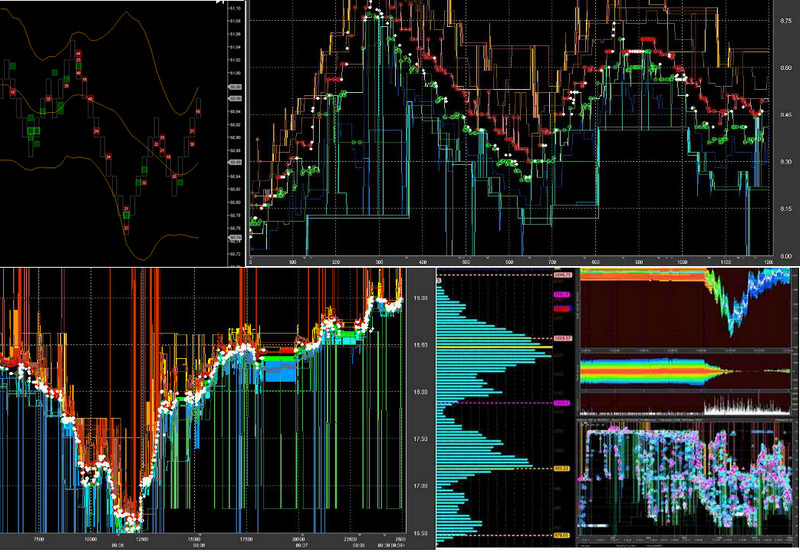
In 2008, strategies went beyond Boolean mathematics: the market began mastering nonlinear indicators and econometrics, which could no longer be "replicated" in standard trading terminals. Unofficial ratings of Forex brokers recorded a drop in client performance at that moment.
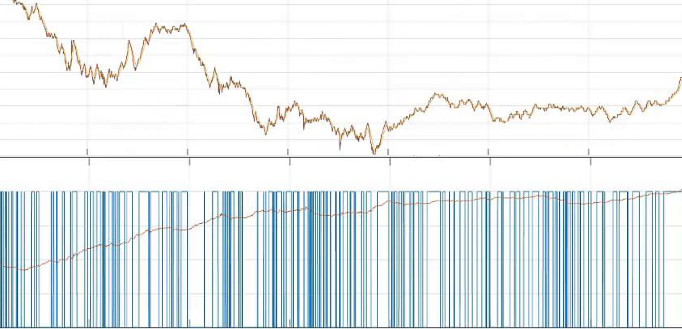
These new approaches have not yet become widespread among traders because of the specific nature of econometrics as a subject, as well as the difficulty and high cost of using analytical software. However, in 2013 another "trouble" appeared: artificial intelligence began actively developing in the Forex market, and it may leave almost no opportunities for manual or automated earnings.
What is a neural network in simple terms

The topic of neural networks "took off" in 2011, and over 8 years it has penetrated all spheres. Now no one is surprised by voice assistants that control "smart homes," facial recognition, and so on.
In the second decade of the 21st century, a medium-complexity neural network beats grandmasters at chess, while a higher-order artificial intelligence is capable of solving complex logical problems. A vivid example of AI’s capabilities is the title of champion in the Chinese board game Go held by Google’s neural robot.
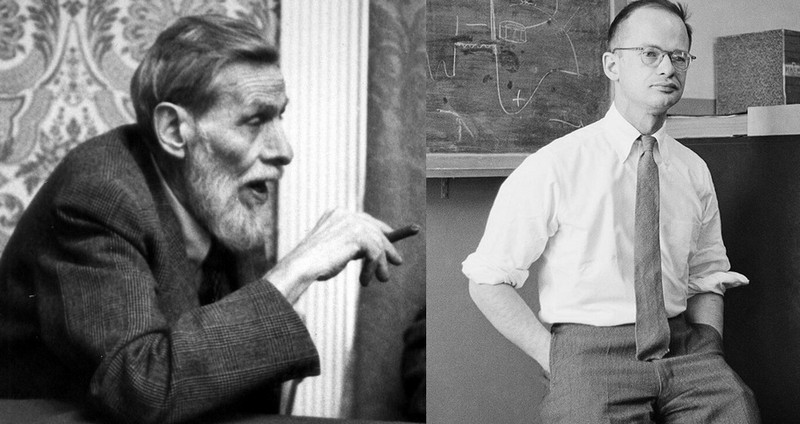
Behind this development stands almost a century of evolution: few people know that the first created neural network will soon turn 80 years old. Thanks to Warren McCulloch and Walter Pitts, scientists began working on creating computations similar to the work of a neuron in the human brain.
Each of them can be assigned its own mathematical operating algorithm, configured to process input data of a certain format. This system of parallel computations is controlled by an output neuron that selects the results of the work in order to fit them to the correct answer.
The answers are provided by a person; this is called the process of training the network, which is a mandatory stage on the path to creating a neural network. The output neuron must strive to build the computation process among the neurons in such a way that, when receiving various input data, it finds the results shown to it by the person.
Setting up or "training" the network before launch is very similar to strategy testing: the network runs computations again and again and uses weighting coefficients to highlight the algorithms most important for the correct answer. The user determines the work of artificial intelligence by the mathematical error report.
Just as in a Forex strategy, when a neural network starts delivering a satisfactory result time after time, a forward test is launched on real but already completed events with a known outcome. If the network passes these trials, it is put to work. At the same time, it is never fully known what exactly and how artificial intelligence will learn: both the result and the process of the neurons’ algorithms inside are a "black box."
I will give two examples. The first comes from the theory of facial recognition. All of us are generally familiar with the process of compiling a composite sketch: selecting lips, a forehead, face outlines, and so on. The neural network solved this task in its own way, and quite simply.
Neurons fill the field of any photo with pixel-sized crosses, whose analysis reveals the boundaries of the image. After blurry areas are removed, counting along diagonals and horizontals begins. It turns out that with such a "measurement of the face," unique sums are obtained that correspond to a specific person, provided scale and proportions are maintained, which are not difficult to determine.
Another curious case often recalled in neural-network training is an attempt by the American military to teach drones to detect military equipment by recognizing its type from the air. Showing many images of planes, tanks, guns, and helicopters taken under different conditions led to AI becoming excellent at identifying weather conditions, but it never learned to look for equipment.
Why is the use of artificial intelligence dangerous in the Forex market?

Neural networks will change currency speculation, and brokers may return to tactics somewhat similar to dealing-desk "bucket shops," only on a global scale. The virtually limitless capabilities of neural networks can be used against the crowd by forecasting not currency rates but the behavior model of each individual trader. Market makers and prime brokers will be able to pick counter-strategies by hunting stops, widening spreads at the moment orders are sent to the market, and placing phantom volumes in order books in advance rather than after the fact.
The neural network designed and launched by startup Sentinent Technologies can already emulate 1800 working sessions, forecasting with high accuracy up to a trillion (!) cognitive behavior models of real traders. The system was trained on order flows taken from the order books of exchanges and broker servers.

The quality and quantity of data are the key to successful neural-network training; archives of tick trades, broken down by specific accounts, are the hottest commodity on the data-mining market. This term names a separate industry that extracts, analyzes, and formats the primary input information for a neural network.
Another pillar determining the success of the system is the number of neurons in the "black box." The higher it is, the more computing power is required, which has gone beyond standard CPU processors. Neural-network designers and creators use chips made to order on special integrated circuits. The idea was borrowed from cryptocurrency miners who mine Bitcoin and other coins on ASIC equipment.
Even if brokers fail to study the behavior model of traders and successfully play against crowd strategies, they will create top-class forecasting systems that can no longer be replicated in trading terminals. Modern trading systems operating in the markets of stocks, commodities and currencies read and understand news and recognize patterns, that is, they represent an analyst with the brain of a supercomputer. This is how, for example, the robot Emma works.

Some companies use traders directly to teach the machine the most successful strategies that have passed competitive selection. The company Numerai runs constant tournaments, not hiding its goal and even offering winners permanent dividends proportional to their contribution to the neural network’s overall trading system.
Mark Lind from IBM’s department that designs and launches neural networks for corporate orders especially noted the "neuro-boom" at the end of 2017. More than 90% of the networks raised by the IT giant in the economic sector were related to forecasting exchange rates in the currency and stock markets.
The systems practically did not use technical analysis, working with real goods-and-money-flow data, analyzing the business press and financial indicators, production data, political news, product-quality reports from independent experts, and even the weather. IBM’s neural-network algorithms did not so much forecast market prices as study the crowd’s reaction to certain fundamental news and indicators, which were reflected not only in the market but also in social networks.
This trend proves the thesis that companies are studying not the behavior of the market so much as the crowd’s reaction to events, some of which can be predicted, learned through insider information, or caused by indirect manipulations unrelated to trading. In that case, Regulators will have no reason to punish large companies.
Artificial intelligence in large investment funds and banks

One of the first companies to use artificial intelligence to forecast market movements was Renaissance Technologies, a company run by talented mathematicians who deliberately hire employees with zero knowledge of trading and technical analysis.
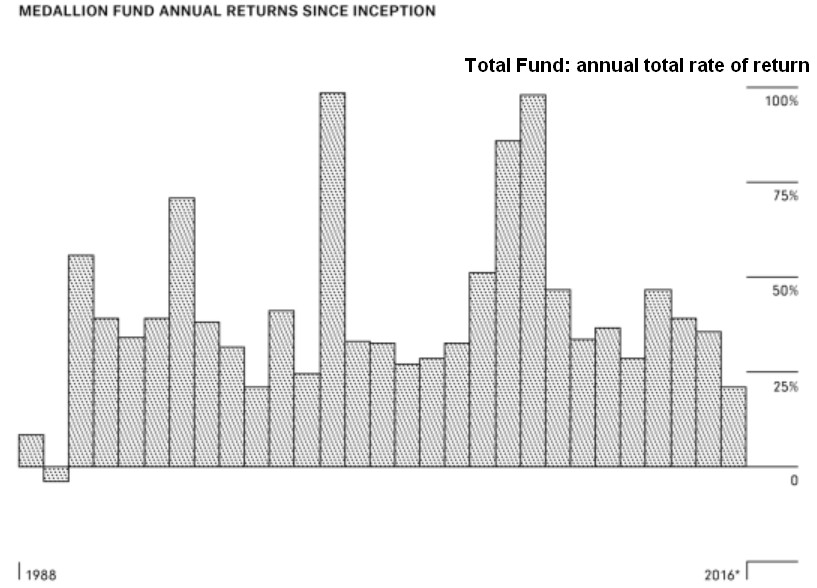
The company is distinguished by low staff turnover, and its employees were able to create the fully robotic Medallion fund, which showed an average annual return of 35% over 20 years of managing investments.
The most radical replacement of traders by artificial intelligence took place at Goldman Sachs: the "talent forge for the State Department" reduced its staff by 99%.
The world-famous investment company BlackRock entrusted up to 10% of all portfolios to the Aladdin neural network and conducts a total audit of all decisions made by the company’s analysts. This decision was made after a decline in income in 2018. The fund noted the successes of competitors from Asia, where a neuro-boom in investments is now underway; on the Hong Kong exchange, Aidyia Limited, a hedge fund fully managed by AI, has been operating successfully for several years.
How is artificial intelligence changing trust management?

The neural network has replaced investment advisers, personal managers, and trust managers. Startups and large companies have for several years now been offering such assistants, capable of adapting 100% to each specific client. The neural network studies their preferences and habits in order to individually select the level of risk and the composition of the portfolio, suggest suitable markets, and optimal money management.
Such assistants are being developed for BlackRock by the startup FutureAdvisor, tested by Motif Investing in partnership with JPMorgan, and created by UBS on the basis of SigFig.
According to McKinsey research and surveys, focus groups of investors following the advice of neural advisers outperform the average result in the trust-management market of "live" analysts by 7% per year.
In addition to robots from banks and large brokers, a separate line of business has appeared in the financial-services market for creating turnkey neuro-strategies, for example, Binatix. There is also an entire field of data-mining services: providing information for neural networks formatted for any specific market, as in the case of the startup BUZZ Indexes.
In the Russian market, the company BCS uses neural networks to manage stock portfolios. The robots bring investors returns of 30 to 70%, outperforming the benchmark represented by the S&P index.
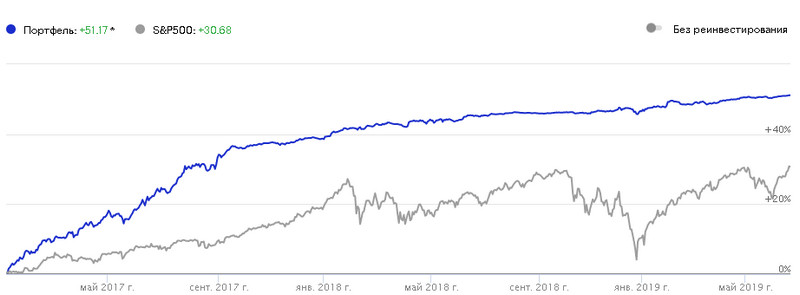
Robo-advisers designed on neural networks have been launched in the investment services of Yandex.Money (Yammi) and Tinkoff Bank. The stated and projected return on investments is a double-digit figure. It is difficult to verify because of the short operating life of the platforms, which is only a little over a year.
How to create your own neural network?

Forecasting the Forex currency market with artificial intelligence is available even to "mere mortals." Neural networks have been participating in various championships in algorithmic trading held by international broker associations since 2008.
You can assemble your own strategy on specialized platforms: neuroshell, matlab, statistica, deductor, or brainmaker. Traders with knowledge of a programming language can use special services from Google, Microsoft, Amazon, and so on.
To simplify as much as possible the complex processes of training a neural network and selecting input data, a trader can use various templates and applications assembled like a block-based strategy builder.
Conclusion

The first wave of interest in neural networks washed over Forex in 2006-2008. The economic crisis and the lack of input data significantly thinned the ranks of enthusiasts. Traders and companies were still unable to show long-term stable results that could justify the high cost of neural-network trading platforms. The second wave, which started in 2011-2012, led to the release of finished products in 2016-2018, which have not yet had time to show results objective enough for evaluation.
Companies advertising neuro-advisers and funds managed by neural networks hide profitability charts; many PAMM accounts launched at Alpari on neural networks had already been blown by the time this article was written.
Given the scant or even complete absence of profitability results for neural networks (across the entire myfxbook service there are five systems, 4 of which are already closed), along with the successes of artificial intelligence in other areas, one can assume that this topic is still used only by large brokers and exchanges.
Forum topic
Best regards, Alexey Vergunov
Tlap.io
