
Forex: from the real world to margin trading
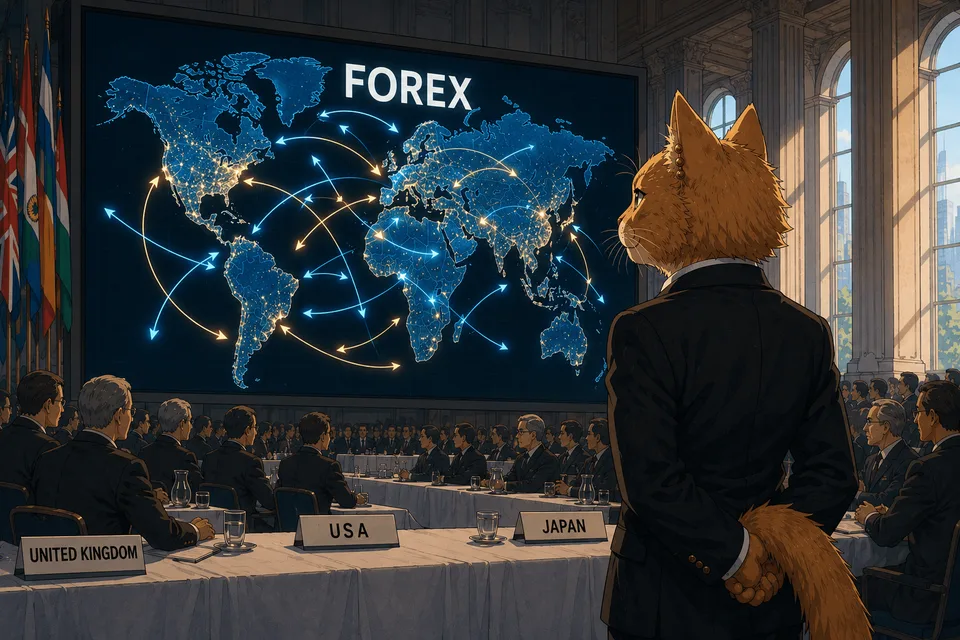
Forex (Foreign Exchange, FX) is the largest financial market in the world, with daily turnover exceeding 7 trillion US dollars.
It might seem that everyone has heard of Forex, but not many understand what it actually is. In this article, we will examine the basic concepts, history, operating mechanisms, and key Forex instruments.
What Forex is in simple terms
Forex (Foreign Exchange, FX) is the international currency market where one currency is exchanged for another. This is where banks, international companies, investment funds, governments, and other participants carry out millions of currency buying and selling transactions every day.
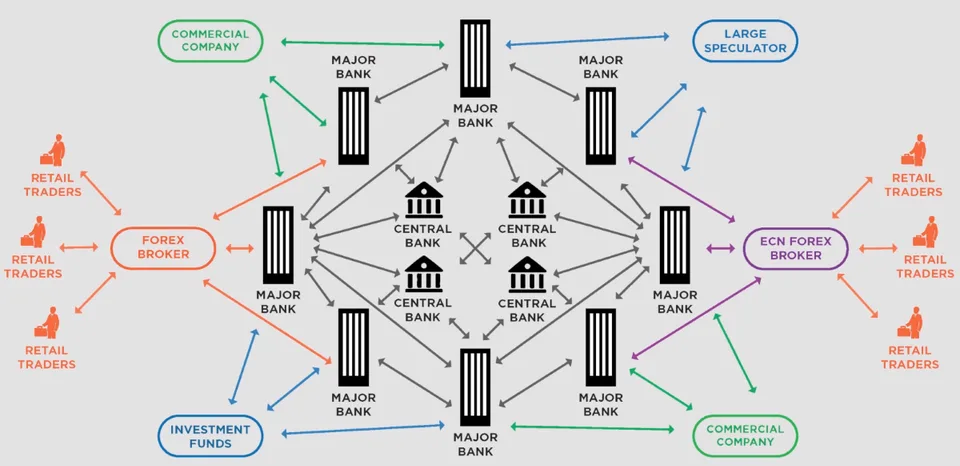
Unlike a stock exchange, Forex has no single trading center. It is a decentralized over-the-counter market (OTC) that connects the largest banks and financial institutions around the world. Thanks to this, trading runs almost around the clock, from the opening of the Asian session on Monday to the close of the American session on Friday.
However, the Moscow Exchange, for example, has a currency section where real currency is exchanged directly. And this is also part of the global Forex market.
According to the Bank for International Settlements (BIS), the Forex market is the largest financial market in the world. Daily trading volume exceeds 7 trillion US dollars, which is significantly more than the turnover of global stock exchanges.
When Forex appeared
Although currency exchange has existed for as long as money has existed, the modern Forex market emerged in the early 1970s. The key event was the decision by world powers to abandon the Bretton Woods system of fixed exchange rates, under which national currency rates were rigidly pegged to the US dollar, and the dollar to gold.

In 1976, the Jamaican monetary system was adopted, formalizing the transition to floating exchange rates. From that moment, exchange rates began to be determined by the market, by the balance of supply and demand, rather than being set by the state. This led to three important consequences:
Importers and exporters were forced to become regular participants in the currency market, since exchange rate changes began to directly affect their financial results.
Central banks gained the ability to influence national currency exchange rates, thereby affecting the economic situation in their countries.
Exchange rates began to be formed based on the market equilibrium between supply and demand.
The role of Forex in international trade
Without the currency market, the modern global economy could not function.
Forex makes it possible to:
pay for imports and exports of goods;
carry out international money transfers;
invest in foreign assets;
service international loans;
hedge currency risks using derivative instruments;
support the global financial system.

The main task of the currency market is to ensure the international exchange of currencies.
Let us imagine a situation: a Russian company buys equipment in China. To pay for the shipment, it needs to exchange rubles for yuan. To do this, the importer either buys yuan from a bank (OTC) or places an order on the Moscow Exchange.
Floating exchange rate
A floating exchange rate is an exchange rate regime in which the value of a national currency is determined mainly by market supply and demand. In other words, the rate changes depending on how many market participants want to buy or sell a particular currency.
For example, if demand for the US dollar rises while supply remains the same, the dollar's exchange rate against the ruble, euro, or another currency usually increases. If demand falls or the supply of dollars increases, the rate generally declines.
Unlike a fixed exchange rate, under which the central bank maintains a certain exchange rate value or a narrow range, under a floating rate daily fluctuations are a natural part of how the currency market operates.
The value of a currency is simultaneously influenced by many factors:
the inflation rate;
central bank interest rates;
the pace of economic growth;
the state of the country's balance of payments;
export and import volumes;
global commodity prices;
geopolitical events;
expectations of financial market participants.
What a floating exchange rate provides

A floating rate acts as a "built-in stabilizer" of the economy. This is its key advantage over a managed (fixed) rate.
When the national currency weakens, prices for export goods fall for foreign buyers — this makes domestic goods more competitive on the global market and offsets negative external shocks.
At the same time, imports become more expensive, which stimulates import substitution and supports domestic producers in the internal market.
When the currency strengthens, imports become more affordable, which limits the risks of the economy overheating. Russia's experience confirms this: the fall in GDP in 2015 (due to the collapse in oil prices and sanctions), in 2020 (the pandemic), and in 2022 (large-scale sanctions) was smaller than during the 2008–2009 crisis, when a different exchange-rate formation regime was in effect.
How the Central Bank regulates a floating exchange rate
A floating exchange rate does not mean the central bank has no involvement at all. Many countries use a managed (or regulated) float regime, under which the exchange rate is formed by the market under normal conditions, but the central bank can intervene if it considers this necessary.
A floating exchange rate gives the central bank the ability to conduct independent monetary policy aimed at domestic objectives — first of all, reducing inflation. This is a necessary condition for an inflation-targeting regime.
Under normal conditions, the central bank does not carry out foreign exchange interventions in order to influence exchange-rate dynamics. This is the fundamental difference between a floating exchange rate and a managed one. However, the regulator reserves the right to conduct foreign-currency operations to maintain financial stability.

Central banks use several main mechanisms.
1. Changing the key interest rate
This is one of the most important monetary policy tools.
If the central bank raises the key rate, loans become more expensive, while the yield on financial instruments in the national currency may rise. This often increases investors' interest in assets denominated in that currency, which can increase demand for it and support the exchange rate.
A rate cut, conversely, may weaken the appeal of the national currency and put pressure on its exchange rate. However, the final effect depends on the overall state of the economy and the expectations of market participants.
2. Foreign exchange interventions
If exchange-rate fluctuations become too sharp, the central bank may enter the foreign exchange market. For example:
by selling foreign currency from international reserves, it increases its supply and may reduce pressure on the national currency;
by buying foreign currency, it increases demand for it and at the same time replenishes international reserves.
Interventions are more often used to smooth sharp fluctuations, rather than to constantly hold the exchange rate at a certain level.
3. Communication with the market
Statements by the central bank's leadership, publication of forecasts, monetary policy decisions, and economic reviews can also influence the expectations of market participants.
If investors understand what the further course of monetary policy will be, this in itself can change demand for the national currency.
4. Regulation of the banking system and the foreign exchange market
In certain cases, the central bank may apply macroprudential regulation measures or temporary restrictions aimed at maintaining financial stability. The specific set of instruments depends on the country's legislation and the prevailing economic situation.
What forex trading is
Confusion in people's minds: forex and the foreign exchange market
In the English-speaking environment, the word Forex (or FX) refers to the currency market as a whole — the entire set of currency exchange operations.
However, in Russian, the term “Forex” is usually used in a narrower sense — it most often means speculative currency trading through commercial banks or dealing centers using leverage (margin trading).
Thus, the currency market means the space where currencies are exchanged (including operations by central banks, corporations, tourists, etc.). But forex in the Russian-language sense is the part of the currency market where private traders and investors trade currencies for profit, using leverage and not expecting currency delivery.
In general, when economists talk about the Forex market, they mean the entire global currency exchange system. When traders say “trade on Forex,” they usually mean trading through a forex broker to profit from changes in exchange rates.
Forex Trading With Brokers
Forex trading is trading on changes in exchange rates through a specialized broker.
Access to currency market quotes is provided by a forex broker. A reliable broker provides a trading platform, connects traders with liquidity providers, and processes orders.
Reliable forex brokers include: Roboforex, Alfa Forex, Alpari, Tickmill, FxPro, AMarkets, Forex4you.
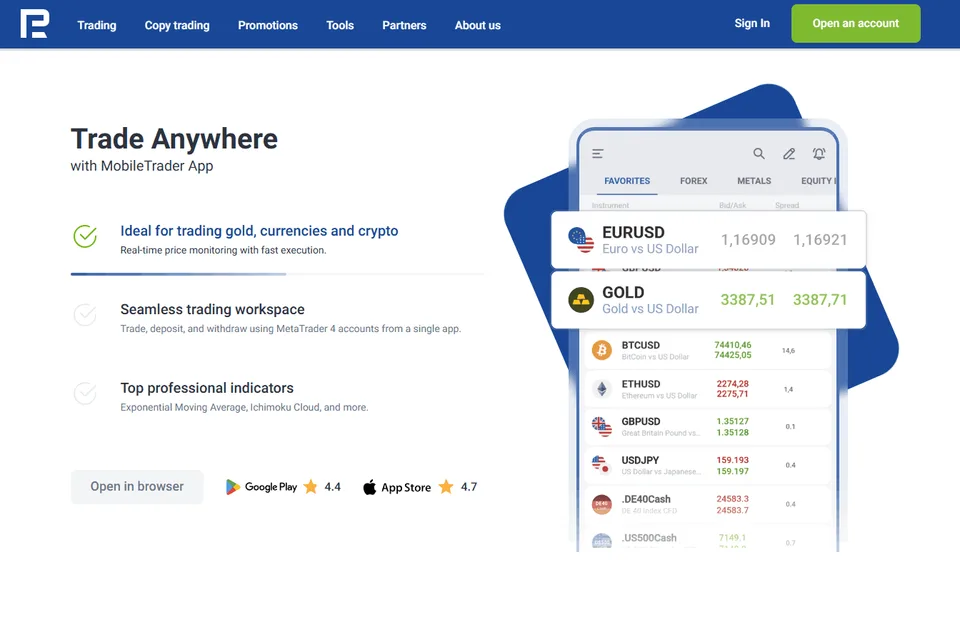
It is important to understand that most private traders do not buy real dollars or euros. As a rule, they open speculative positions on changes in the value of currency pairs.
For example, a trader forecasts growth in the EUR/USD rate and opens a long position. If the forecast proves correct, the broker records a profit. If the rate declines, a loss occurs.
In many cases, trading is conducted through contracts for difference (CFDs) or similar derivative instruments. Their terms depend on the jurisdiction and the operating model of the specific broker.
Therefore, trading with a forex broker is not direct participation in the global interbank currency market.
Beginners should also remember the risks of using leverage. It allows opening positions for amounts significantly exceeding the size of one’s own funds, but at the same time increases both potential profit and possible losses.
Forex Futures on CME
CME Group (Chicago Mercantile Exchange) provides the world’s largest regulated venue for trading currency futures.
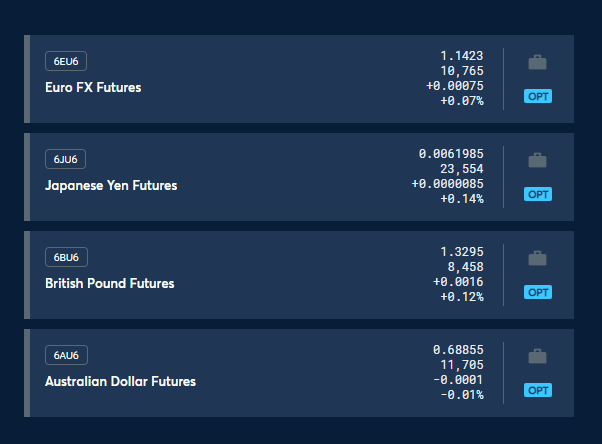
A deliverable currency future is a contract to buy or sell a certain amount of currency at a pre-agreed price with settlement in the future.
A non-deliverable currency future is a contract to buy or sell a certain amount of currency at a pre-agreed price without delivery of the currency.
Key features of CME futures:
Transparency: open and understandable pricing, equal access to the best price for all participants.
Regulation: clearing (settlements) takes place through the CME clearing house with high safety standards.
Liquidity: CME offers futures and options on major currency pairs with narrow spreads.
Flexibility: contracts with monthly and quarterly expiration dates are available.
CME FX Link: a special mechanism linking the over-the-counter Forex market with exchange-traded futures.
Trading on CME is conducted 23 hours a day.
CME trades futures on the euro, British pound, Japanese yen, Swiss franc, Canadian dollar, Australian dollar, Mexican peso, and other currencies.
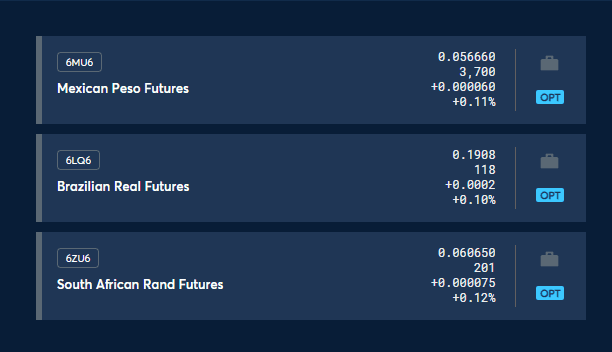
The advantages of exchange trading are considered to be transparent pricing, centralized clearing, unified trading rules, and a high level of regulation.
Currency Instruments on Crypto Exchanges
Some cryptocurrency exchanges (such as MEXC, Binance, BTCC) also offer derivative instruments linked to exchange rates or stablecoins.
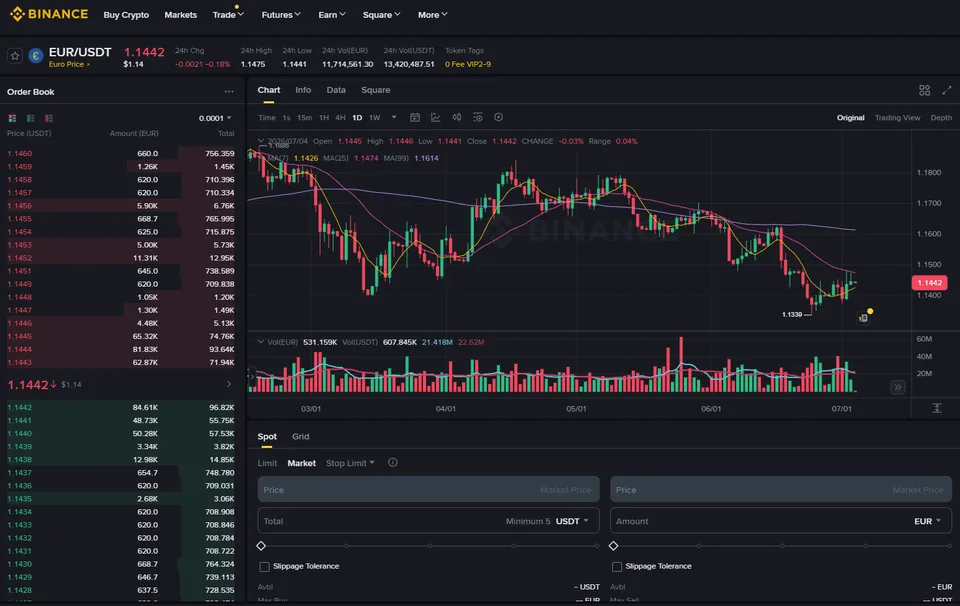
However, such products differ from classic currency futures traded on regulated exchanges. Their terms are determined by the trading platform itself, and the level of regulation can vary significantly depending on the jurisdiction.
Before using such instruments, it is necessary to carefully review the rules of the specific exchange and assess the related risks.
Useful Forex Indicators
For quick orientation in exchange rates, the TLAP website has several simple, but extremely informative tools for forex market analysis.
For determining:
currency strength — currency pair strength indicator ;
dynamics — currency heat map ;
volatility — currency volatility indicator ;
currency correlation — correlation indicator .
It is also worth noting the availability of online currency charts on the TLAP website.
Currency Pair Strength Indicator
The Currency Pair Strength Indicator (Currency Strength Indicator) is a TLAP analytical tool that assesses the relative strength of each currency in relation to others.
Unlike analysis of a single currency pair, the Currency Strength indicator considers several instruments at once.
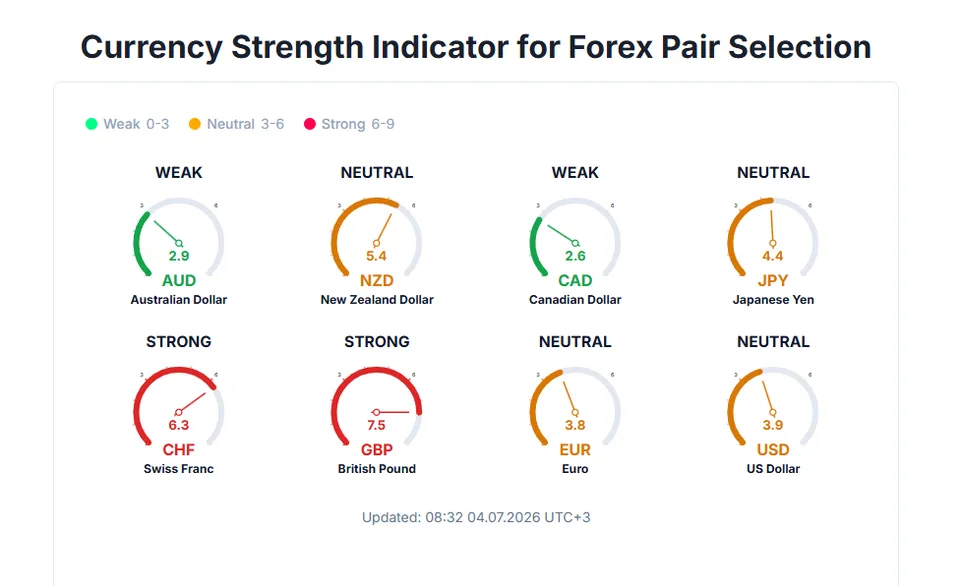
For example, if the euro simultaneously strengthens against the US dollar, Japanese yen, British pound, and Swiss franc, the euro strength value increases.
The currency pair strength indicator helps to:
find the strongest currencies;
identify the weakest currencies;
look for pairs with high movement potential.
Forex Currency Heat Map
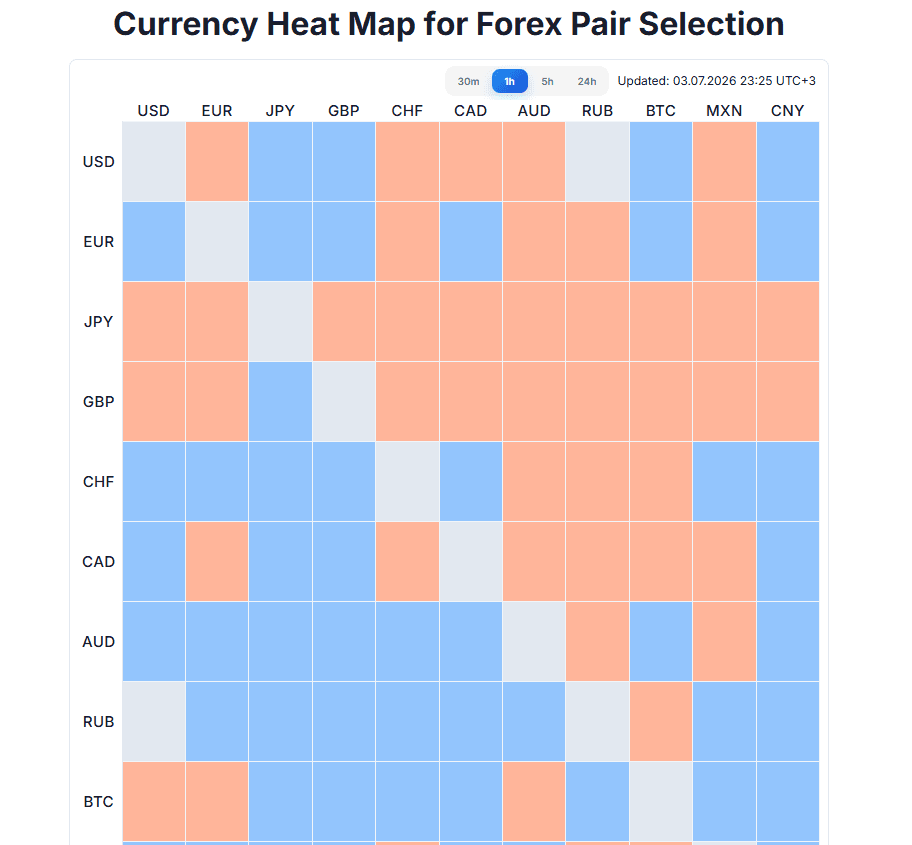
The Forex Currency Heat Map (Forex Heat Map) is a tool for visual analysis of the currency market. It shows which currencies are strengthening and which are losing value relative to the opening of the trading period (M30, H1, H5 and Day). The TLAP forex currency heat map uses the following colors: blue — above the close, but below the high;
pink — below the close, but below the low;
gray — unchanged.
The currency heat map lets you assess the overall market situation in a few seconds without analyzing dozens of separate charts.
Volatility Indicator in Forex
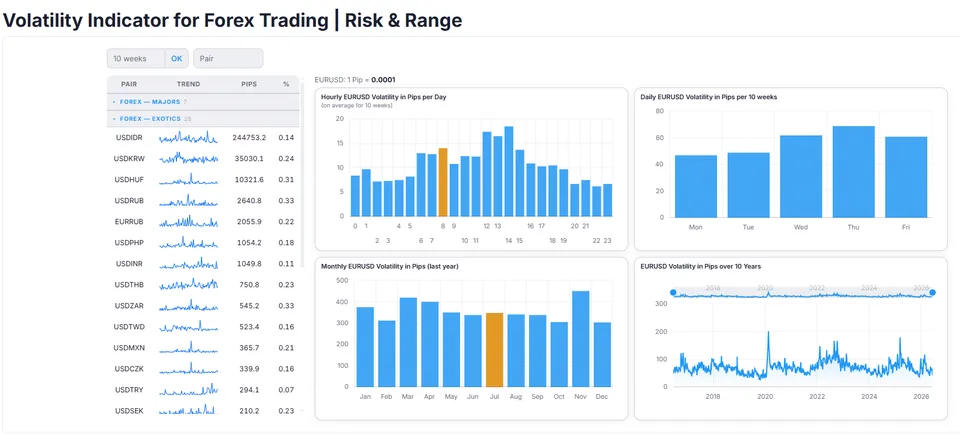
The main advantage of the TLAP volatility indicator is that it provides the ability to evaluate short-term hourly, daily, and monthly volatility in points over a specified period of time (in weeks).
Additionally, the TLAP forex volatility indicator shows monthly volatility for the previous year and for 10 years.
Currency Pair Correlation Indicator
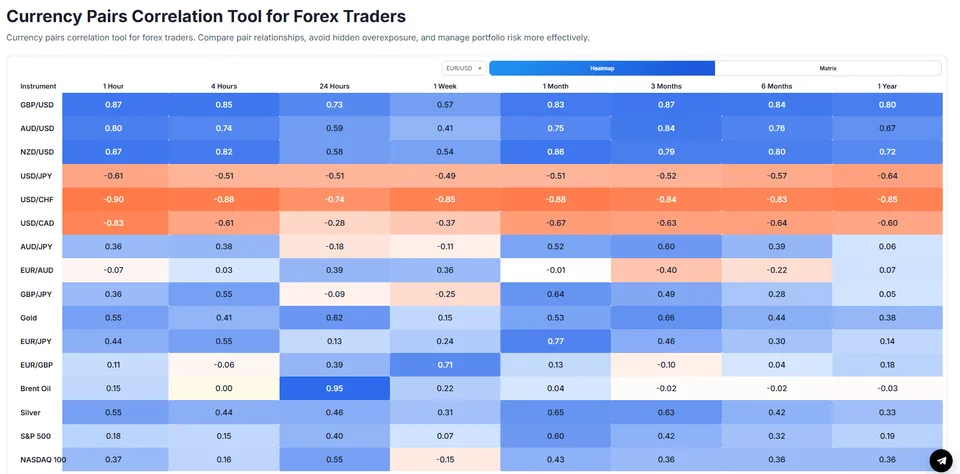
The currency pair correlation indicator shows the correlation of currency pairs over time (from an hour to a year). It also allows you to evaluate the correlation of individual instruments with each other as a matrix.