
Unexpected Observations About Trading Over 10 Years

Exactly 10 years ago, on March 11, 2011, the TradeLikeaPro.ru website (now tlap.io) began its work. A lot of water has passed under the bridge since then, but we are still with you.
In honor of the anniversary, a stream (webinar) was held in which I shared with you interesting and at times unexpected observations about trading and traders that especially stayed with me over these 10 years.
Shocking Observations About Trading
Ten Years
Hello, fellow traders!
Our trading project in the Forex market turned 10 years old! TradeLikeaPro took place thanks to your active support of the site and work on the forum, participation in creating material, its discussions, and in the development and testing of trading systems.
The past 10 years are a reason to compare the theory of trading on Forex with practice, and to share my unexpected observations on which things work and which dogmas bring questionable benefits when they are used.
Trading Against the Trend

One of the main principles of market theory calls on traders to trade with the trend. Ten years of observations of the Forex market show that the main mass of participants trade in the opposite, counter-trend direction.
This issue is examined in more detail in a recent article on the site, which describes a trading strategy "against the crowd." A prolonged rise or fall of a currency causes most traders to become convinced of an imminent reversal of the trend. Instead of fearing a loss, they are driven by the desire to enter at the top or bottom of the market.
Any minimal correction of a strong trend leads to a wave of crowd trades, driven by the fear of being late for the reversal. In reality, the next wave of buying or selling in the direction of the main and obvious trend knocks them out of the market.
Observations of the indicators described in the article from the American broker OANDA, reflecting the open positions of traders, proved the consistency and systematic nature of this mistake. Do not be the crowd, follow the main trend. Do not operate with the concepts of a high / low exchange rate.
It is better to build a strategy on this knowledge or find a profitable trading system that follows major trends. In this case, a higher timeframe and proper money management guarantee the trader long-term profit.
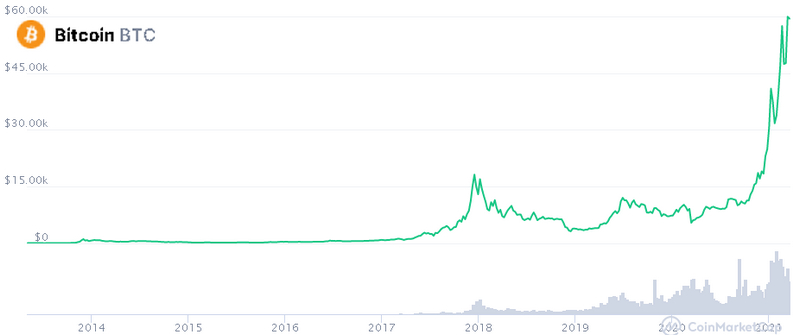
Bitcoin is a vivid example of the uselessness of arguing with an obvious trend. You can have different attitudes toward cryptocurrencies, but over 12 years the value of BTC has risen to $59 thousand. The increase in value was accompanied by constant expectations of a fall in the digital asset, accusations of being a bubble and of insolvency. Now the volume of Bitcoin has grown to 10% of the world's gold reserves, exceeding the money supply of the ruble and the South Korean won.
Martingale and Grids Rule in Forex

Grid strategies, the averaging of a losing position or martingale, which provides for increasing the volume of such trades, are considered by many to be unacceptable methods of working in the Forex market. On the TradeLikeaPro site, almost all of the first articles about advisors were supplied with such warnings.
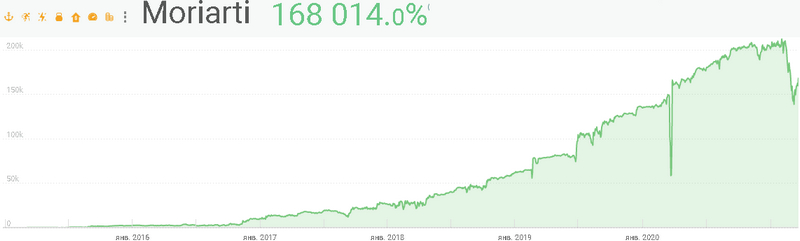
Talented programmers and traders from our forum were able over these 10 years to prove that with the right attitude toward such strategies, it is possible to obtain stable profitable systems. For example, here is a list of the best Forex advisors in 2021 with performance results, which included robots using martingale. In the site section Robotest there are grids with a duration of profitable operation of more than five years.
The tactic of averaging works only in the Forex currency market, which unlike stocks and cryptocurrencies is prone to returning to the mean, to trading in wide ranges. This gives traders the opportunity to bring trades to break-even on pullbacks thanks to increasing and averaging the total position.
How much of an averaging element can be introduced into one's strategy is something everyone decides independently for themselves. If someone plans to switch completely to automated martingale, our site and forum have many articles on this topic, where both simple and very complex advisors are posted for free.
As for the extent to which grids and martingale are widespread in the Forex market, these strategies can be seen among most managers of the PAMM accounts service, including those occupying the top places in the ranking. Averaging is also used by traders of large prop companies, judging by the testimony of the talented Tom Dante.
Professional market makers in stock markets enter only with the help of order grids. This is a standard tactic for building a position, excellently and vividly described in the book "Reminiscences of a Stock Operator".
Strategies That Were Profitable Earlier Can Become Profitable Again in 2-5 Years

Night scalping is one of the most popular strategies, allowing traders to make money in the sideways market that arises because there are no large players on the Forex market at this time. Ten years of observing expert advisors that support this tactic show periodic declines and surges in this strategy.
A vivid example is the observation of two different strategies: the breakout strategy, based on pending orders above/below the trend direction, and trading in overbought/oversold zones to catch a pullback.
At the beginning of the year, as after any local crisis, "breakout" strategies bring decent profit because of increased volatility and the number of impulse moves. Right now, as the crisis begins to fade, the "All-In" strategy has started working, although some time ago it was useless.
You should not abandon an expert advisor that has been bringing the trader stable medium-term profit. If the strategy's performance worsens, it can be moved to a cent or demo account. By watching the trading statistics, the changes can be seen in a year, two, or three, and after that the robot can be moved back to the main account.
Trading Psychology Is Not What You Think

Ten years of observing the forum have shown that users pay the least attention to published articles on trading psychology. However, the content on this topic usually touches only on the emotional component (fear, greed, etc.) and discipline.
In reality, "childhood" psychological attitudes can interfere with working in Forex and even with developing your own business. From an early age, the topic of money and earning is associated with something bad, which ultimately leads to subconscious barriers.
Such "childhood attitudes" can make a trader feel ashamed of profit. In his view, earnings "cause pain" to trading opponents who lost money; another possibility is that the trader does not believe in strategies with high profit. This is a general example; each of us was raised differently and has personal phobias that can interfere with profitable trading in the Forex market.
Of course, they cannot be described and accounted for in books on trading psychology; moreover, a trader is not always able to identify them independently, because many of these attitudes form the foundation of his worldview. However, they influence how he places trades, takes profit, sits through positions while ignoring the stop, and so on.
A step-by-step method by Dr. Caroline Leaf will help you tune in to positive work and get rid of the "harmful" psychological aspects that interfere with trading. It is described in a book whose Russian-language edition is titled "Switch On Your Brain."

The author's "five steps" consist of the following stages:
A trader may expect every trade to close by stop, becoming emotionally exhausted after each entry. He may not realize these negative expectations, but the body will be tense and the movements constrained;
A trader should use questions asked to himself to understand the causes of this tense state. For example, if the strategy is profitable, it is necessary to realize the low probability of a negative outcome for each trade. If the trader is in a state of euphoria, having, say, received three profits in a row, he needs to remind himself about the possibility of taking a loss so that a triggered stop-loss does not drive him crazy;
In the example above, the trader should achieve the absence of anxiety that the stop will be triggered.
This exercise is discussed in more detail in any of Caroline Leaf's books.
You can also watch a very interesting interview with her, where this exercise is also discussed:
Everything That Has Ever Happened to the Markets Will Happen Again

The talented journalist Edwin Lefevre, whose name became widely known thanks to his work "Reminiscences of a Stock Operator".
However, he has another, lesser-known but also very interesting book, "Wall Street Stories," in which he described in detail the stock exchange of the late 19th and early 20th centuries. Even after more than a hundred years, reading this work makes it easy to find parallels with the present day not only in Forex, but also in the cryptocurrency market, which was hard to imagine in those years.
Such a work is interesting to read when a trader encounters an unfamiliar market situation. For a beginner, this knowledge will help compare theory and practice. The market's behavior during a global economic crisis can be understood by studying previous downturns.
In principle, the very existence of candlestick analysis, chart patterns, and various patterns proves that everything happening to the market now will repeat itself many times in the future.
Fundamentals Deserve Attention

An extremely strong fundamental factor "switches off" trading strategies.
For example, Germany's unexpected decision not to help Cyprus with its debt in 2013, made on a Sunday, dropped the euro by 200 points on a gap on Monday. In January 2015, the Swiss National Bank unpegged the franc from the euro, which led not only to a rise in the rate of this currency, but also to the formation of volatility in the major currencies, knocking out quite a few stops.
Fundamental news must definitely be taken into account when trading on the Forex market. These include periodic data such as interest rates, GDP, unemployment, etc., as well as important political events such as the Brexit referendum, elections in developed countries, and others.
These events set medium-term or long-term trends that can only be canceled by an equally global change in direction. For a trader, this knowledge will help build a profitable strategy capable of generating steady income for a long time.
In fundamental analysis, there is no need to understand things in depth; the driving factor will be described in all the news. Until it disappears, the market will not change direction. At the time this article was written, the main topic of each day was the rise in short-term Treasury yields. They had risen above crisis levels, providing a medium-term trend toward a stronger dollar.
No robot can trade fundamentals and market sentiment

The capabilities of trading robots are limited by the mql language, which uses the simple mathematical apparatus of Boolean logic. If the description of an advisor for Metatrader contains the words "neural network" or "artificial intelligence", then at best it is a marketing gimmick, and at worst an attempt to sell a system with nonexistent characteristics.
In the mql language, it is impossible to program functions that cannot be repeated in manual trading with the help of technical indicators, and it is certainly impossible to teach an advisor to "see" market sentiment or "understand" fundamentals.
Profitable trading goes against our feelings

Many years of Forex market statistics show that traders on average sit through losses twice as long as they hold current profit. They prefer to lock in profits quickly, not allowing price to reach the set targets.
Changing this philosophy is the key to success. Cut stops quickly and let profits grow to the level predetermined by the strategy. Small players do not know how to hold on to profit, which is proven by cryptocurrency market statistics.
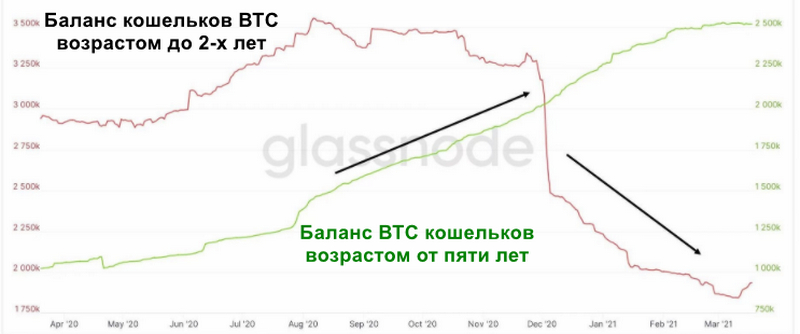
Throughout December 2020, traders holding wallets from one year to two years old were actively selling Bitcoin, reducing their deposit. During that time, the cryptocurrency rose from $30 thousand to $59 thousand. Now pay attention to the balances of wallets five years old and older. They are growing rapidly together with the price of BTC.
All strategies have already been invented in one form or another

The probability of finding a new strategy is too small; in the second century of exchange trading, traders have gone through and tested a significant number of trading system variants. By the way, among them there is no grail with 100% positive entries, but that does not mean you will not be the one to find it.
In most cases, everything comes down to "reinventing the wheel." Is it not easier to use existing developments without spending time on the search? The second option is to trade without indicators based on market information.
The site contains data on traders' open positions and stop-losses from broker OANDA, based on which you can open trades against the crowd.
When a strategy goes public, it really does work worse

Ten years of observations of the site show that automated trading systems (advisors), after an article with a description and distribution appears on the main page, reduce the profitability of the strategy.
It is difficult to give an exact explanation for this; the reason is far from the mass use of the algorithm. Not that many people install a robot posted on the TLAP site. Perhaps the "blame" lies with market-maker algorithms adapting to the stops of the new strategy.
The only advice on how to get rid of the "public effect" is to focus on evaluating the advisor's performance over a long period of time. Many traders, on the contrary, judge the effectiveness of a robot's work over a period of one to three days.
Trades need to be waited for, not searched for

Any strategy generates an uneven density of trades. During periods when they are absent, the trader begins to look intensely for entries, breaking the rules or inventing signals. Sometimes they close in profit, but that is the exception; in the medium term such searching only increases the strategy's losses.
The most profitable trades are usually the most obvious ones, requiring patient waiting instead of active searching. A trader simply will not be able to pass by without opening such a position.
Income does not depend on the amount of effort

Trading profitability depends on a correctly chosen and tested strategy and money management, which can be found by spending not so much time studying theory. A working strategy can later generate profit for quite a long time, and the trader will not have to make great efforts.
This violates the usual postulates of proportionality between effort and reward for work. In the financial market, this is not so. Remember the Winklevoss brothers, who managed to get compensation from Mark Zuckerberg, investing those millions first in Facebook shares and then buying Bitcoin many years ago.
Buying promising assets made them billionaires, but they earned that money simply by holding a position in the rising Bitcoin.
You Must Have Income Independent of Trading

Betting that income from trading will cover everyday needs is a mistake. Most leading and talented traders had a side source of steady income. Larry Williams sent out paid forecasts in newsletters, which he is still doing now, and Jesse Livermore opened a deposit and received interest like a rentier.
When coming to the Forex market or speculating in other instruments, a beginner should satisfy as many needs from Maslow's hierarchy as possible. Ideally, satisfying all levels will allow you to invest money in long-term projects.
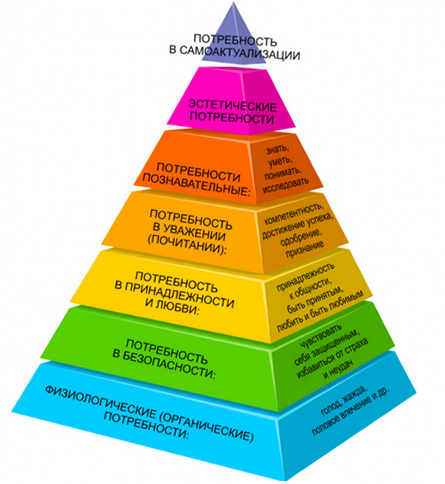
In the example above, the Winklevoss twins refused cash compensation, taking Facebook shares instead, which could not be obtained until the company went public in its IPO. The brothers were millionaires and could afford to wait for the first social network to reach the exchange, earning more than $200 million from it. They did exactly the same with Bitcoin, but that investment is still being held by the twins to this day.
Forget That You Are Smart

Traders often forget that a market forecast is a probability, not a dogma. Some believe in their own analysis so strongly that they refuse to notice reversals and an obvious change of trend. Such an argument with the market is always decided not in the trader's favor. Any level of acquired knowledge and skills will reduce, but not eliminate, the percentage of losing trades and incorrect forecasts.
Even worse is the situation of holding a losing trade on principle. A common reason for such tactics is an error in a forecast written in a comment. The trader tries to “save face” by blowing the deposit, although it is always possible to point to a mistake.
Markets Are Ruled by Emotions

Markets are irrational; asset prices depend more on the mood of market participants than on economic indicators. For example, oil often comes under sell-offs or, on the contrary, soars to a price that halts the economic growth of oil-dependent countries, gold reaches a four-digit price level, and so on.
If in the 20th century irrational movements were driven by professional traders, then in the 21st century the effect of social networks appeared. The Wallstreetbets community on Reddit periodically unites to oppose hedge funds shorting weak stocks. The symbol of their struggle was the attack on GameStop shares, which was examined by the regulator SEC and the US Congress.

Traders from this social network attacked silver, whose quotes rose by 10% while the other metals were falling, bought the DOGE cryptocurrency, which rose by thousands of percent, and launched attacks on BlackBerry and AMC shares.
Despite the actively promoted legend of retail traders defeating hedge funds, in reality professional traders stand behind the subreddit, disguising market manipulation behind activity on social networks. This is a forced strategy after the tightening of laws and methods for detecting insider trading.
Regulators have not finished the investigation; it is possible that those who sincerely believed in the fight against hedge funds will actually be among the victims. The share prices of the named companies rose, but there is more emotion in their valuation than real assessment.
Nevertheless, you should not try to short such stocks in the hope of profiting from a burst bubble. Remember Bitcoin, which after 12 years continues to set price records.
Patterns and Statistics Deserve Attention

Seasonality, reporting, dividends, tax payment periods, and other periodically recurring things cause a predictable market reaction. Many traders know about the Christmas rally, about the rise of national currencies at the time taxes are paid, and about seasonal fluctuations, but do not build strategies on this.
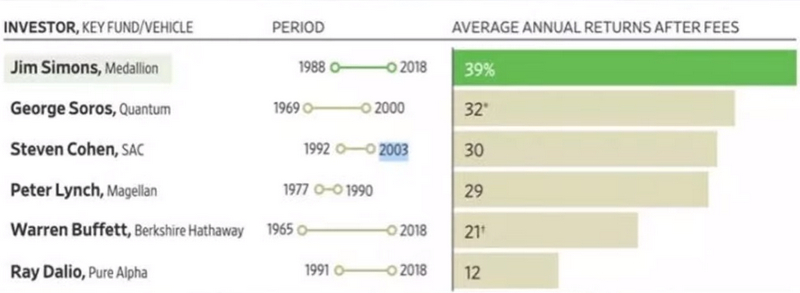
Below is the performance of the most famous investment funds. In first place is the Medallion fund of Jim Simons, which trades only on recurring patterns. At the same time, they do not have the highest forecast accuracy figures, only a little more than 50% profitable trades, but a large number of assets and the proper use of leverage make it the most profitable fund in the world.
Expected Value Is Everything to Us

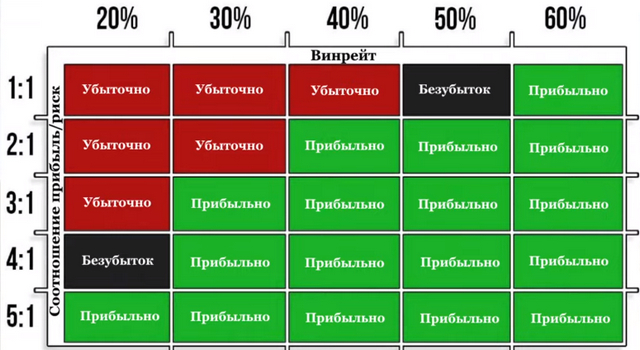
Traders strive to find a strategy with a large number of trades closed in profit (winrate). Ideally, this is the holy grail, where 100% of orders are closed in profit. The expected value table below, the ratio of money management to winrate, shows what is truly important for a strategy.
A trader with a high profit-to-risk ratio will earn starting from 20% profitable trades. With a ratio of 1 to 1, it is necessary to close more than 60% of positions in profit. Finding such a strategy is much more difficult than properly setting up money management.
Conclusion

The conclusion from ten years of observation is that traders make systematic mistakes and continue searching for the holy grail, believing in the existence of miracle robots or unique strategies. In reality, simple rules work reliably in the market: trading with the trend, whose direction is indicated by the crowd's mistake, and statistical or fundamental factors.
The main thing is to monitor the level of risk and correctly set the money management parameters. In this case, the trader will be able to profit from the strategy with a minimal number of successful entries.
Respectfully, Pavel Vlasov
Tlap.io
