
Can the Stop Be Bigger Than the Take?

There are unbreakable commandments of trading. For example, that take-profit should always be 2-3, or better yet 5, times larger than the stop-loss. Everyone agrees with these canonical recommendations from old, dust-covered books and.... Trades the other way around. A bigger stop, a smaller take. And then they feel guilty about "improper" risk management.
So where is the truth? Must the take always be larger than the stop? Should you consider yourself a sinner if you trade with a large stop?) Let's try to figure it out.
Positive Expectancy or Your Edge in Trading
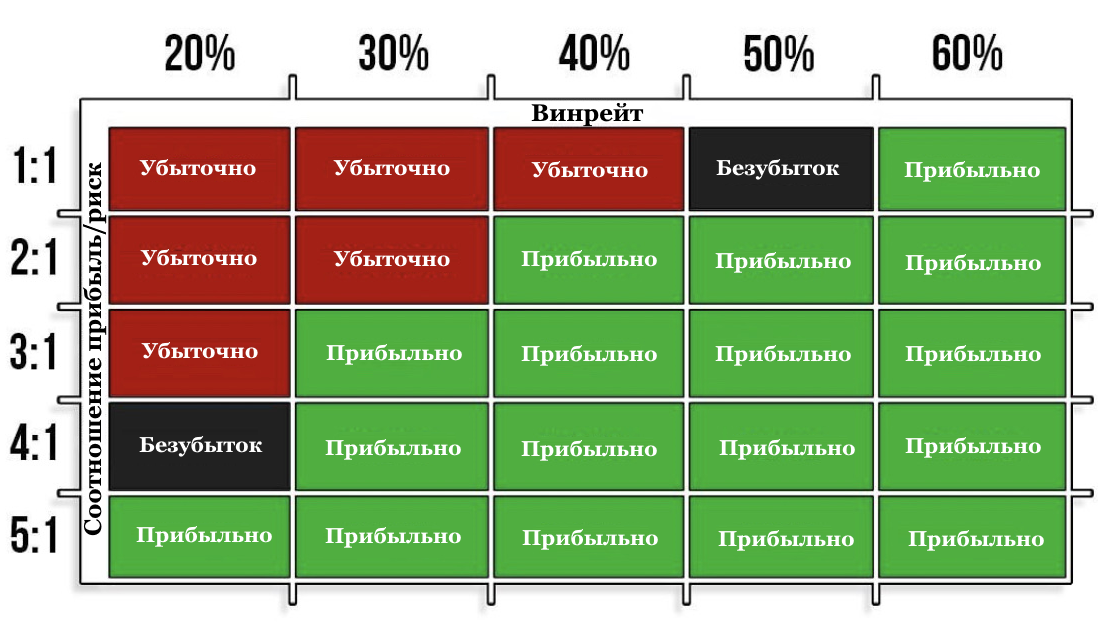
To stay in profit after a large number of trades, you need positive expectancy. Or, in other words, a trading edge.
Expectancy is calculated using the formula:
(Average profit value * profitable-position coefficient) - (average loss value * losing-position coefficient) - transaction costs.
I'm not a fan of formulas. In my view, the table above gives a much clearer idea of what positive expectancy really is.
If you have only 20% profitable trades, then to stay in profit and have a trading edge, you need a Profit/Risk ratio of 5:1 or more. Since the take-profit must be at least 5 times larger than the stop.
With 50% profitable trades, a Take/Stop ratio of 2:1 is enough. But with more than 60% profitable trades, the stop can even be larger than the take-profit.
From this we can draw the first conclusion: The smaller the take, the higher the win rate must be.
A Feature of the Forex Market

But what about in practice? How many long profitable monitoring accounts of manual trading or advisors have you seen on Forex, where profit is consistently several times larger than the stop? I haven't seen many....
And here we come to another nuance. You need to take into account the characteristics of the market you trade.
Most of the books from which all these pieces of advice on the profit-to-risk ratio come are written for the American stock market, whose feature is a stronger tendency to rise than to fall.
And the feature of the currency market is mean reversion.
What do I mean?
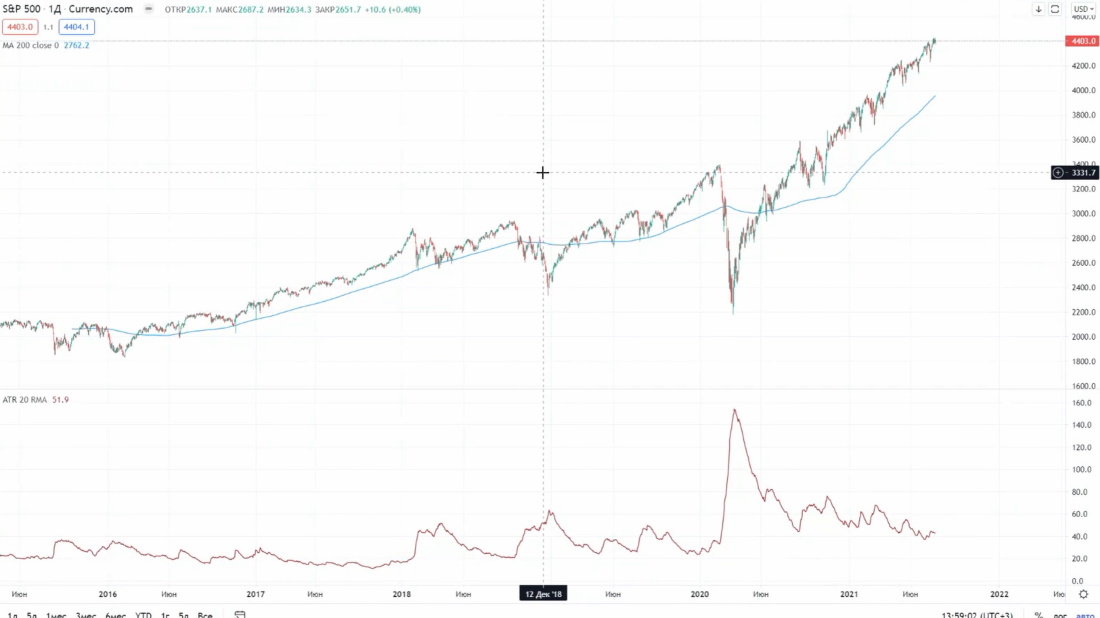
What do you see? Even a child can tell that the chart is generally going up.
Now let's look at the notorious EURUSD:
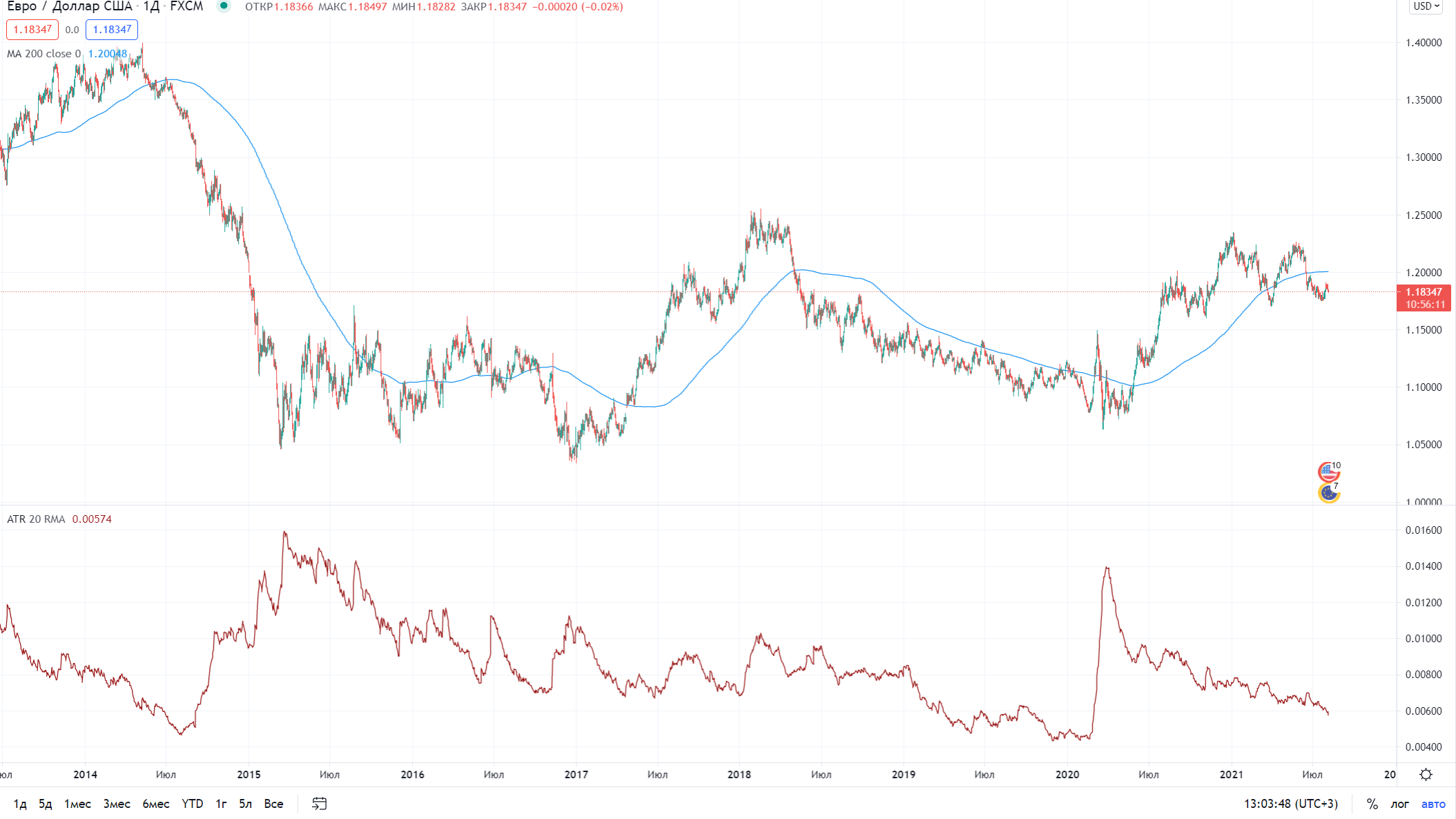
And what would you say about this chart? It rises, then falls, but overall it tends toward certain average values. That is mean reversion.
From this we can draw one more conclusion:
If you have a large stop, you can "sit through" the fluctuation; if you have a large take, you may not wait for it to be reached.
This does not at all mean that large takes cannot be used. They can and should be used when there are prerequisites for it. When your analysis shows that the price is indeed capable of reaching a large target.
That is when you can set a large profit target. And not because you multiplied the stop-loss by 5....
So What Should You Do?

So what should you do?
You need to set the stop and take according to the situation and your view of the market, as well as according to the strategy.
Here is the monitoring for the Survivor expert advisor:
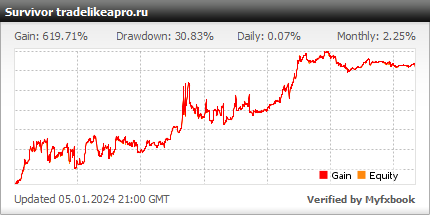
Over 4 years, the advisor earned almost 400% profit. What take-profits and stops does it use?
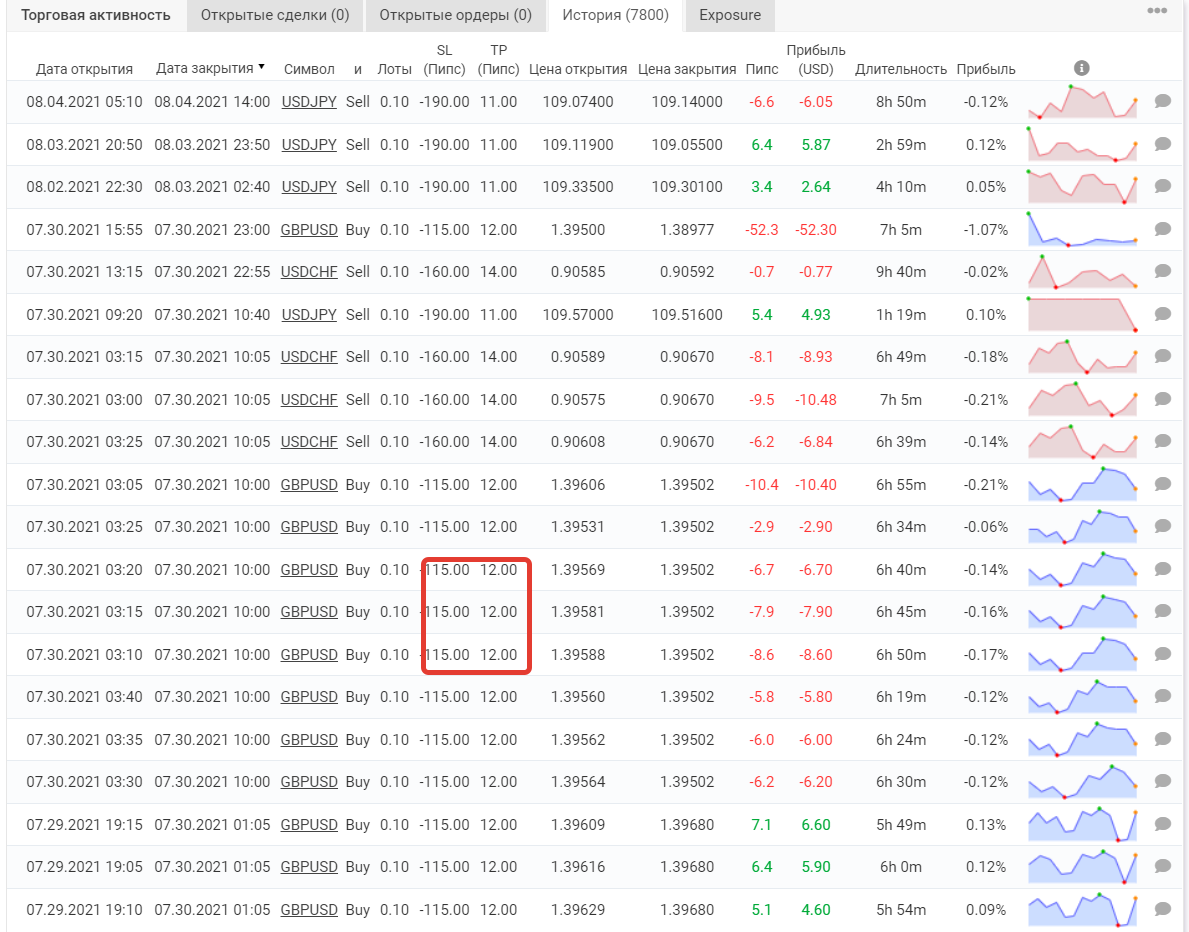
Depending on the pair, on average the advisor uses a stop more than 10 times larger than the take-profit. Scary? It is worth noting that it often exits the market before the stop, but also before the take.
Therefore, in the end, according to Myfxbook data, the average profitable trade of the advisor is 2 times smaller than the average losing one.
Although if I described such a system for manual trading, people in the comments would tell me that I was not quite right in the head.
Nevertheless, if the situation on the chart and your analysis show that a larger target is achievable, then you should try to take it.
An example on the GBPUSD pair:
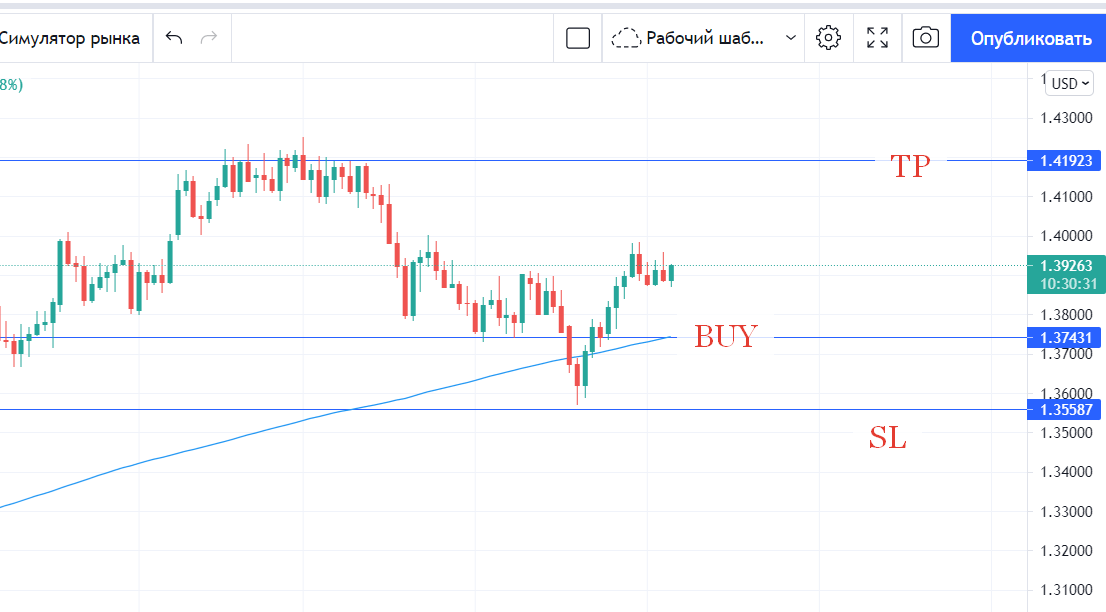
I bought after a false breakout of the 200 SMA. I set a stop equal to 2 ATR.
And, according to my analysis, I expect the price to reach the level marked as take-profit on the screen, which is about 2.5 times larger than the stop-loss. Will the price get there? Maybe it will not. But if I consider this target adequate, why should I set a smaller take?
In a different chart situation, I would set a take equal to or even slightly smaller than the stop-loss if that is what my analysis showed.
Conclusion

So, the profit/risk ratio is not a dogma. It is always worth remembering common sense and sticking to the "golden mean" so that positive expectancy is preserved. Stop-loss and take-profit should depend on the strategy, the chart situation, and your technical/fundamental analysis, and not because you set a stop at 10 points and calculated the take-profit by multiplying 10 by 5.
You should also not forget about the specifics of the market you trade.
Respectfully, Pavel Vlasov
Tlap.io
