
Brexit 2019: So Will It Happen or What?
 On June 23, 2016, a referendum was held on Britain's withdrawal from the European Union, where it was decided that the United Kingdom would leave the EU, putting an end to the long-running dispute over the kingdom's place in the Union.
The unexpected outcome of the British referendum on leaving the EU caused a real fever at the time. The British currency fell 10% against the dollar in just a couple of hours, the pound sterling ended 2016 as the worst-performing major currency, brokers sharply raised margin requirements, and the period of abnormal market volatility lasted for more than one week.
By now the situation has calmed down somewhat, but Brexit still remains one of the main issues on the news agenda of the Forex market.
So forecasts for the movement of currency pairs involving the British pound, and questions about the best trading tactics during Brexit, remain relevant. That is what we will talk about today.
Brexit and the "deal"

The UK's departure from the EU is a virtually settled matter. The possibility of "replaying the referendum" still exists in theory, but the probability is vanishingly small because the political risks for the British government are too high. So now everything comes down to the question of how exactly Brexit will take place. There are two scenarios: a soft one, within the framework of the so-called "Brexit deal," and a hard one, with the rupture of existing treaties and relations that would then have to be rebuilt "from scratch."
The "deal" assumes that, from an economic standpoint, the "rules of the game" will not change. The UK and the EU will still remain in a "customs union," will not introduce import duties on goods, and will preserve full mutual access to capital. However, the EU insists on preserving all the rights of EU citizens within the United Kingdom and on substantially limiting Britain's ability to regulate immigration, which in many ways contradicts the original idea of Brexit, and it also takes a very hard line regarding Northern Ireland's status in the EU. Because of this, the British Parliament keeps failing vote after vote on accepting the EU's terms.
Theoretically, if by the "deadline" currently set for April 12 no "deal" is reached, Brexit will proceed under the "hard" scenario. A full customs border and full border control will appear between the EU and Britain, and all agreements on the movement of capital and goods will be torn up, meaning the United Kingdom will cease to be Europe's financial center. Both sides are already working on decision packages for the "hard" scenario, but at the same time the "deadline" has already been postponed several times, because everyone still hopes that an agreement will be reached.
The Market Is "Tired"
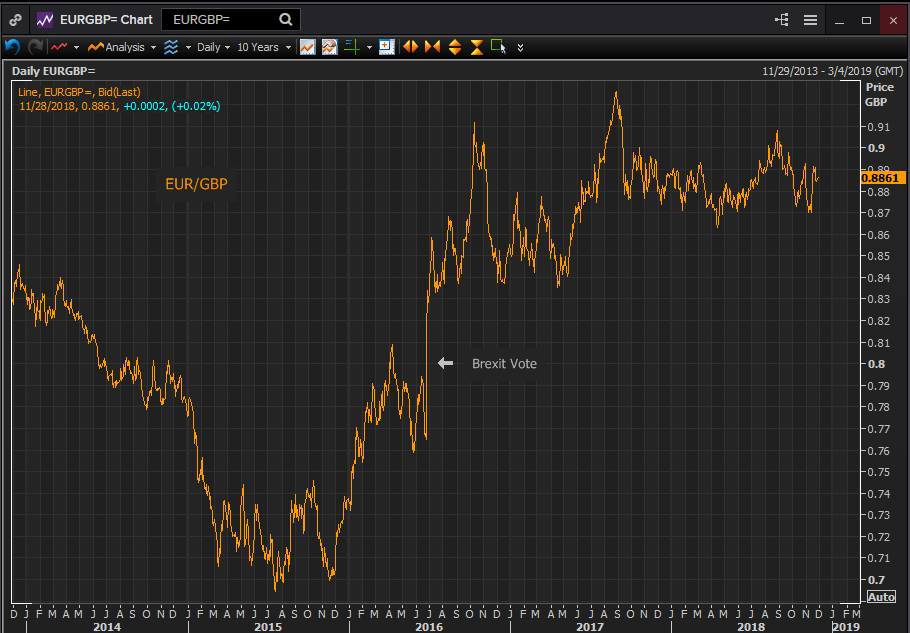
The pound's fall after the referendum results were announced was sharp and very substantial. It dropped against the dollar from 1.50 to 1.37 USD in just two hours. No major currency in the history of the Forex market had ever shown such a poor two-hour chart. Against the euro, the drop was 7%. Some minor currencies, such as the South African rand, also collapsed, along with major stock indexes including the Dow Jones (-2,5% in half an hour) and the FTSE 100 (-5% in two days). The panic in the stock markets led to the biggest one-day losses in history, more than 2 trillion dollars.
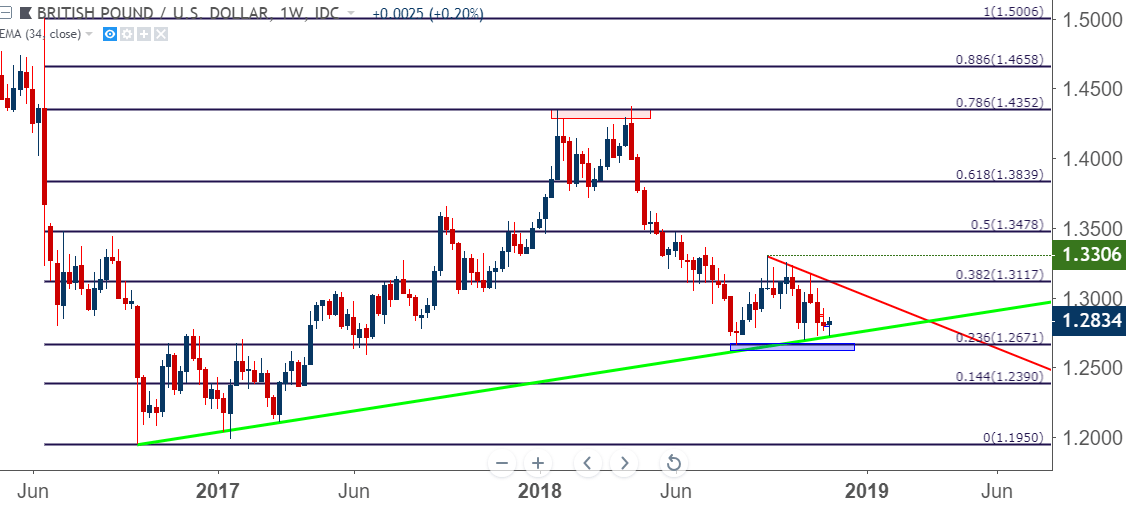 However, after that a recovery period began. Stock indexes returned to their pre-Brexit levels within just a couple of weeks, and by now the pound has recovered half of its losses against the dollar. The EURGBP pair is fluctuating around its post-Brexit lows.
At the same time, the market's reaction to news related to Brexit is much weaker than it was to the initial referendum results. Votes in the British and European parliaments, announcements of a "deal," postponements of the "deadline" all cause bursts of market volatility, but the final change in the pound's exchange rate after news releases does not exceed one percent. The market is waiting for final and definite decisions, not yet another interim one.
But because of the unpredictable swings in the British currency when Brexit news is released, a good idea would be to exit the market ahead of the next news event and re-enter only after a stable trend has formed.
Likely Currency Pair Moves Related to Brexit

Friday, April 12, promises to be extremely unpredictable. Another Brexit "deadline" is scheduled for that day. It is better to "sit out" the period when this news is released; if you remain in the market, the risk of blowing your deposit will be quite high.
The pound's and euro's further prospects depend on the actions of European and British politicians. In the most likely outcome, another postponement of the "deadline," the current uncertain situation will drag on for an even longer period.
Under a "soft" scenario, one should expect a substantial strengthening of the euro and the pound against the USD. A pound "rally" against the euro is also likely, as all previous positive news about the "deal" led, albeit to only slight strengthening, of the British currency. Even neutral news had a similar effect.
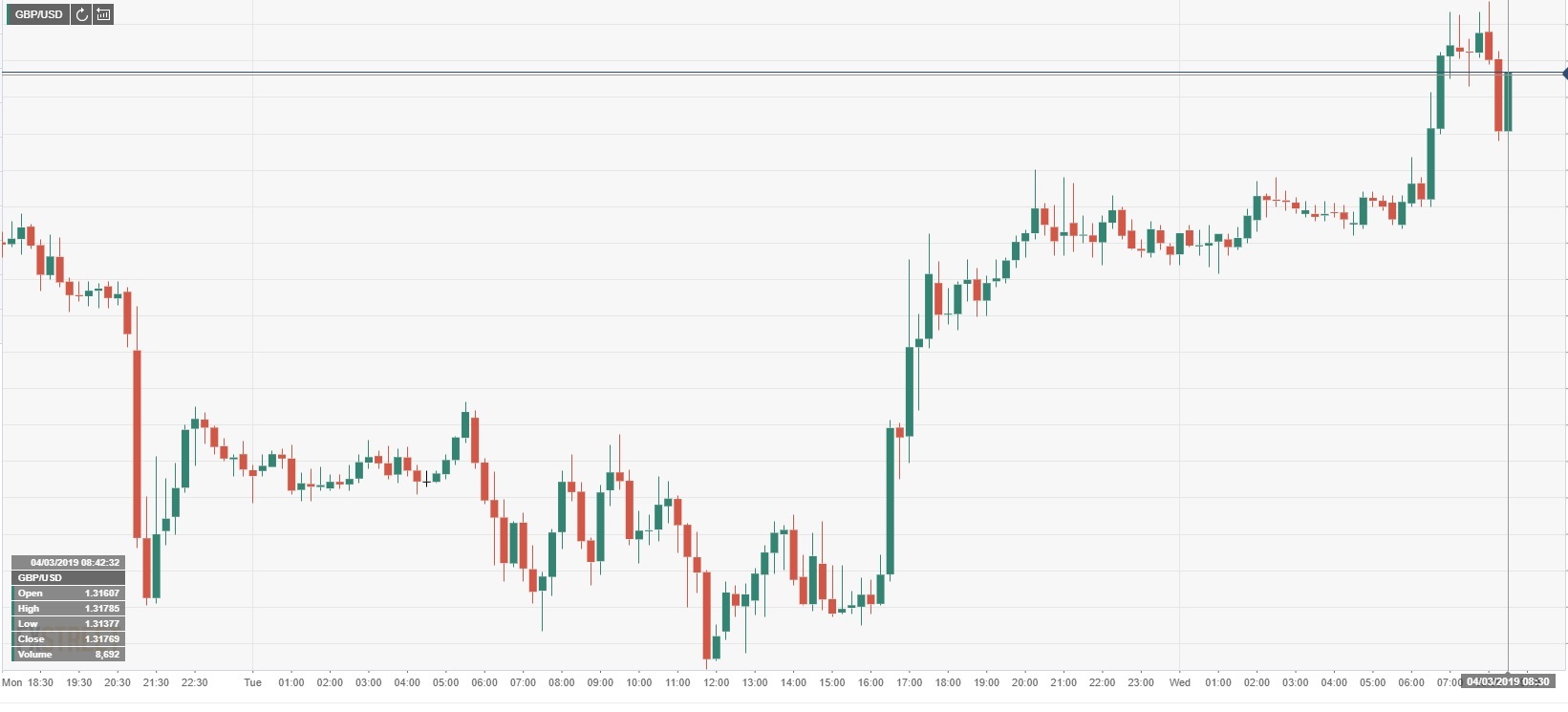
For example, merely publishing the schedule of Brexit votes planned for April 3 led to a rise in GBPUSD from 1,3013 to 1,3050, and the pair continues to rise gradually. This happened even though only the announcement was made that a special bill would be passed in three readings to prevent the "hard" scenario and extend the time available to work out a compromise solution.
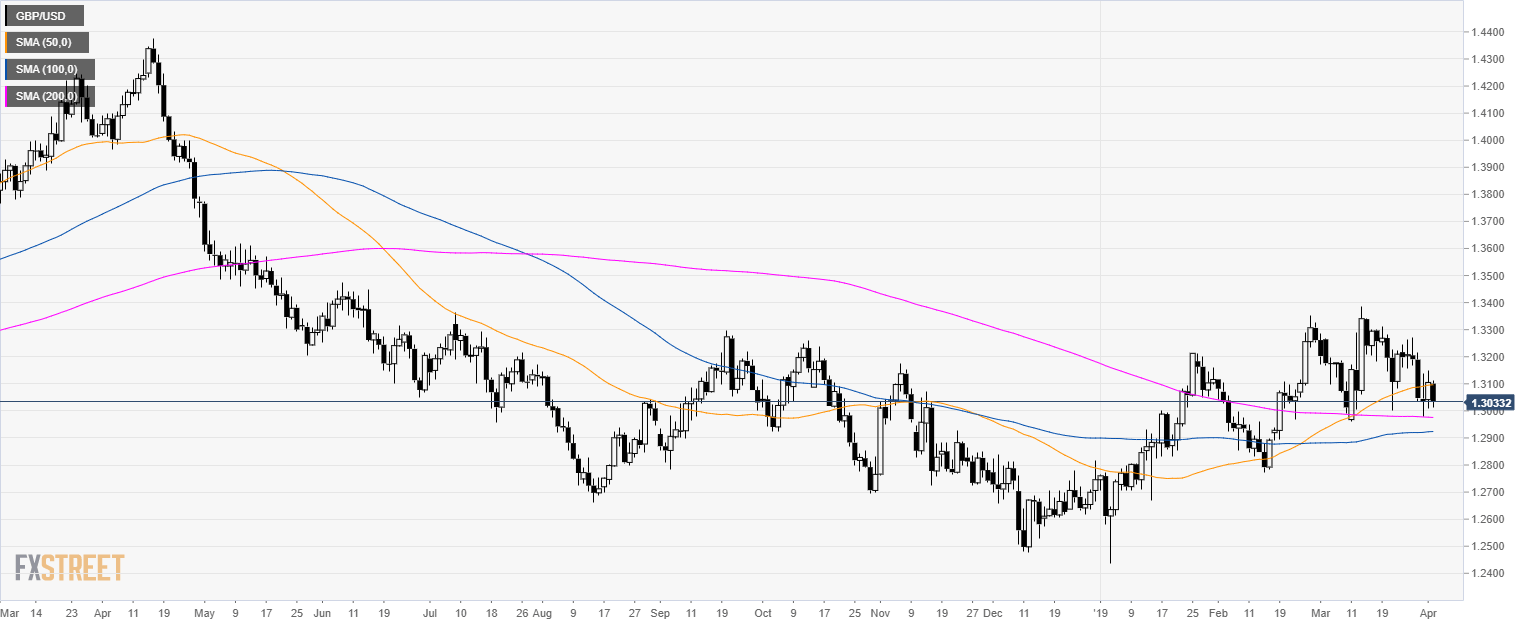
 Right now GBPUSD is consolidating above its average level over the last 200 days, so it is obvious that even minor positive news triggers a bullish trend in the market.
 If a "messy divorce" does still happen, the pound will collapse again. One should also expect new panic in the stock markets, with all the accompanying consequences for the global economy. However, the EURUSD pair will also move sharply lower, because Europe will lose its main financial center as well as an important hub for the movement of capital between the Old and New Worlds.
In addition, the pound could be pushed lower by problems for Theresa May's government caused by the stalling of the Brexit negotiations. The "negotiating team," led by the foreign minister, has already had to be replaced once, and that led to a fall in the British currency. A repeat of that scenario, or even the resignation of the entire cabinet, also cannot be ruled out.
It is impossible to say unambiguously how Brexit will affect the EURGBP pair. Analysts still cannot decide whether a "hard" British exit will be a bigger problem for the pound or for the European currency.
Conclusion

The problems of the European economy (and first of all, those connected with Greece) make the eurozone stable, but its position is clearly worse than the position of the economy of the United Kingdom. In fact, the pound is held back from a "rally" against the euro only by Brexit and the monetary policy connected with it of the Bank of England, which is purposefully restraining the pound. And in the event of a "soft" Brexit these restraining factors will stop working, and the situation will return to the "pre-Brexit" one, when the euro was slowly but steadily becoming cheaper.
 In the end, both scenarios of the United Kingdom's exit from the EU are capable of leading to a decline in the exchange rate of the European currency.
Respectfully, Alexey Vergunov Tlap.io
