
Yen carry trade back in the spotlight: USD/JPY keeps the market on alert

Introduction
The yen has again found itself at the center of market attention not because of a sharp move, but because of how many trades depend on its calm. USD/JPY is now at 161.3 JPY, the daily change is -0.07%, and at first glance this looks almost like a measured stroll across the FX tape. But at such levels, even a small shift forces FX desks, macro blogs, and Bank of Japan watchers to check whether the popular carry trade is starting to creak in its most stressed places.

💱 USD/JPY: small move, big context
The USD/JPY pair at 161.3 JPY with a daily change of -0.07% is not yet showing a full-fledged reversal in favor of the yen. However, the level itself remains high enough for the market to treat even moderate fluctuations as a signal about positioning, the authorities' tolerance, and investors' willingness to hold risk. The yen carry trade is built on simple logic: borrow cheap yen and invest in higher-yielding assets. This structure works best when the funding currency remains cheap, stable, and boring. Now the yen has stopped being boring, which means the usual math of the trade again needs to be reviewed.
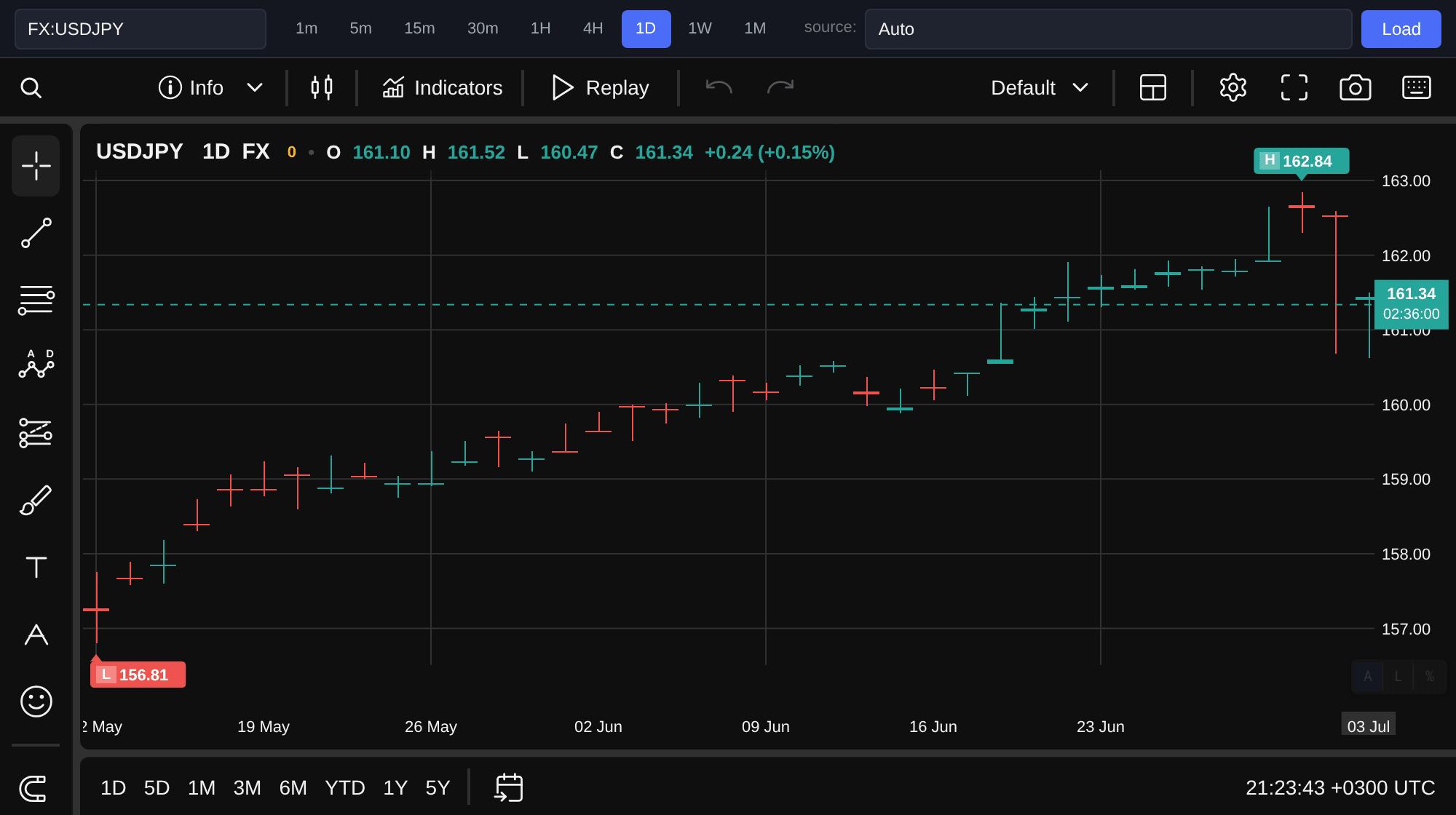
🏦 Intervention risk is back on the screen
BoJ watchers and FX desks are again discussing where the pain threshold for Japanese authorities may lie. The market does not need to wait for confirmed intervention to become more cautious: sometimes convincing talk that the yen's move has become too one-sided or too fast is enough. With USD/JPY at 161.3 JPY, even a -0.07% decline for the day is read not only as ordinary daily dynamics, but also as part of a broader political-market story. Japanese authorities usually look not at one magic level, but at the speed of movement, position imbalances, and signs of disorderly trading. For carry positions, intervention risk now works like an invisible stop loss: it is not in the quote, but it is already affecting the size and boldness of the trade..

📈 JGB yields are changing the carry formula
The main story around the yen now lives not only on the USD/JPY chart, but also in the Japanese government bond market. If expectations for JGB yields shift higher, yen funding becomes less comfortable, and short yen positions become harder to view as an almost free backdrop. Rising JGB yields by themselves do not mean an immediate mass unwinding of the carry trade. But they change investors' patience, especially if too many participants hold similar positions at the same time. The key risk is not one daily move in USD/JPY, but the combination of crowded positioning and a reassessment of expectations for the Japanese yield curve..

🌐 Why global markets are watching the yen
A reversal of the yen carry trade rarely remains only an FX story. Borrowed yen is often used to fund positions in equities, credit instruments, emerging-market currencies, and other yield assets, so closing such trades can quickly turn into a broader risk-off episode. For now, the picture does not look panicked: USD/JPY is around 161.3 JPY and is changing by only -0.07% on the day. But calm numbers sometimes hide an important reset of expectations, when traders begin recalculating leverage, margin, and scenarios for regulators' reactions. The yen has again become not a quiet funding currency, but a sensor of overheating in global risk appetite..
Conclusion
The day's conclusion is restrained: USD/JPY at 161.3 JPY with a daily change of -0.07% points more to a mode of cautious waiting than to a confirmed reversal of the carry trade. But talk of possible intervention, JGB yield expectations, and dense positioning have again tied into one market knot. As long as this link remains, even small moves in USD/JPY will carry more information than the daily percentage suggests. Practical takeaway for a Forex trader: the rule should be tested on a demo account, written into the trading plan, and applied the same way before every trade. Practical takeaway for a Forex trader: the rule should be tested on a demo account, written into the trading plan, and applied the same way before every trade. Practical takeaway for a Forex trader: the rule should be tested on a demo account, written into the trading plan, and applied the same way before every trade. Practical takeaway for a Forex trader: the rule should be tested on a demo account, written into the trading plan, and applied the same way before every trade. Practical takeaway for a Forex trader: the rule should be tested on a demo account, written into the trading plan, and applied the same way before every trade. Practical takeaway for a Forex trader: the rule should be tested on a demo account, written into the trading plan, and applied the same way before every trade. Practical takeaway for a Forex trader: the rule should be tested on a demo account, written into the trading plan, and applied the same way before every trade.