
The World Cup and the National Currency: How Does the FIFA World Cup Affect Forex?
Traders in the Forex market, in addition to major pairs, often pay attention to the national currency, because there are unconditional “local” economic reasons that make it possible to predict its rise or fall most accurately.
For example, the currency of any state is highly likely to strengthen during presidential elections and fall as a result of a state mutiny or coup. In countries with a developed commodity-based economic model, the exchange rate may depend on the dynamics of oil prices, and a sharp drop or surge in energy resources may lead to predictable exchange-rate growth. Bets on such events bring traders “conditionally guaranteed” profit, but elections, like a commodity crash or a local crisis, are rare phenomena.
There is another rare but more or less accurate way to forecast the future movement of individual national currencies: the FIFA World Cup. The statistics will surprise you)
History of the World Cup

Copa Mundial de Fútbol is the Spanish expression that gave the World Cup in this sport the common name “mundial.” Translated, it means “The Main International Football Competition.”
The international FIFA federation gathers the national teams that have passed the preliminary qualifying round for the final championship in various countries.
Football as a sporting discipline had been part of the Olympic competitions since 1908, until in 1928 it “earned” the right to hold a separate World Cup. Since 1930, for 85 years (with a break for World War II), once every four years tens of millions of fans from different corners of the world cross the border of the host state at the appointed time to rejoice, grieve, and become a historical participant in the victory or defeat of their team.
The current championship is the 21st in history and is being held in Russia; the next championship will be held in Qatar. Usually one host country is chosen; only once in FIFA history was this rule broken, when the organization entrusted the world championship to two countries at the same time.
Football-Currency Economics

The basis of the economic stimulating effect of the FIFA World Cup is a significant inflow of foreign currency and a surge in consumer spending. The popularity of this sport attracts several million tourists to the country, ready to spend their savings up to the final matches.
Local residents also take part in this celebration, so some citizens create additional liquidity in the national currency by using savings or withdrawing deposits.
Even before the guests arrive, the host country spends millions in public funds on infrastructure preparation, as well as tranches from foreign and domestic investors. The surge of investment in the national economy stimulates increased demand for the “local currency,” while guaranteeing no reaction from the central bank. There is no point for the regulator to “distract itself” with short-term speculative trends that will eliminate themselves after the final match of the world championship is played.
The predictability of the event and the response to it are used by Forex traders for short-term earnings. The speculative funds of currency speculators drawn in by the FIFA World Cup reinforce the strengthening of the host country’s national currency.
Statistics of Championships and Currency Surges
The Forex currency market traces its beginning to 1971, when the G7 adopted the US dollar as the yardstick for the exchange rates of other currencies after America refused to keep national money tied to the value of gold. Market-based determination of currency exchange rates began to function fully in 1977.
The first country to host the FIFA World Cup under conditions of full-fledged currency trading was Argentina. After the 1976 coup, the country was ruled at that time by a military junta, so the national money was not pegged to the US dollar. By other objective indicators, one can note growth in the country’s GDP despite the economic crisis and the coup that had taken place a year before the championship.
In 1982, Spain had the honor of welcoming football national teams from different countries. The country’s economy was in ruins after the political crisis with the failed coup attempt of 1981 and the prolonged global crisis of 1979. Therefore, the national currency was constantly “giving up” ground to the US dollar.
The World Cup took place from June 13 to July 11, 1982, against the backdrop of the country’s preparation for early elections due to the ruling party losing 93% of its supporters.
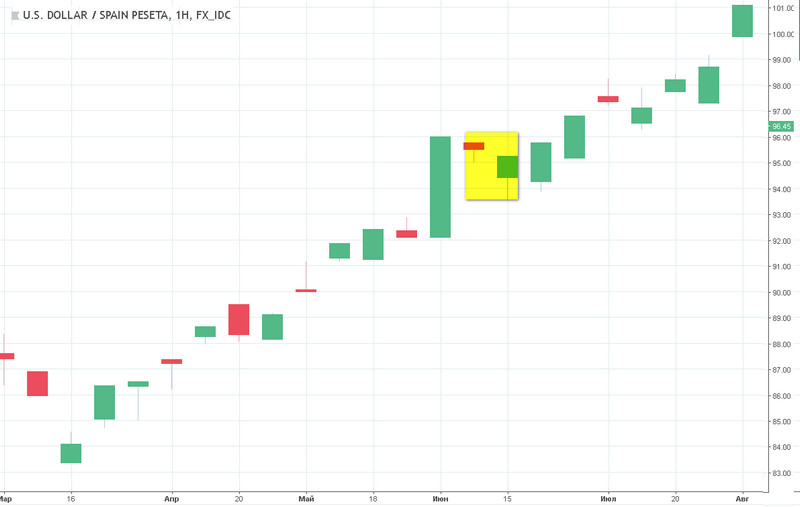
On the currency chart of USDPES, it is clearly visible that the tragic events affected the exchange rate of the Spanish peseta, which from March to August 1982 almost doubled in price from 63 to 101 per 1 US dollar.
The chart is shown in weekly format, where the strengthening of the national currency during the first two weeks of the championship is clearly visible.
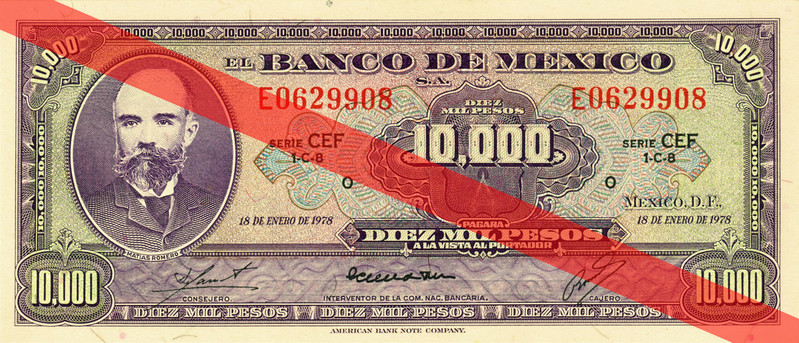
 Mexico took over the relay of hosting the mundial from the Spaniards in 1986. Unfortunately, at that time the country had declared a default on its external debt, so the Mexican peso, considered the most stable currency in Latin America, was excluded from market trading on Forex and appeared there again only in the 1990s.
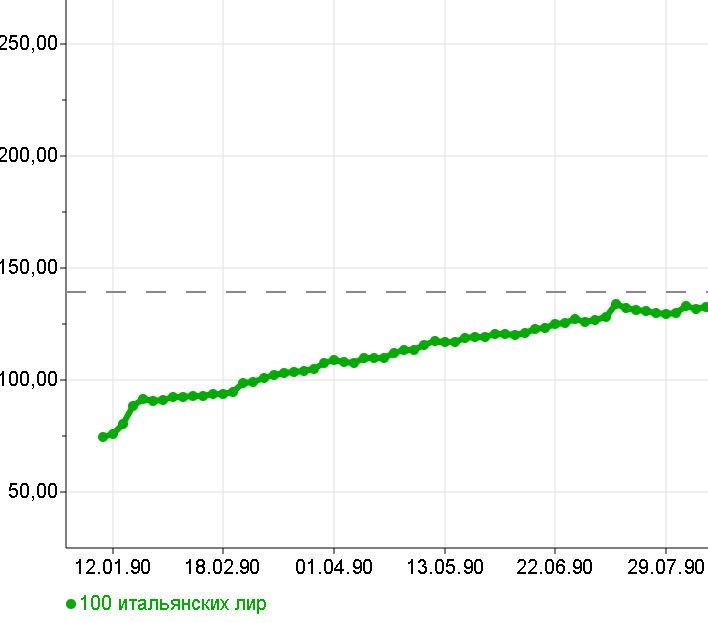
With the beginning of the last decade of the 20th century, world football events moved once again to the Old World, where Italy welcomed guests and teams. During the month-long tournament, from June 8 to July 8, the country’s economy was in good shape and the lira was strengthening significantly against the US dollar. Therefore, hosting the mundial only accelerated the strengthening of the national currency.
In 1994, the football championship returned to the New World, with the national teams of the world gathering in the USA. The event coincided with the creation of a free-trade zone between Canada and Mexico under the NAFTA agreement, in which America played a key role by saving Mexico from a total crisis. These events led the country to spend more than $50 billion on its “neighbor.”
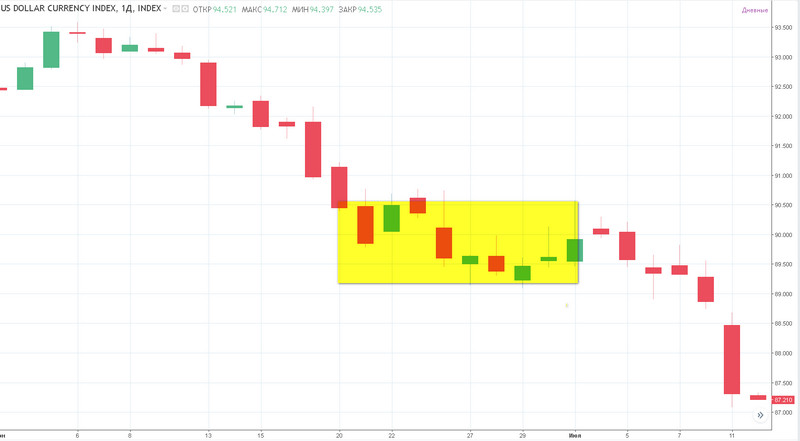
The FIFA World Cup traditionally lasted a month, starting on June 17 and ending on July 17; during this time the Forex market saw active selling of the US dollar, with traders choosing any major currencies. The DX (USDX) chart, the dollar index against a basket of major world currencies, helps accurately assess the negative sentiment of currency speculators in 1994.
The exchange rate was literally collapsing before and after the championship, and only the two weeks after the opening match were able to stop this decline, which then continued further.
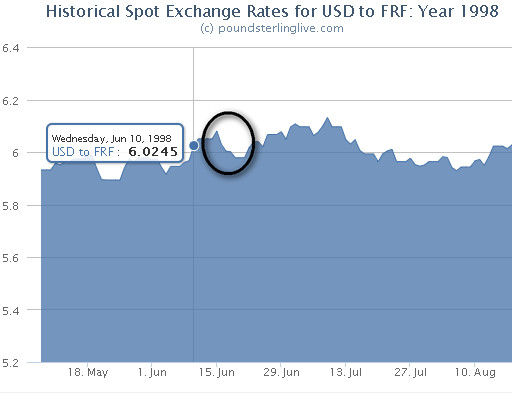
The currency and economic crisis in Asia of 1997-1998 coincided with the FIFA World Cup in France: the country hosted fans and teams from June 10 to July 12, 1998. Traders were set on selling the franc, so on the chart the USDFRF pair exceeded the threshold of 6 francs per 1 dollar. The situation changed sharply in the first two weeks of the championship, the national currency strengthened, but then gave up ground.
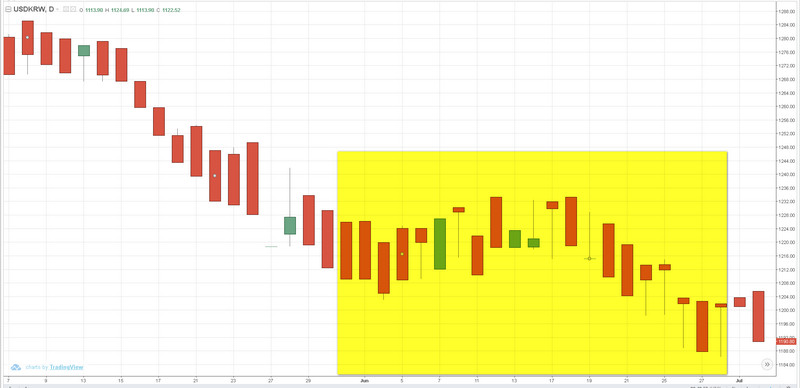
In 2002, the mundial was held in the Asian region for the first time, whose national flavor was demonstrated to guests and hosts by the Republic of Korea. The country recovered from the economic crisis surprisingly quickly and successfully restructured the chaebol model, companies managed by family clans.
At the time of the games from May 31 to June 30, the South Korean won was strengthening strongly against the US dollar. The championship helped the currency continue this movement in the USDKRW pair, as can be seen from the chart below.
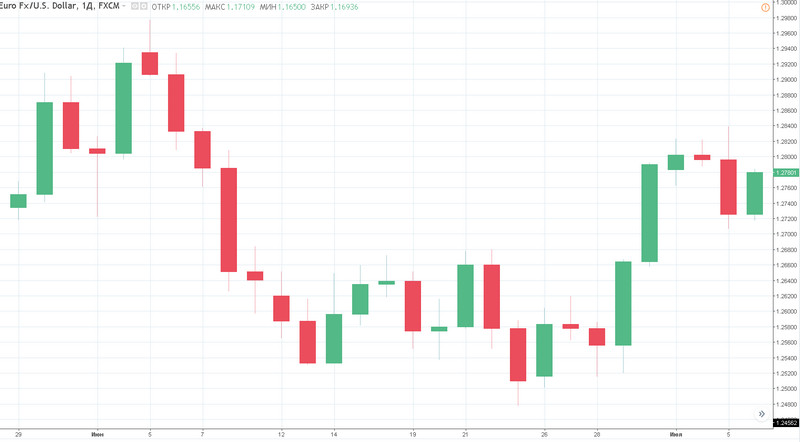
In 2006, the championship returned to Europe and was held from June 9 to July 9 in Germany, which had become part of the united European Union with the single currency EUR. Germany’s economy was at a high level of development, as was its social policy, but the exchange rate of the currency was determined by the general assessment of the Eurozone.
The EURUSD exchange rate began to fall rapidly before the first meetings of the football teams, but with the first kicks of the ball it stopped and turned upward by the final battle for the Cup.
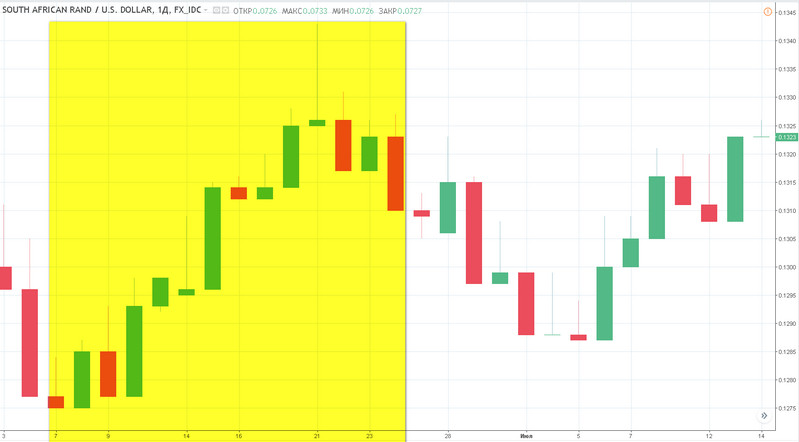
Similar behavior of the national currency was noticed in South Africa, which became the first country on the African continent chosen by FIFA to select the world’s best national football team. Sixteen teams met in the matchups, and the battles lasted a month from June 12 to July 13, 2010. At that moment the national currency had no clear trend, but with the opening of the championship it began to rise, reaching a maximum in the first two weeks.
Since June 14, 2018, the FIFA World Cup has been taking place in Russia. The team competition attracted 2 million fans and once again reminded everyone of the unpredictability of sports results. The country is under the pressure of economic sanctions, so the ruble is also losing to the US dollar on the Forex market.
The mundial managed to stop the jump-like rise, but two weeks after the start are already behind us, so the negative trend may continue.
How Can a Forex Trader Earn from the World Cup?
How can a Forex trader make money at the World Championship?
If the football celebration coincides with a local or global economic crisis, one should buy the local currency at the nearest support levels, whereas during a period of growth, at the current market price.
The frequent coincidence of mundial events with negativity in the economy once again proves the theory of the cyclical nature of these phenomena.
Counting on the ruble exchange rate to rise together with the flight of the ball is completely meaningless. The mundial will only hold the rate in place thanks to the inflow of foreign capital, which will just as rapidly stop supporting the level in one place. As a result, a continuation of the exchange-rate decline is expected, with a prospect of acceleration. History teaches us that a rise is followed by a fall; however, in our case, even holding in one place should already be perceived as a rise, and after the World Cup ends, traders should pay attention to the continuing fall of the ruble.
Counting on the fact that along with the takeoff of the ball the ruble exchange rate will soar is completely pointless. The World Cup will only maintain its course thanks to the influx of foreign capital, which will also quickly cease to maintain the bar in one place. As a result, the exchange rate is expected to continue to fall with the prospect of acceleration. History teaches us that a rise is followed by a decline, but in our case, staying in one place should already be perceived as a rise, and after the end of the World Cup, traders should pay attention to the continuing fall of the ruble.
Conclusion
Drawing analogies with the football matches of the world championship that coincided with crisis, one should expect the ruble’s decline to continue after the end of the 2018 World Cup.
And before the 2022 World Cup, we will be buying the Qatari riyal (In 2022 the Mundial will be held in Qatar) :) .
Respectfully, Alexey Vergunov TradeLikeaPro.ru
Best regards, Alexey VergunovTradeLikeaPro.ru
