
USDINR: How to Trade the Indian Rupee

Hello, friends! In an era when the European Union is coming apart at the seams and the future of the United States is uncertain, emerging countries such as China and India are moving to the forefront. And for us, as forex traders, their currencies are of primary interest. We have already looked at the Chinese yuan (USDCNH) - now it is time for the Indian rupee.
The USDINR currency pair reflects the relationship between the U.S. dollar and the Indian rupee. The pair has some unique features and therefore is of considerable interest as a trading instrument. We will discuss the nuances you need to know when working with this exotic instrument in the review below.
India's Economy

India's population is growing faster than China's population and, overall, the growth rate of the Celestial Empire's economy is already somewhat lagging behind that of its eastern counterpart.
Given its population, which already exceeds one and a quarter billion, and the world's fourth-largest economy, we will certainly note the results of active economic growth in the future. India has come a long way, carrying out a revolution in the agricultural sector along the way, and seven decades after declaring independence the country has transformed from being chronically dependent on grain imports into a net exporter of food products.
During this time, average life expectancy has almost doubled, the literacy rate has increased fourfold, and the middle class has grown significantly. India is now home to many pharmaceutical companies, as well as information technology and space technology industries. All of these factors increase India's importance on the international stage. By the end of 2015, foreign companies had invested about $26.5 billion in India, exceeding the previous year's figure by 18%.
Today, India ranks third in terms of GDP volume, after the United States and China. The main export items are software, jewelry products, agricultural products, pharmaceuticals, textiles, and the automotive industry.
As a major oil consumer, low commodity prices are extremely beneficial for India. Over 10 years, imports have grown by more than 50%, and the collapse in black gold prices has had a favorable effect on containing inflation. In fact, India is currently fourth in terms of oil consumption, trailing only the United States, China, and Japan by this measure.
Demographic analysis suggests that by 2020 India will have the youngest workforce and, accordingly, a huge consumer market. China, where the average age of the population continues to rise, can serve as an example for comparison. A favorable demographic situation and a low level of per capita income act as catalysts for rapid economic growth.
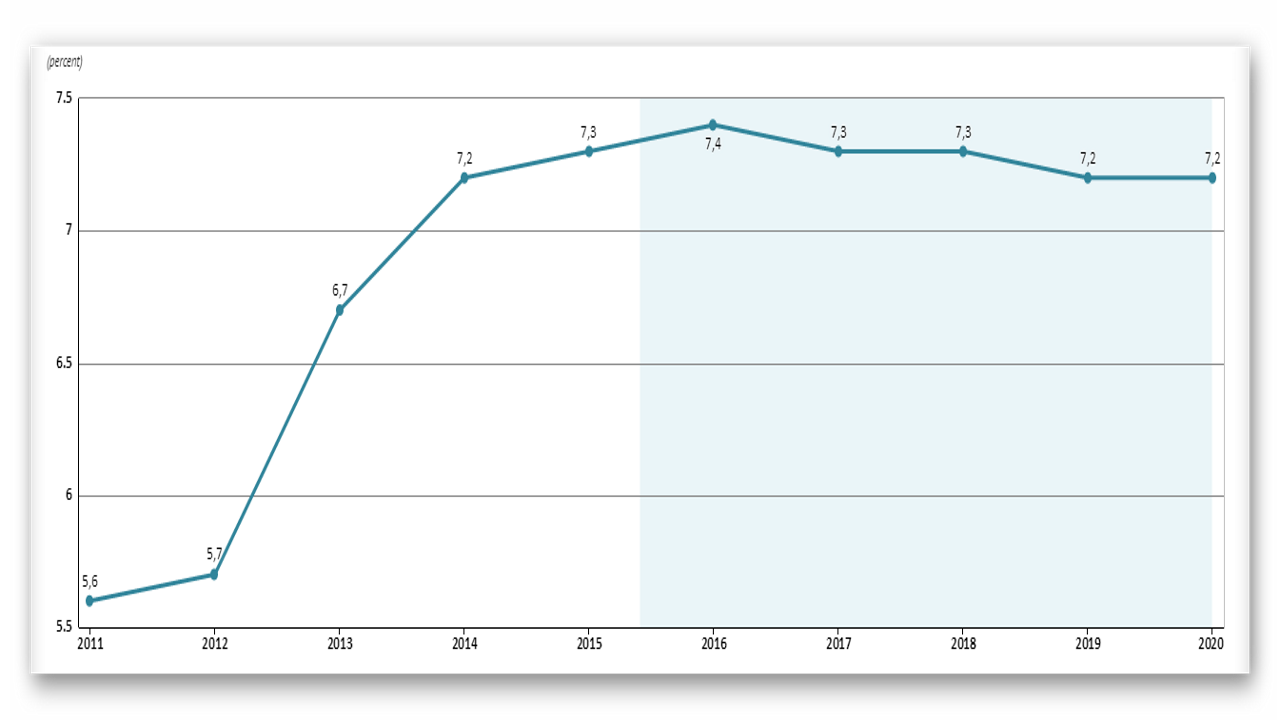
GDP is considered the main indicator reflecting the state of the national economy. After growing by an average of 6.3% over three decades, a period of stagnation began in 2011. Now India is showing the strongest growth among the countries of the Asia-Pacific region, with a potential 6-7% annually, if not more, over the next five years.
Thus, India's economy is one of the fastest-growing and holds leading positions among emerging markets. In 2015, GDP grew by 7.3%, and by the end of fiscal year 2016 it was ready to grow by another 7.6%. The results indicate that by these measures India is ahead of China, one of the largest economies in the world.
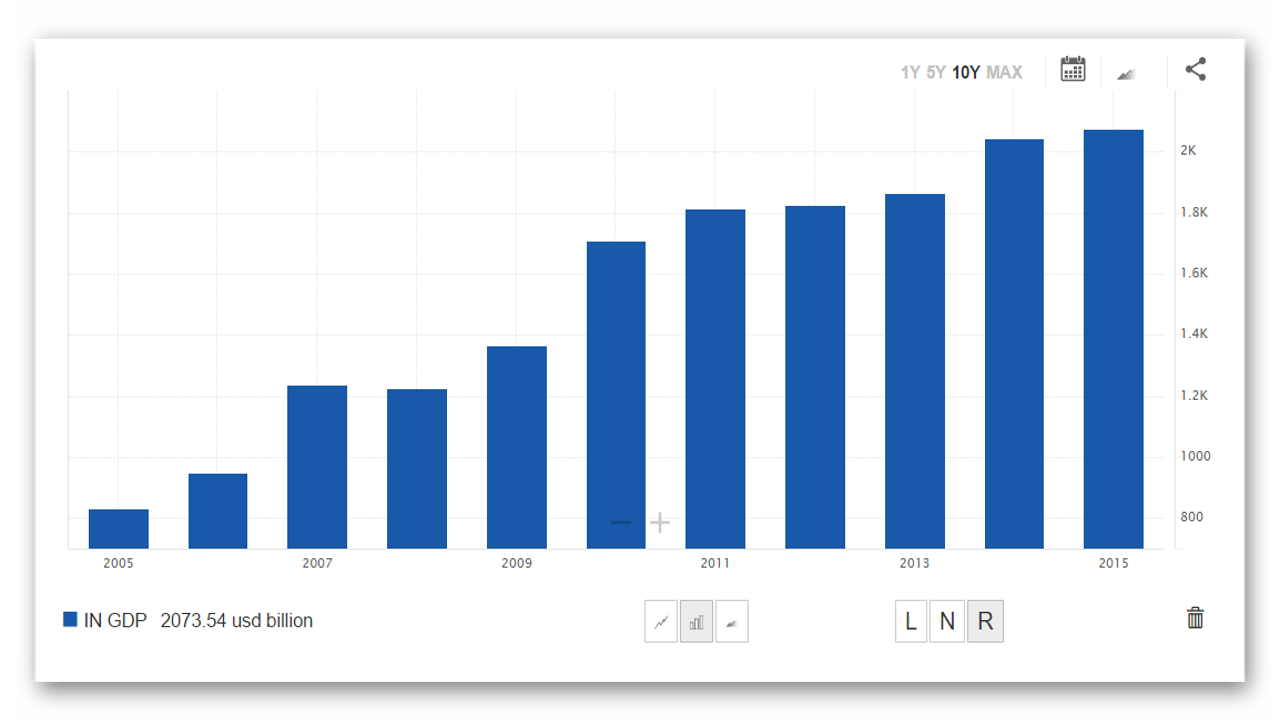
Nevertheless, a U.S. government report says that annual GDP growth above 7% in 2015-2016 is in fact overstated. In part, such figures are due to the fact that the method for calculating macroeconomic indicators was changed quite recently. Because of this, the accuracy of these values is in doubt, given that growth rates in the manufacturing sector and services sector have slowed recently, and in the future the information technology sector, which now accounts for only a quarter of GDP, will play the dominant role.
According to various estimates, India is expected to see a smooth decline in growth rates over the next decade. Taking into account the natural cyclicality of economic recovery periods, however, we are now right on the threshold of a new wave of growth. This is partly caused by the actions of the central bank, which led to a reduction in the interest rate and inflation level and had a positive effect on corporate sector income.
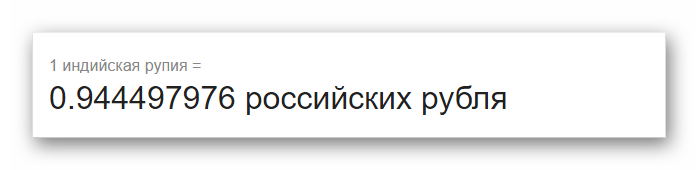
The Indian rupee appeared in 1542, and during its lifetime the currency has gone through a large number of reinterpretations and changes in standards. At the moment, banknotes in circulation are 5, 10, 20, 50, 100, 500, and 1000 rupees. The reserve bank is responsible for issuing the currency. Remarkably, at the moment one Indian rupee is almost equal to one Russian ruble.
Central Bank Policy
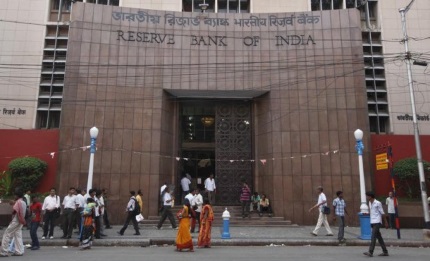
The Reserve Bank of India, which performs the functions of the central bank, was founded in 1934 and began its operations a year later. The bank is located in Mumbai, the financial capital of India. The bank controls the issuance of currency and regulates the banking system, that is, it performs the functions of a central bank.
At the meeting on October 4, it was decided to continue the policy of easing interest rates, reducing the repo rate from 6.50% to 6.25%, thus returning to the 2010 level. This was the first decision made by the new monetary policy committee headed by its new chief, Urjit Patel, who took office in September of this year.
The Reserve Bank of India has been following a policy of rate cuts since January 2015. Deliberate easing contributed to a significant decline in the national currency's exchange rate against the dollar. The devaluation of the currency, in turn, triggered an outflow of capital from the country. At the moment, the central bank has to find a balance between stimulating economic growth and reducing pressure on the national currency.
In fact, the central bank reforms were introduced in order to make the voting process more transparent by taking into account the opinions of all six committee members during the vote. Previously, the decisive vote belonged to the head of the central bank.
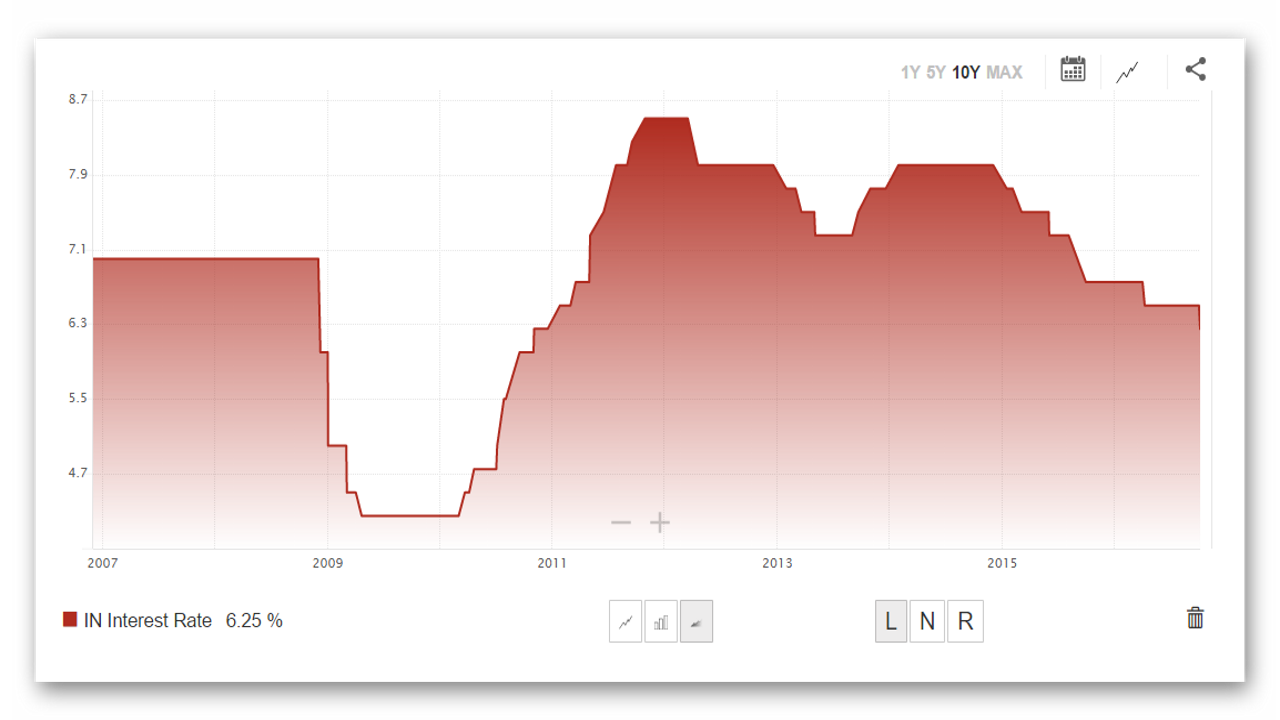
The very fact of rate cuts is aimed at moving closer to the 5% inflation target. The easing decision would not have been so convincing if not for the recent measures that contributed to lower food inflation.
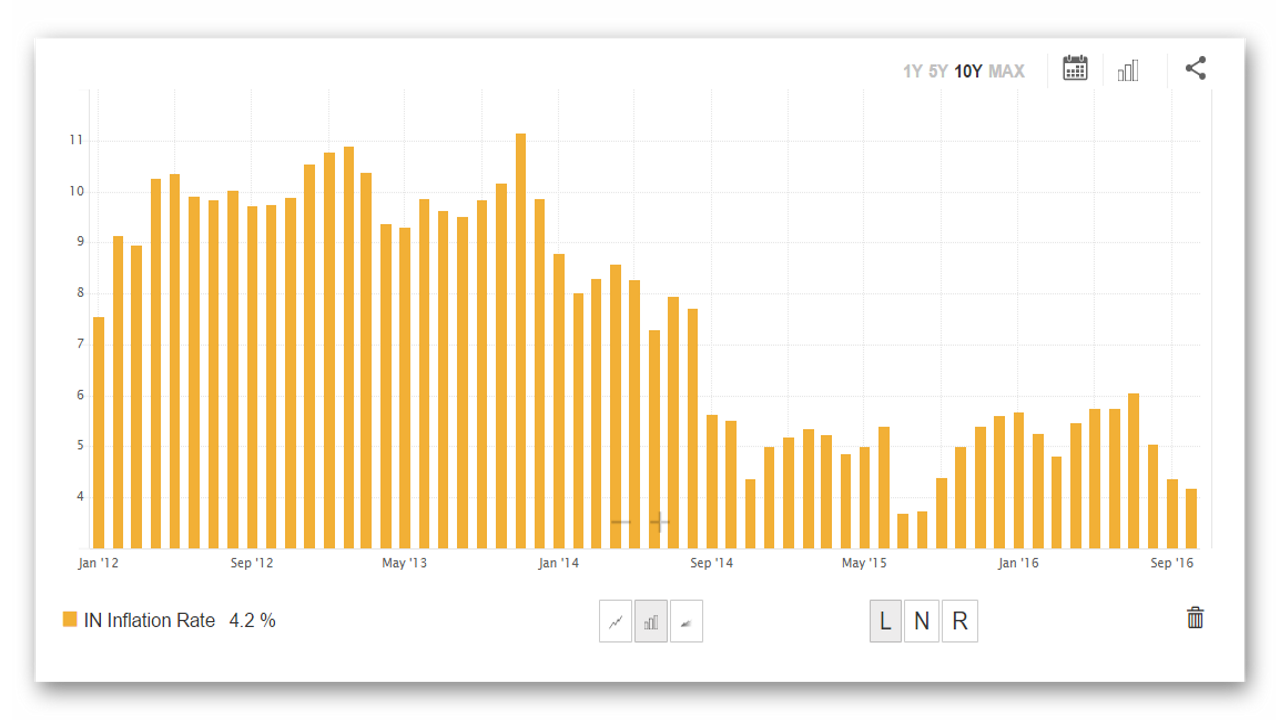
Most likely, the reserve bank will adhere to a policy of further rate cuts.
In any case, the future of interest rates now depends on the committee's decision, and not directly on the central bank. In fact, the central bank's main task now is only to control consumer inflation. Such a distribution of tasks is intended to create a more stable monetary policy, counting on more predictable and considered decisions.
Fighting Corruption

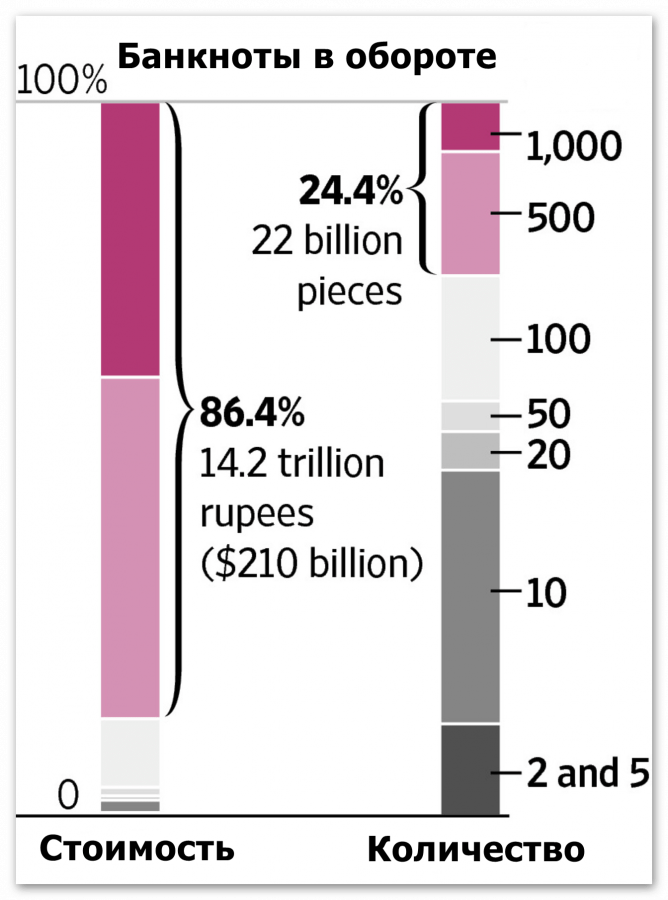
On November 9, the prime minister announced the withdrawal from circulation of all 500 and 1000 rupee banknotes. The authorities announced a deadline until the end of the current year, by which all old banknotes must be exchanged for lower-denomination notes or new 500 and 2000 rupee notes. This measure is aimed primarily at solving corruption problems, since the exchange will be possible only with declared income: collection points will require proof of identity and a certificate of tax payment.
Thus, a significant part of the money supply is subject to replacement. To be precise, these banknotes account for 24.4% of the country's total circulation and 86.4% of the total money supply. The measures taken will most likely deprive both ordinary citizens and private businesses of part of their profits for several months ahead. In the long term, the measures taken should help solve the problems of corruption and the growing black market.
Characteristics of the Currency Pair
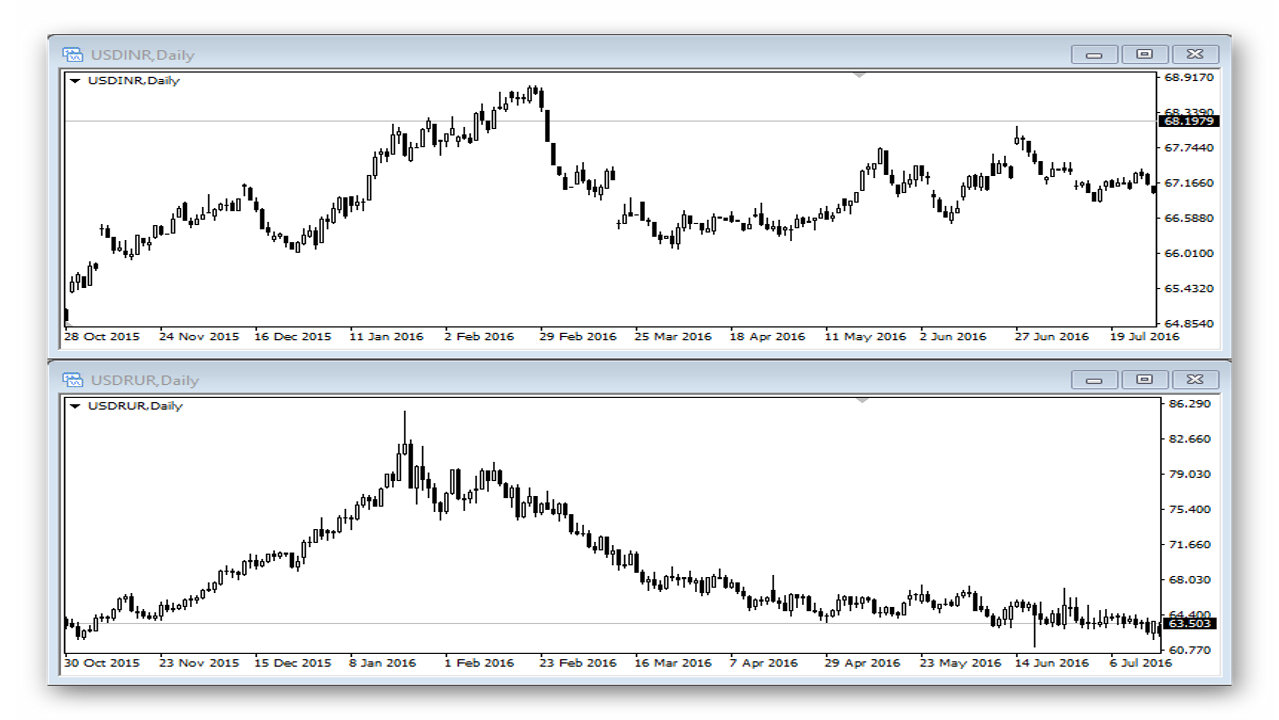
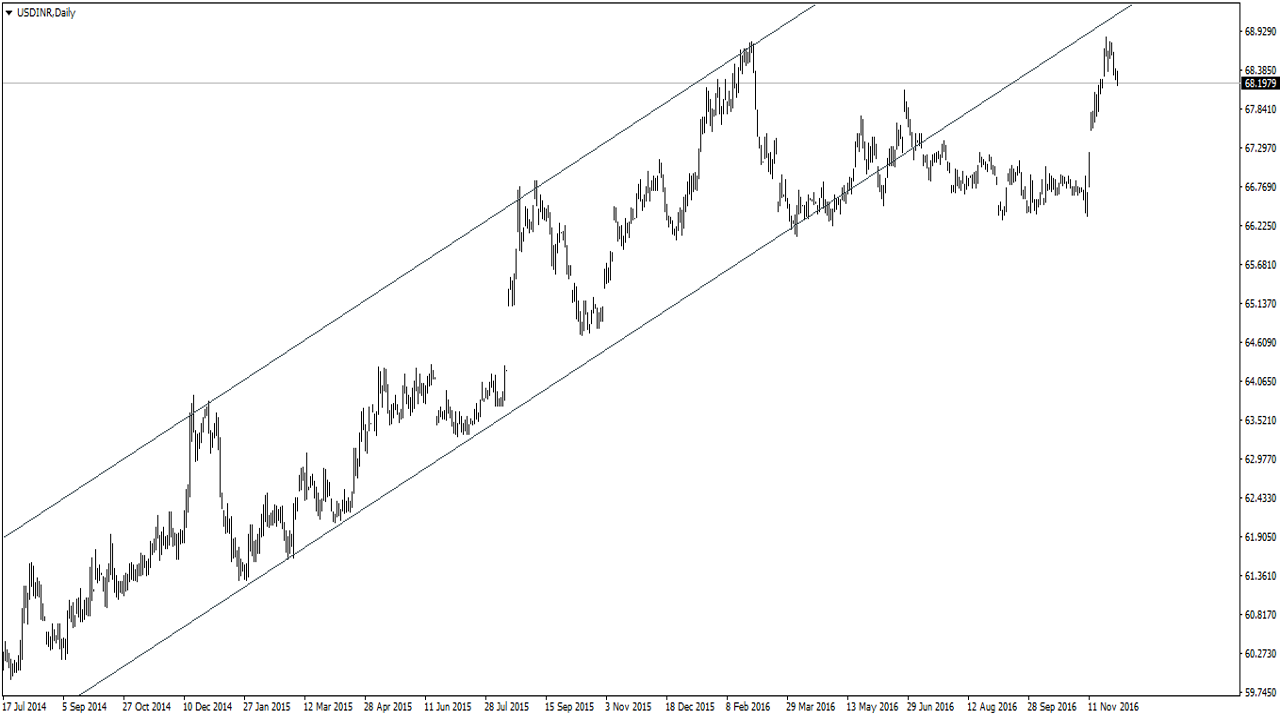
At the moment, the growth of USDINR has slowed somewhat. But if you look at the historical chart, the global trend points strictly upward.
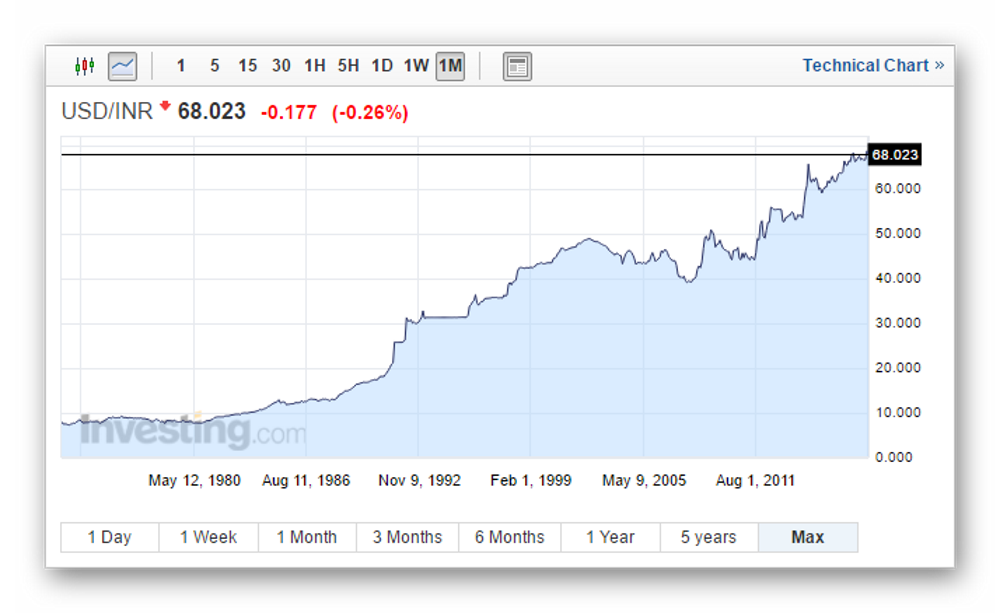
The chart itself is very similar to the chart of the dollar against the ruble (USDRUB). Here we have a very similar rate, the same interrupted quote movements, and the overall global direction. With some reservations, the same trading strategies can be applied to both pairs.
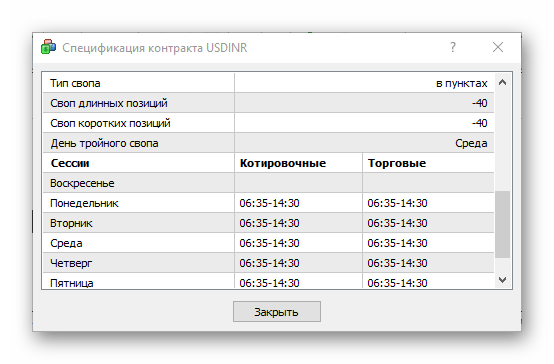
At the moment, among major forex brokers, only InstaForex offers USDINR trading.
Swaps are equal to -40 points. The pair is quoted to the third decimal place, while the point value is 10 times lower than EURUSD. That is, although swaps are negative, they are still small enough not to focus on them. Trading hours are also limited. The trading session for the rupee at InstaForex starts at 7:35 and ends at 15:30 Moscow time.
Volatility

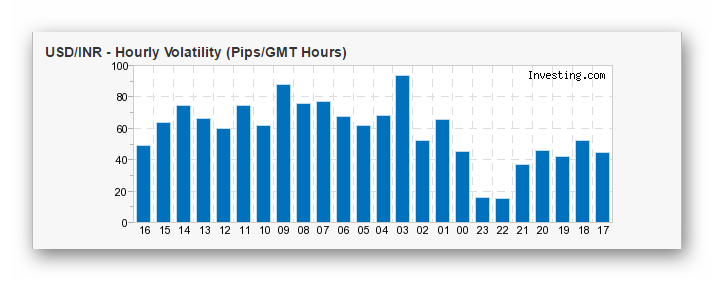
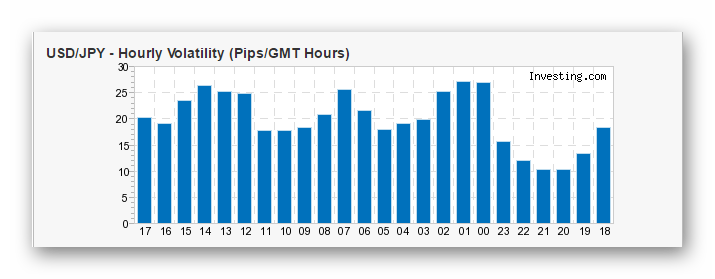
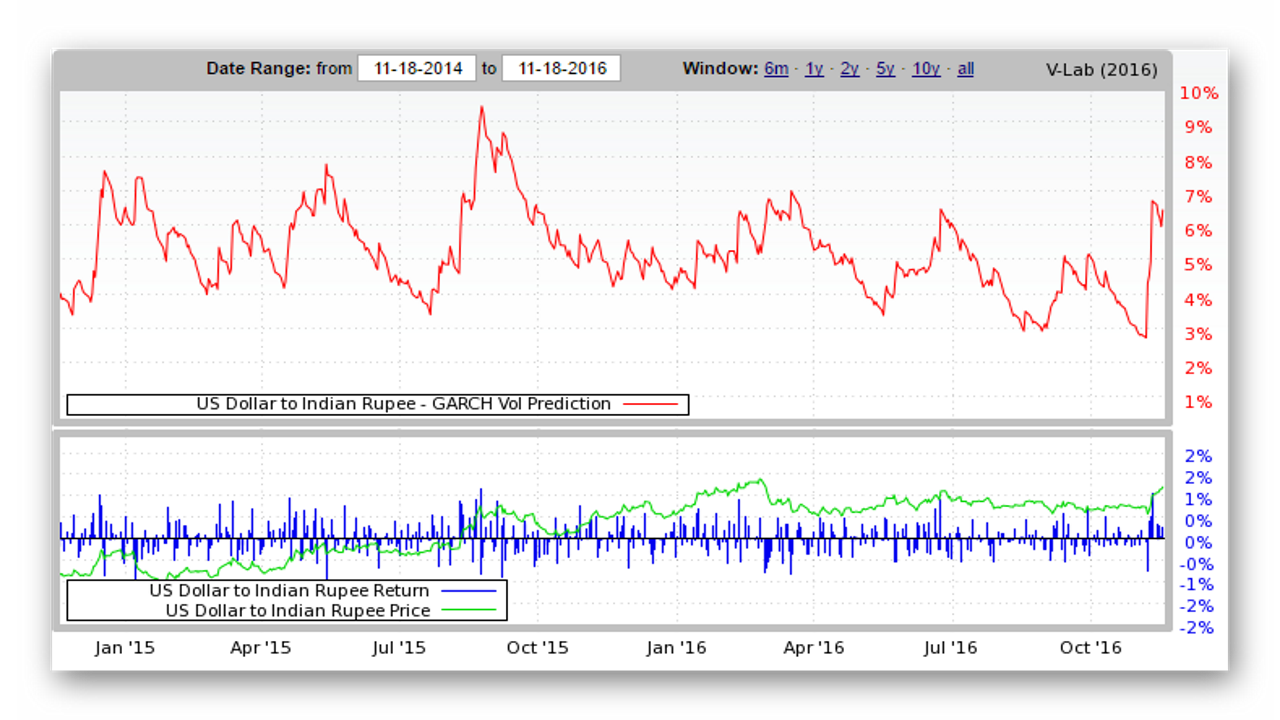
The currency pair has a level of volatility comparable to EURUSD, but is almost twice behind USDJPY. For the rupee, average volatility during the week is slightly above 6%, while the yen shows 11%. Despite the relative calmness, the pair reacts sharply to news events, and due to the lack of liquidity this can cause strong gaps in quotes.
Trading activity is evenly distributed between the Asian and European sessions. At the same time, during Europe trading is more consistent, but the peak of volatility falls on Asia.
Overall, USDJPY behaves similarly. In exactly the same way, a slowdown begins toward the end of the American session and trading activity falls. Then, from about 9 PM to 3 AM Moscow time, trading is very sluggish.
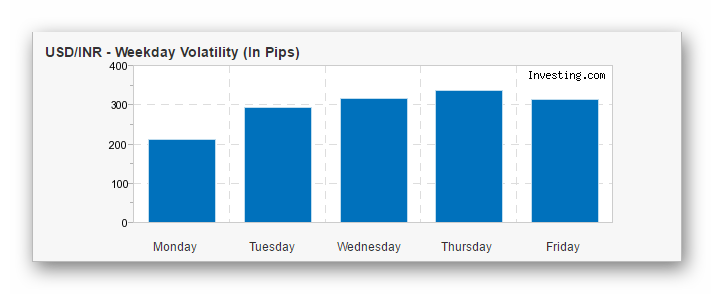
Weekly volatility grows from Monday to Friday. Thus, the biggest moves occur in the second half of the week - the pair needs time to "pick up speed".
Let us try to analyze the seasonal volatility of the currency pair over the last 2 years. If USDJPY is more active in the spring period, then the rupee, as we can see, shows the greatest activity in summer, with a smooth decline toward the autumn season. Otherwise, the pair behaves quite steadily, without showing any abnormal spikes.
Trading Tactics
Emerging market currencies have one interesting feature, and far from all traders take it into account. The global financial market is cyclical, and from time to time even leading countries experience the consequences of recession. However, over time the economy begins to recover again, and the relative value of leading currencies rises. At the same time, with exotic pairs the opposite picture emerges, and the rupee already pulls the dollar downward, experiencing the consequences of the recovery of the global economy.
Considering that the currency pair is quite distinctive, and even offers noticeable resistance to the dollar, USDINR is well suited for risk diversification. By adding USDINR to the portfolio of your trading system together with other exotic pairs, you can achieve smoother profit growth and reduce the equity drawdown.
The pair has a fairly strong inverse correlation with the Indian stock exchange index - NIFTY 50. That is, the stock market falls, the currency pair rises; the market rises - USDINR falls.
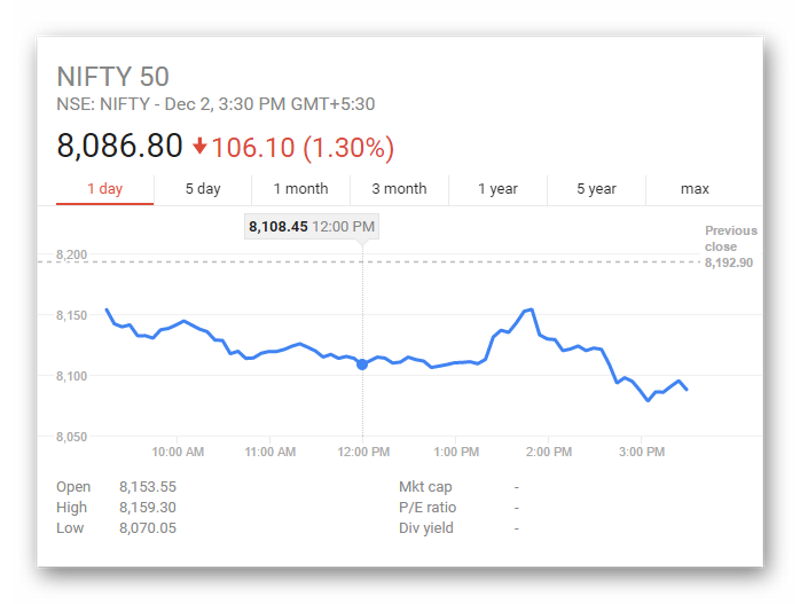
It is also worth noting the pair's correlation with precious metals; in particular, USDINR has a strong inverse relationship with gold (XAUUSD). You can also reduce trading risks by simultaneously opening positions in the same direction on both instruments. A pairs trading strategy can be used by opening two positions in different directions when the spread widens.
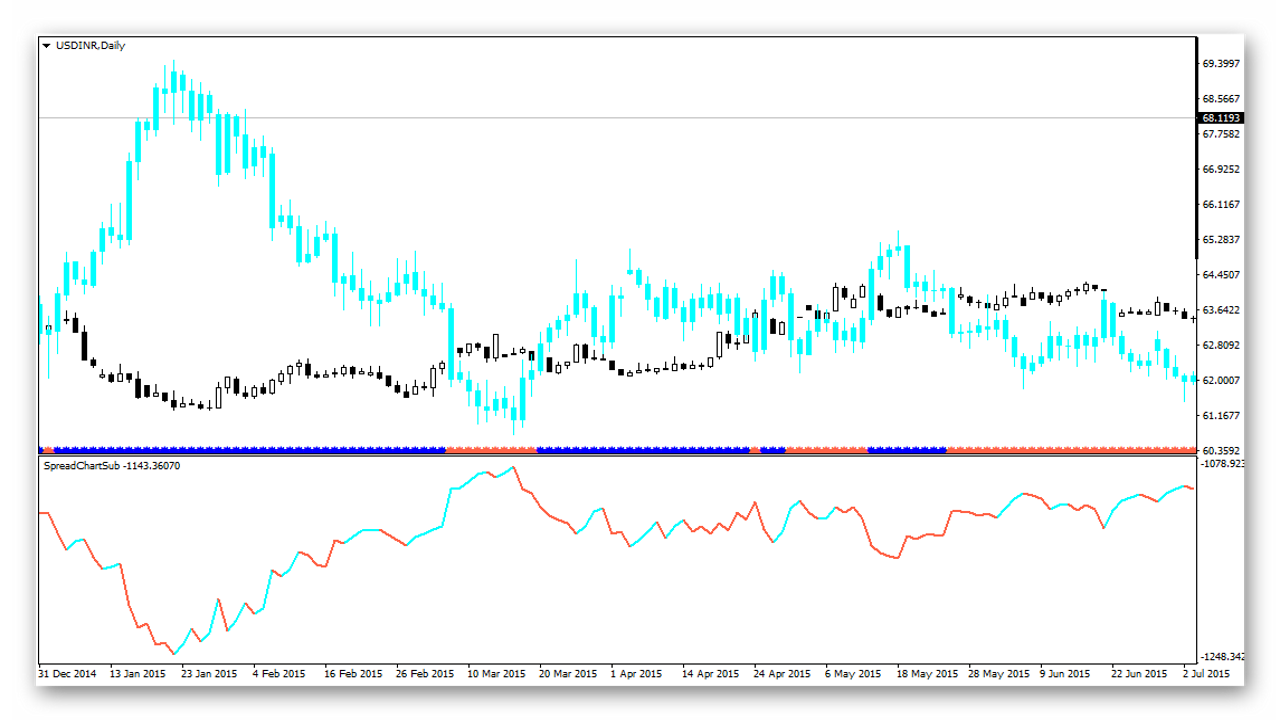
Download the SpreadChartSub Indicator (as in the screenshot)
At 67, we have a strong support level that the pair may want to test before continuing higher. From there, we enter only on buys.
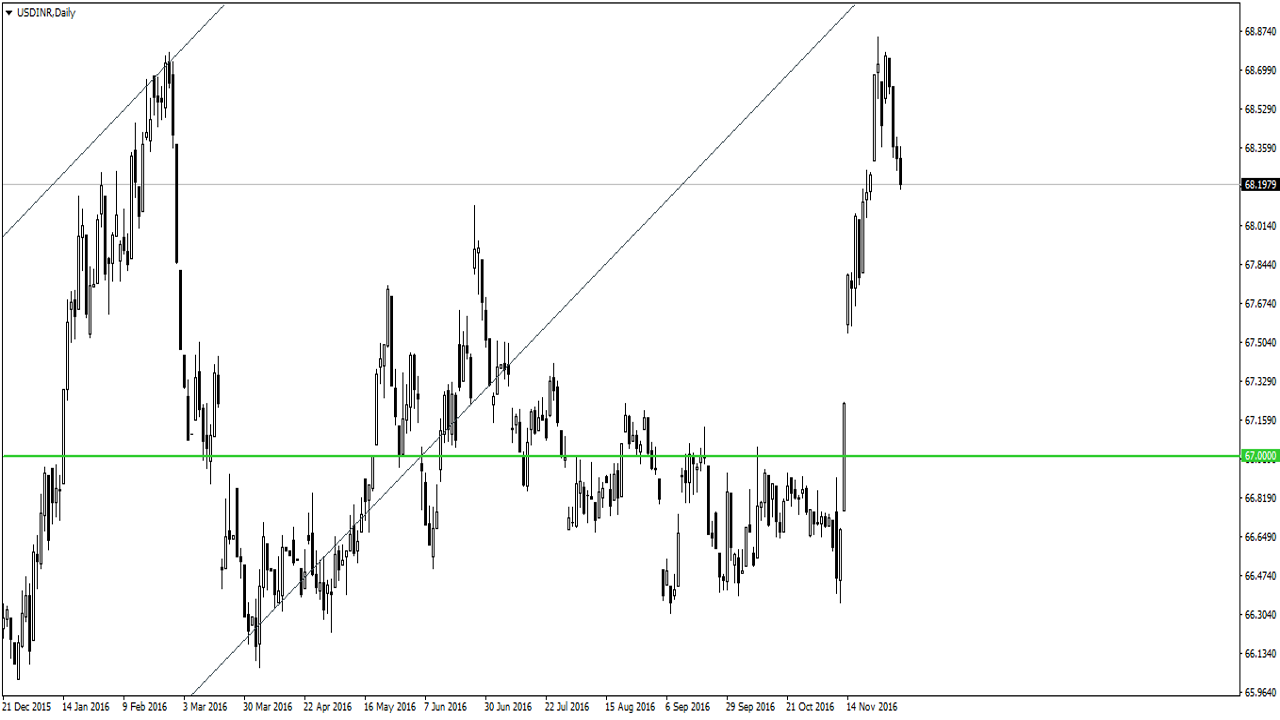
If growth continues, one should focus on the boundaries of the long-term channel, which the price already exited in the spring of 2013, but returned back into a year later.
USDINR is quite vulnerable to news events. At the same time, the pair is most influenced by the same news that affects the US dollar. Therefore, in trading we take into account all red-flag news regarding political races, the Fed's intentions, and important economic reports.
Conclusion
When trading, try to exclude short positions and track only possible buys. Be sure to take into account long-term channels and key levels on daily charts. It is also worth considering that gaps on this pair are quite a normal occurrence, and they do not always get closed.
USDINR is currently an absolutely distinctive instrument, as can be judged by the pair's moderate reaction to the US presidential elections. Backed by the strong potential of the Indian economy, the pair will fit perfectly into a ready-made diversification portfolio. Overall, USDINR is more suitable for position trading, taking into account stable trends and the formation of long-term channels. The same applies to the correlation with metals, where a long-term relationship is present.
Sincerely, Pavel Vlasov TradeLikeaPro.ru
