
I want to take a break from trading - is that normal?
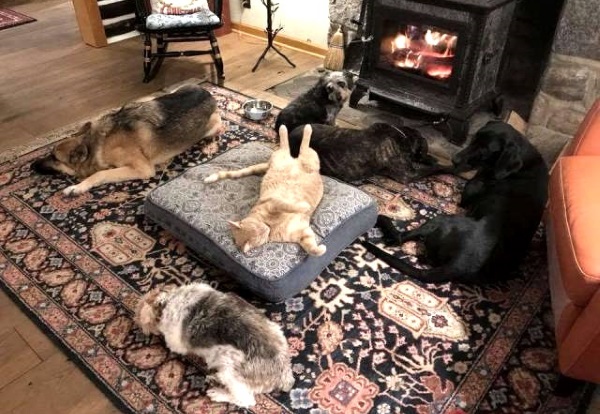 Recently in our VK group one trader asked me a question: "Is it okay if I don't trade for a couple of weeks? Won't I lose the skill?".
That is what prompted me to write this post. Today we will talk about the importance of breaks in trading, work, business.... in any activity) We will figure out how to work properly, how to rest most usefully, how often it is worth taking a vacation, why people are not robots, and how to activate the secret weapon of our brain - the Default Mode Network.
The more you work, the better, is that really so?
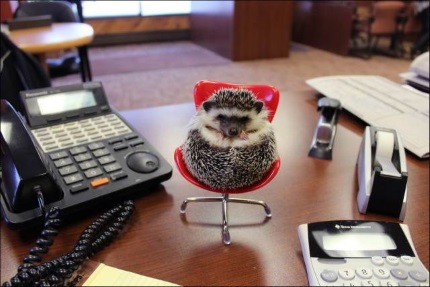
Being busy is fashionable.
Imagine a trader who at breakfast studies the upcoming news and fundamental analysis for today, then trades until lunch, during lunch watches video lessons on trading or reads books on psychology or programming, if he needs to go somewhere, on the way he listens to audiobooks or training courses, during the day he also answers several dozen messages in email and social networks, checks bots on a VPS, and so on and so forth .....
What would you think about him? That he is mega effective?
But no. He is creatively impotent. A robot. Dreary office crap. He is not capable of producing a single sensible NEW idea, only of performing routine functions.
Why? Because WE ARE NOT ROBOTS. The behavior model described above is effective for a computer, for an android, but not for Homo Sapiens. We have different algorithms.
Scientific studies

If you think that working a lot and being insanely effective will lead you to success, then I hasten to disappoint you. That stuff taught in personal effectiveness trainings will only make you a more efficient SLAVE performing routine tasks. It will not help you much, because in the future such workers will be displaced anyway by automated devices.
If you are like me, overly logical and can only be convinced by scientifically proven facts, here is a list of scientific studies whose general conclusion is simple: resting is necessary, and working many hours a day is not the best idea....
- http://journals.sagepub.com/doi/abs/10.1177/1745691612447308
- https://www.sciencedirect.com/science/article/pii/B9780123705099001819
- https://www.sciencedirect.com/science/article/pii/S1556407X10001220
- https://www.nature.com/articles/nn.2384.epdf
- https://www.sciencedirect.com/science/article/pii/S0272494487800312
- https://www.ncbi.nlm.nih.gov/pubmed/19691365
- https://link.springer.com/article/10.1007/s10608-007-9119-0
- https://www.sciencedirect.com/science/article/pii/S1053810009000828
- https://www.ncbi.nlm.nih.gov/pubmed/19427210
- https://hbr.org/2009/10/making-time-off-predictable-and-required
- https://www.ncbi.nlm.nih.gov/pubmed/15586782
How cool ideas come
For cool ideas to come, you need a LOT of free time. Or, more precisely, time in which you are not occupied with your main type of activity.
Everyone who plays video games from time to time knows the following situation: in the evening you reached a difficult section in a game (for example, a Boss), and you try many times but just cannot get through that section. In the end you abandon the idea and go to sleep. And the next day, when you sit down at the game again... you pass that section almost on the first attempt.
Do you think this is an accident? No. It is the work of the so-called Default Mode Network (hereinafter - DMN) or, in translation, the brain's passive mode network. This very thing allows us to solve complex tasks and generate cool ideas.
The thing is that when we are not busy with anything, doing something that does not require attentiveness, for example: riding in transport, washing dishes, brushing our teeth, walking down the street - our brain switches to Passive Mode and processes the available information on the question that worries us. But we do not suspect it)
We all know the feeling that an idea came as if "out of nowhere" when we were taking a shower or walking in the park. Richard Bach even called these phenomena the "shower fairy" and the "walking fairy". In fact, no fairies exist, and the ideas that came to us during activity that does not require active attention are the result of the brain's work. And this is not any kind of miracle, but a feature of our brain that would be a sin not to use.
For those who think this is nonsense, here are links to scientific studies:
- http://journals.sagepub.com/doi/abs/10.1177/1745691612447308
- http://www.sciencemag.org/content/311/5763/1005.full
- http://www.pnas.org/content/early/2017/10/18/1710521114
A short video explaining how the Default Mode Network works (in English):
So how do we activate the "secret weapon" of our brain?
- First you need to obtain the necessary amount of information on the question that interests you. Otherwise the brain will have nothing to work with. For example, you studied some strategy on the forum by reading a thread of about 100 pages. More than enough volume )
- You need not to worry about anything: you should not be rushing to work/meetings, you should not have a list of 100500 tasks, a million unanswered business messages, and so on. That is, it should be so-called "free time", ideally a day off;
- Engage in some routine activity - perhaps tidy up the garage, walk in the park, go to the gym, run on the treadmill (while you must not watch/listen to anything that requires attention), and so on. And, importantly, WITHOUT THINKING ABOUT THE PROBLEM at all;
- The information will be digested, understanding and/or some ideas will come;
- Profit )
The scheme is not perfect, it does not always work "on demand". But it works) And yes, for DMN to activate more often, you need a lot of free time. That is how our brain works, whether you like it or not.
Yes, by the way, there are studies that prove that regular meditation helps strengthen the work of the DMN.
Therefore, if you suddenly consider yourself ineffective when you are not busy with anything "useful", think again.
How to Work Properly
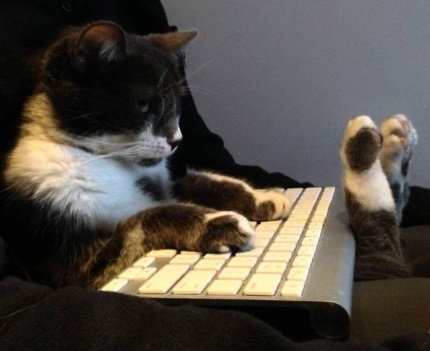
It is the middle of the workday. Around 2-3 p.m. you feel tired, your brain is no longer working as actively as it did in the morning, and you want to take a nap....
Is that normal? More than. By a more or less conscious age, we have all been taught to sleep at night and stay awake all day. But this is not the best habit for our mental health, and our ancestors definitely did not sleep like that.
People in the pre-industrial era, when there was no electricity yet, would fall asleep around 8 p.m., then wake up at about 2 a.m. for a couple of hours, engage in creative work, smoke, have sex, visit neighbors.... and then go back to sleep until morning (you can read more about this in Roger Ekirch's book).
A similar story happens during the day as well. The thing is that our brain prefers to fall asleep and wake up more often than once a day. From 14 to 16 o'clock is the so-called "Nap Zone", a period of time ideally suited for a daytime nap. It is known that the ancient Romans, back in the first century BC, liked to doze during the day; they called such breaks Meridiari, then they began to be called Sexta (the sixth hour, according to their timekeeping), and over time the word Sexta transformed into Siesta. Anyone who has been to Spain knows that during siesta almost nothing works in the daytime - everyone is resting.
In China, workers sleep for about half an hour during the day, including in many offices. If you are Chinese and nod off at your workplace after lunch, no one will fire you or fine you.
Many studies show the positive effect of short sleep during the day. Concentration and attentiveness improve, and you can get more done.
An interesting fact: a 10-minute nap is the most effective. After it there is no period of "sleepiness" as there is after a 20-30 minute one, while at the same time the same positive effect as from a half-hour rest remains.
Moving on. The next interesting clues are given to us by a 30-year study of people outstanding in their fields - musicians, athletes, writers, and so on.
Key number 1: it is possible to deliver outstanding results at the limit of your abilities for only about an hour without rest. Scalpers who closely monitor the market should take note. Trade for an hour, then take a break.
Key number 2: people who have achieved outstanding results in their disciplines practice/train for about 4 hours a day on average. Increasing the amount of workload leads only to burnout and injuries (in the case of athletes). Therefore, there is little point in trading for more than 4 hours a day in total.
And of course, the most effective period is from morning until lunchtime. If you have some task that requires maximum attentiveness and concentration, it is better to do it in the morning.
To sum up all of the above:
- Do the most important task in the morning;
- It is possible to work intensely, at the limit of your abilities, for only about an hour without rest - do not hesitate to take short breaks;
- There is no point in practicing trading/music/sports for more than 4 hours a day;
- Between 2 p.m. and 4 p.m., it would be good to set aside 15-20 minutes for a short nap;
- It is better not to have lunch at home - walk to the nearest cafe; perhaps during that time your DMN will activate a couple of times (read above in the block about ideas). And please do not stare at your smartphone while eating.
P.S. An important note: if you have entered a flow state and some task is wildly exciting you, there is no need to force yourself to stop. If with burning eyes you are testing a new system until one in the morning - that is a good sign)
How to Rest Properly and How Often to Take a Vacation

The best way to rest is something that includes physical and mental activity, with deep immersion in the process. For example: rock climbing, drawing, golf (it is not for nothing that Donald Trump recommends it in one of his books).
The task is to switch off completely and not think about routine/work/trading, and so on.
Of course, if you are wildly tired - sleep, watch TV series, play video games - by all means. When you simply have no physical strength, that will work too.
I will not tell you here about regular fitness classes - everyone already knows that this is vitally necessary. The only point is this: the next time you go to lift a barbell, know that the human body was originally created to run away from a cheetah and climb an apple tree, while all illnesses related to joints appeared in the agrarian era, when people began poking around in the soil bent over and carrying huge tubs of water. And perhaps it is worth focusing more on track and field instead of showing off with kettlebells.
As for vacations, in general scientists agree that ideally they should be about one week every three months. Hard work or trading without days off and without a vacation will only lead to health problems. You still will not earn all the money anyway...
Conclusion
I understand perfectly well that not everyone can apply the recommendations given above. But if this post at least made you think about how important rest and breaks are in work and trading, then I did not write it in vain. For a long time I myself believed that always being busy with something was cool and great, and I even sometimes felt guilty during weekends or vacations when I was doing nothing "useful", but as it turned out, there is nothing to feel guilty about - without rest and breaks, productivity is simply impossible.
Remember: the market will still be here tomorrow. And if you feel that you want to take a break from trading for a day/week/month, go for it. Nothing terrible will happen; on the contrary, during that time you will most likely come up with new, cool ideas about how to improve your trading.
Sincerely, Pavel Vlasov TradeLikeaPro.ru
