
Stop Looking for Trades on the Chart!

How many times have you stared at the chart, trying to understand: should you take this signal or not? And how many times in such cases did you make a profit? And honestly?
Good trades do not need to be searched for on purpose. You simply wait for them and react. Keeping a couple of nuances in mind...
Today we will talk about how often you should check the chart in forex trading, as well as about the reasons why our brain sees trades where there are none (and what to do about it).
You Do Not Need to Look for Entries at All
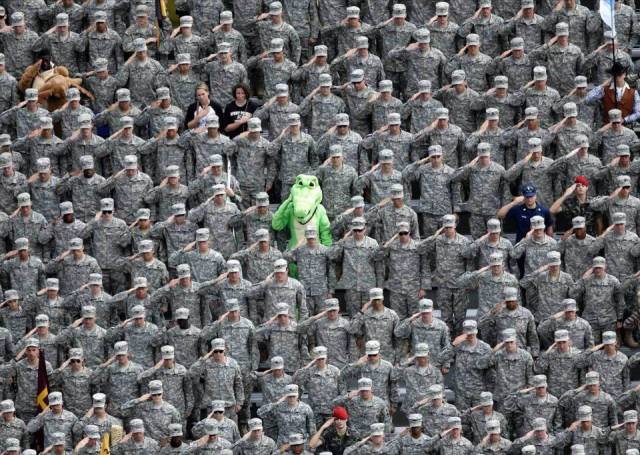
Good signals are visible immediately. Instantly. Like the crocodile in the photo above. You do not need to look for them. You turn on the terminal and see everything right away. You do not guess, do not draw things in, do not change the chart scale (narrower/wider), but IMMEDIATELY see the entry.
If you do not see a signal on the chart in the first 1-2 seconds, it is not there.
In general, if you know at least 4-5 methods of technical analysis, you can, if you want, find a signal in any direction at any moment on any chart.
Example:
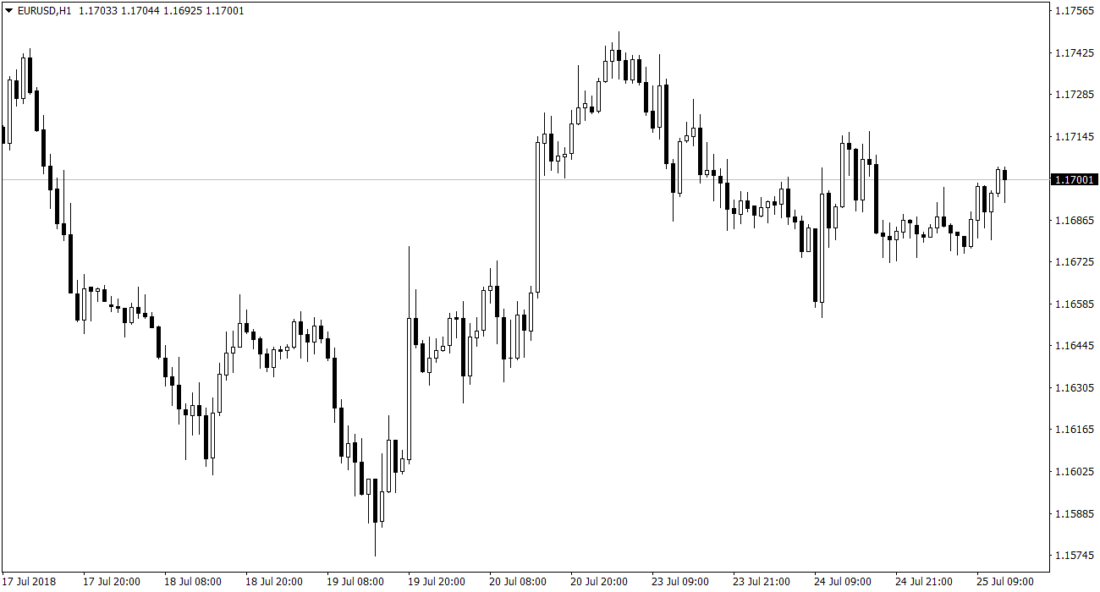
EUR/USD, a chart like any chart, on the "naked" chart nothing by Price Action catches the eye, lazy consolidation, it is worth waiting.
Ok.
Let's throw Stochastic on the chart:
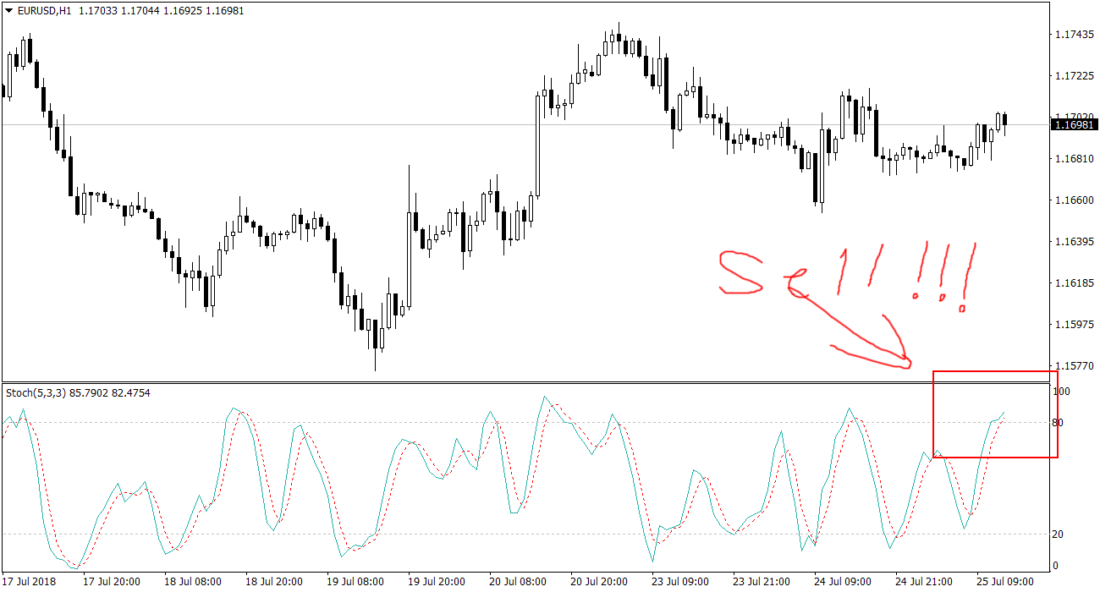
What do we see? Stochastic shows us overbought conditions. We need to sell!
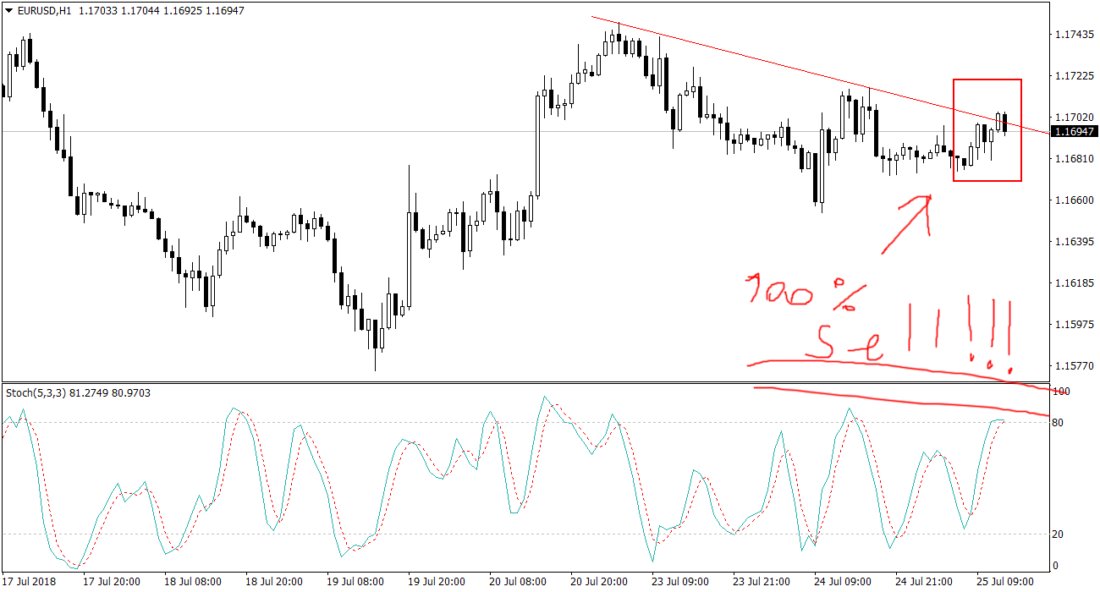
Next, the brain needs confirmation that we are right. We draw a trend line and see that there was a false breakout of the trend line, the price is moving down, that's it - we urgently need to sell! Aaaaa!!!!!
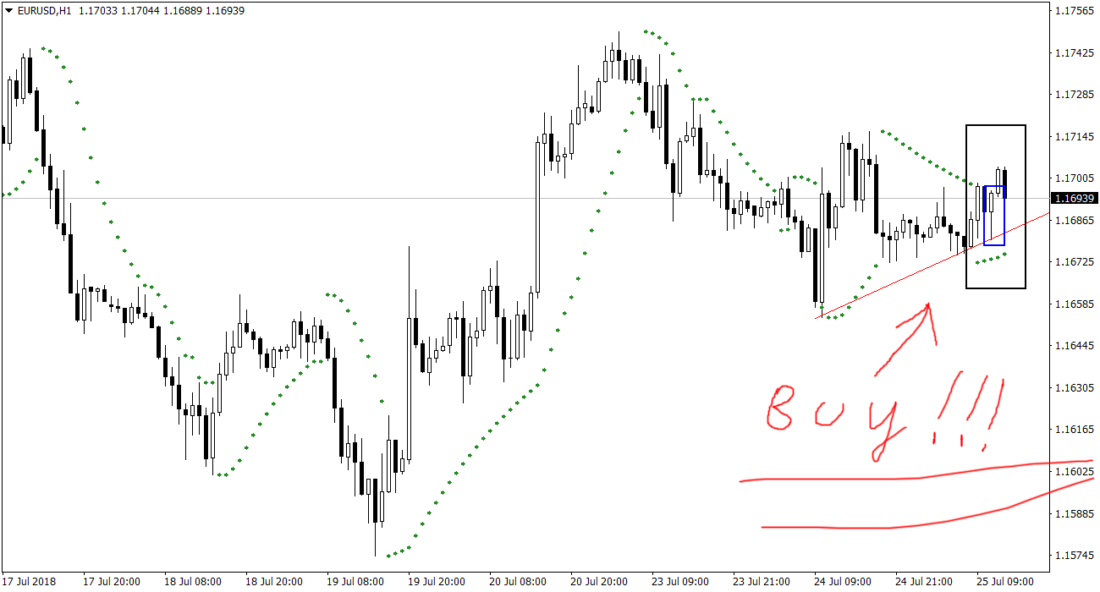
And now let's find a buy signal on this same chart.
We draw a trend line, there was a bounce! And this bounce is a Pin Bar! The price has pulled back exactly to its half, an excellent moment for entry. Also the PSAR indicator (green dots, we added it for confidence, because we need to be right, don't we?) is below the price. There is no doubt - Buy with the whole stack.
So, at any moment on the chart, if you want, you can find any signals. Impatience, the desire to earn, bitterness after the previous losing trade, or euphoria after a winning trade, all this clouds our brain and we look for trades where there are none, while proving to ourselves that we are right.
The Longer You Look at the Chart, the More Trades You See
According to research by scientists, our brain works in such a way that the less often we encounter a familiar and usual phenomenon, the more often we begin to notice it.
Think about this phrase. As soon as you start looking for trades, you find them)
Neighborhood Watch Syndrome
An interesting experiment was conducted: in an area with a high crime rate, teams of volunteer patrols were introduced, who reported any violations of public order to the police.
At first, calls came in only about serious crimes. However, then the crime rate in the area noticeably decreased and the patrols began calling the police for less significant reasons: crossing the road in the wrong place, someone walking down the street at night, and similar nonsense...
Phantom Threat
In another experiment, people were shown several sets of composite portraits with completely different facial expressions: from frightening to absolutely friendly. And they were asked to choose from them those that looked threatening.
At first, people quite adequately chose the most "beastly" faces, but then the scientists began removing them from the samples, leaving more "ordinary" faces. And people began to call threatening those faces that at first seemed harmless to them.
Why? Because they were told to FIND threatening faces.
The experiments described above clearly show that when you look for something, you will definitely find it. Just like trades on the chart.
Our brain tries to match all the facts in such a way as to confirm our point of view. And this leads to losses.
The only way to fight this effect, according to psychologists, is to define the goals you set for yourself as precisely as possible and write down specific wording.
In the case of trading, the remedy is simple - a checklist. We have a separate article about this.
If a trade matches all the checklist items - there is a signal. If it does not match even one - you are just bored...
Practice on Demo

Naturally, after putting a new system on the chart, you will not see trades in 2 seconds. Any new strategy requires that you get used to it. A demo account helps greatly with this.
How long should you get used to a new trading system? It depends on the timeframe and the frequency of trades. If it is intraday trading, a week is enough. If it is daily charts (D1) - then about a month.
How Often Should You Check the Chart?
Whatever timeframe you have - check it that way. If D1 - once a day, If H1 - once an hour. And so on. On timeframes below D1, it is worth limiting the trading window when you are looking for signals. Checking charts at night on low timeframes usually makes no sense.
Conclusion

To sum up: the more you stare at the chart, the more incorrect trades you have (they may be profitable, given the random nature of the market, but not according to the system). The best signals are visible immediately, literally in the first second. But, of course, if you have experience working with the strategy and define its signals correctly - a demo account will help with that.
Oddly enough, the same is true in life. Waiting and reacting to situations, offers, and events is most often much more effective than trying to set goals and achieve them. But that is for another time .... )
Respectfully, Pavel Vlasov TradeLikeaPro.ru
