
Specifics of trading commodity currencies on Forex

The main task of trading comes down to reliable forecasting of the future movement of the exchange rate currency pair. It includes US dollar, displaying global world trends, and a currency that directly depends on the state of the national economy. The GDP and budget revenues of many countries depend on the extracted raw materials, if they occupy a sufficiently large share of exports. This makes the national currency predictably dependent on the market value of mined minerals or cultivated/produced agricultural products.
On the other hand, in the Forex market there is a situation where all currencies without exception are affected by one common factor (interest rates of the world's leading economies, trade wars, etc.). As a result, trends diverge, and at this moment the time comes for a fairly predictable subsequent movement of the national currencies. The review will discuss how to technically “see” such moments, determine entry points and trading strategy for commodity currencies.
How to find a commodity currency?

As mentioned above, the export schedule helps determine the commodity currency. On the site of the MIT Media Lab startup, you can get a fairly complete picture of any country in the world and instantly determine which product affects its GDP.
Click search (1), select the country (2) and the type of visualization (3). A more visual representation of the export structure is obtained in Tree Map mode, but the service can produce bubble charts, line graphs, etc. There are also many filters for specific products and raw materials, which makes it easier to find large exporters.
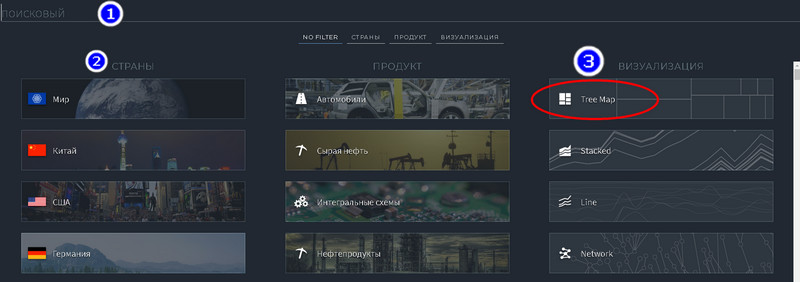
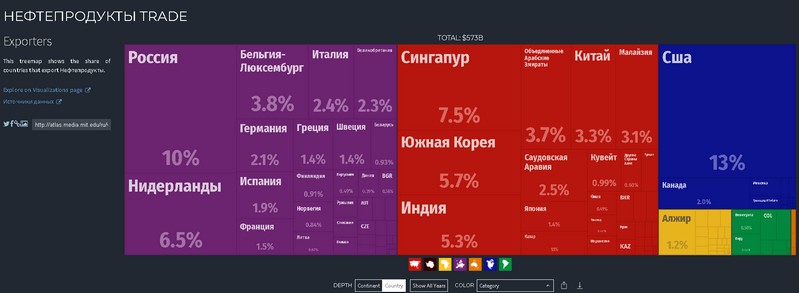
The picture below shows the breakdown of oil, where you can see that The USA surpasses Russia in supplies, but this does not make the American GDP oil dependent.
To be convinced of this, just look at the structure of US exports; it has diversified budget income, since there are no foreign trade items exceeding a share of 15%.
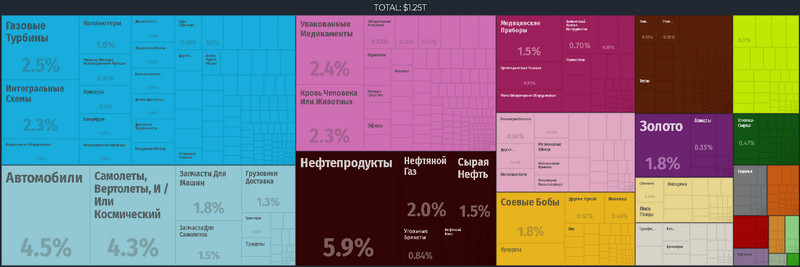
Commodity currency is the national currency of a country with the share of exports of one type of raw material exceeding 15%. The more, the better the decorrelation “plays out”, thanks to which we are going to make money on the Forex market.
Pitfalls of choosing commodity currencies

The strategy for trading commodity currencies only works in liquid pairs that will not “break” to win back internal news. Regardless of commodity prices, a civil war or political crisis will lead to a fall in the national currency against the dollar.
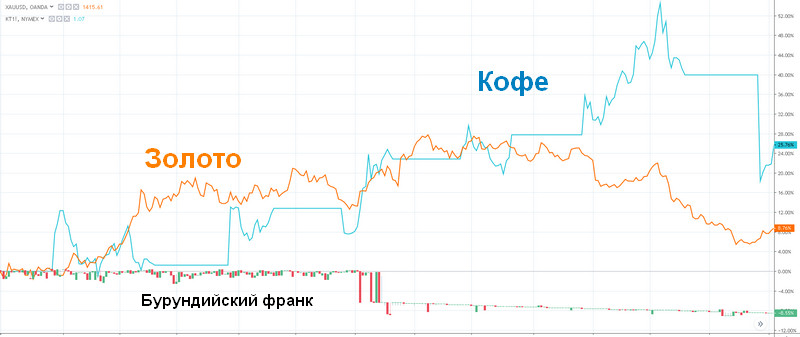
Pay attention to the country of Burundi, where the export of coffee and gold accounts for a share of 23%.
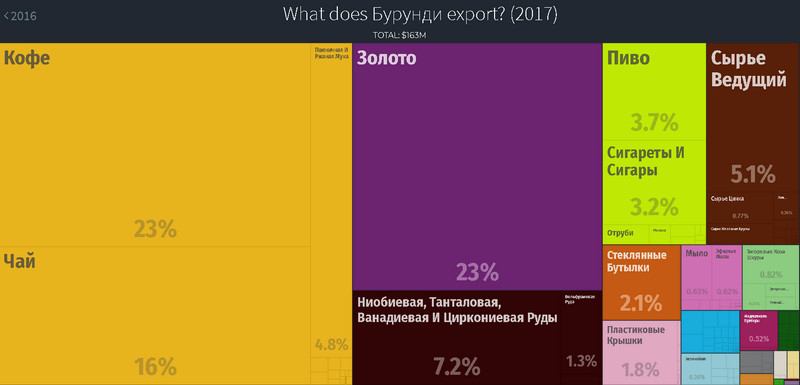
Both types of raw materials showed growth at the end of 2017, the cost of coffee beans especially soared, but the Burundian franc only lost its value.
For the same reason, traders trading the USDRUB in correlations with oil sometimes notice how the dynamics of the ruble “refuses” this relationship.
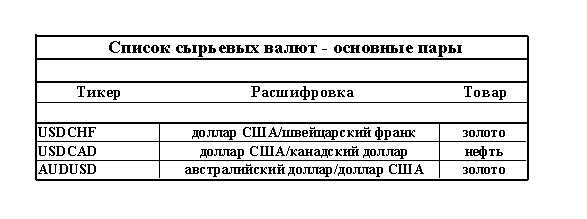
The most reliable type of instruments that do not experience problems with liquidity and local economic crises are the main currency pairs. Commodities include the Canadian, Australian and the New Zealand dollar, Swiss franc.
The economy of the country of alpine meadows, reliable watches and banks depends on gold no less than the African state that produces it - this is proven by the structure of exports.
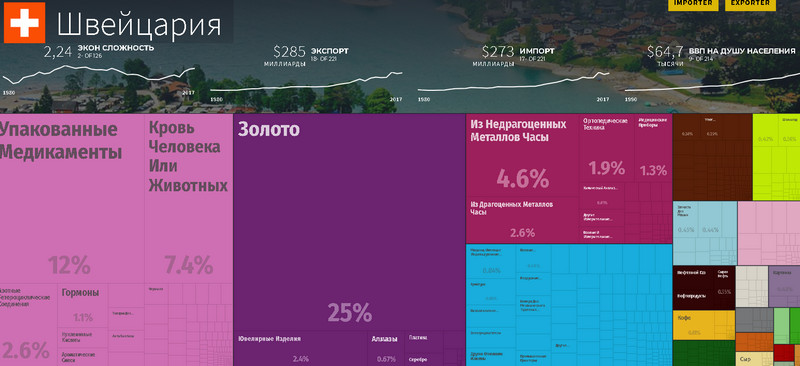
Switzerland is engaged in gold processing and intermediary sales, helping some states to legalize the mined raw materials. In the 20th century, Germany resorted to its services during World War II and the USSR during the Cold War, not to mention the countries of the Middle East, Africa and Latin America.
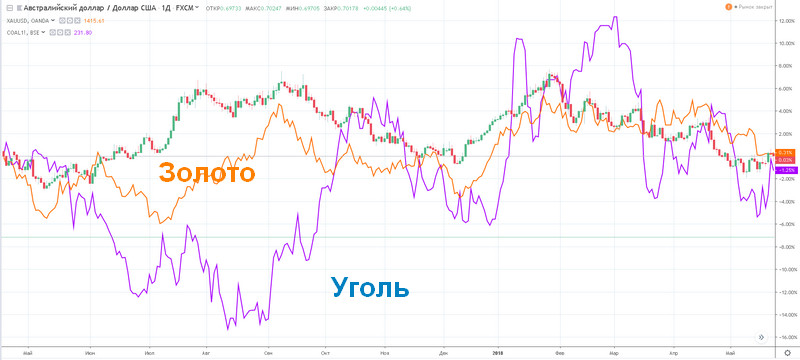
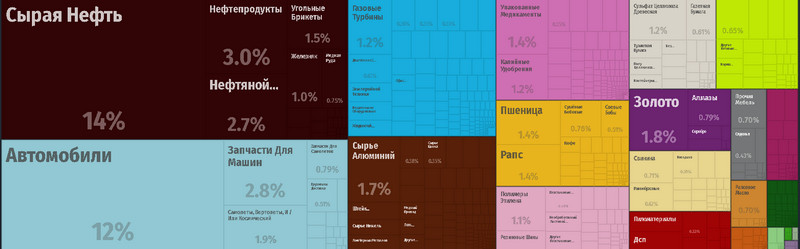
Australia also depends on gold exports, although the continent's export structure is heavily dominated by coal.
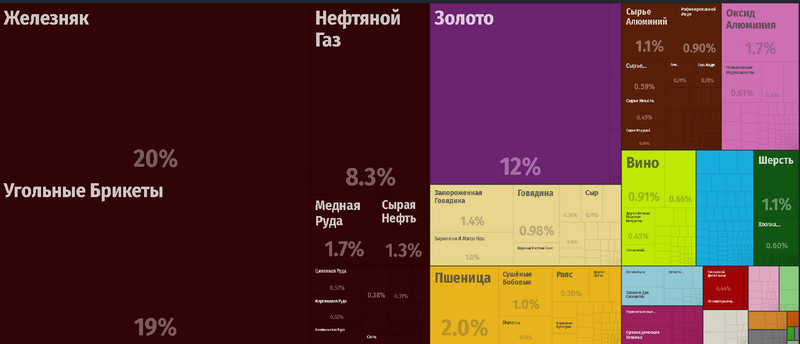
A large number of types of coal, the specifics of transportation and delivery, as well as relatively low liquidity are factors that greatly reduce the real impact of this raw material on the national currency. Traders do not take into account its cost, as can be seen from the comparison of graphics of three instruments: AUDUSD, gold and coal futures.
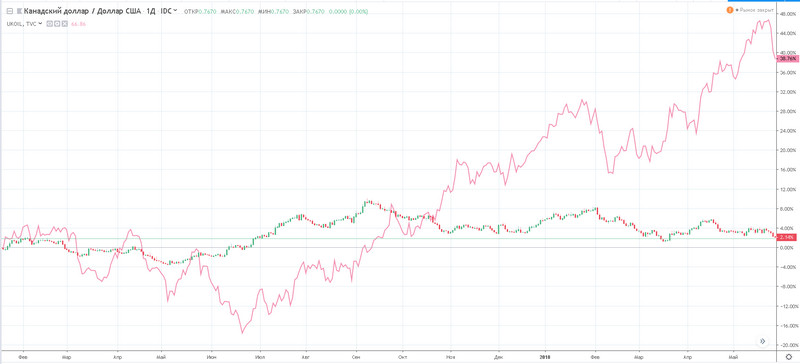
In the case of USDCAD, the high liquidity of a commodity that dominates the share of exports is not a clear argument for the influence of its value on the national currency. Canada's budget revenues clearly depend on foreign oil trade.
However, having built a graph comparing currencies and oil futures, we will not see any relationship between quotes:
The pitfall here is that traders look at the development of the economy USA, it alone determines the growth of Canadian oil exports, as well as car sales, which occupy no less a share of foreign trade. The benchmark for forecasting the movement of USDCAD is the S&P500 stock index.
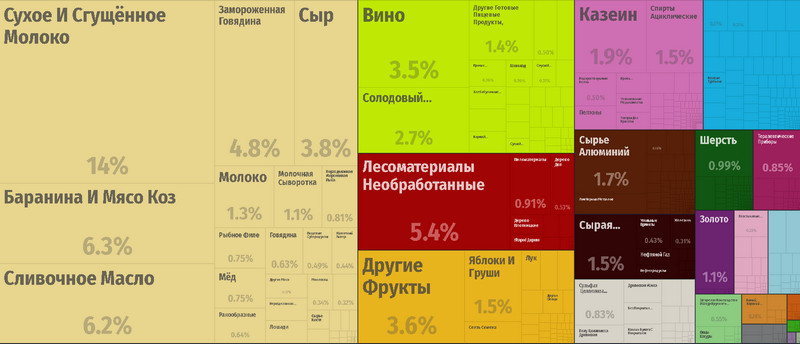
The choice of a “guide” for the New Zealand currency also has pitfalls; the country is a leader in the supply of meat and dairy products to international markets.
The value of a currency is influenced by quotes from the CRB index, which is a basket of goods collected and tracked by Commodity Research Bureau.
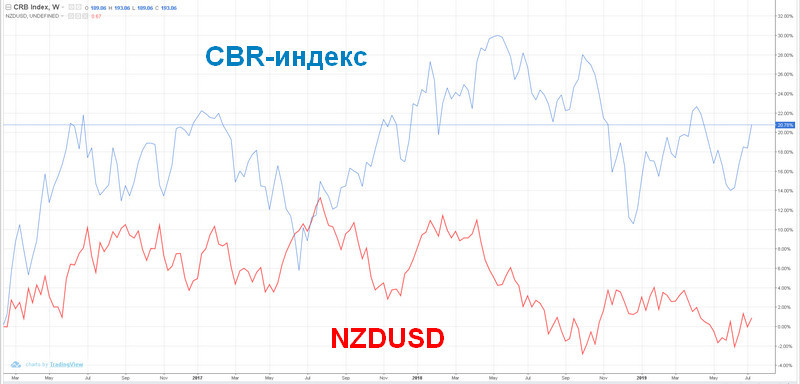
Features of forecasting commodity currency exchange rates

As noted above, the trading system uses a simple logic of the relationship between the growth of raw materials and the national currency exchange rate. There are two types of cost discrepancies that have different predictive values.
If, during a medium-term fall in the currency and raw materials, the latter begins to grow, this is a signal to search for the bottom and open a long position in the commodity currency. The exchange rate will rise for a whole range of reasons: increased budget revenues, which have a positive impact on the economy; monetary policy measures Central Bank, receiving a large influx of foreign exchange earnings; actions arbitrators, etc.
Increasing prices for raw materials and a high value of the currency can lead to its sharp fall. Currency speculators will thus react to the strengthening of the US dollar, which, in turn, can grow on crisis expectations. In this case, we can predict a subsequent drop in prices for raw materials due to a decrease in their consumption against the backdrop of economic stagnation.
Strategy characteristics
Platform: any
Trading instruments: USDCAD, AUDUSD, NZDUSD, USDCHF
Timeframe: D1
Recommended brokers: Alpari, RoboForex, AMarkets
Open two charts of daily candlesticks, one of which is the leading commodity and the other is the currency pair. Add the indicator Bollinger Bands with a period of 200 and synchronize candles by day of the week. Additionally in the indicator settings:
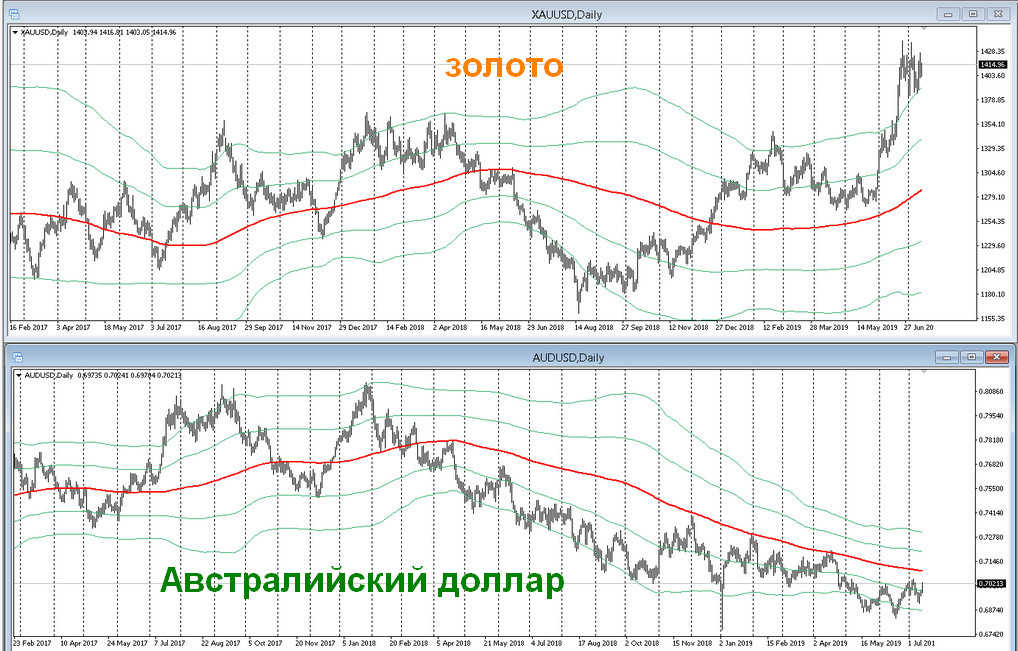
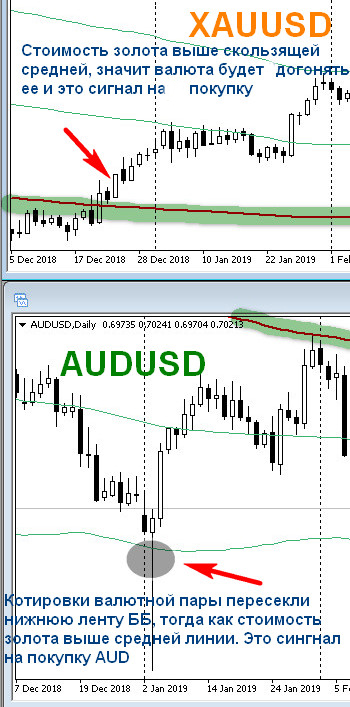
A signal to buy a currency pair appears provided that:
A prerequisite for the trade is the previous coincidence of trends: the quotes were in the same zone below the moving average, and then the commodity began to rise while the currency lagged behind the trend.
A signal to sell the commodity appears under similar factors:
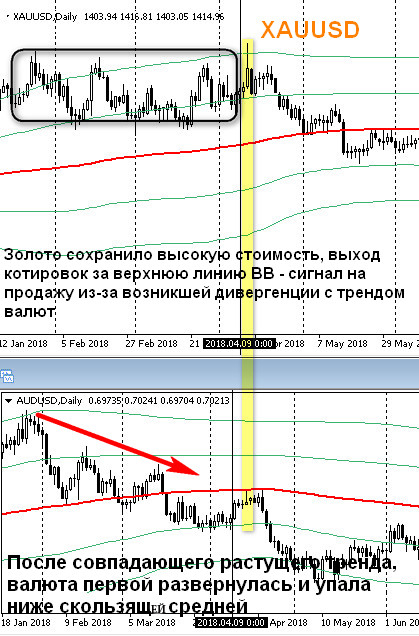
Profit can be taken at the Bollinger Bands. It is better to split the entry into several parts and add on a retest or repeated crossings of the moving averages by either instrument, provided that the current price of the new trade is better than the previous entry. In fact, this means averaging the position.
The strategy does not provide for a specific stop loss level; the trade can be held until the imbalance disappears: the currency and the commodity will converge in the trend, ending up simultaneously above or below the moving average. However, it is not recommended to hold the trade that long; it may turn out to be unprofitable, taking into account the cost of the accumulated swap.
When trading inverse pairs, for example the Swiss franc, instead of selling you should buy at the moment when both instruments are above the moving average and the currency crosses the upper band.
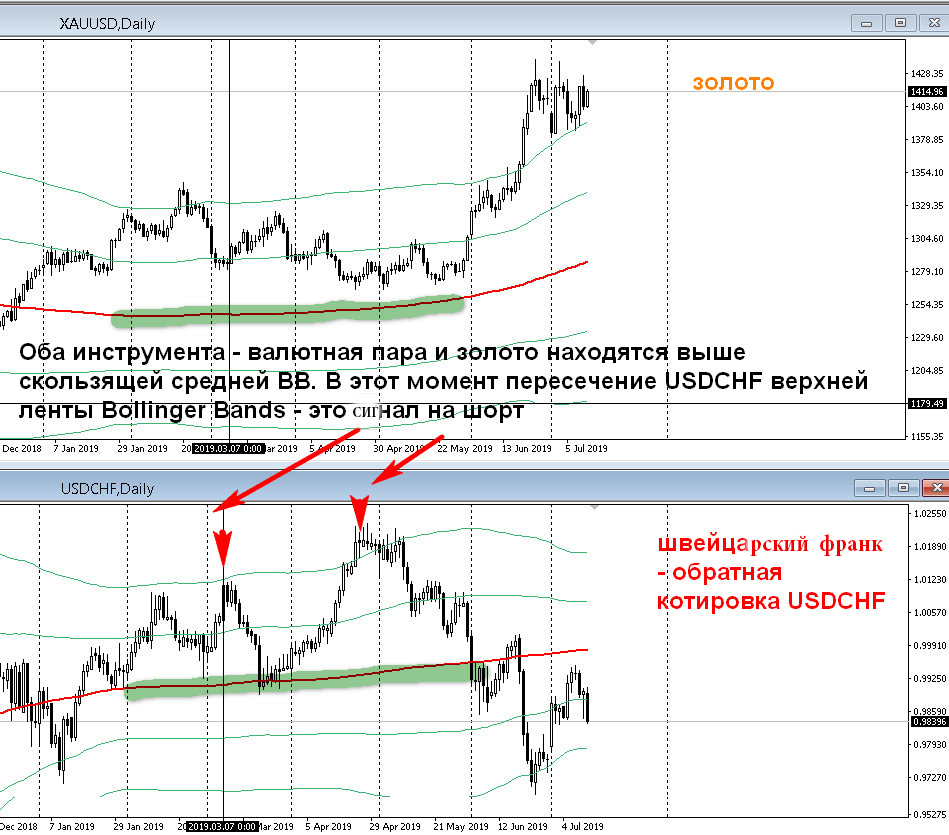
A strong franc exchange rate combined with a cheap gold price is a fairly rare situation, so to buy the precious metal it is enough for both instruments to be below the middle line, crossing the first deviation band.
Conclusion

Despite the abundance of countries with commodity economies, in fact, the guide model works with almost absolute reliability only on major currency pairs. The divergence between gold and pairs can be used as a non-trading indicator that clearly shows the “common bottom” in the Forex currency market.
When adapting the indicator for smaller time frames, it is important to keep a large period and also think through the money management system, since divergence on hourly candles often lasts several days.
Best regards, Alexey Vergunov
Tlap.io
