
SEC Vote on Reg Crypto: An Opportunity for Altcoins and Risk in the Details

Introduction

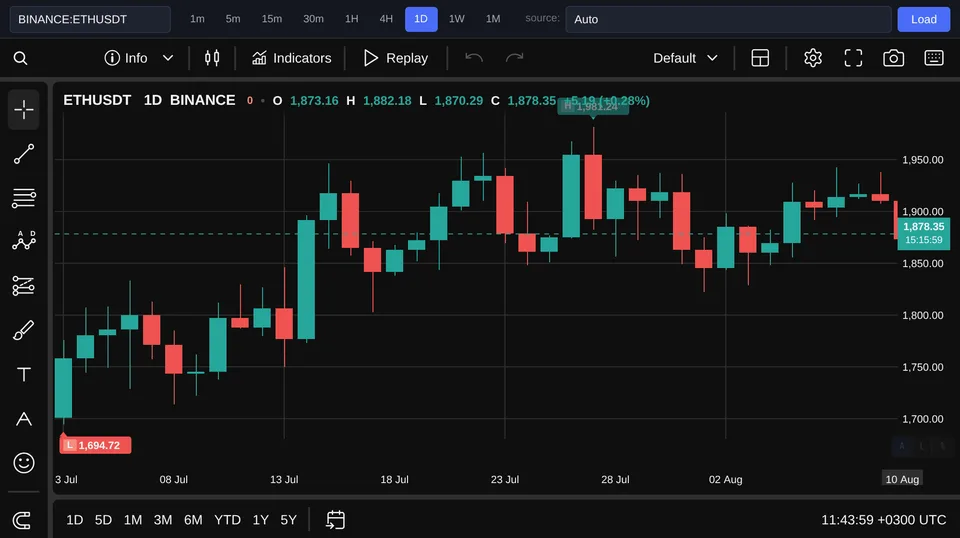
This week, the SEC is expected to vote on launching Reg Crypto—the first major rulemaking process broadly covering digital assets. For the market, the very shift from regulation through individual claims and court disputes to a formal document that issuers, exchanges, investors, and lawyers can discuss is already important. However, the vote will open the process rather than give the industry a finished rulebook in a neat folder. Altcoins have gained a positive narrative, but the market is not yet rushing to turn it into a broad rally. Ether is trading at 1 878 and gaining 0.25% for the day, while XRP is near 1.01 and falling by 0.71%. This divergence shows that expectations of regulatory clarity are already entering participants' calculations, but macroeconomic pressure, liquidity, and the specific features of individual assets remain stronger than the headlines.
🏛️ What the SEC Vote Will Actually Launch
The upcoming decision concerns the start of rulemaking, meaning the formal development of regulation, rather than the immediate introduction of a final regime. If the SEC approves the start of the process, the next significant event will be the publication of a proposal describing the legal approach, the transactions covered, and the expected obligations of market participants. This is usually followed by the collection of public comments, analysis of feedback, and possible revision of the text. The main result of the vote will be the emergence of a common regulatory framework for substantive discussion, not the instant legalization of all altcoins. Today, projects and platforms often try to reconstruct the regulator's position from a collection of individual cases, each involving its own facts, products, and token distribution arrangements. A unified proposal will make it possible to compare business models against published criteria rather than guesses about which argument the SEC will use next. At the same time, a positive vote will not automatically answer which tokens will receive special status, what exemptions will be provided, or how costly compliance will be. The market will have to assess the text of the proposal, not the initiative's name. In other words, the starting signal for a long regulatory race will sound, although the finish line and even part of the route remain hidden.
🧩 Why Altcoins See Both Opportunity and a Catch
Many altcoins trade at a regulatory discount: investors cannot always determine in advance how a token's initial offering, its subsequent distribution, and staking will be assessed.
📊 Ether and XRP Do Not Confirm a Broad Regulatory Rally
The current market snapshot clearly reflects the dual nature of expectations. Ether stands at 1 878, showing a daily gain of 0.25%: the move is positive but too modest to suggest a powerful repricing driven by Reg Crypto. XRP is trading at 1.01 while losing 0.71% for the day, so there is no synchronized demand even among prominent altcoins. The divergence between ETH's 0.25% gain and XRP's 0.71% decline means that the current movement cannot be considered a broad regulatory rally. Participants continue to factor in interest-rate expectations, dollar liquidity conditions, overall risk appetite, and the specific structure of each market. Until the SEC proposal is published, investors cannot reasonably calculate its costs, timeline, or range of potential beneficiaries. Ether's small gain is consistent with cautious optimism, but by itself does not prove that the SEC initiative was the cause. XRP's decline likewise cannot be viewed as the market's verdict on a regime that has not yet been presented. The more accurate conclusion is modest: the regulatory issue has become a potential catalyst, but has not yet outweighed macroeconomic factors and assets' individual risks.
🔍 Which Details Will Determine the Market's Next Reaction
The first test will be the definition of digital assets and transactions covered by the new regime. For traders, it is crucial whether classification will be based on the method of initial offering, the team's degree of control, holders' economic rights, the network's design, or a combination of these features. The more precise the criteria, the easier it will be to assess the position of tokens already trading and new issues. Disclosure requirements are equally important: who must publish information if a decentralized network has no conventional issuer, what data must be updated, and who is responsible for its accuracy. For altcoin valuations, the transitional provisions, possible exemptions, and rules governing previously issued assets are especially significant. They will show whether existing projects receive time to adapt or face an immediate choice between costly compliance and restricted market access. Finally, timing matters. A long period may pass between the launch of rulemaking, publication of the proposal, discussion, and adoption of final rules, while the text may change substantially. Short-term trades will therefore react to the SEC's wording and signals, whereas a lasting change in valuations will require a clear enforcement regime, acceptable costs, and predictable application in practice.
Conclusion
The expected SEC vote is important as the possible beginning of a shift from fragmented regulatory signals to formalized rules for digital assets. This may reduce uncertainty surrounding the offering and trading of altcoins, but at the same time raise costs and restrict market access for projects unable to meet the new requirements. Current prices do not express a unified verdict: Ether stands at 1 878 and is up 0.25% for the day, while XRP is at 1.01 and down 0.71%. For a lasting repricing of the sector, the market needs published classification criteria, data disclosure obligations, rules for existing tokens, transitional mechanisms, and clear timelines. Until these provisions appear, Reg Crypto remains a significant potential catalyst but does not yet provide a reliable map of winners and losers.