
Realistic Trading Expectations: What New Traders Need to Know
“When reality contradicts our beliefs and expectations, traders eventually face a psychological challenge”
Greetings to all forex traders, beginners and older. Today we are going to tackle one of the bad habits – illusions in trading. It will be painful, not everyone will be able to face reality, but it is necessary to go through it if you want to earn money on Forex steadily, not from time to time.
Why do people like to live in illusions ?

Cognitive dissonance is a psychological term used to describe the discomfort a person experiences when two contradictory beliefs are present at the same time. The theory is that people like to keep all their beliefs and experiences in harmony and avoid disharmony (dissonance).
A prime example is when a person believes that the world will end on a certain day, but then the next day he is confronted with the continuing contradictory reality of the world. The reality does not match his beliefs, and so he naturally experiences emotional discomfort.
When we experience this conflict and discomfort, our thoughts will immediately attempt to restore balance by changing our beliefs and attitudes and, justifying our actions and behaviors.
Ultimately, we all want our expectations to match reality in such a way that we can experience a sense of control.
We all experience cognitive dissonance on an almost daily basis. In everyday life, it can be fairly harmless and even fun to recognize its presence, but for traders it can be disastrous.
Mismatches between beliefs and reality
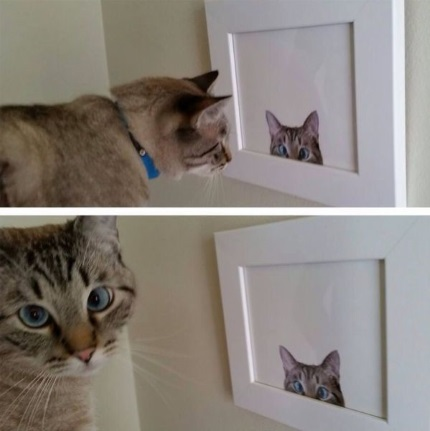
To lay the groundwork for its manifestation, here are a few everyday examples:
Marina is on a diet in hopes of losing weight. She realizes that fast food is unhealthy and contributes to obesity (belief), but somehow she consumes it (reality). Her actions contradict her beliefs, thus she justifies her actions by saying that she will lead a more mobile lifestyle to burn off the extra calories, or that she only consumed it in small amounts for breakfast so everything is in perfect balance, or that she has been so good at sticking to her diet until today that she is well deserving of such a treat.
Ivan has just bought a new car, but paid more for it than he had planned, bought a “cooler” model. He knows he can’t afford it (belief), but he bought it nonetheless (reality). To restore conscious harmony, he justifies his actions by telling himself that this car is likely to last longer than the cheaper one and will save him money in the long run.
Does this behavior sound familiar to you? You can certainly think of many other situations where people exhibit similar thought patterns, and from this point on, you may even be able to see them in yourself.
Clearly, this is a complex and multidimensional topic to discuss, but to make it simple to apply it to the type of trader’s mindset, you must remember that there are times when reality does not match expectations.
How does this apply to traders?

The vast majority of ambitious amateur traders approach their profession with deeply unrealistic expectations.
Here are just a few of them:
– You can learn to trade the market fairly quickly.
– One can quickly and regularly recoup the money spent in large quantities.
– Rapid attainment of abundance and wealth.
– Daily, steady, reliable results.
– One can quickly quit one’s job and work from home.
Anyone who has ever tried trading has quickly learned through experience that none of the above statements are true. This instantly creates a conflict between what you believed and what you experienced, and thus your thoughts quickly try to erase the discomfort and restore harmony.
The reasonable and logical thing to do in this case is to recognize and accept that your original beliefs were incorrect, and then revise your beliefs so that they can accurately reflect reality.
However, admitting that you were wrong and that you made a mistake is in itself emotionally painful, although it must be done. No one likes to admit they were wrong, it is much easier and quicker to just try to rationalize and justify your original beliefs. People generally try to justify their own mistakes because, by doing so, they feel better about themselves. And it doesn’t matter that your beliefs are false, and they will continue to be false for as long as you continue to believe that everything that happens is normal.
It goes without saying that this is completely irrational and can be extremely destructive to traders.
It is important to find someone to blame

It is typical to believe that trading can be learned quickly, and that you can earn X amount of money every day and quit your job within a month or two.
When reality conflicts with this belief or expectation, the trader will make excuses, trying to find justification for their actions, why they were right, telling themselves something like “I just haven’t found the right system yet”.
Instead of accepting their mistakes from their faulty judgments and then taking action to align their behavior with reality, which will ultimately lead to success, they prefer to find excuses for their beliefs.
The situation described above leads to so many traders constantly switching from one forex system to another.
One of the truly destructive characteristics in this situation is that as a result of cognitive dissonance, the original false belief is actually further reinforced… the exact opposite of what would be most beneficial.
In order to restore emotional harmony in such a situation, something needs to change. Either we need to change our beliefs or reduce the importance of one of the conflicting issues.
Very often the broker is “blamed” for trader’s failures. After all, it is so easy to shift the blame onto someone else….
All most people do is maintain an existing belief (rather than admit error), introduce new beliefs to justify the first (justified), and then diminish the importance of real events (disregarding the facts at hand).
The end result is that they continue even more passionately down the false path.
Give me money and fast!

This, however, easily leads to unrealistic expectations and beliefs of traders, namely:
They expect to get big returns quickly.
When reality shows them that their expectation is false, they ignore the facts and look for something to help prove that their belief is correct.
You can often see traders switching from one trading system to another every few months. They add forex indicators, add rules, change timeframes, test different methods, study different theories, follow different mentors (most of them are scammers who live on pennies from selling training courses), trade on different instruments, change their money management system, change risk profiles, buy different software, etc., etc.
They may even find a profitable strategy, but discard it because, in their opinion, it doesn’t give them the great return (those 100500% profits) that they could get.
These people will spend the rest of their lives in a futile search to find something that in reality does not exist. This is quite obvious not only from their own experience, but also from the documented experience of any other trader who has previously traveled this path.
And yet they ignore this evidence. They ignore reality. Their beliefs collide with harsh reality, which causes emotional discomfort. Instead of admitting they are wrong, which would cause even more discomfort, they simply ignore reality, find excuses for their original belief (e.g. the strategy is bad, or the terminal is slow, or the market is wrong, etc.), and find harmony again, convincing themselves that they were right, but just haven’t found a solution yet. And they think it’s better to keep looking for them next!
Similar behavior can be found in the cult of the end of the world. People believe that the world will end on a certain day, and when that date arrives and their prophecy does not come true, the members of the group, instead of admitting that they made an error in their judgment, usually become even more committed to their faith. Their commitment to the cult becomes even stronger, and they find all kinds of excuses to justify their original belief (God is just testing us, he’s given us a second chance, he’s given us a responsibility to save more people by drawing them to our group). Anything but a mask of embarrassment and discomfort in recognition that they were wrong.
It’s time to make a choice

Traders are faced with tough choices that they need to make. We all at some point face the discomfort of cognitive dissonance when our beliefs go against reality. We can either restore our mental harmony by ignoring the evidence of reality and continue to make excuses. Or we can accept that our beliefs were false and then realign them and change our actions and behavior in a way that works in parallel with reality.
The former path is the easiest and most convenient, but it certainly represents an option that leads to guaranteed and lasting delusion. The latter path is more difficult and less comfortable, but it naturally represents the option that will eventually lead the trader to success.
Here is the question that all traders should ask themselves and answer honestly: