
Pro.ECN Accounts - Revolution or the Same Old ECN in Fancy Packaging?

Hello, forex trader friends! At readers' request, we decided to review the Pro.Ecn account type, which appeared at Alpari quite some time ago, was presented as revolutionary, yet has received mixed reviews.
We tested order execution, measured spreads on the major currency pairs during different trading sessions, tried trading the news, and also attempted to understand whether there is any benefit from the additional execution settings that are exclusive to this account type.
What Kind of Account Is Pro.Ecn?

Until recently, the forex market was associated only with the work of market makers, known in our region as DCs (Dealing Centers). Such a broker acts as an intermediary between the trader and the bank and sets bid and ask prices independently. The main profit of a DC comes from client losses. Suppose a client wants to open a buy order on EURUSD, then the broker opens a sell order with the counterparty and pockets the difference between the two positions. Obviously, such a setup with isolation from the external market is far from the concept of being "transparent." In addition, there is a direct conflict of interest. For the broker, this is the most profitable scheme possible, but not the most stable one - sometimes clients make money.
A more advanced MM algorithm, in addition to internal dealing, uses external hedging. That is, the aggregate client position is fully covered with external counterparties. But the broker cannot earn on hedging alone, so the client does not get the best prices or the fastest execution. You send a request to the broker, and the broker sends that request to the bank, which creates a substantial delay in execution and causes requotes.
Over time, the NDD system appeared - the same process, but fully automated. An even more modern STP technology removes the intermediary broker from the chain entirely, providing straight-through order processing - the client trades directly with the counterparty. Such a broker earns exclusively from commissions on trades. STP can also connect to ECN venues. The ECN system automatically matches and executes corresponding opposite client orders. In other words, traders get the ability to trade directly with each other and see the order book.
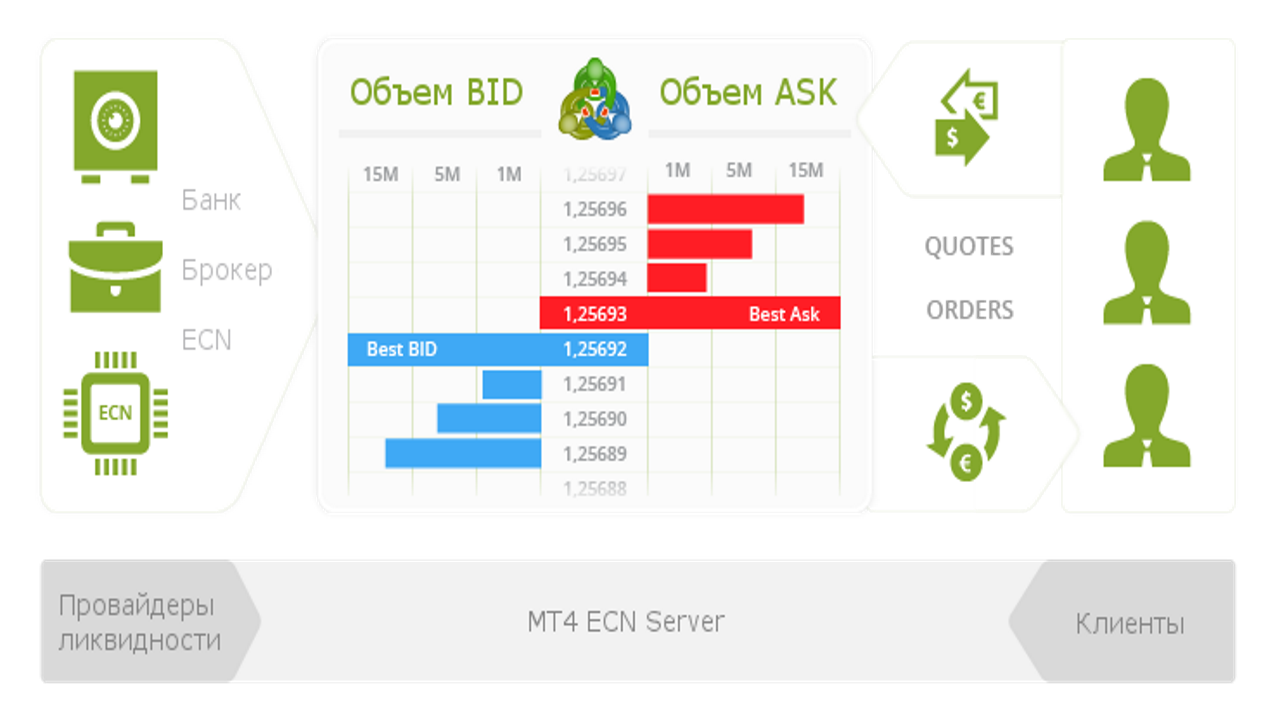
Some time ago, Alpari, in cooperation with Dmitry Rannev, announced a new type of real account - pro.ecn. As stated in the press release, the fundamentally updated ECN technology is supposed to take forex trading to a fundamentally new level.
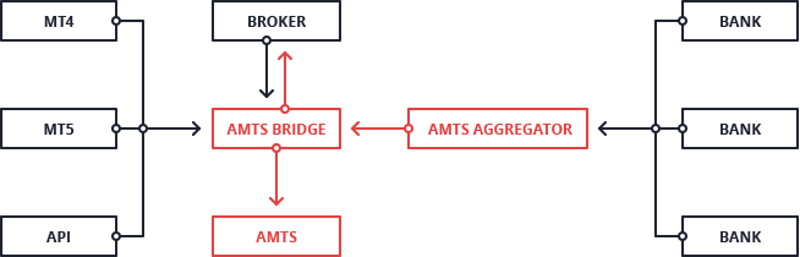
Here is what Dmitry says about the details of the cooperation on the Alpari forum:
"Our software controls the entire execution process, from beginning to end. For every instance of slippage, we know exactly where it came from.
The broker can only connect or disconnect providers, configure commissions, swaps, and determine contract sizes, leverage, etc. The broker cannot interfere in the execution process."
What is immediately pleasing is the fairly low commission of $16 per million one way. This is already below many entry-level plans at other brokers. The goal of our test is to determine spread dynamics and the quality and speed of order execution.
The minimum deposit is $500. That is, for beginning forex traders, this account type is unlikely to be suitable.
Spread Measurement

Apart from the trading system, the average spread over a period does not carry particularly important information. There are already many brokers on the market with fairly low and competitive prices. Therefore, I tried to cluster the results as much as possible so that the charts would show the difference in dynamics during different periods of time and reveal the extreme values in the sample. Because, in essence, it is precisely the peak and minimum spread values that can indicate special trading opportunities.
Spread measurement was carried out over the course of a week (from Monday to Friday) on the main currency pairs (the majors): EURUSD, GBPUSD, AUDUSD, NZDUSD, USDJPY, USDCHF, USDCAD. The measurement period was divided into sessions: from 10 to 19 for Europe, from 16 to 1 for America, and from 3 to 12 for Asia.
*Blue dots mark the actual spread value, the orange line marks the average. The vertical axis shows 4-digit points.
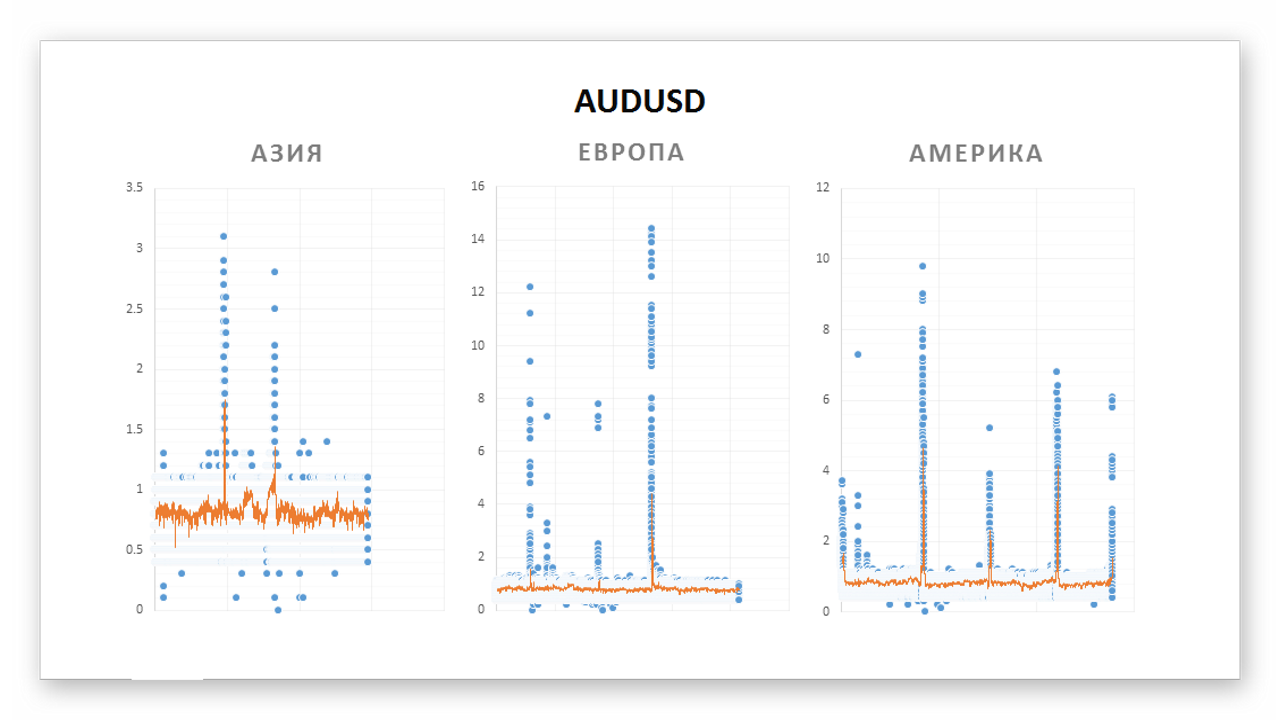
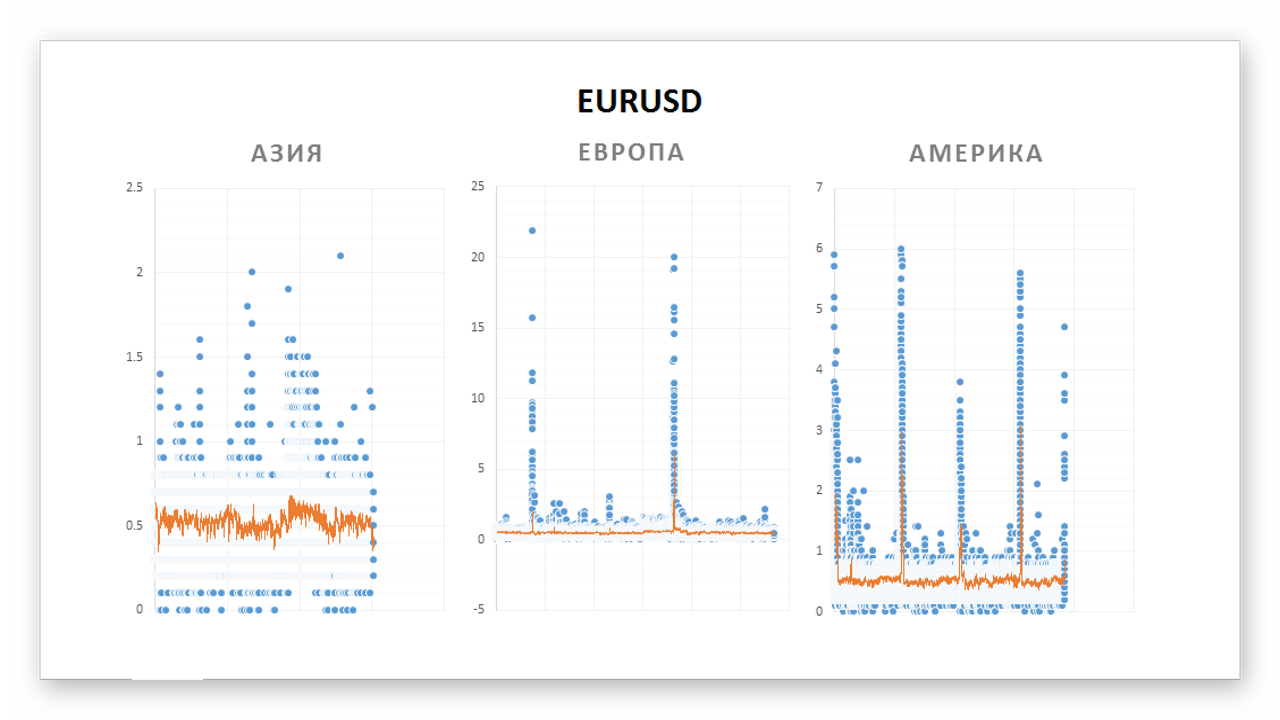
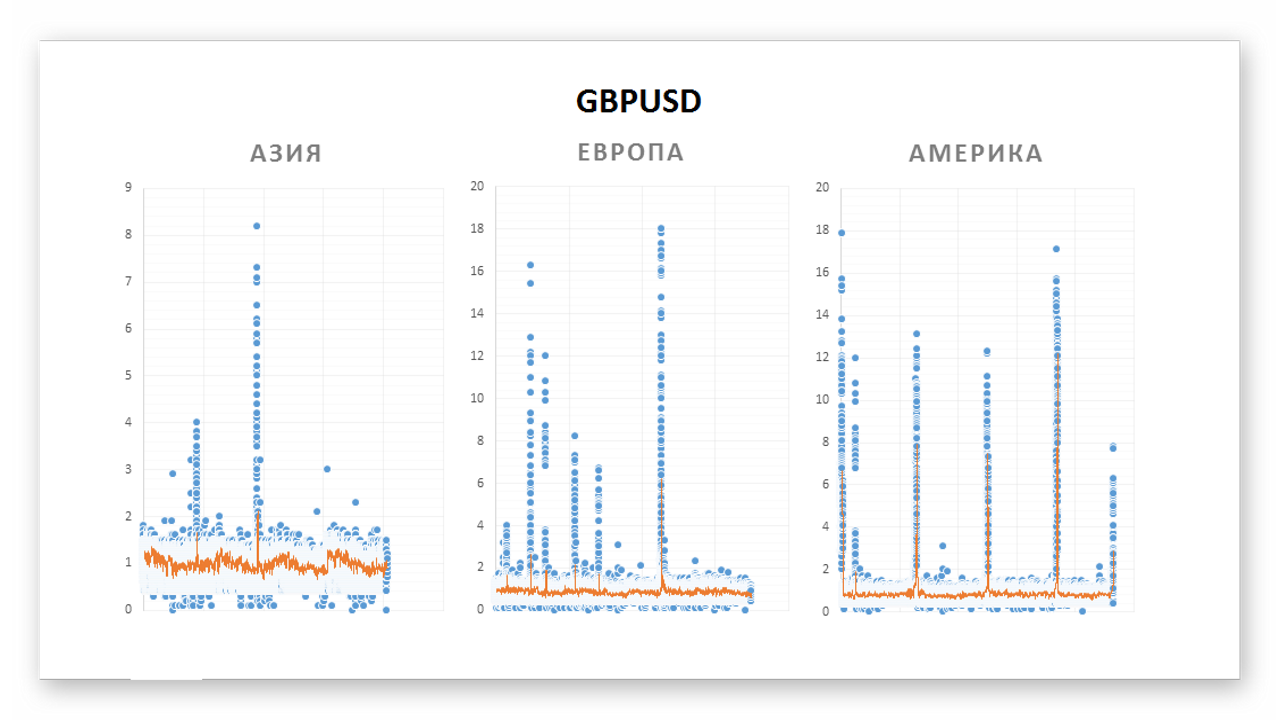
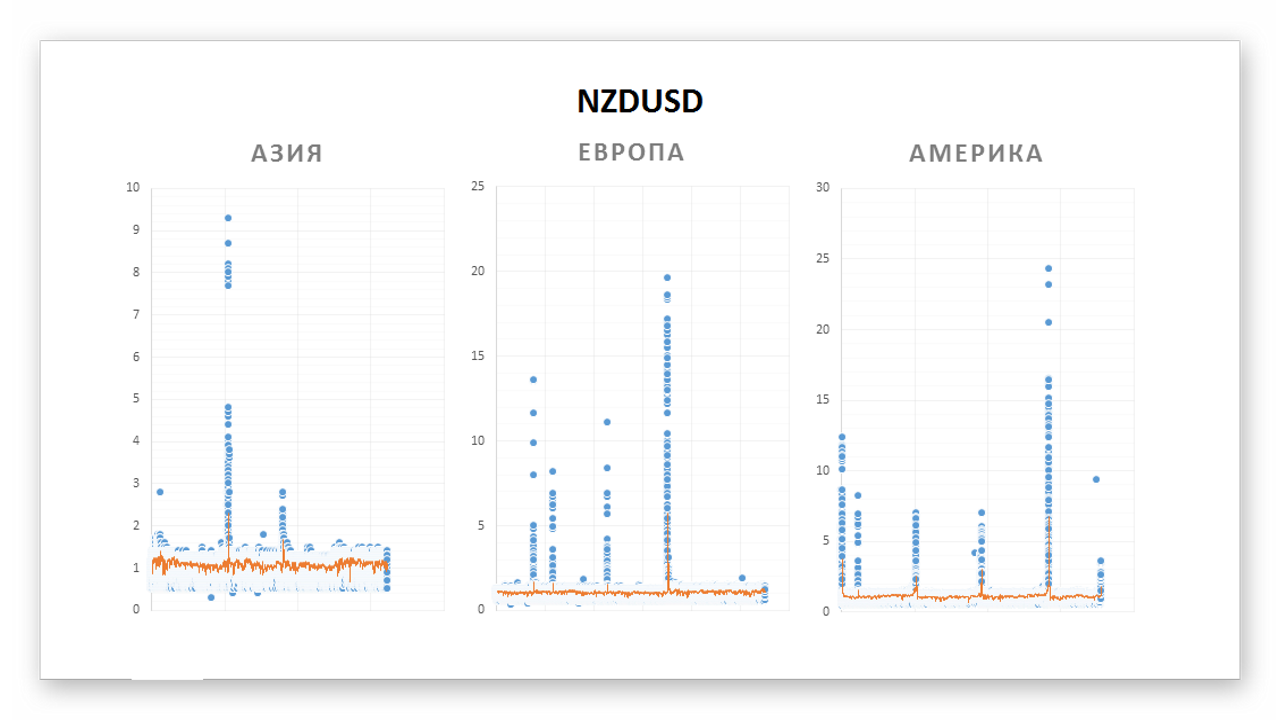
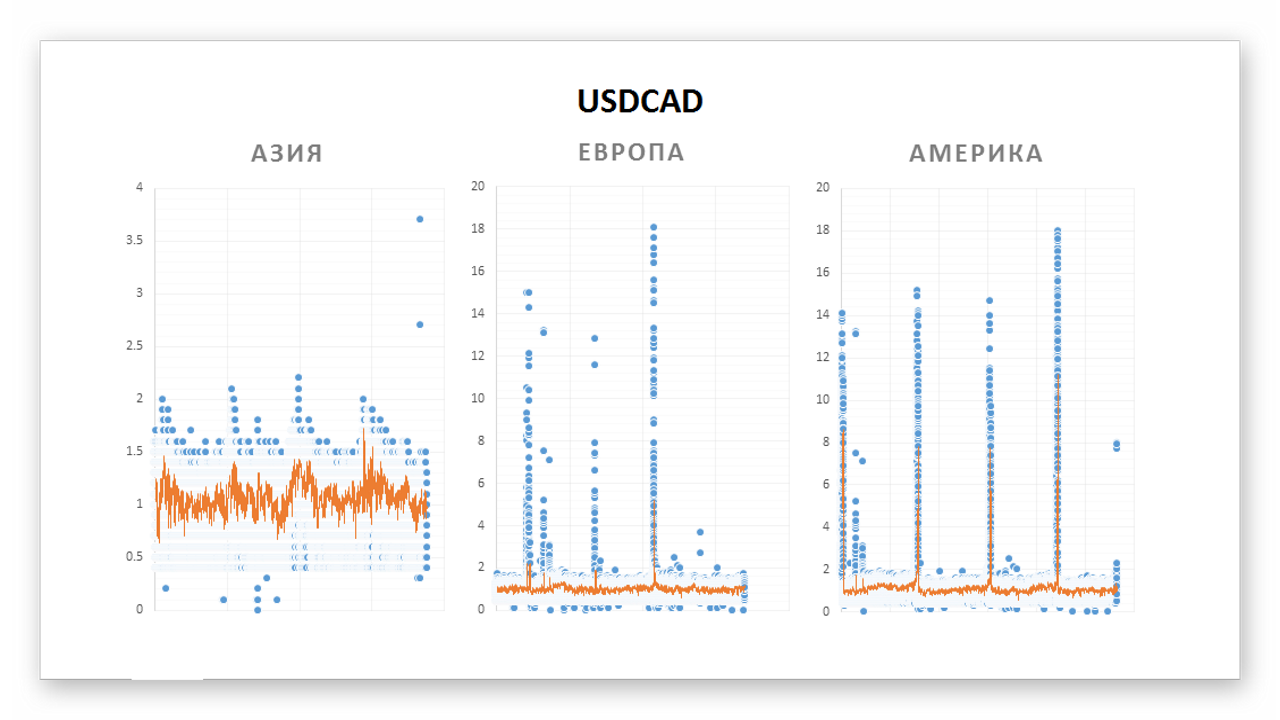
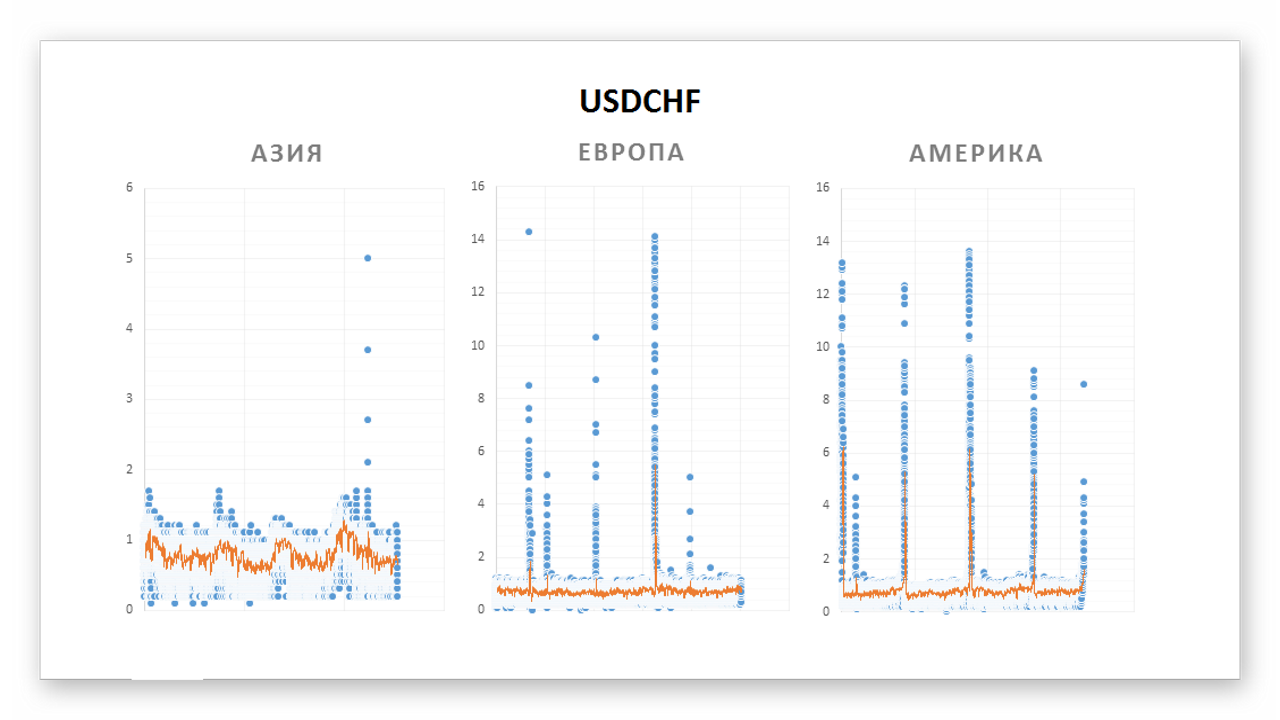
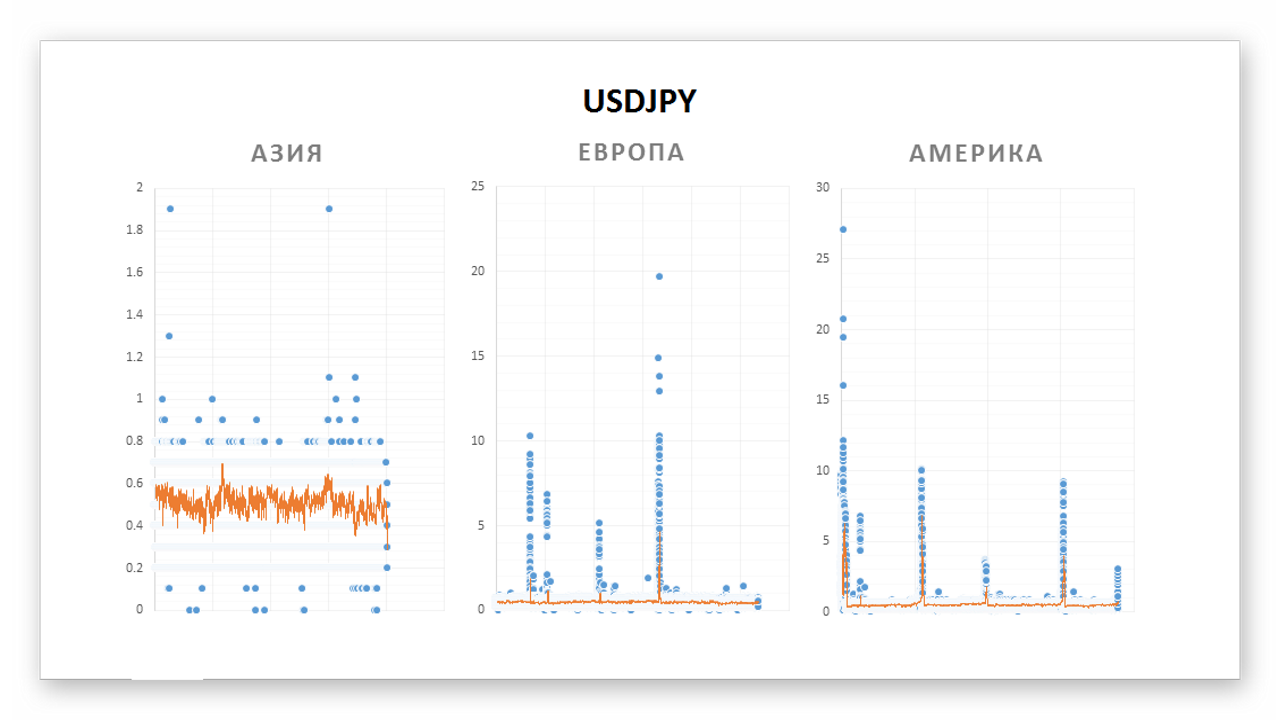
Peaks are the maximum spread widenings during a session. Visually, you can see that Asia fully justifies its reputation as a calm market - during this period the spread is the most stable. During the European session the largest widenings are possible, but the spread is low most of the time, just as during the Asian session (especially on the popular pairs). Perhaps this is connected with the timing of news releases, but during the American session the largest spread was recorded, and it widens to large values with reasonable regularity.
Trading the News
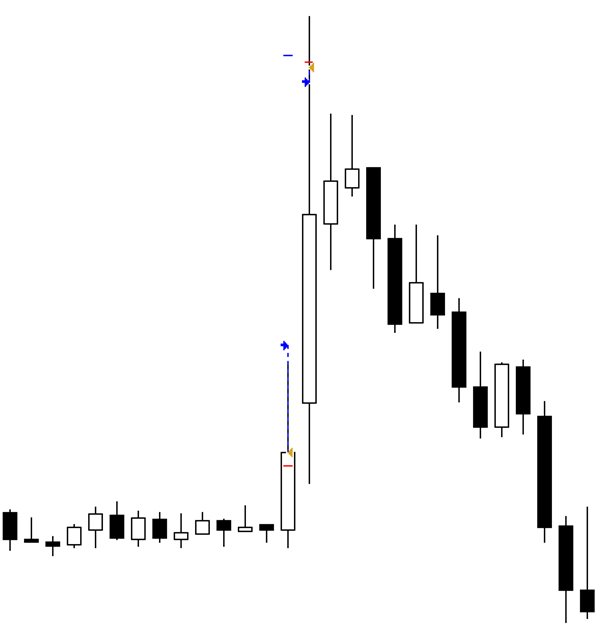
The test was conducted during one of the most volatile news releases - Nonfarm payrolls. Unfortunately, the order was not placed very well and was executed twice at the top of the bar. The first order was triggered by the initial swings and closed at the stop.
By doing a simple calculation, you can determine that at the moment the second order was placed (1200 ms before the news), the spread was at least 160 points (fifth digit), and by the time of execution (almost 3 seconds after the news) it had narrowed to 110. This information is confirmed by myfxbook statistics:
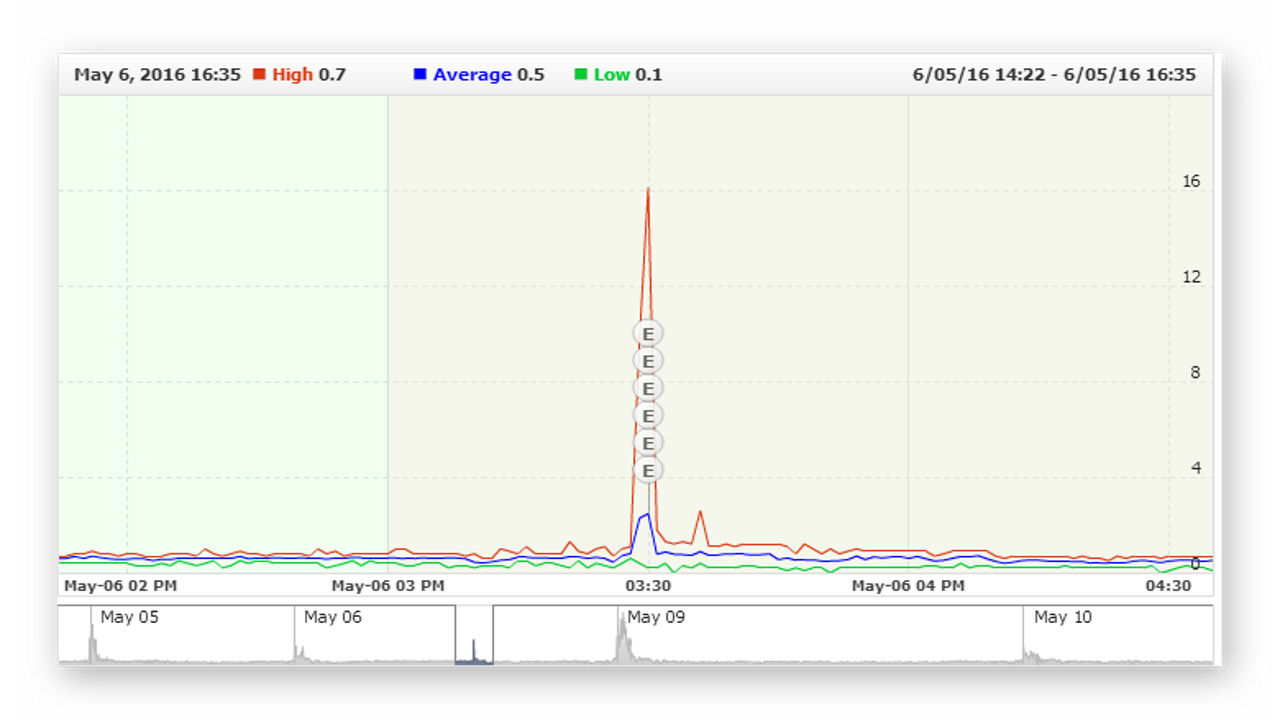
The ping to the broker in this case was 50 ms, but reducing that value would hardly have affected the result much.
But judging by Dmitry Rannev's comments, execution without slippage is not guaranteed even in a calm market:
"This is the market, there can be no guarantees here.
I have repeatedly written that from time to time there can be (and there are) both longer execution times and more slippage than usual.
There are two main options:
1. The provider took longer than usual to execute.
2. The provider rejected it, and it had to be sent again to another provider, which takes time."
And to sum up what was said earlier:
"Who said this account is for news traders?
I'll let you in on a secret: there is nothing for news traders except random temporary luck.
This account is for those who do not want to get an unexpected huge slippage."
In other words, news traders should keep walking.
Execution Speed

A modern ECN/STP system, in theory, provides better prices than simple STP. Nevertheless, the availability of better prices does not guarantee execution at those prices. Liquidity at those prices may be tiny or absent altogether. But even the mere presence of better prices can mean better execution overall. To do this, it is enough to specify in the request a price slightly worse than the desired one, then the probability of execution increases significantly.
A server with minimal ping (< 8 ms) was rented for the test.
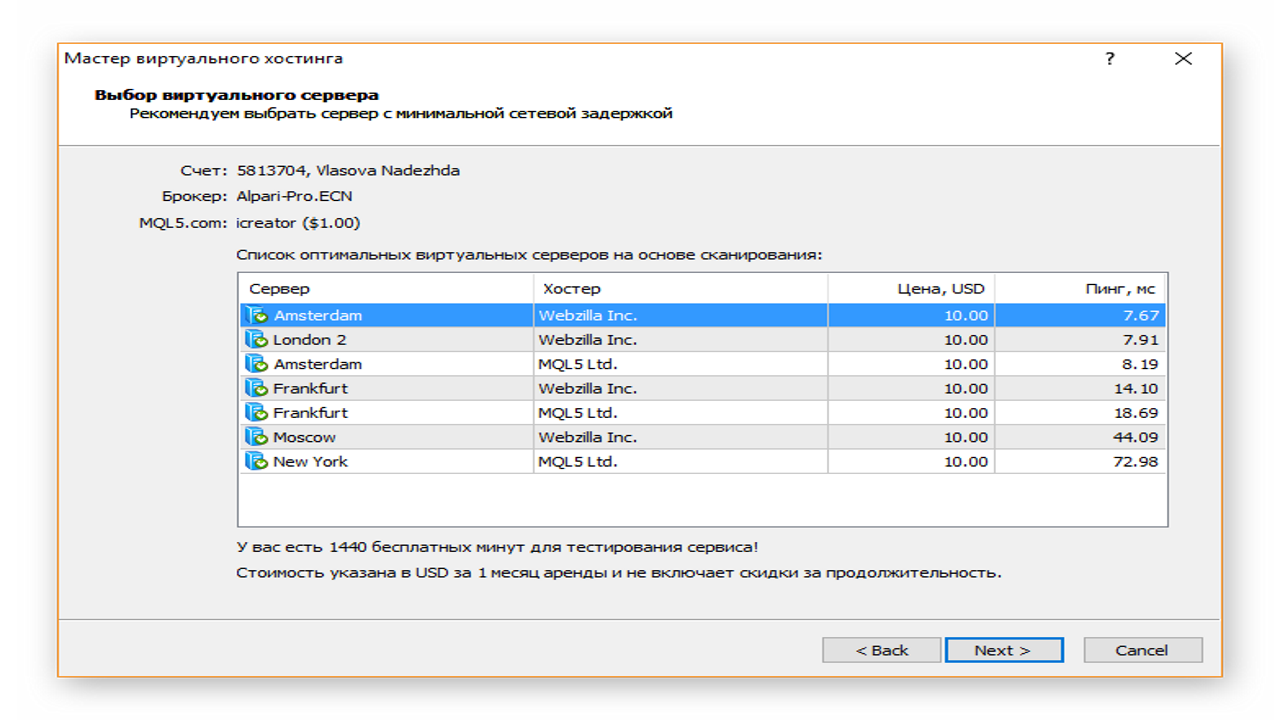
A small script was also written to measure the time required to open a batch of orders.
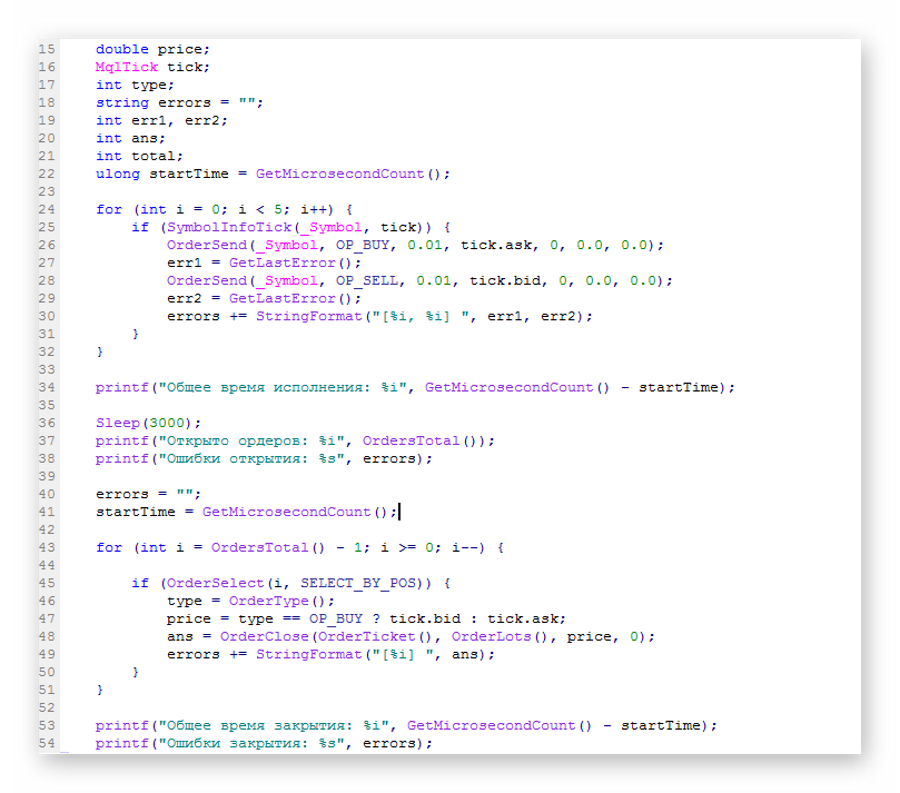
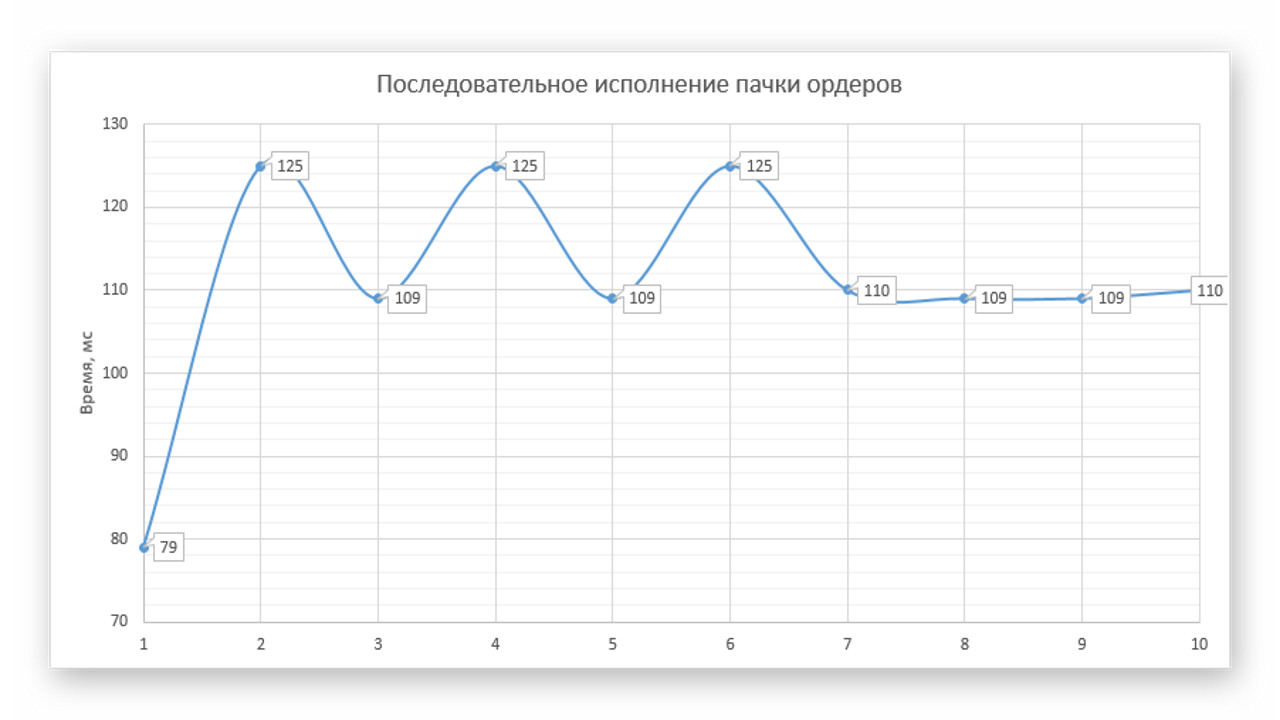
Since we use small volumes, the primary thing that interests us is speed. Some individual orders are executed quickly. When sending 10 sequential requests, in the best case it was possible to achieve order execution in 80 ms.

On the chart you can see the order execution speed in the order they were opened. I can assume that the fluctuations are connected with switching between liquidity providers - the aggregator's process of selecting the best price.
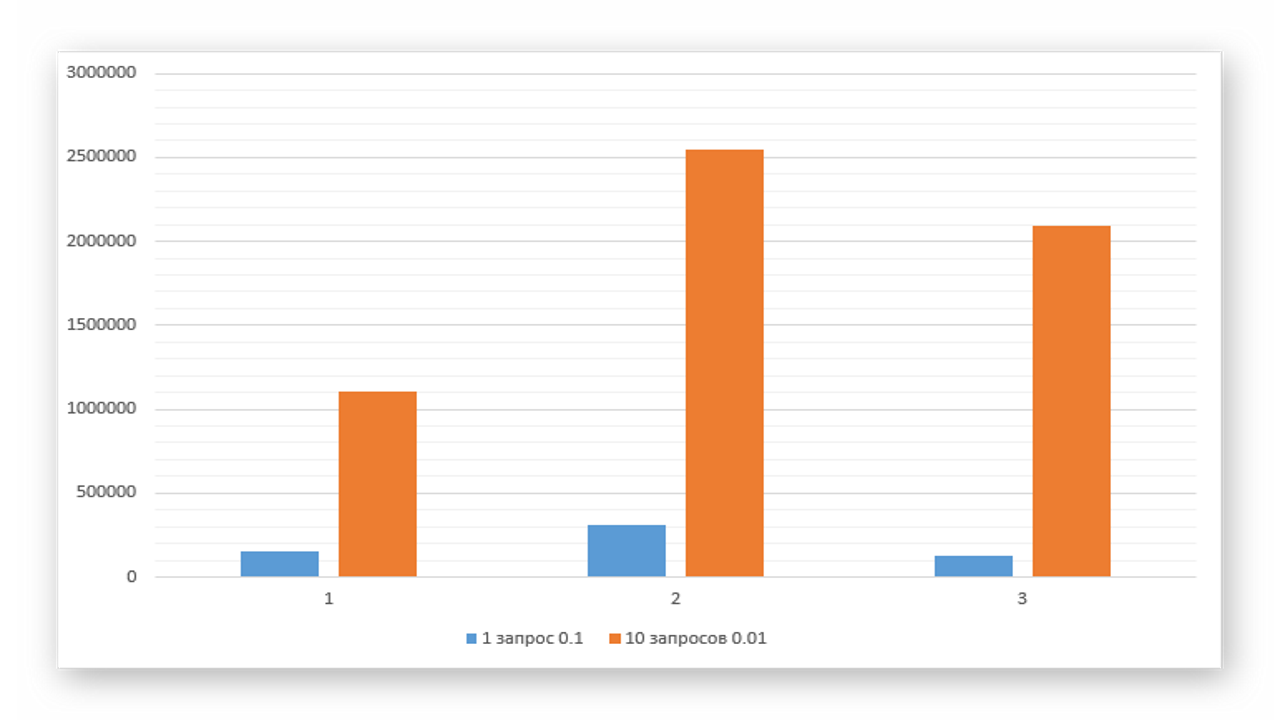
For example, you can compare execution of a batch of orders with a 0.01 lot and one request with a 0.1 lot. The comparison, admittedly, is not entirely fair, because in the first case there are synchronous requests. That is, the function waits for a response from the server and only then sends the next request. But it still allows a rough estimate of how much time is wasted when sending an order. The vertical axis values are in microseconds.
Trading Settings
This practice was developed on GKFX services and inherited by Alpari. You could say it is one of the most useful innovations, allowing you to configure execution to suit yourself.
You can change the account settings in your personal cabinet:
- Click on the account number and choose Account Card
- Then Trading Settings.
- Change the settings and click Save Changes.
Slippage in Order Comments
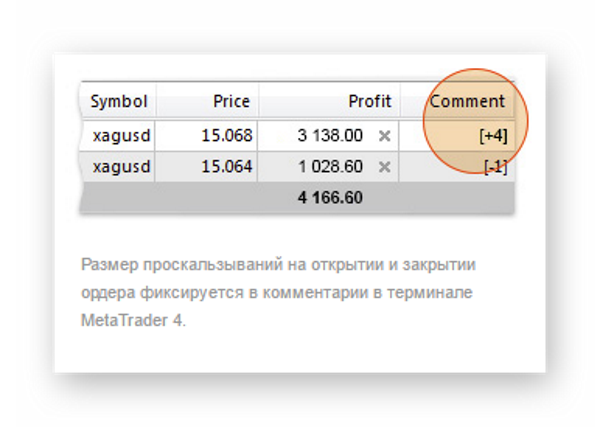
Slippage occurs when the actual order execution price differs from the requested price. That is, the field shows the difference between the price that reached the server and the real price at which the order was executed. A useful function for tracking execution quality.
Partial Execution of Limits
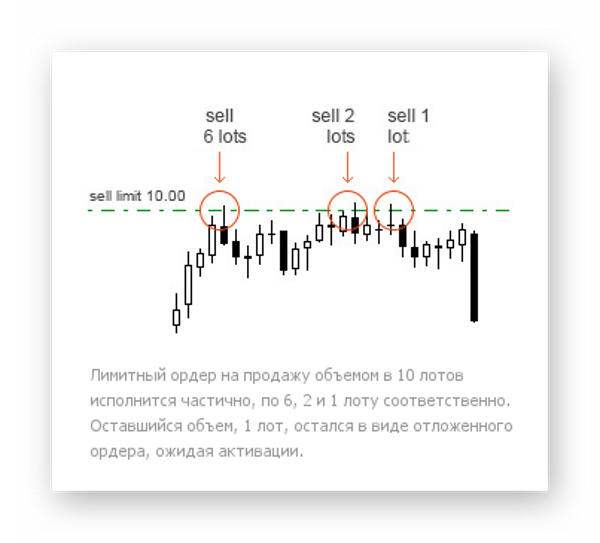
Usually, limit orders are executed either fully at the specified price or with positive slippage. This function allows you to place an order with a fixed price and execution that is not guaranteed. When the order is partially executed, the remaining volume is placed back at the same price. If liquidity at the specified price never appears, the order can be deleted manually.
Market Execution of Limits
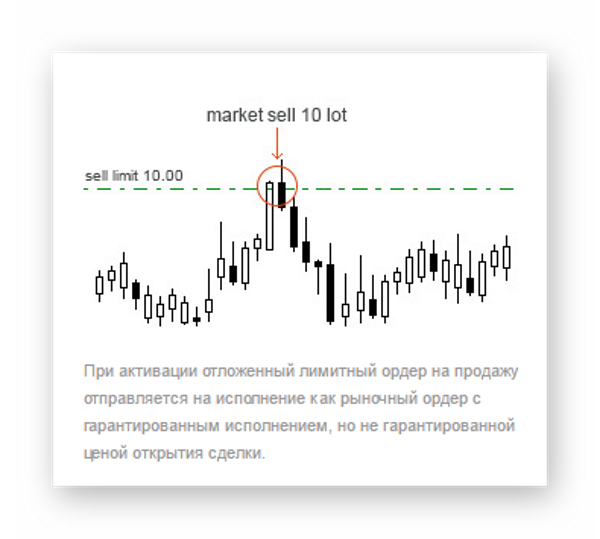
The function, in essence, replaces the limit order with a regular market order at the moment of execution. Since the order is executed at current prices, negative slippage is possible during execution (not in the trader's favor).
Cancellation of Orders When They Fall Into a Gap
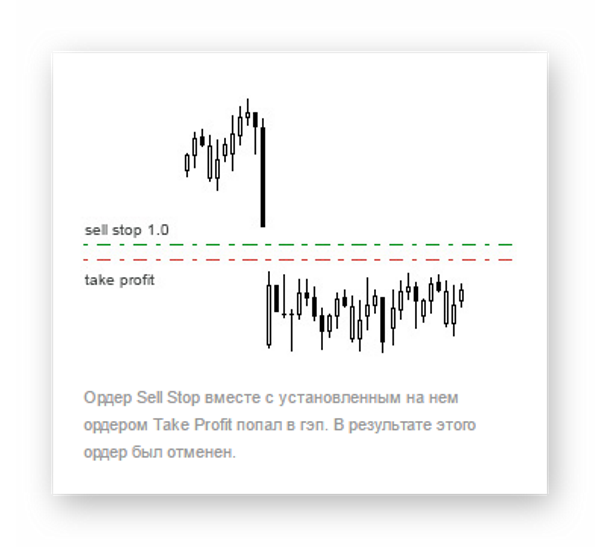
If a pending order and a stop/profit level simultaneously fall into the space between two quotes, the pending order is canceled. This is done to avoid opening a deliberately losing position.
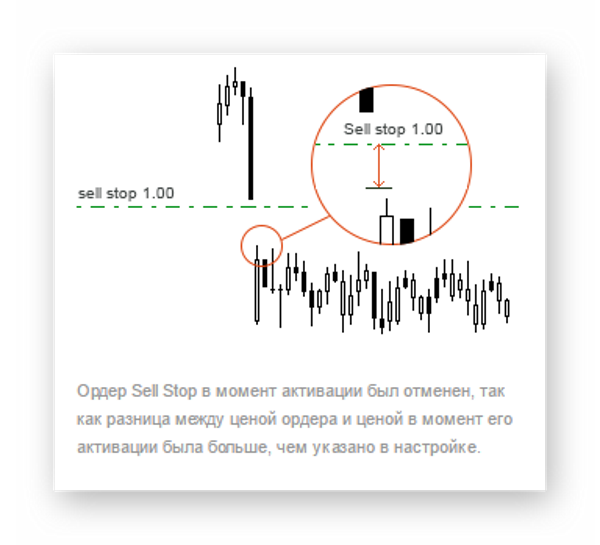
The same applies to stop orders. If the difference between the first quote price and the order price exceeds a certain number of points, the order will be canceled.
Slippage Limitation
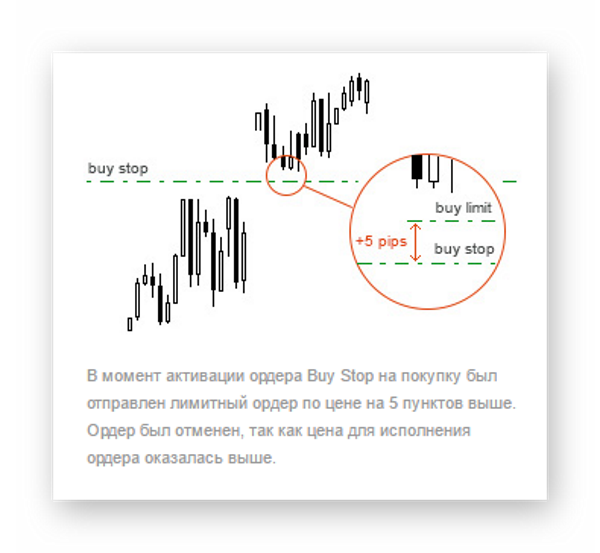
The function replaces pending orders and stop levels with limit orders, with a price worse by the amount of the maximum slippage. In this case, the order is executed only with positive slippage. If there is no liquidity in the market at the order price or better, the order is canceled.
Alpari advises using this setting during news events, but judging by posts from company employees on the forum, the account is not intended for news trading, and the function was created more as protection against sharp spikes.
Activation of Orders at the Opposite Price
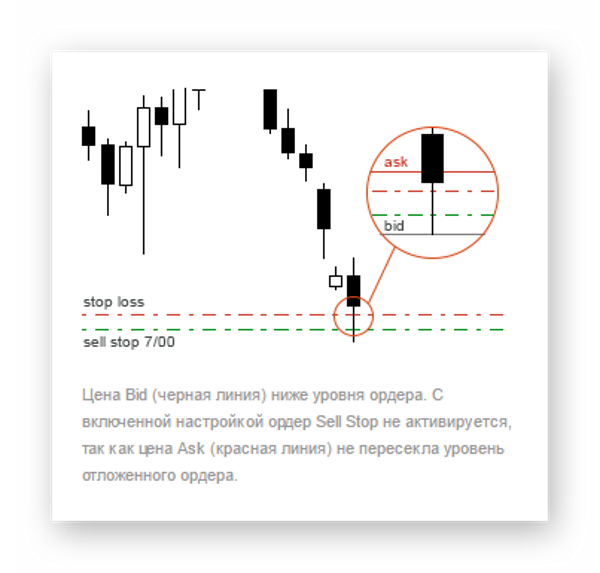
If the option is enabled, stop orders will be activated and sent for execution according to the following principle:
- Buy Stop is sent for execution when the Bid price crosses the order price;
- Sell Stop is sent for execution when the Ask price crosses the order price;
- Stop Loss is activated when the Ask price (for Buy) / Bid price (for Sell) crosses the Stop Loss level.
Thus, this option can prevent stop orders from being activated in the event of spread widening, which is especially relevant during the release of economic news or in times of low liquidity.
Pros and Cons of the Pro.Ecn Account

Pros
- At times, very fast execution. For maximum effect, it is worth getting a virtual server with minimal latency;
- Availability of advanced trading settings.
Cons
- Execution is fast but unstable - it all depends on the provider's available liquidity. Because of this, it is difficult to predict whether an order will be filled in 0.1 s or require an order of magnitude more time;
- Significant spread widening and slippage during news events. In this respect, the account brings nothing new. AMTS Solutions improved the aggregation algorithms, but the provider still will not execute an order at a price that no longer exists.
- Minimum deposit of $500, which is far from suitable for everyone.
Respectfully, Alexey Vergunov Tlap.io