
Oil Near $90: Why Hormuz Risk Keeps Brent and WTI on Edge
Tlapchik

Intro

🛢️ High prices, slightly lower session
The daily moves in Brent and WTI are small enough to be read as hesitation rather than a reversal. Brent at 88.74 USD remains within sight of $90 despite its 0.19% decline, and WTI at 82.95 USD is only 0.30% lower. The market is therefore distinguishing between the price level, which remains elevated, and the latest direction, which is mildly negative. That distinction matters because geopolitical premiums do not rise in a straight line. A burst of alarming news can push buyers to pay more for immediate protection, after which prices may consolidate as participants assess whether the threat will materially affect physical supply. Today’s weakness suggests that traders see serious risk, but not yet a newly confirmed disruption large enough to justify aggressive buying. The phrase “Brent is back near $90” describes the market’s altitude, not necessarily the direction of every individual session. Oil can remain expensive while slipping by a few tenths of a percent, just as a nervous cat can stay on the wardrobe without climbing any higher. The important question is whether tension keeps the market at this elevated level or produces evidence strong enough to trigger another repricing.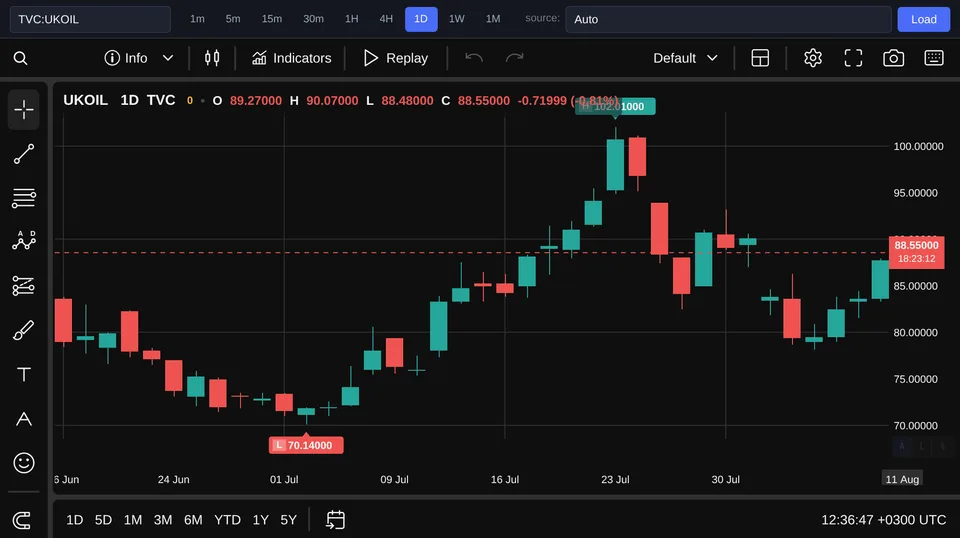
🚢 Why Hormuz turns headlines into trades
The Strait of Hormuz matters because it is a critical passage for seaborne energy flows. When security deteriorates around such a chokepoint, the market does not need an immediate and complete interruption to react. The possibility of delays, rerouting, higher insurance costs, tighter vessel availability, or precautionary behavior by shipping companies can be enough to increase the value assigned to reliable supply. Reports of attacks on vessels are especially sensitive because they connect geopolitical tension with the physical machinery of trade. Traders first ask whether an incident is verified, where it occurred, what was damaged, and whether commercial traffic is changing its behavior. They then assess whether the event is isolated or part of a pattern that could raise the probability of disruption. Hormuz is functioning as a rapid trading trigger because every credible security update can alter the perceived odds of supply trouble. That does not mean every headline deserves the same response. Unconfirmed claims may cause brief price swings, while verified operational changes involving ports, tankers, insurers, or shipping routes are more likely to have a durable effect. This is why intraday volatility can remain high even when the closing change looks modest. Algorithms and short-term traders react quickly to breaking reports, while longer-horizon participants often wait for confirmation. The result is a market capable of jumping on a headline and then retreating when the practical consequences remain unclear.⚖️ What the military premium actually represents
The geopolitical, or military, premium is the portion.📈 Signals that could extend or cool volatility
Volatility is likely to remain elevated while traders receive conflicting signals about vessel security and diplomatic prospects. The most supportive scenario for prices would involve repeated, verified incidents that make commercial operators more cautious or create visible friction in deliveries. Even without a complete closure, persistent threats could encourage the market to maintain a larger buffer for possible disruption. The opposite scenario would be a credible diplomatic breakthrough accompanied by evidence that navigation remains normal and security risks are receding. In that case, part of the premium could unwind because participants would require less compensation for low-probability, high-impact outcomes. A quiet news cycle alone may reduce short-term excitement, but a durable repricing would usually require stronger evidence that the underlying threat has diminished. Traders should therefore watch the quality of information rather than the volume of headlines. Verified vessel incidents, changes in shipping practices, official maritime notices, insurer responses, and concrete diplomatic steps are more informative than recycled claims or dramatic commentary. The next sustained move will probably depend on evidence that changes expected physical flows, not merely on another alarming headline. Brent’s 88.74 USD price and 0.19% daily decline, alongside WTI at 82.95 USD and down 0.30%, capture this balance neatly.Conclusion
The day’s oil picture is defined by tension between a high geopolitical risk premium and a lack of fresh evidence sufficient to extend the rally. Brent remains close to $90 at 88.74 USD despite falling 0.19%, while WTI is at 82.95 USD after a 0.30% decline. Risks around the Strait of Hormuz and attacks on vessels continue to support prices by raising uncertainty over shipping and supply reliability. The clearest guide from here will be whether verified incidents begin to affect physical operations or credible diplomacy lowers the probability of disruption. Until one of those paths becomes dominant, elevated and headline-sensitive volatility remains the most defensible expectation.#Brent oil price#WTI oil price#Strait of Hormuz#oil market volatility#shipping risks