
MOEX at 2,147–2,148: Rebound, Pause, or a Local Ceiling?
Tlapchik

Intro

📈 What the Monthly Rebound Really Says
A rise of more than 7% in one month is substantial enough to deserve attention. It suggests that selling pressure has eased, investors have become more willing to take risk, and at least some negative expectations were already reflected in prices. At the same time, the index’s position around 2,147–2,148 points shows that the recovery has reached a zone where buyers need stronger reasons to keep adding exposure. The deep gap from year-ago levels is an important reality check. A market can stage a vigorous rebound within a broader decline without establishing a lasting upward trend, especially when valuations recover faster than earnings expectations or financial conditions. The monthly move is evidence of stabilization, but it is not, by itself, proof of a durable market reversal. Trading near the same narrow area after a sharp monthly gain can therefore be read in two ways. It may represent healthy consolidation, with investors digesting gains before another advance, or a local ceiling formed by limited liquidity and unresolved macroeconomic risks. The index is currently like a runner who has completed the first steep hill: the pace has improved, but the route ahead has not become flat.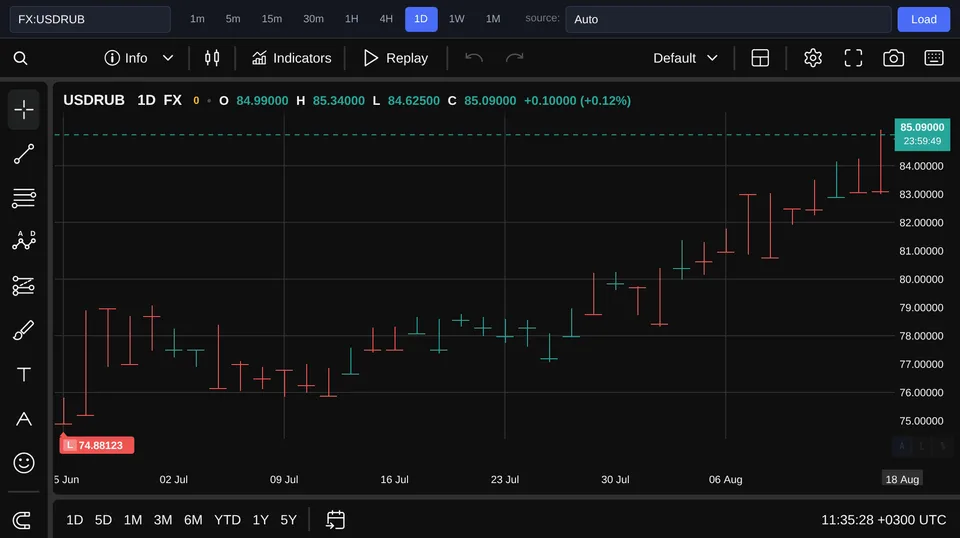
🏦 Interest Rates Set the Valuation Boundary
Interest rates remain the most direct constraint on the broader equity market. When monetary conditions are tight, bonds and deposits offer stronger competition for investor capital, while companies face higher financing costs and households have less incentive to move savings into volatile assets. This combination can limit the valuation multiples that investors are prepared to pay even when corporate results remain resilient. The effect is uneven across sectors. Highly leveraged businesses, companies dependent on domestic demand, and firms requiring continuous investment are generally more sensitive to expensive funding. Cash-generative exporters may be better protected, but they cannot fully isolate the index from the discount-rate effect that applies to future earnings across the market. For the rebound to develop into a more stable recovery, investors would need credible signs that pressure from high rates is no longer intensifying. That does not require an immediate policy shift; improving inflation expectations, clearer financial conditions, or greater confidence in future easing could also help. If monetary conditions remain restrictive for longer than the market expects, the area near 2,147–2,148 points is more likely to behave as a ceiling than as a launchpad.💱 The Ruble Helps Exporters, but Cannot Lift Everything
USD/RUB stands at 85.09 rubles, with the currency pair up 0.17% for the day. This modest weakening of the ruble can provide some support to exporters because foreign-currency revenue converts into slightly more rubles, potentially improving reported revenue and cash flow when other variables remain unchanged. The daily move is small, however, and should not be treated as a standalone catalyst for the entire equity market. A weaker ruble has a double effect. It can improve the nominal financial results of export-oriented companies, which carry significant weight in the index, but it may also add to inflation concerns and complicate the outlook for interest rates. Import-dependent businesses can face higher costs, while consumers may encounter pressure on purchasing power. The same currency move can therefore support one group of shares while making the domestic macroeconomic backdrop less comfortable for another. The current level of 85.09 and the daily increase of 0.17% are mildly favorable for ruble-denominated exporter earnings, not decisive evidence of a new index-wide trend. The constructive scenario requires a ruble that remains acceptable for exporters without weakening enough to intensify inflation and prolong restrictive monetary policy. Currency stability matters more here than a single day’s direction.🛢️ Oil and the Two Scenarios for MOEX
Oil remains another central variable because it influences exporter earnings, fiscal expectations, foreign-currency flows, and the market’s overall perception of risk. Supportive oil conditions can reinforce the benefits of a relatively weak ruble for energy producers, improving confidence in cash generation and shareholder returns. Yet oil prices may also contain a geopolitical premium that can shrink quickly when news flow changes, making part of that support less dependable than it first appears. In the constructive scenario, oil remains supportive, the ruble stays within a range that preserves exporters’ revenue advantage, and expectations around interest rates gradually become less restrictive.Conclusion
The MOEX rebound has improved sentiment, but the index’s continued distance below year-ago levels keeps the recovery unconfirmed. A sustainable advance requires a workable combination of less restrictive rate expectations, a ruble that supports exporters without aggravating inflation, and oil conditions backed by more than a temporary geopolitical premium. Until those factors align, 2,147–2,148 points should be viewed as a test of the rebound’s quality rather than a reliable signal of its next direction.#MOEX Russia Index#MOEX monthly rebound#USD/RUB exchange rate#Russian stock market#oil prices and MOEX