
Meaning of Margin in Forex

Hello, forex trader friends! We have all more than once seen the mysterious values Margin, Free Margin, and Level in the trading terminal. But do you know what they mean? What practical benefit do they provide? And what is the connection with leverage? Even experienced traders are often confused about this matter, let alone beginners. I suggest we sort out these concepts, since not knowing them can end badly....
What Is Margin?

Today, most exchange trades are made with the goal of making a profit in the short term, and the goal of any speculator, as we know, has always been to earn on the difference.
But to generate a sufficiently large turnover, we will need considerable starting capital. Here the principle of margin trading helps us, that is, trading with borrowed funds taken against a certain collateral (or margin). In the case when funds are insufficient to open a position of adequate size, or you deliberately want to increase trading turnover, brokers offer a short-term lending service, which allows you to open positions many times larger than your initial capital.
Unlike a regular loan, the amount of a margin loan can be dozens and hundreds of times greater than the size of the collateral. Leverage, in this case, reflects the ratio of the actual trade volume to the amount of collateral. Depending on the market and the assumed risks, different companies may offer their own lending terms. As a rule, leverage in Forex ranges from 1:50 to 1:500. Accordingly, the higher the leverage value, the smaller the collateral required to open a position of the same size.
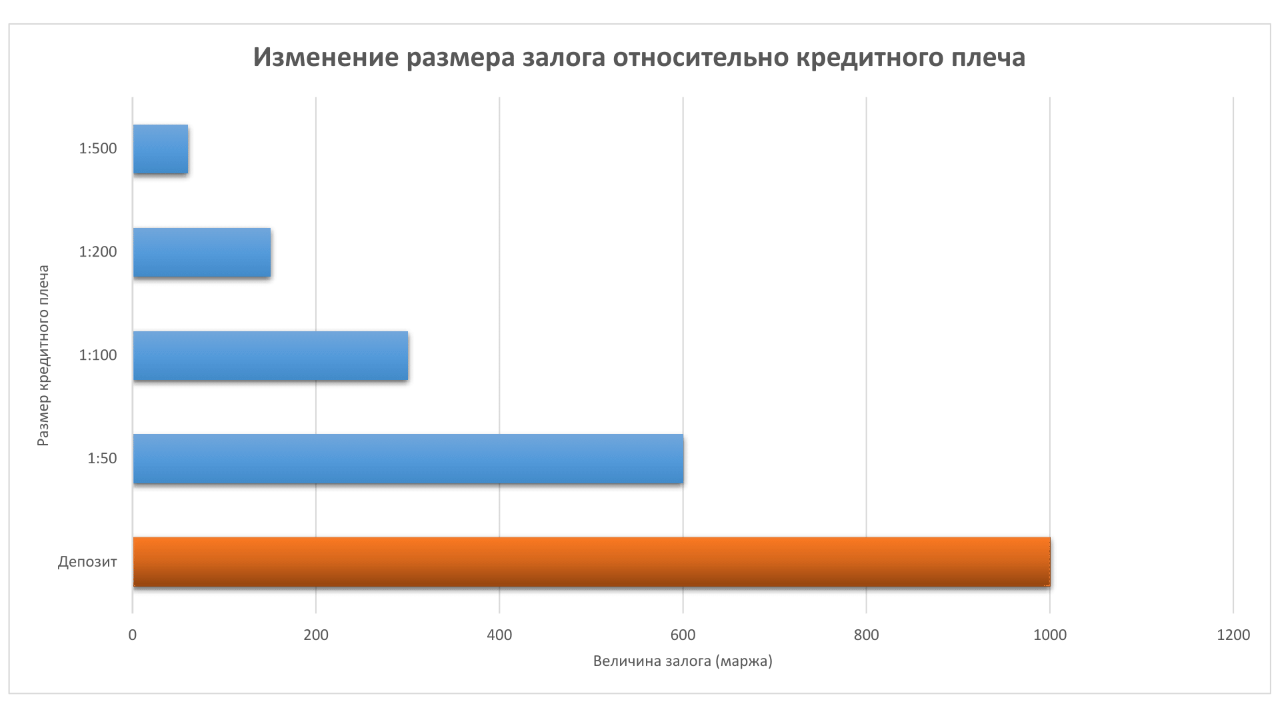
Monitoring Values in the Terminal
In the trading terminal (whether it is metatrader 4 or metatrader 5), along with the balance, equity (funds), and total margin values for open positions, you will also find the value of free margin and the current level.
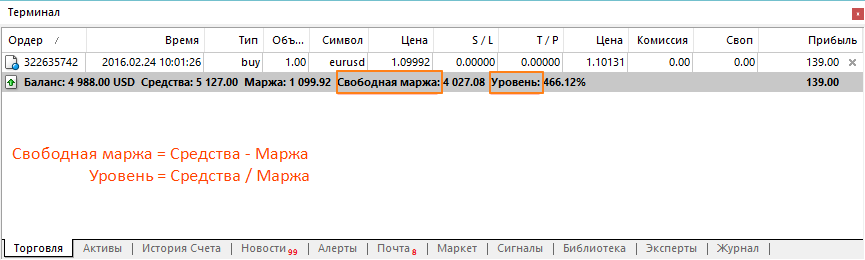
Free margin is the free funds available for opening new positions. In essence, this is the difference between the actual funds in the account and the amount of funds already reserved.
Level is the ratio of funds (account equity) to the used margin, expressed as a percentage.
Margin Level

It is important to remember two key margin level limits: Margin Call and Stop Out. Once you reach the Margin Call level, you will no longer be able to open new positions, since there will not be enough free funds to cover one more collateral requirement. Usually, brokers set this value at 100%.
If the margin level falls even lower and reaches the Stop Out value, the broker will begin to forcibly close your positions, starting with the most unprofitable one. This is where the danger of trading with collateral funds shows itself. The broker does not intend to lose its funds and will close your positions before you have time to go negative.
As a rule, with proper capital management, this should not happen. A typical mistake of beginner traders is opening too large a lot with high leverage. Because of this, even a slight change in the rate almost immediately leads to a Margin Call. Also, beginners often forget to set stops, because of which positions that have gone far into the negative have a chance to be closed by Stop Out.
Calculating the Maximum Lot
The size of leverage directly affects the maximum position size available to open. Suppose you want to open a new position in USDCHF. Since a standard lot in forex equals 100,000 units of the base currency, then with 1:100 leverage, the collateral funds required to open one lot in USD/CHF will be 1000 dollars. Having 10000 dollars in the account, you will be able to open up to 10 lots at most. At the same time, with 1:200 leverage you will be able to open twice as much, that is, 20 lots.
The General Formula Looks Like This
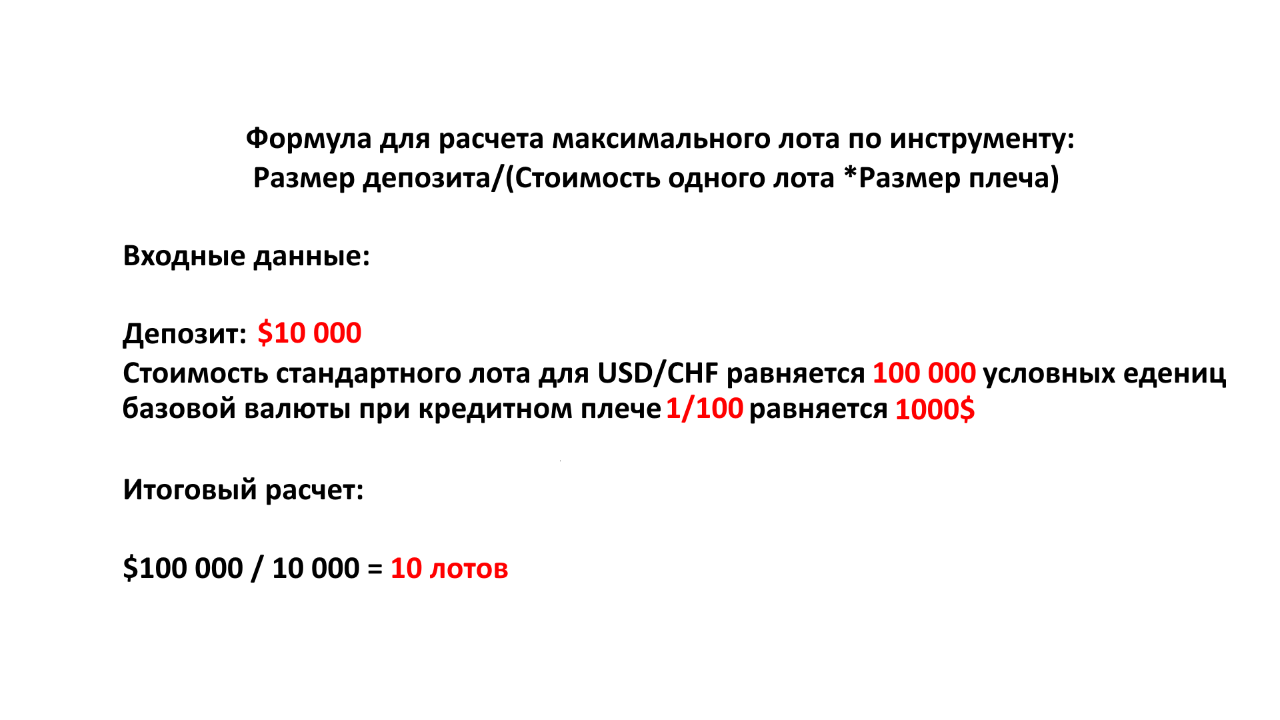
It is worth considering that the cost of a lot differs for different instruments. In Forex, to calculate the cost of one lot, it is enough to convert the base currency of the pair into the deposit currency.
Let us consider one more example. Suppose that at the time the position was opened, the EURUSD rate was equal to 1.09992. That means that with 1:100 leverage, one standard lot in EURUSD will cost 1099.92$ dollars. That is, with the same $10 000 deposit, we would be able to open 9.09 lots in EURUSD.
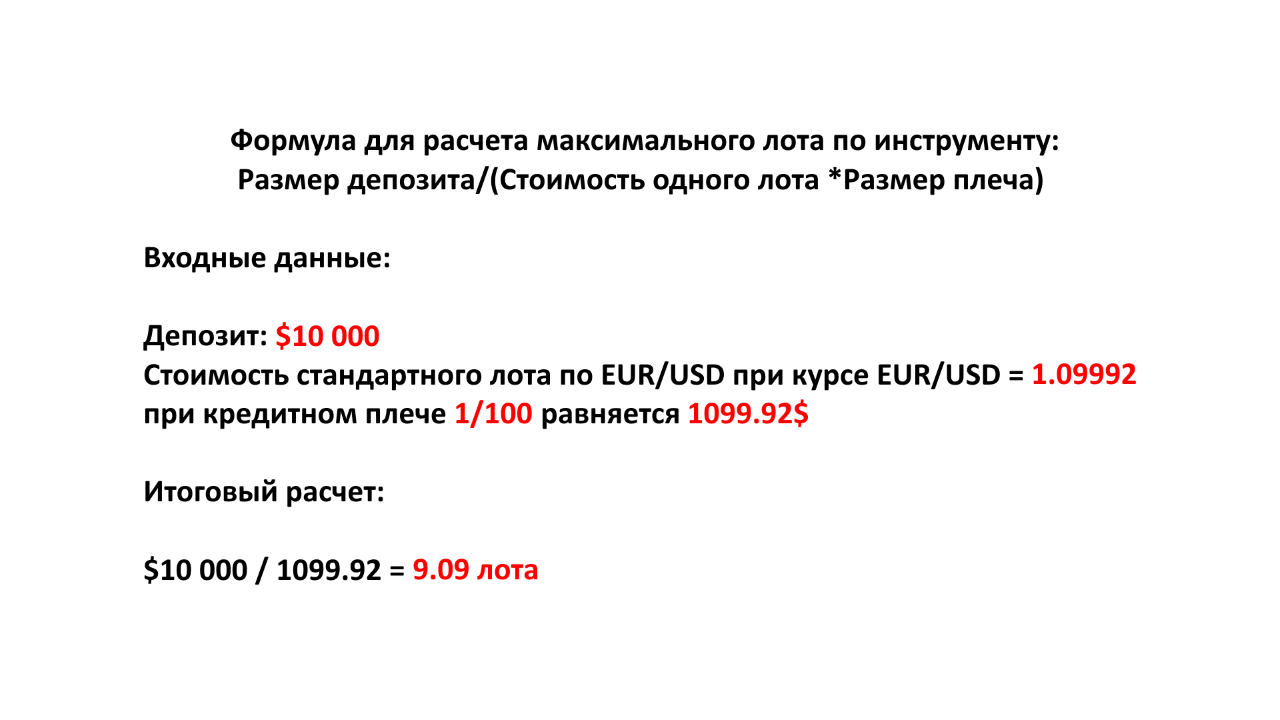
Display of the example for the EUR/USD pair in the trading terminal.
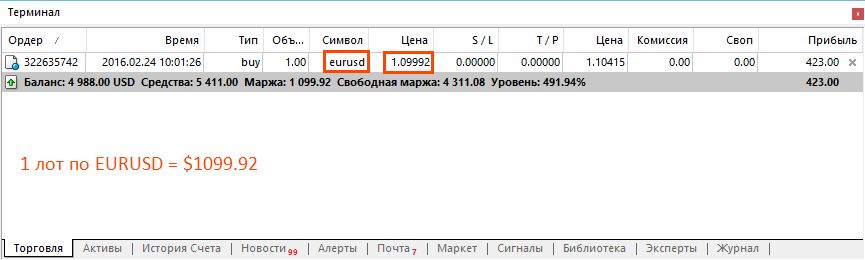
To avoid calculating everything manually, you can use a margin calculator.
It is strongly not recommended to use all available free funds to open positions. A good practice is considered to be trading with a certain percentage of the deposit (2-3% is recommended), so that some "safety cushion" remains. Otherwise, in the event of a mistake, the funds in the account may unexpectedly run out and the account will be wiped out by Stop Out. Therefore, when opening a position, it is important to accurately calculate the size of the maximum possible loss and, if possible, use loss limiters, namely stop loss.
Practical Example
Let us try to review and reinforce the material we have just learned with live examples. For convenience, let us open a new, clean demo account. We enter a deposit amount of 10 000$ with 1:100 leverage. Next, we open a trade with one lot at the rate of 1,0919.
Our margin amounts to a sum a thousand times greater than our rate at 1:100 leverage. Free margin is expressed as the difference between the balance and margin and constantly jumps due to the addition of current profit/loss to that same difference. The level value displays the ratio of free margin to margin.
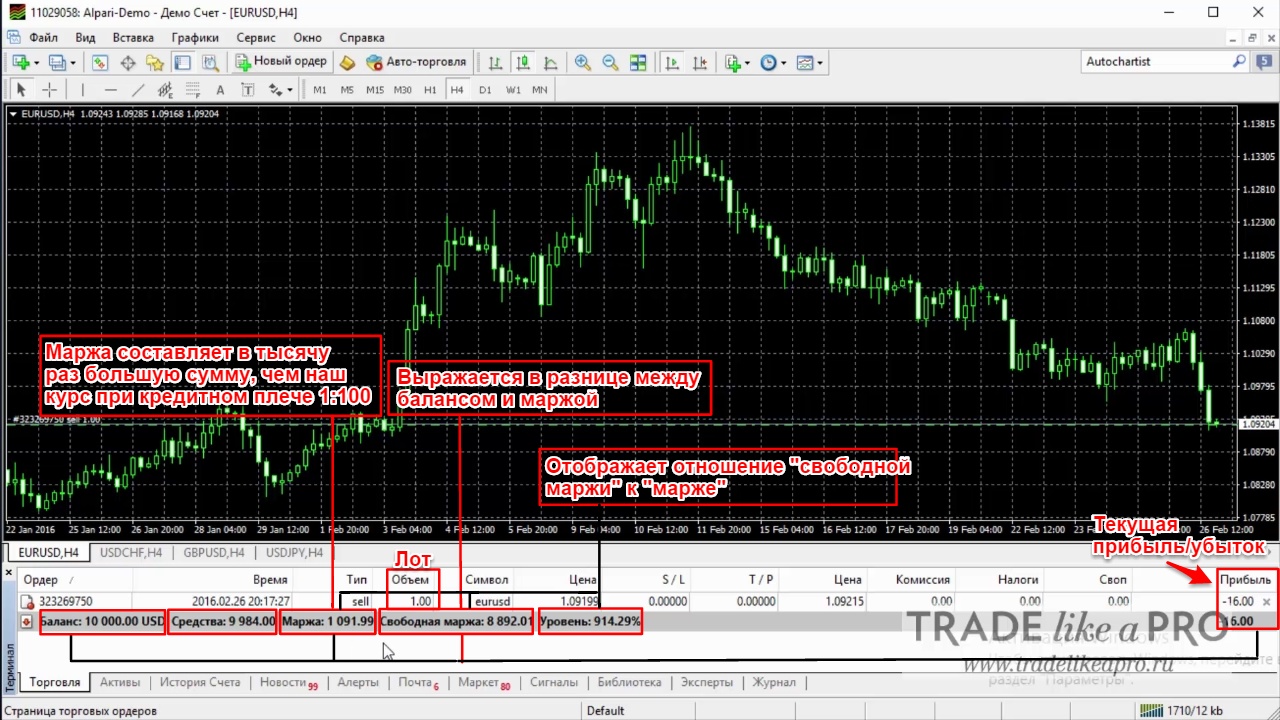
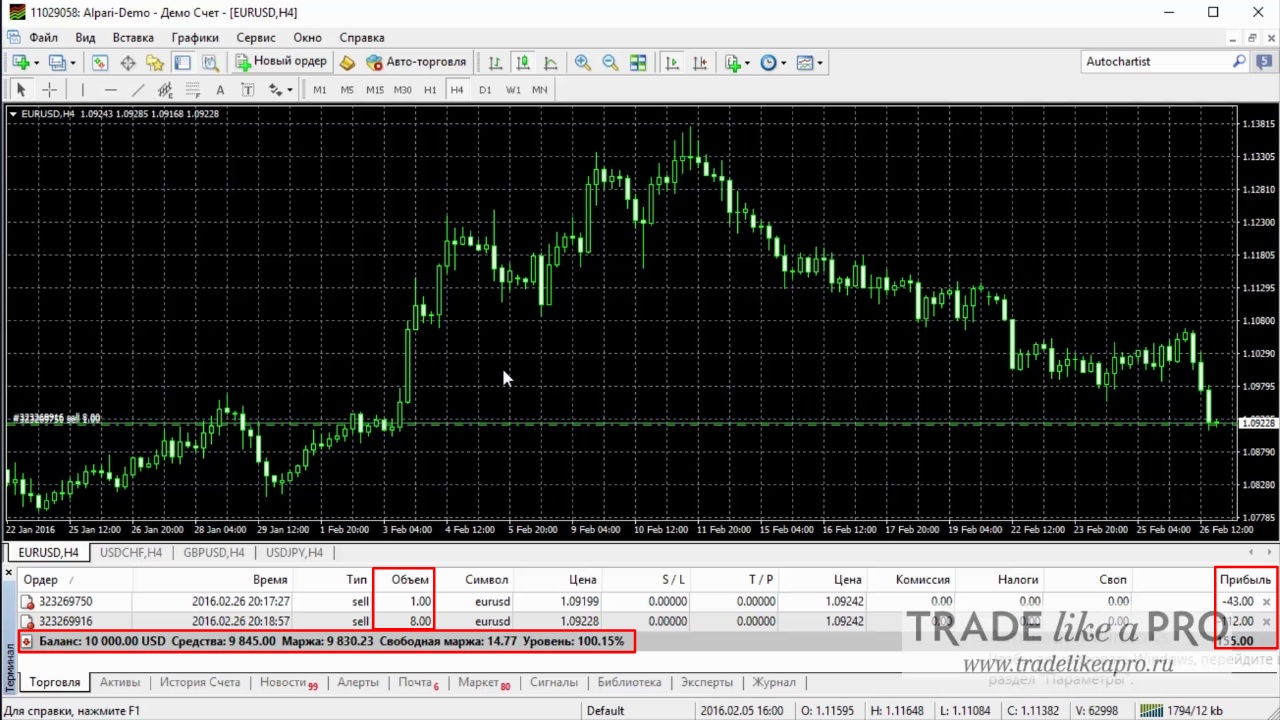
So, if 1 lot is about 1100$, and free margin is about 8 800$, then we can open about eight more lots. We open one more position for eight lots, and this becomes our limit for the current deposit. If the positions show a positive result, free margin from the unrealized profit becomes available for opening new positions. But doing this is strongly not recommended.
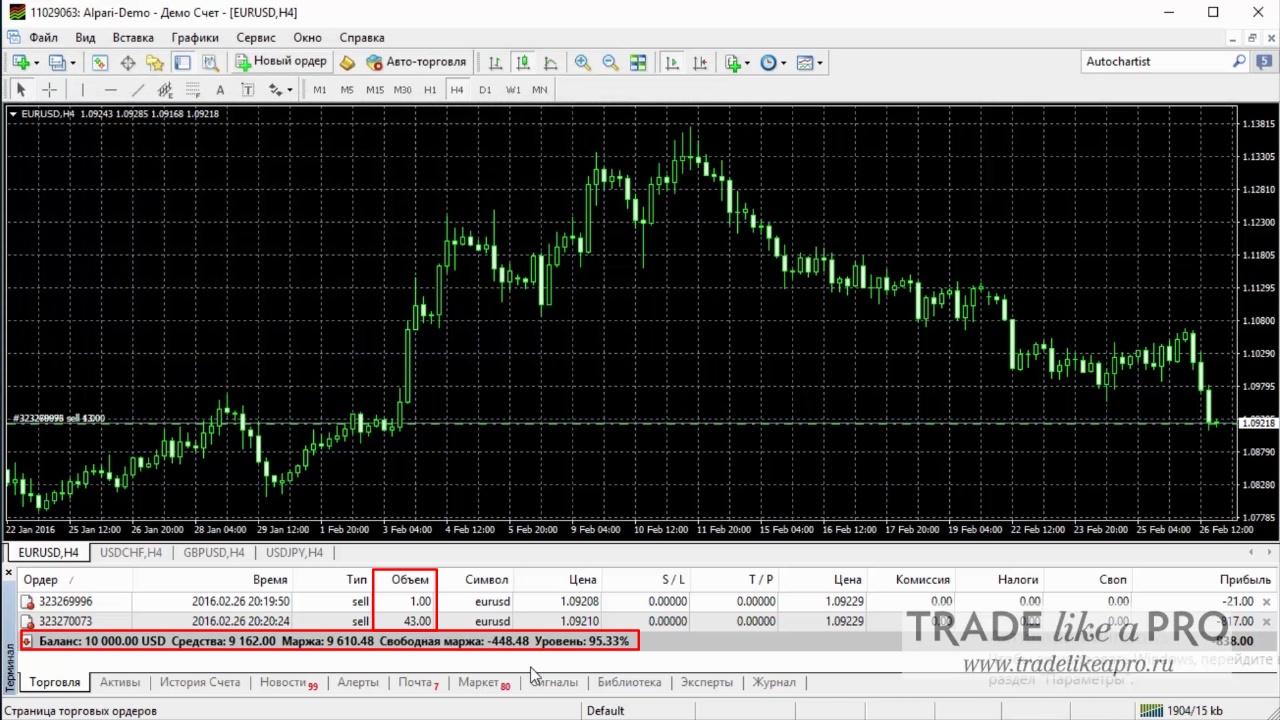
Let us try to look at a somewhat different situation. We open a demo account similar to the previous one, but with 1:500 leverage. We open a position with one lot at the same rate. So, our margin is five times smaller than with 1:100 leverage. That is, the higher the leverage, the fewer funds go toward our collateral and the more positions we can open. In this case, we have the opportunity to additionally open about 43 lots.
Conclusion

By competently using the principle of financial leverage, you can significantly increase trading efficiency. High leverage allows you to control risks more flexibly and also opens access to new trading opportunities. You can trade on exchange rate differences while having in your account only a small percentage of the full contract value. At the same time, the risks are limited by a small collateral amount which, in the event of a positive outcome of the trade, is returned to your account together with the profit received. It is important to remember that as leverage increases, so does the risk of losses.
Therefore, before learning to use margin trading effectively, make sure that you fully understand all the trading risks associated with this undertaking.
Respectfully, Aleksey Vergunov TradeLikeaPro.ru
