
Margin Zones on Forex, or How to Predict Price Movement

Hello, fellow traders and readers who are interested in the topic of trading on the Forex market! After the release of an article about Open Interest in currency options and futures, which described a trading strategy based on analyzing the volume of positions in derivatives, a question arose in the comments about margin zones.
This tactic is interesting because it is based on real data and the specifics of the currency futures market. It combines two trading methods: short-term and medium-term analysis of resistance/support levels and a “breakout.” The latter term is unique, as is the trading tactic itself, which defines “zones of least resistance to the trend.”
The article presents alternative material, with no overlap with the margin-zone strategies described on the internet. The construction and operation of the levels are explained from the point of view of currency option traders on the Chicago Mercantile Exchange (CME).
Chicago – the center of “currency gravity” or the role of the CME in Forex

The Forex market is decentralized: a common interbank platform registers and distributes trades of institutional clients. The platform is intended for exchanging large currency amounts, and single transactions amount to millions of dollars. In general, legal entities trade there; a private client can access Forex through a bank, where for a minimum lot one must pay from $100 thousand, while trades are carried out with minimal leverage.
Exchanges take much less margin deposit, which allows you to bring lots for $100 thousand, leaving only a few percent of their value.
Such positions cannot enter the interbank Forex market, unlike hundred thousand dollar transactions of bank clients, where the amount of leverage is covered by the real money of the financial institution. The exchange simply does not do this, trading “internally” in derivatives that replace currencies.
Before the advent of Forex brokers the first currency speculation took place inside exchange platforms in the form of futures trading, the mechanism of turnover of these derivatives is described in the article about Open Interest and vanilla options.
Today, currency derivatives are present on almost any national exchange, but the Chicago CME Exchange is considered the international center of trading, the turnover of which reaches $90 billion per day (futures + options).
Taking into account that the majority of contracts are delivery contracts that provide for actual repayment in foreign currency at the end of the derivative's validity period (expiration), it turns out that the Chicago Exchange buys and sells up to 30% of the total turnover of the international Forex market under the security and insurance of trades.
Such statistics allow traders to use various open data from the Chicago Exchange on currency positions to analyze and forecast future trends, in particular, statistics on margin.
Features of currency margin on CME futures

Every Forex trader knows that the size of the margin deposit depends on the leverage in the Forex market; if the size is 1 to 100, the broker withholds 1% of the open lot size. In case of transferring a position “overnight” trader may lose money (or earn) on swap.
The Chicago exchange uses a dual margin calculation mode, lowering the margin requirement for a futures contract during U.S. trading hours and increasing it fourfold for a medium-term open position.
This regime makes it possible to avoid the risk of default when the exchanges are closed and, consequently, clearing is disabled. This is the process of tracking and covering issued short and long contracts with real currency, as well as forcibly closing futures via stop-out.
On the exchange, this looks somewhat different than with a Forex broker: first the trader receives a margin call, a requirement to add funds to the account, and if the conditions are not met, the contracts are closed at the next opening of the session.
What are margin zones in the Forex market?

Margin zones in Forex are the margin-call levels established by the CME exchange's short-term (intraday) and medium-term requirements that apply to positions held overnight.
They are calculated in points for each of the 10 traded currency pairs on the Chicago exchange. It is better to choose pairs that have options available; this is a matter of instrument liquidity and an opportunity to add extra filters to the strategy. This refers to the strikes described in the article on vanilla options, where the maximum OI is located.
The margin value is taken from the futures specification daily. The collateral amount “floats” slightly; more serious changes in the margin requirement may indicate:
Where to look and how to calculate the margin zone of a currency pair?

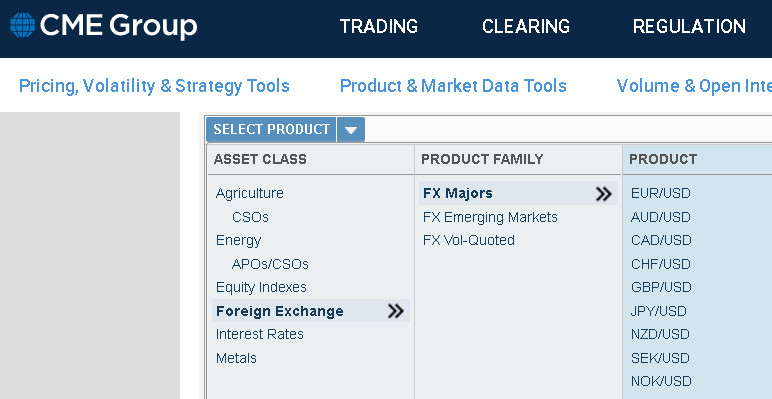
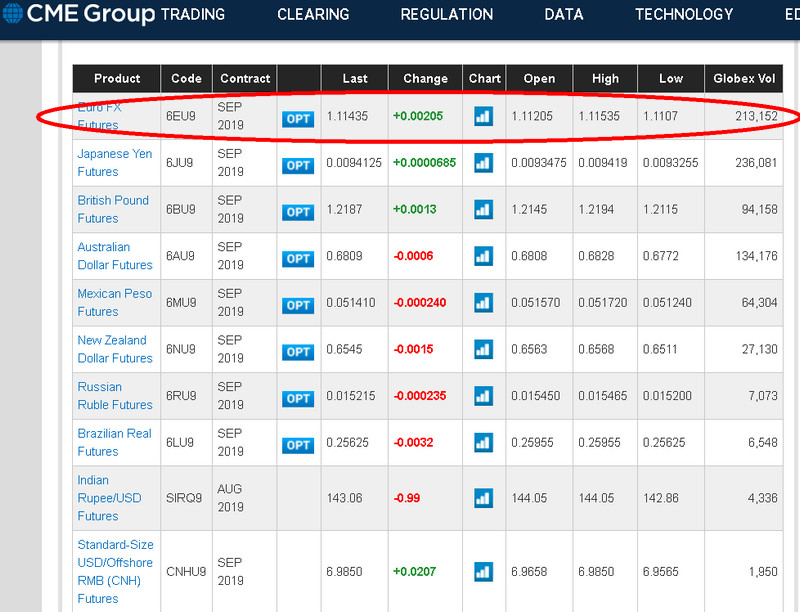
In the table that opens, select the currency pair we are interested in, for example, Euro FX, corresponding to the EURUSD ticker. All futures by default have a basis in the form of USD, so traditionally inverted Forex pairs are written here in a direct quote - JPYUSD, CHFUSD, etc.
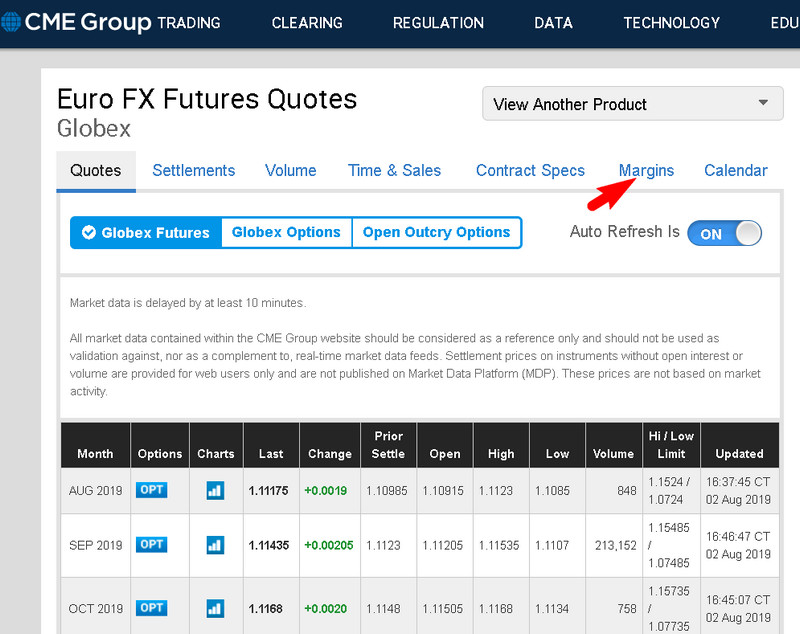
Here you can find out the details of the contract specifications; the margin is “hidden” under the “Margins” option:
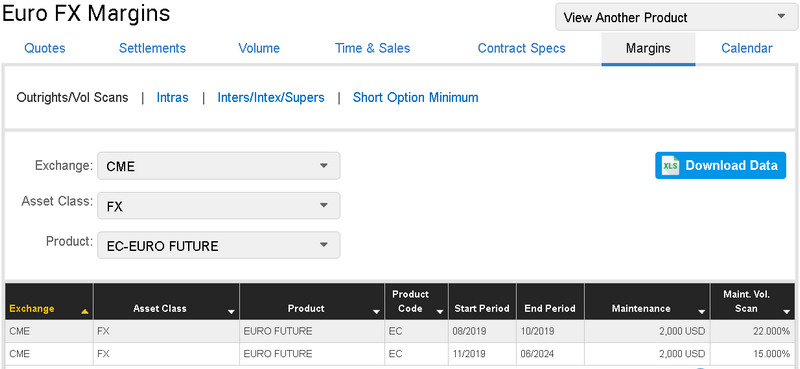
Opening it, we see that to hold one futures contract as a medium-term position, you have to pay $2000.
It is to this level that the exchange raises the margin requirement at the end of the session (2 a.m. Moscow time). The trader receives a margin call requiring the deficiency to be covered before the next trading session begins. If the shortage of funds is critical, current positions or part of them will be closed under stop-out conditions.
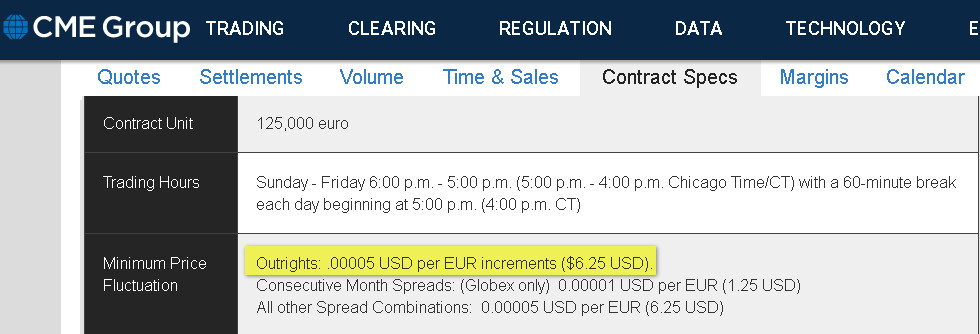
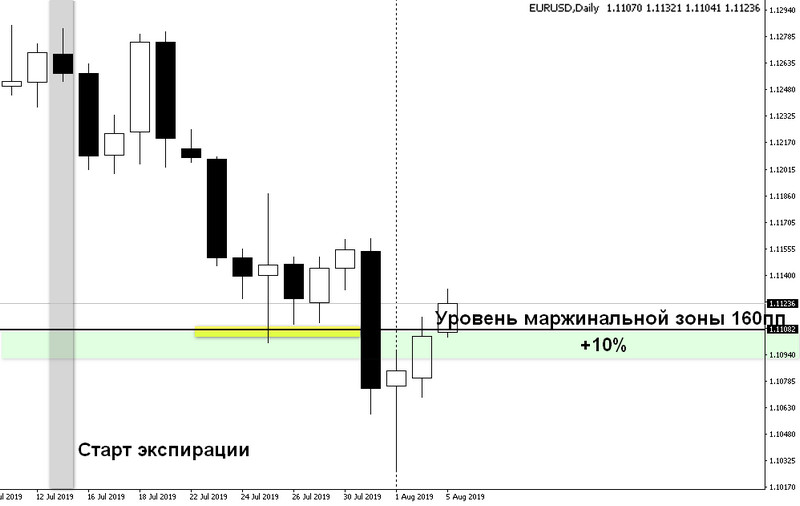
Menu option (2) in the contract specifications will allow you to calculate the value in points of the full margin requirement. Half a pip is valued by the exchange at $6.25, therefore 1 pip = $12.5. Dividing the full margin requirement (in our case $2000) by this number, we get 160 points.
This is our medium-term resistance/support level, which defines the maximum expected range of change in the currency pair's exchange rate. Countertrend orders Sell Limit/Buy Limit are placed there, making it possible to profit from a pullback or a reversal in quotes.
Each day, the trader works with pending Buy Stop/Sell Stop orders at the breakout levels, along the boundaries of the reduced margin requirement, which in our case is reduced by a factor of four to 40 pp.
Every day, the trader works with pending Buy Stop/Sell Stop orders at the “breakout” levels, along the boundaries of the reduced guarantee, reduced by 4 times, i.e. equal in our case to 40 pp.
How to correctly plot Forex margin zones on a chart?

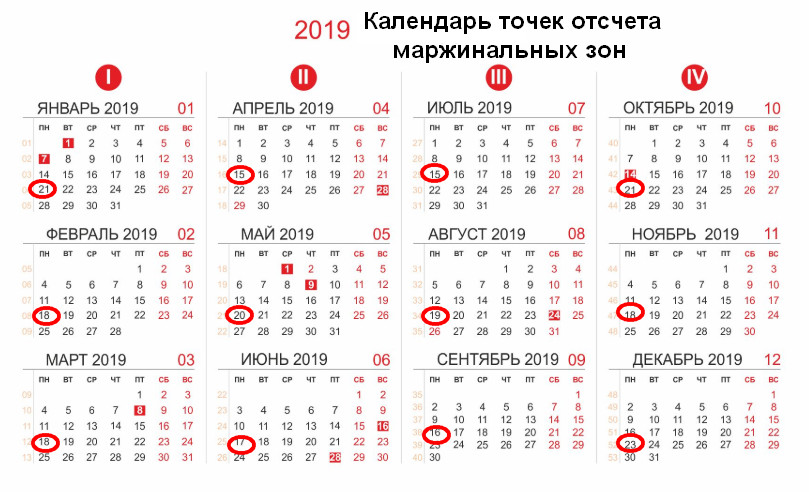
The levels are located symmetrically, above and below, the starting point is the beginning of futures expiration - every third Monday of the month. It is also the boundary for canceling the action of previous levels.
The size of the zone depends on market volatility; in crisis conditions, the ranges expand along with the growth of margin requirements. The exchange insures the trader's positions and its own reserve funds against default.
The size of the zone depends on market volatility; in crisis conditions, the ranges expand following the growth of guarantee coverage. The exchange insures the trader's positions and its security funds against default.
Rules for constructing medium-term margin zones

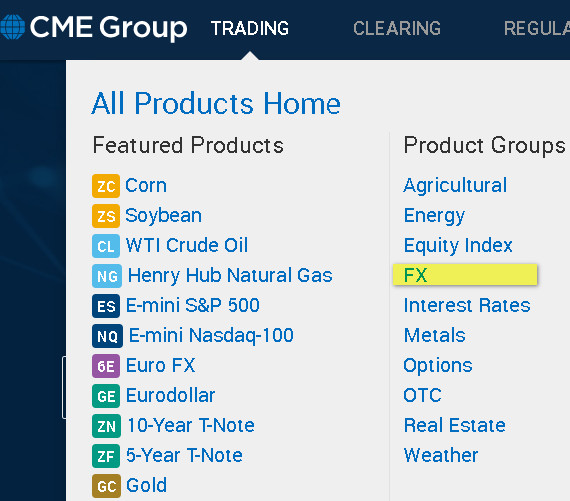
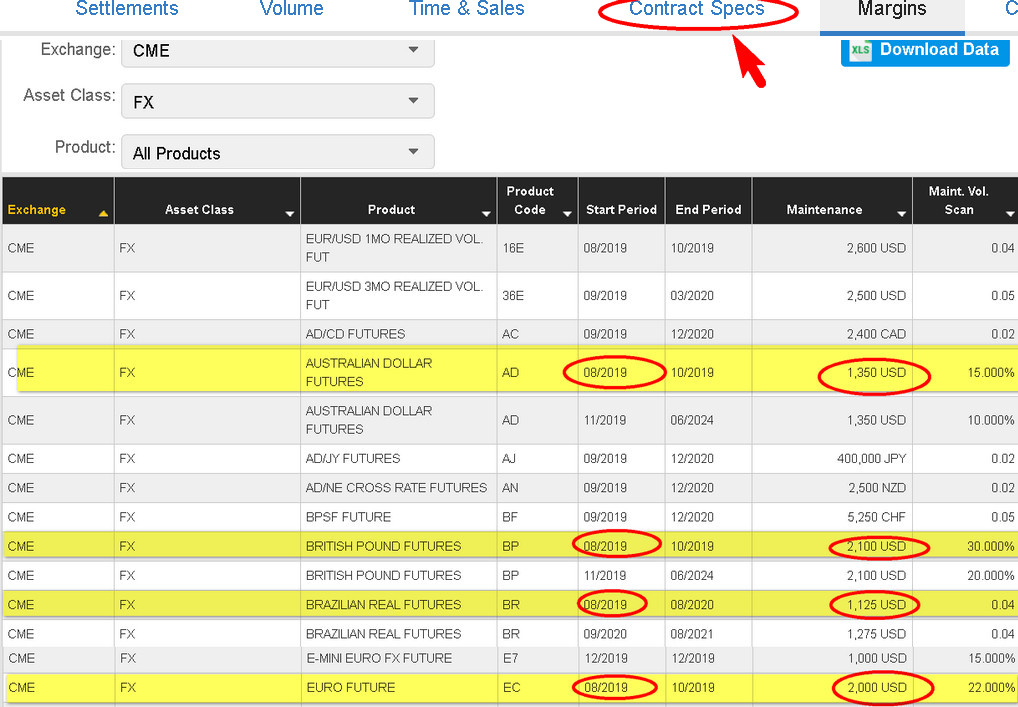
2. Follow the link to the CME website, set the CME exchange in the settings of the table that opens, select the FX section below, and choose the currency pair you need from the list of currency futures, or set “All Products” to display the full list of currencies.
Pay attention only to the lines with the name of the currency + future (euro future, Canadian dollar futures, etc.). We select the nearest futures by execution date, in this case 08/2019.
3. After specifying the margin size, we find out the cost of the point (spread) and calculate the margin zone, as shown above.
4. Add 10% to the result obtained, setting the levels symmetrically to the reference point.
At the time of writing, the EURUSD margin is 160 pp + 16 pp (10%), the starting point of the zones is July 15th.
Despite the static nature of the margin zone, it can be adjusted as volatility rises. For example, at the peak of the euro's decline in 2014, the margin requirement exceeded 180 points.
The chart with weekly candles shows the processing of signals of medium-term resistance and support in a critical situation. The trader manages to close the position on the rebound even in a crisis.
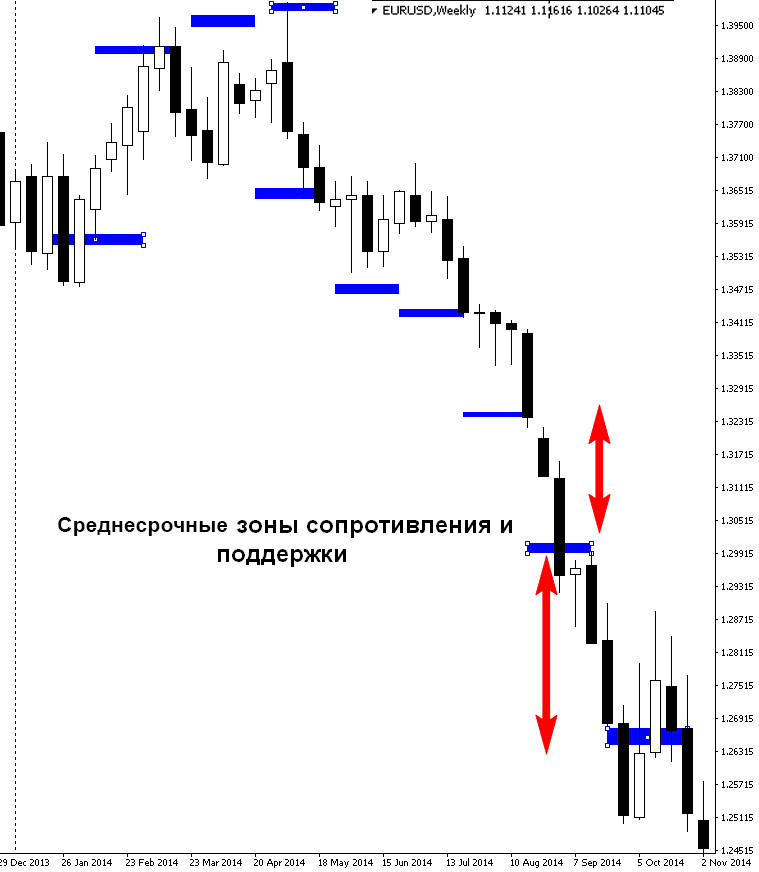
As can be seen from the chart, such long-term trading would have allowed entry at the beginning of the trend and holding the trade by moving the stop to the upper resistance levels of the margin zones.
As can be seen from the chart, such long-term trading would allow one to enter at the beginning of the trend and hold the transaction, moving the stop to the upper resistance levels of the marginal zones.
Rules for constructing intraday margin levels

In the example with the EURUSD pair, after the start of trading at 18-00, we put 40 points below and above the start of the candle.
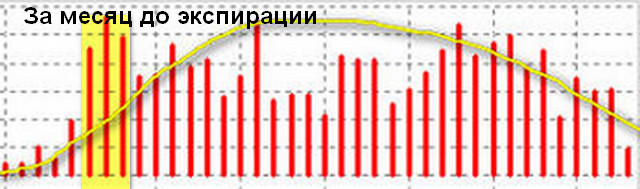
Statistics of average Open Interest values, i.e. held positions in currency futures, looks the same as many other instruments - in the form of a bell. Derivatives are available three months before expiration, but the largest number of entries occurs in the month before expiration.
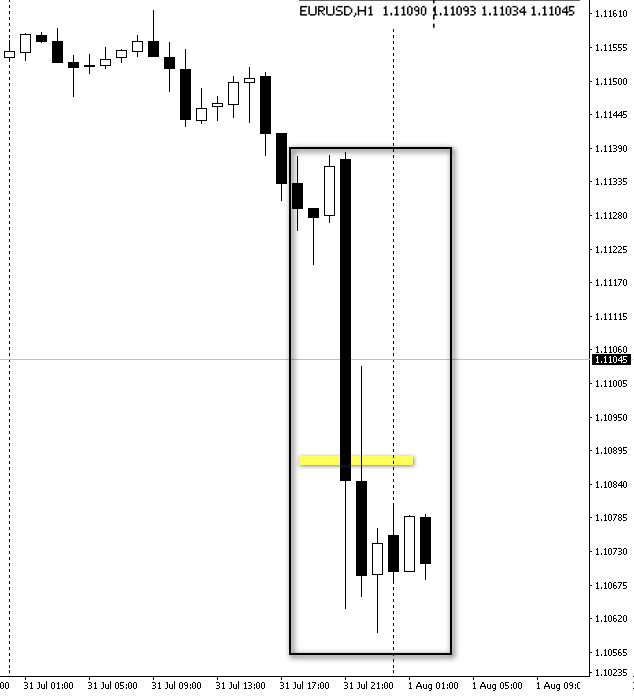
How do margin zones work in Forex?

Due to the specifics of the strategy, futures are “covered” by a large number of options. These are deliverable contracts that are converted into futures at expiration.
When the exchange rate approaches any of the medium-term zones, the trader can cover excess options with new futures taken in countertrend, without worrying about stops. At expiration, the positions will offset each other, and the profit earned earlier on the option contracts will cover the losses on the new futures.
Buying and selling futures “pushes back” the rate at medium-term margin zones; the new positions are invulnerable because they have no stops, so a surge of countertrend trades is difficult to knock out with an impulse move.
Intraday the situation is different: due to high commission costs and short trading time, it is profitable for traders to sell rather than buy options. This position carries the risk of “unlimited” losses, but for this, quotes must overcome 40 points in 8 working hours, which is quite rare. When this happens, traders have to urgently exit positions at market.
The specificity of options is such that they are difficult to close due to non-linear changes in supply and demand prices. It is faster and easier to purchase futures, only in this case it will be bought or sold in the direction of the trend.
Inside the dayThe situation is different: due to high commission costs and short trading time, it is profitable for traders to sell rather than buy options. This position carries the risk of “unlimited” losses, but for this, quotes must overcome 40 points in 8 working hours, which is quite rare. When this happens, traders have to urgently exit positions, “hitting the market.”
Platform: any
Currency pairs: EURUSD, GBPUSD, USDCHF, USDJPY, AUDUSD, NZDUSD, USDCAD
Timeframe: H1, D1
Trading time: medium-term option - any; short-term - U.S. session
Recommended brokers: Alpari, RoboForex, AMarkets
Rules for medium-term strategy
We define and mark medium-term margin zones as described above, setting levels above and below the opening price of the third Monday of the calendar month. We place pending Sell Limit and Buy Limit orders at the midpoint of the zone boundary, adding 5% to the margin level.
Rules for medium-term strategy

Set the stop-loss at 100 pp, moving it to breakeven after a positive close of a daily candle that rebounded from the margin level by 50 points or more. There is no take-profit; the trade is closed when the futures expire.
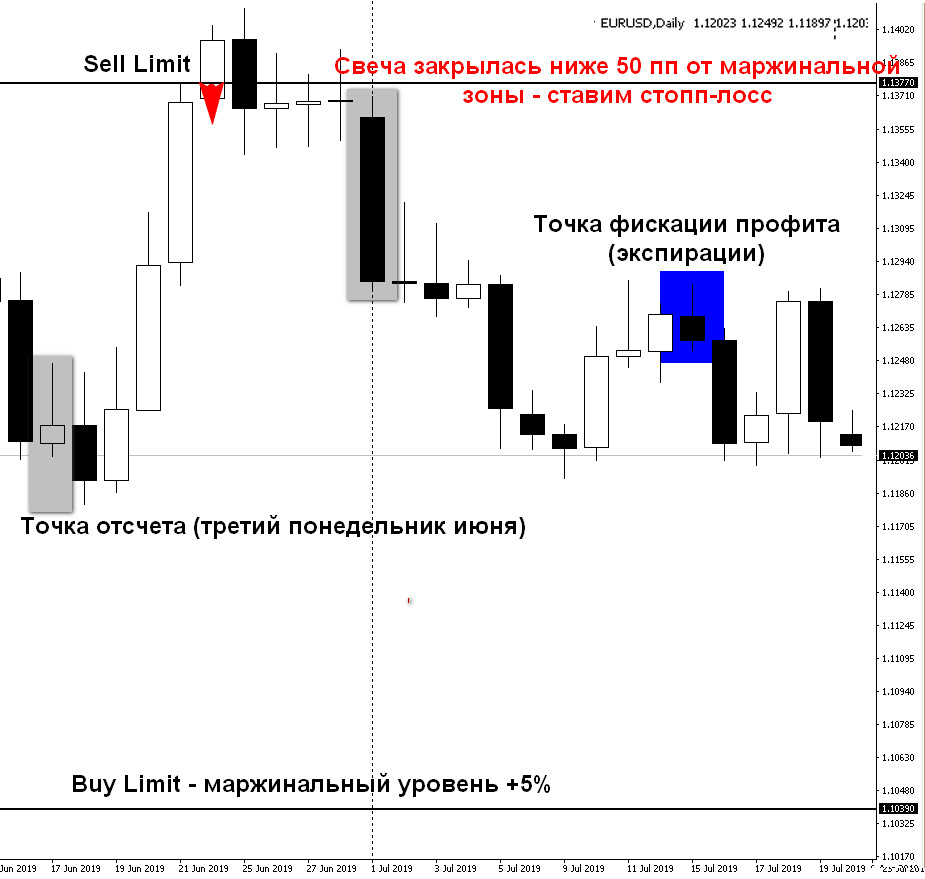
In the future, the position of orders can be adjusted only if the value of the margin changes. You can clarify its size after the opening of the Chicago stock exchange at 18-00 Moscow time (in winter at 19-00) atwebsitesites.
In 80% of cases (for the EURUSD pair), medium-term margin zones reliably work as rebound levels. However, because of the countertrend nature of the tactic, price often returns to the trend and the trade is closed at breakeven.
Special conditions

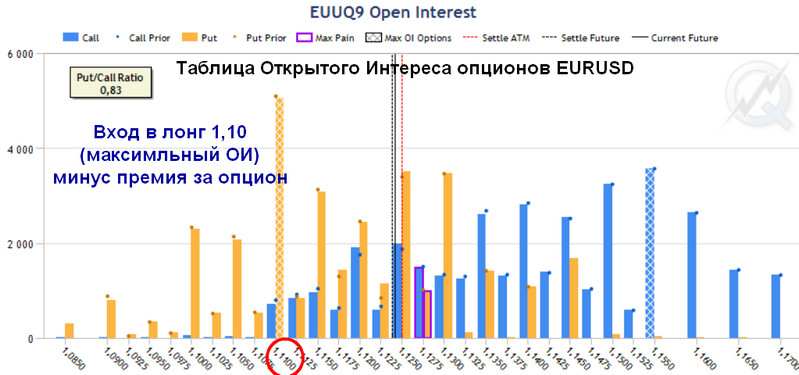
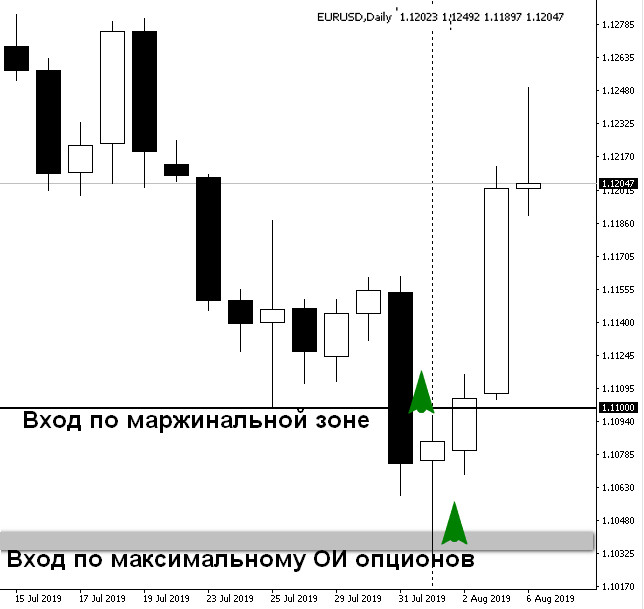
It is also useful for traders to monitor changes in the level of the maximum OI tied to a certain price of a currency pair (strike); any shift above the Sell Limit or below the Buy Limit may be a reason to cancel a pending order.
This is a signal that the margin zone will be broken, but the trader can re-enter by calculatinglevelby maximum Open Interest (OI) of options. As a rule, it is located nearby, as it is associated with futures through various option strategies.
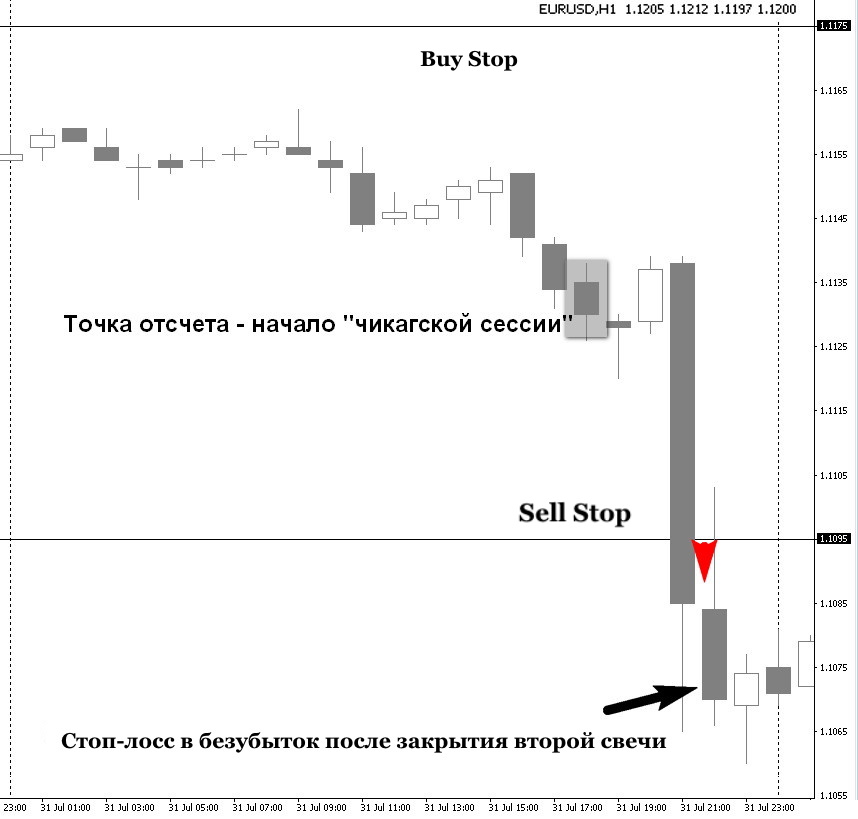
Before the opening of the Chicago exchange, we calculate the number of points in the margin requirement for the currency futures contract and divide it by 4. These are the conditional stop boundaries, whose levels are set above and below the candle's opening price at 18-00. Based on them, we place two breakout orders: Sell Stop and Buy Stop.
After one of them is triggered, the second one is canceled and a stop loss is set at the opening price at 18-00, which is moved to breakeven after the second hourly candle closes positively in the direction of the breakout (trend).
Rules for short-term strategy

Before the opening of the Chicago stock exchange, we calculate the number of points of margin security of the currency futures and divide it by 4. These are conditional limits of stops, the levels of which are laid above and below the opening price of the candle at 18-00. Using them, we set two breakout orders: Sell Stop and Buy Stop.
Traders often complain about the unpredictability of the market, but careful observation of trade statistics or price action can produce “predictable combinations.” The article clearly shows the existence of zones of least and greatest resistance to the trend, which work with a probability of 80%.
By combining the acquired knowledge with option levels or other types of resistance and support levels, you can obtain a fairly reliable strategy. By the way, one of these strategies has been working very successfully for some time on PAMM accounts at Alpari. This has repeatedly been mentioned in quarterly reviews of the best managers in the Forex market.
Conclusion

Sincerely, Alexey Vergunov
Tlap.io
Combining the acquired knowledge withoption levelsor other types of resistance and support levels, you can get a fairly reliablestrategy. By the way, one of these strategies works very successfully for some time onPAMM accountsAlpari. This has been written about repeatedly in quarterly reviews about the best managers in the Forex market.
Best regards, Alexey Vergunov
Tlap.io
