
Learning to Lose Correctly

One of the few aspects of Forex trading where you can experience some certainty is that you will have losses. Absolutely. Losses are an integral part of trading, and one of the key differences between successful traders and the rest is not how many losses they have, but how they deal with those losses. Being able to lose is a key point in order to be a winner in the long run.
How do you currently deal with your trading losses? How do they affect you? What impact do they have on your trading performance and results?
Let us break down three steps that can help you better cope with your trading losses in Forex.
Step 1: Reducing Losses

The first step in effectively dealing with losses is "reducing losses." Reducing losses is a key aspect because if you perceive this step correctly, then later you will have to use steps 2 and 3 less. The first step can be viewed as a kind of "disease prevention."
There are three aspects that will help you reduce losses in trading and will affect how you cope with them.
1. Reduce the number of your losses
When I talk about reducing the number of losses, I do not mean trying to reduce losses as such, because that is unrealistic, I mean focusing on your trading strategy, maintaining trading discipline, and reducing losing trades that, for example, arise from trading that is not part of your strategy and that therefore can be avoided.
Losses that occur as a result of orderly trading - are nothing more than a losing trade that is part of trading. But losses incurred from opening trades that go against your trading strategy, when you just "thought you saw something there," can be regarded as bad trading or something else that could have been avoided. In a word, do not fool around. Follow your Forex strategy.
2. Reduce the size of your losses
Obviously, it all comes down again to risk management. It is important to acknowledge that large losses have a significant impact on our emotional state and often can influence our trading behavior, usually far from in the best way, for example, attempts to "take revenge on the market." Under no circumstances should you increase your lot size after a losing trade.
3. Reduce the mental and emotional impact that these losses have on you
Your reaction to losses is one of the factors in how you incurred those losses (whether you strictly followed your strategy or not), their size, as well as your perception of and beliefs about those losses. If you do not like taking losses and feel that you should not have losing trades or deal with trading where losing trades are possible, then your reaction will differ greatly from the reaction of those people whose thinking is more realistic and who realize that losses are an inevitable component of trading, that results are probabilistic, and that not every trade is a winner.
Do you fully realize the fact that losses are an integral part of trading?
Do you fully realize the fact that any trade does not exclude losses and has a probabilistic outcome?
Step 2: Reaction to Losses

The ability to lose is the key link that will help you become a winner.
This step comes down to how you actually cope with yourself at the moment when you realize that you may have to accept a loss. Coming to terms with losses is extremely difficult, this is connected with such factors as our ego, our desire to win, and our human nature of disliking loss, and this is exactly why the phase of "reducing losses" is very important. However, even that one step in terms of accepting losses can still be difficult, especially if we have already had losses before. In this regard, it would be useful to have some strategies that could help you remain calm, focused, and disciplined when you are heated up.
Many people are stopped or thrown out of trading by a feeling of anxiety or anger. Their behavior begins to be guided by the emotions they are experiencing at that moment, as a result of which they lose self-control and discipline. The whole point is to be able to manage your emotional state in real time and keep your mental abilities open for trading, as well as to be able to control yourself and maintain strict discipline.
The only quick and simple way to learn to manage your emotional state is to learn to manage your breathing. In a state of stress, your breathing usually changes - it becomes ten times faster and more broken - therefore it is necessary to breathe more deeply and longer: the inhalation must be done slowly, from the diaphragm, and the exhalation must be made longer, slower, and more controlled (the body's natural relaxation response). This will help you overcome the stress reaction and preserve calmness, composure, and, most importantly, discipline within yourself.
Pressing my palms together by interlacing my fingers also helps me. This is a simple ancient Indian technique for calming the nerves.
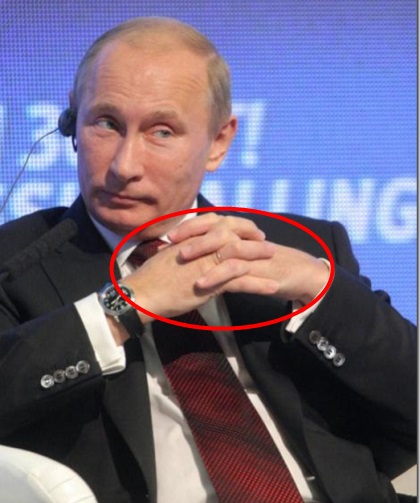
In addition, while taking a cognitive approach, maintain sound thinking in such situations. What thoughts usually visit you at the moment when you make a losing trade? "The market always goes against me." "This should not have happened," and so on. ...
These are useless thoughts because they only raise the level of stress. Better ask yourself the following: "What would a successful trader say to himself in a similar situation?" This can help you direct your thinking in the right direction and, as a result, affect your feelings and lead to more positive behavior.
Another way to manage your thinking is to actually create some affirmations, phrases that you can repeat to yourself when you find yourself in a situation that may bring you losses, and direct your thoughts, feelings, and emotions in the right direction, as well as overpower any unconscious and habitual reactions that you may have developed in yourself. Remember that your emotional state and discipline will depend on what you focus your attention on.
It can be very useful to focus on phrases that will help you concentrate on your trading process and do the right things (which is probably not easy) at the right time and for the right reasons; for example: "I am a winner because I follow my trading plan."
Step 3: Recovering After Losses

It is useful to have some strategies that can help you remain calm, focused, and disciplined when you are heated up.
At the end of your trading, sum up your losses for today. What can you do for this?
1. Assess your condition.
How do you feel? Assess the state of your trading in general on a 10-point scale, where the number 10 will correspond to the state of your successful trading, and 1, accordingly, to the opposite end of the scale. Where are you now?
2. Assess and analyze the cause of your losses.
What kind of loss took place - a losing trade or bad trading? Can a lesson be learned from this trade? Can anything be done in the future?
Carry out an assessment and analysis of the cause of losses. What lesson can you learn from this?
3. Control your reactions.
There is a whole range of ways by which you can manage your reactions to losses.
At the cognitive level, you want to be fully aware of your thoughts, your perceptions, and the meaning that you attach to your losses. Your losses have the meaning that you yourself attach to them. A loss does not at all mean, for example, that you are a loser. You can take a different point of view, looking at things more broadly - what lesson can I learn from this? how will I feel about this at the end of the day, at the end of the week, at the end of the month, in 6 months, in a year, in 5 years?
At the behavioral level, you could use a breathing or relaxation technique, take a walk, or do some physical exercise in order to help you cope with the feeling of loss.
Sometimes it is merely a matter of time. One trading session or day can often be enough to help you get rid of some emotions, regain some perspective, and be ready to start trading again.
4. Pull yourself together.
Come back and be ready to start Forex trading again - intellectually, emotionally, and strategically. Recall your trading plan, concentrate on your breathing, and then act.
In Conclusion

If you want to learn to lose like a winner and develop the skills that will help you improve your chances of becoming a successful Forex trader in the long run, remember:
• Reduce your losses: develop the ability to avoid strong reactions to losing trades by reducing the number of preventable losses and bad trades; by managing position size and final trading results; and also by developing a mindset that has a more positive view of losses.
• React correctly to your losses, directing your thoughts and focusing your attention on controlling your breathing to create a state that will enable you to behave properly, as required for orderly trading.
Best regards, Pavel
TradeLikeaPro.ru