
The Inflation Trap: Can CPI Undo a 70% Fed Hike Bet?

Intro

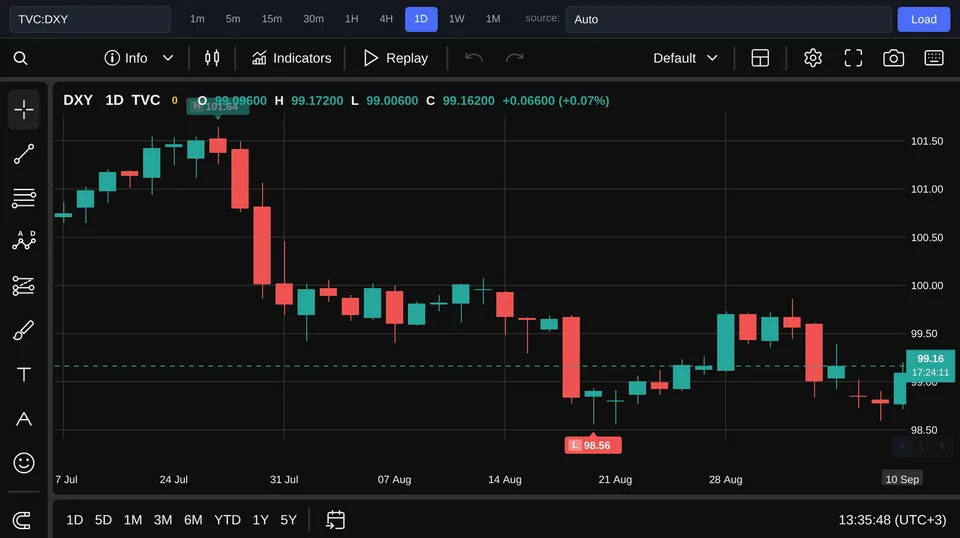
The market has arrived at an unusually tense setup. US producer prices rose 0.4% in August and 5.4% from a year earlier, while an oil shock added a fresh inflation concern. Traders consequently raised the implied probability of a Federal Reserve rate increase next week to about 70%, turning what had been a risk scenario into something close to the market’s base case. There is a wrinkle, however. The US Dollar Index, or DXY, stands at 99.16 USD and is up only 0.07% on the day. That is hardly the triumphant march one might expect if investors were fully convinced that another lasting round of monetary tightening had begun. The central question is whether CPI will confirm the inflation trap or expose the 70% hike probability as an overcrowded position.
PPI raises the alarm, but it does not settle the case
The confirmed facts are straightforward: US PPI increased 0.4% in August and 5.4% year over year. Those readings indicate meaningful price pressure at the producer level, where companies encounter changes in energy, transport, materials and other input costs. They give the Fed a reason to remain cautious, especially when inflation is already the dominant constraint on easier policy. The transmission from producer prices to consumer prices is not automatic, though.
Oil can amplify inflation without proving persistence
The oil shock complicates the picture because energy affects inflation through several channels. It can lift prices paid directly by households, increase freight and production costs, and influence inflation expectations. Even companies that buy little oil may face higher charges from suppliers whose logistics bills have risen. Yet central banks generally have to distinguish between a temporary supply shock and an inflation process that keeps reproducing itself. Raising interest rates cannot produce additional barrels of oil. It can, however, restrain demand and reduce the likelihood that an initial energy-price jump spreads into wages, services and repeated price increases. That makes the appropriate response dependent on the shock’s duration and its secondary effects. The key issue is not simply whether oil has become more expensive, but whether its impact begins to migrate into broader and stickier inflation. A short-lived energy surge followed by stable underlying prices would provide a weaker case for tightening than a rise accompanied by persistent core inflation. CPI matters because it offers the next practical test of that migration. Editorially, this is where the phrase “inflation trap” deserves caution. The market may be trapped between an uncomfortable headline shock and incomplete evidence about persistence, rather than trapped in an inevitable hiking cycle. Oil has rung the alarm bell; it has not yet written the entire policy statement.
Why the dollar is not celebrating the hawkish turn
At the time of writing, DXY is at 99.16 USD, with a daily change of just +0.07%. That specific market move is notable beside the approximately 70% implied probability of a Fed hike. Higher expected US rates often support the dollar by raising prospective returns on dollar assets, but the relationship is neither mechanical nor isolated from what traders had already anticipated. One explanation is that much of the hawkish repricing has already occurred in interest-rate markets. Once a scenario is widely reflected in prices, the dollar needs an additional surprise to extend its move decisively. Another possibility is that investors are reluctant to build large positions before CPI, because a softer release could erase part of the rate-hike premium very quickly. Other influences can also separate the behavior of Treasury yields from that of the currency. The dollar is a relative price: expectations for other central banks, global risk appetite, hedging flows and existing positioning all matter. A rise in US yields may therefore coexist with only a modest increase in DXY if comparable forces are working in the opposite direction. The muted +0.07% move does not disprove the hawkish rate signal, but it does show that conviction is incomplete. Our inference is that traders are treating CPI as an event capable of changing both the probability and the path implied beyond next week. The dollar, in effect, is keeping one paw near the exit without actually leaving the room.
Four signals that will distinguish confirmation from reversal
The first signal is the gap between reported CPI and market expectations, viewed in both headline and core terms. Headline inflation will reveal the visible effect of energy, while core inflation will help show whether pressure is broader. A hot headline figure driven narrowly by energy may produce a less durable reaction than firm core inflation across several categories. The second signal is the response of short-maturity Treasury yields. These securities are particularly sensitive to expectations for near-term Fed policy. A sustained rise after CPI would suggest that investors see stronger evidence for tightening; a sharp decline would indicate that the report has weakened the logic behind the current hike bet. The third signal is the implied probability of next week’s decision. The current reference point is approximately 70%. If that probability rises and remains elevated after the initial volatility, the inflation-trap thesis has gained confirmation; if it falls materially, the market has begun unwinding a crowded hawkish position. The fourth signal is DXY itself. A move above its current 99.16 USD level, accompanied by stronger short-term yields and a higher hike probability, would create a coherent hawkish response. If DXY reverses from its present +0.07% daily gain while yields and the implied probability also decline, the message would be equally coherent in the opposite direction. Mixed moves would argue for patience, because they could reflect positioning rather than a settled reassessment of inflation.
Conclusion
Two conditional scenarios follow from the evidence. A stronger-than-expected CPI report, especially one showing persistent underlying pressure, would reinforce the roughly 70% hike probability and could support both Treasury yields and the dollar. A softer report would challenge the inference drawn from PPI and oil, encouraging traders to reduce hawkish bets and creating room for a reversal in yields and DXY. The decisive issue is persistence, not one alarming data point. PPI and oil have raised the burden of proof for a dovish outcome, but CPI can still change the market’s assessment. The clearest conclusion will come from agreement among inflation details, short-term yields, the implied Fed probability and the dollar—not from the first price move alone.