
How to Trade USDRUB? National Currency Specifics, Secrets, and Tricks
Hello, forex trader friends! Of course, each of us is a patriot at heart, that cannot be taken away. But unfortunately, it so happens that the exchange rate of our native Russian ruble is unstable. What can we do about it? Globally, nothing, but you can profit from fluctuations in the Russian currency rate through trading the USDRUB pair.
But things are not so straightforward here. There are many nuances that you should know before opening ruble positions. Today we will talk a little about the economy of the Russian Federation, what affects the USDRUB rate, the volatility of this pair, the influence of oil, naturally, and most importantly, which trading strategies to use in order to make a profit.
The Economy of the Russian Federation
- Downturns and correction cycles of the Russian economy
The Russian economy, in general, demonstrates high income indicators, representing a mixed type of economy, which in turn implies the presence of state ownership in strategic commercial sectors. The market reforms of the 1990s opened high prospects for privatization activity in various sectors of industry and agriculture, excluding, however, parts of the energy sector and the defense industry.
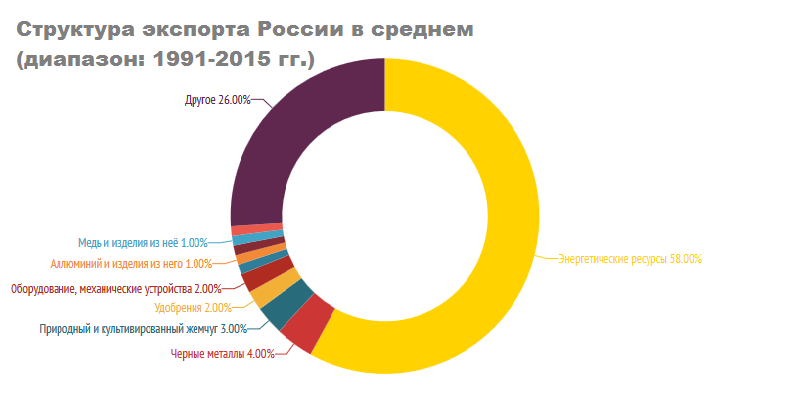
Among the world's largest economies, Russia stands out for relying on income from energy exports to stimulate its growth. The country has many natural resources, including oil, natural gas, and precious metals, which make up a critical share of Russian exports. Income from oil and gas exports, on average, accounts for 16% of GDP, half of federal budget revenues, and more than 70% of total exports.
Russia also has major industries engaged in the design and manufacture of highly complex weapons. The value of Russian arms exports amounted to $15.5 billion. According to 2013 data, only the United States had a larger share of income from arms supplies. Russia's top military exports include combat aircraft, air defense systems, ships, and submarines.
In 2014, Russia's economy was the sixth largest in the world by PPP and the tenth largest by market exchange rates.
The monetary unit of the Russian Federation is the Russian ruble. The ruble is also legal tender in Abkhazia and South Ossetia.
The Russian monetary system (issuance, monetary, and credit) is regulated by the Central Bank of the Russian Federation (Bank of Russia). Founded on July 13, 1990 by order of the Supreme Soviet of the RSFSR, the Bank of Russia, initially called the State Bank of the RSFSR, assumed the obligations of a central bank after the collapse of the Soviet Union in 1991.
The economy's strong linkage to energy resource exports makes the Russian currency vulnerable to cyclical fluctuations and downturns, responding to demand from major importing partners and to the geopolitical climate that regulates international trade relations.
Another reason for the instability of the Russian currency is the growing distrust of both domestic and foreign investors in the Bank of Russia's ability to act promptly and effectively within the correlations typical of the Russian currency with the health of the energy sector. Russia has a reputation for currency crises and for "Black Tuesday." Key interest rates that are often inadequate for global market dynamics contribute to the closure and ruin of banks and enterprises, which frequently find themselves insolvent and cut off from external sources of financing because of various geopolitical factors.
The most obvious economic pattern for Russia is significant growth due to demand for energy resources from international trading partners and, accordingly, a downturn due to a lack of demand. Each renewed tendency for sliding commodity prices puts the Central Bank in a hopeless position, destabilizing the ruble and igniting inflation that erodes consumer and purchasing power, in particular due to a number of sanctions imposed on the country from time to time by the international community because of a rather aggressive foreign policy.
- Russia and oil
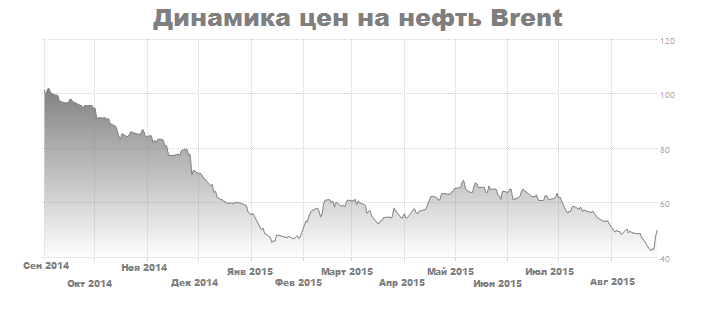
Modern Russia is even more oil-dependent than, say, the Soviet Union was. Oil and gas currently account for about two thirds of Russia's exports. As much as 70% of Russia's GDP today is "oil-dependent" (including government spending, 60% of which is financed by taxes from the oil extraction industry). Most Russian economic sectors, international reserves, currency exchange rates, government revenues, and indeed GDP itself, correlate strongly with oil prices.
- Geopolitics and its impact on ruble growth
The Russian ruble, as mentioned earlier, is a commodity currency, so the dynamics of its exchange rate will largely depend on global commodity prices, including oil and gas. The ruble is not alone in such a linkage, just consider the currency club consisting of the Norwegian krone, the Kuwaiti dinar, as well as the Australian and Canadian dollars. These currencies also remain dependent on energy resources. Nevertheless, their fluctuations are much less pronounced than those of the Russian ruble. We tried to explain why above, touching on geopolitical nuances reflected in Russia's commercial activity.
Let us emphasize once again that the disproportionately large share of the oil and gas industry within Russia's national economy, oriented toward exports and budget revenue replenishment, is an unacceptable foundation for the seventh-largest economy in the world by volume.
Also, one should not forget that today the Russian ruble, although it meets the criteria of a freely convertible currency as provided for in the charter of the International Monetary Fund (IMF), does not have a sufficient credit history, is not used widely enough in the global economy, and remains a newcomer to the world financial markets.
The openness of the Russian financial market to foreign players also makes the ruble an unstable currency attractive to speculators.
It is worth noting, of course, that the role of oil prices in the ruble exchange rate is often somewhat exaggerated. But even if we assume that the Bank of Russia will deliberately soften monetary policy in order to keep ruble revenues from oil exports on a stable footing, its actions may give grounds for containing the currency crisis in the country. Restructuring key sectors of industry, liberalizing the country's foreign policy activity, and weakening the pressure of geopolitical interests on the commercial sphere could, of course, have the necessary effect on improving and stabilizing the national currency rate, but nothing indicates prerequisites for such a scenario in the further development of events.
The USDRUB currency pair
The global trend of our currency is directed downward. And for the USDRUB pair, accordingly, upward:
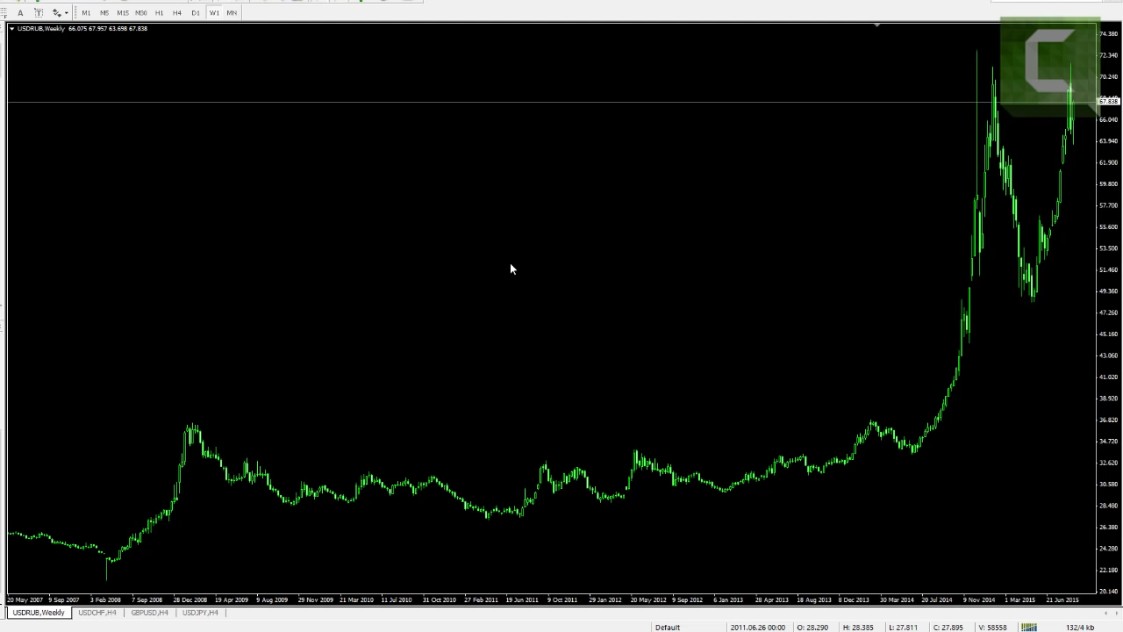
The dollar is getting more expensive, the ruble is getting cheaper. This global trend is characterized by sharp jumps about every 5-7 days. If we recall the crises of 1998, 2008, and 2014, then in general there appears the opinion that the country is constantly in crisis and does not come out of it. Let us move on to the technical aspects of the currency.
Swaps on the USDRUB pair are small. On short positions they are about 1 point, and on long positions 2 points.
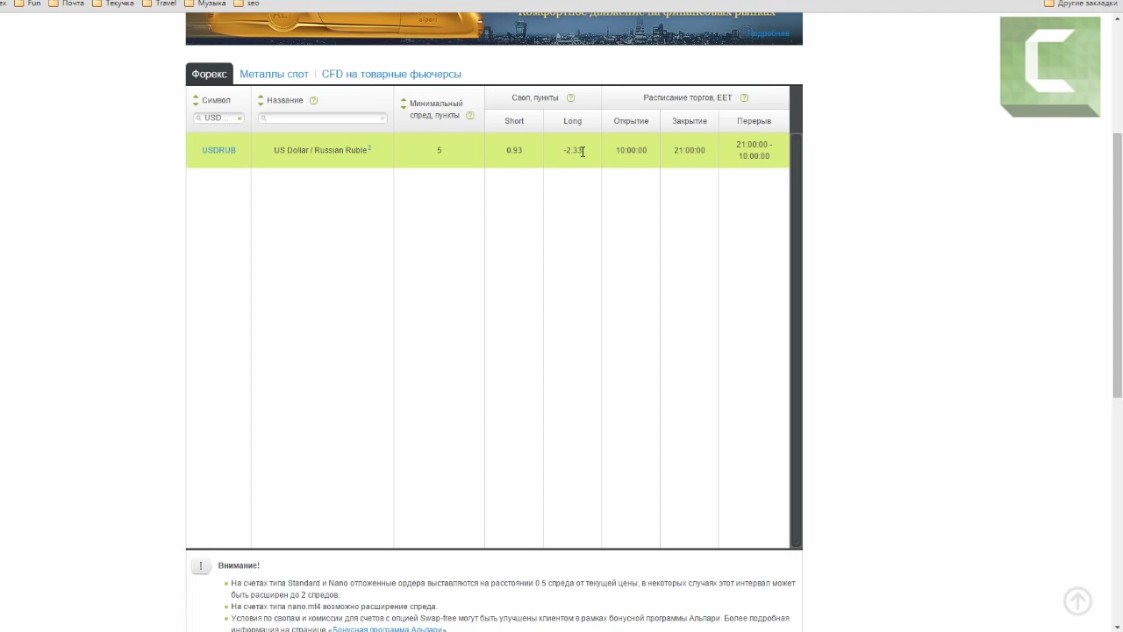
I do not see any strategy based on swaps here, they will not make a strong difference, but on the other hand we can, without paying attention to them, hold positions for several days.
On the chart, one point of the currency equals one kopeck, which makes them convenient to count. Therefore, we do not pay attention to the third digit after the decimal point. However many kopecks the currency pair moved, that many points its movement amounted to. The Russian currency is most active during trading on the Moscow Exchange. This takes place from 10:00 to 19:00 Moscow time. Then there is an evening session until midnight with short breaks. At the same time, trading hours may differ among brokers. And this should be taken into account.
The commission and spreads on the USDRUB currency pair are very strongly dependent on the current state of the economy. When the economy is very stormy, the spreads can be exorbitant and unsuitable for trading. Therefore, when you open a trade, look at the commission and spread, especially if something is happening in our country's economy. For example, some new sanctions are being adopted or the Central Bank announces some decision on the interest rate. Always check the spreads and commission, since on such days they may be very heavily inflated.
Once again I want to remind you that the USDRUB currency pair is not for beginners. Volatility is about 30 kopecks per day, but on the condition that we take a broad period of time. On days of increased activity, when the economy is stormy, the currency can jump several rubles up and down, which corresponds to several hundred points.
The most volatile days are Monday and Friday:
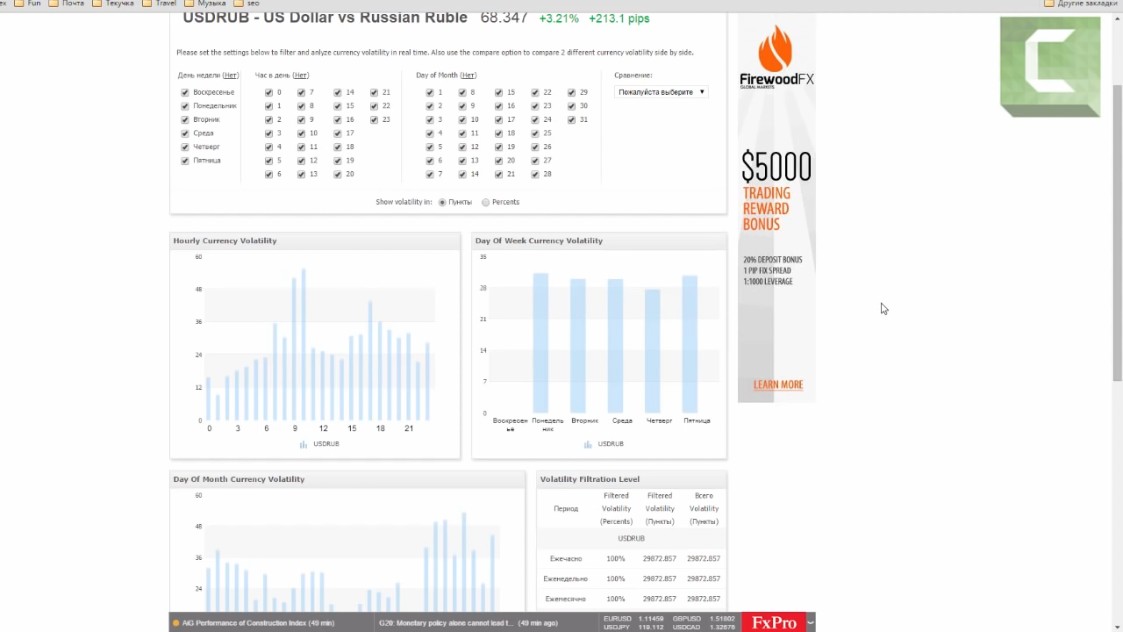
Increased activity is observed in the first few hours after the market opens and at the beginning of the evening session, after 19:00 Moscow time.
If we consider the days of the month, then the most volatile are the days from the 24th to the 31st.
Correlation with oil

Speaking about USDRUB quotes, it is impossible not to touch on the correlation with oil.
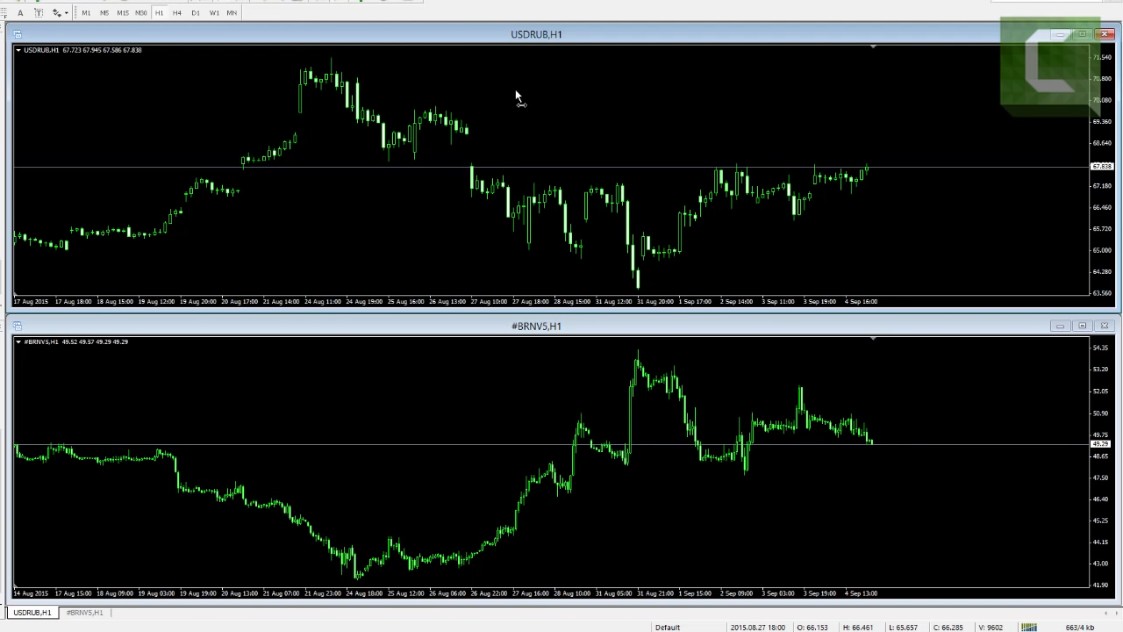
On the upper chart we have the USDRUB currency pair open on H1, and on the lower one the quotes of Brent oil. Although Russia exports many grades of oil, such as Urals, REBCO, Sokol, and many others, as a rule investors look at Brent oil quotes. Because it is this grade that is traded on international markets.
What can we notice on the charts? If oil falls, then the USDRUB currency pair rises. As oil quotes fall, the Russian ruble also gets cheaper, and the dollar gets more expensive.
The dependence is visible not only on hourly charts, but also on daily ones:
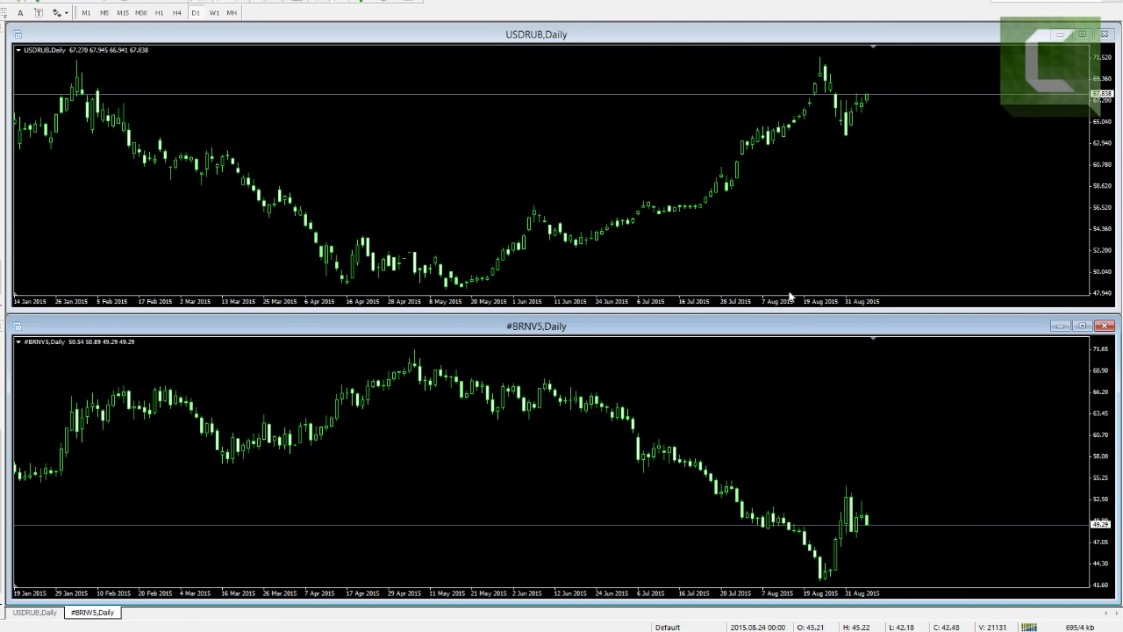
Since the trading hours of the Russian ruble and oil differ, I would advise following oil quotes precisely at the moment of your trading.
Let us imagine that you are trading USDRUB now and at the same time glancing at oil quotes. If some strong movements occur, then we make decisions according to the situation. Everything is actually very simple and is expressed in a simple relationship. If oil gets cheaper, then USDRUB rises, and if oil gets more expensive, then USDRUB falls.
At the same time, technical indicators showing correlation at the moment should not be used. Because of the different number of candles involved in trading, different instruments may produce incorrect and false data. Therefore, view the charts manually. In this case, everything is visible here with the naked eye.
Remember that oil should be primary for you. If you noticed some movement first in oil quotes, and this has not yet had time to be reflected in ruble quotes, then perhaps the time has come to open a position.
What news affects the Russian currency?
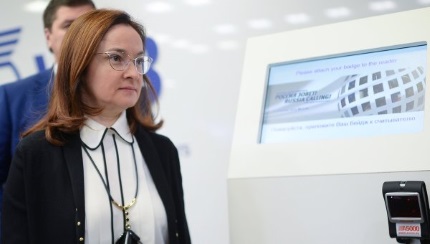
I think any of our readers will be able to answer this question.
This currency is affected by oil news, APEC decisions on limiting oil production, and news about geopolitical issues, namely the introduction of sanctions and their removal. Of course, at the moment such talks are not taking place, but in the future it is quite possible that one of the two may happen. Also, general data on the country's economy affects the USDRUB currency pair.
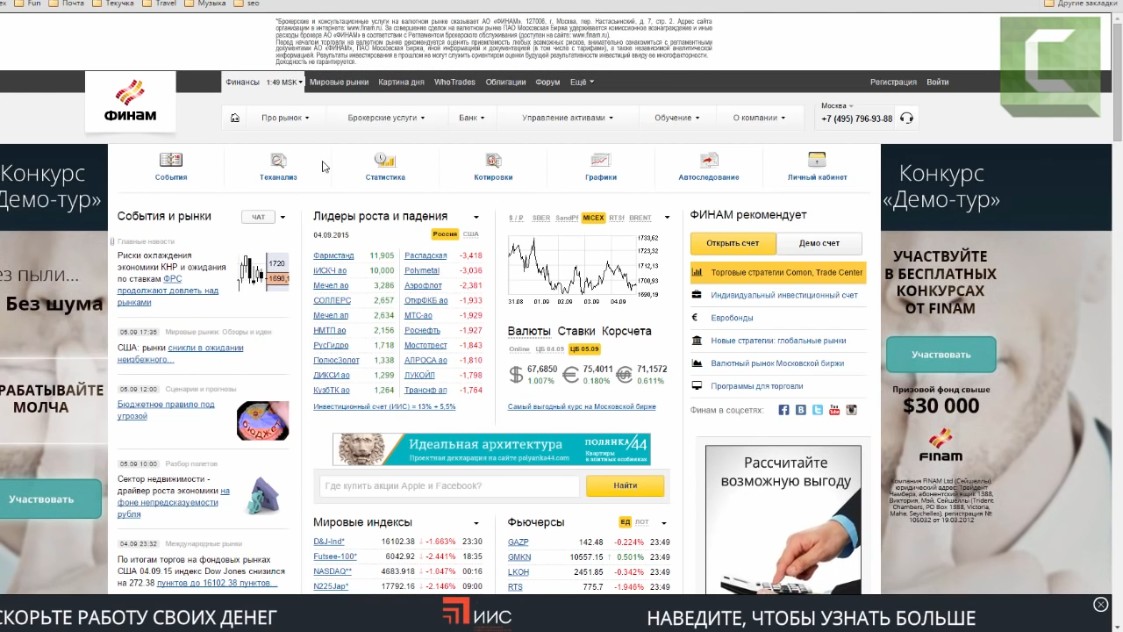
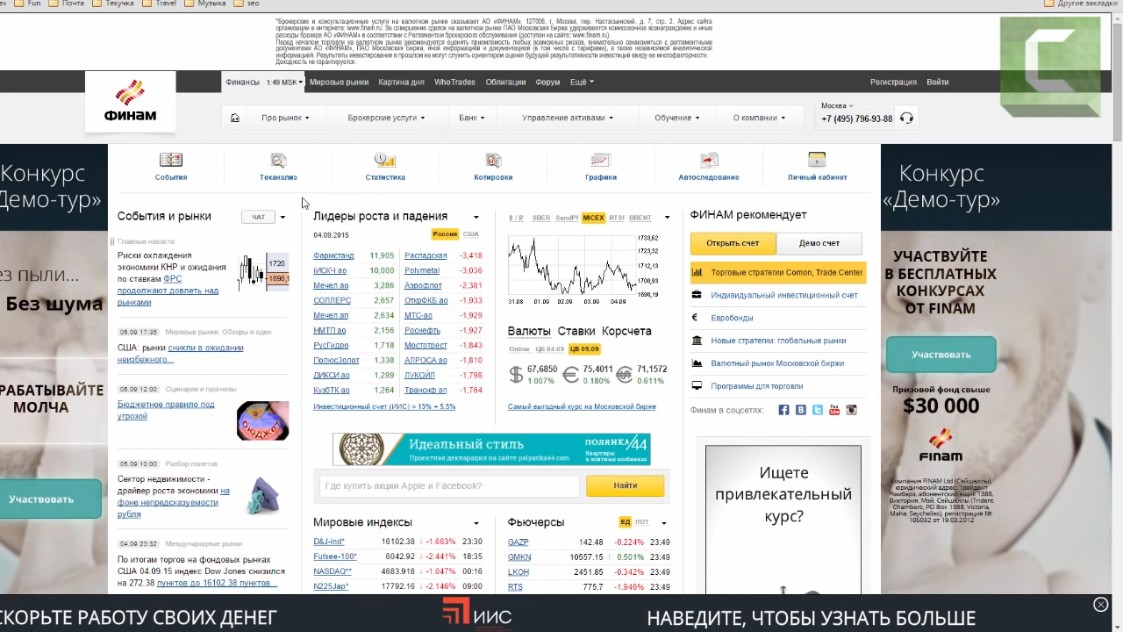
Any major portal about economics and finance will do. In the economic calendar, the news that affects the Russian ruble is not shown.
You should not pay attention to news about the US dollar either. If in the case of other currency pairs, when news is released that can reflect badly on the currency, we try not to trade, then they do not affect the Russian currency. I think this can be counted as a plus.
Thus, when trading USDRUB, try not to pay attention to the economic calendar. Follow only the news that reflects only economic changes in the country.
Strategies for the USDRUB pair
Let's move on to the main thing, namely the trading strategies for the USDRUB pair.
On this currency pair, the market is very speculative, therefore, even despite any positive or negative news, movements can be in any direction. This is worth remembering when trading.
Pay attention to the fact that price gaps after the market closes and, accordingly, after it opens do not close as on other pairs. More precisely, they do close, but far from always. Therefore, if you see a GAP, then trading in the opposite direction and counting on it to close is not worth it. This strategy does not work on this currency pair.
It is worth paying attention to breakout strategies designed for the market opening. Namely, there is an opportunity to calculate a range that is significant for this currency pair. And when it is broken, enter in that direction. As a rule, after some fluctuation during the day, this currency pair shows a single movement. Of course, this does not always happen, but you can make money on it.
In the first one or two hours, deceptive movements usually occur. Therefore, if you see that the chart is moving up, then watch for an opportunity to open a sell, and vice versa:
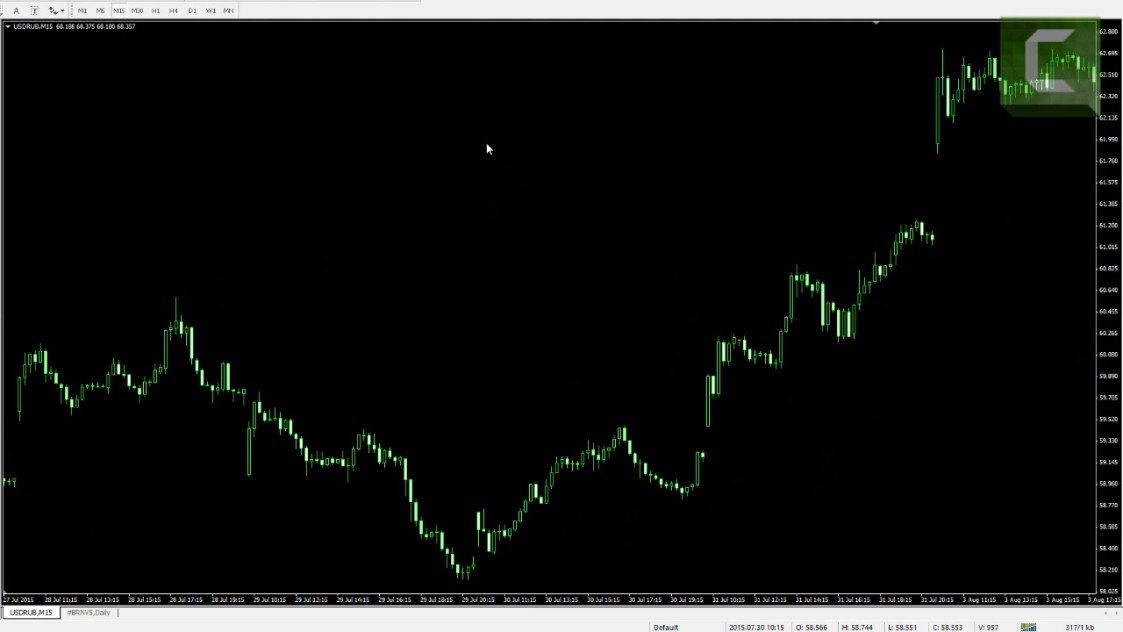
Thus, very often the pair throws out not very experienced traders, and then continues its movement in the other direction. Another interesting strategy is to leave trades overnight in the direction of the current trend on H1.
That is, using hourly charts we determine the dominant trend that existed on the current day and place a pending order in the same direction. Or open immediately, without waiting for the day to close. Subsequently, when the price breaks our pending orders in the first hours, we close them.
You should not set some huge targets on this pair, since volatility is not too high, and we may incur a loss. Traders who like some risky strategies can short at extreme levels. These include round levels such as 60, 70, 80. As long as the correction does not end, you should hold the position and thereby earn money, including on swaps. But again, I repeat once more, this currency pair is not for beginners. And even more so, this strategy requires good experience.
In general, pay attention to round levels, because they are such not only for speculators, but also for ordinary people and the country's economy as a whole. On this currency pair, round levels play an even greater role than on the other pairs.
And finally, for intraday scalping I do not see any good opportunities, but if someone can do it, then, as they say, more power to them. In general, I would not advise getting involved intraday and on small timeframes. We have already discussed the correlation with oil, but still, I think it is worth repeating.
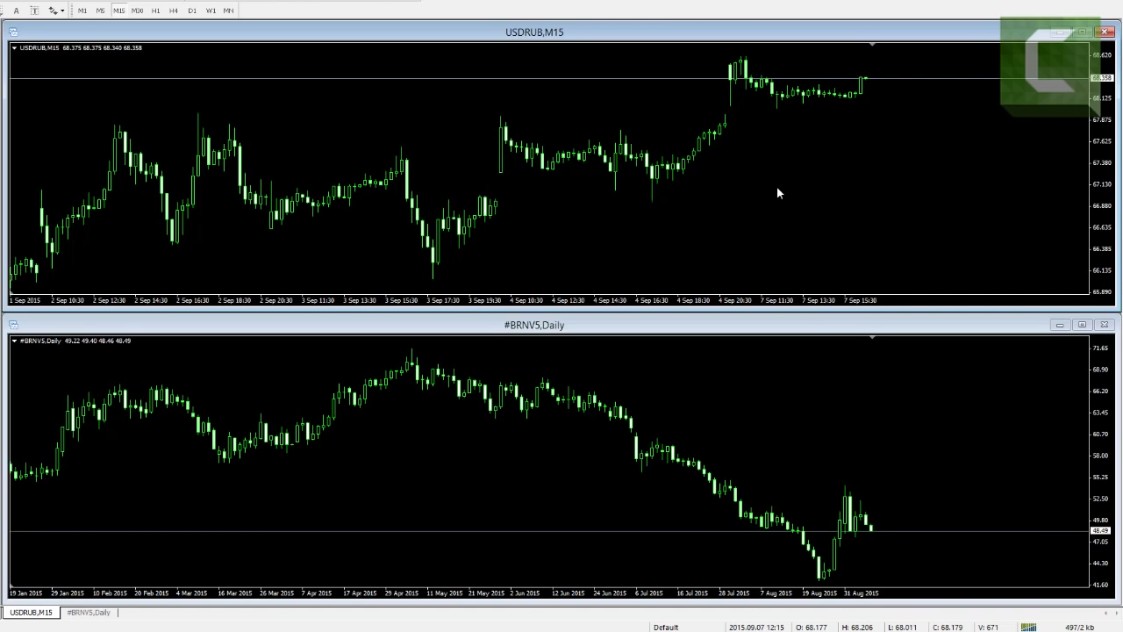
If you see a movement in oil, which is a leading indicator for the USDRUB pair, and the pair has not yet priced in this movement, then it is time to open positions.
This strategy is quite simple, but you should determine the limits for yourself, namely by how many percent oil should move in order to serve as a trigger for entering a position on this instrument.
Another interesting strategy that may come in handy in your trading.
Let us look at the movement of this currency pair on Friday. If, an hour before the market closes, the price does not correct against the background of the previous move, but only keeps rising and rising, this means that speculators are in no hurry to close their positions for the weekend. And that means they are expecting this currency pair to rise on Monday.
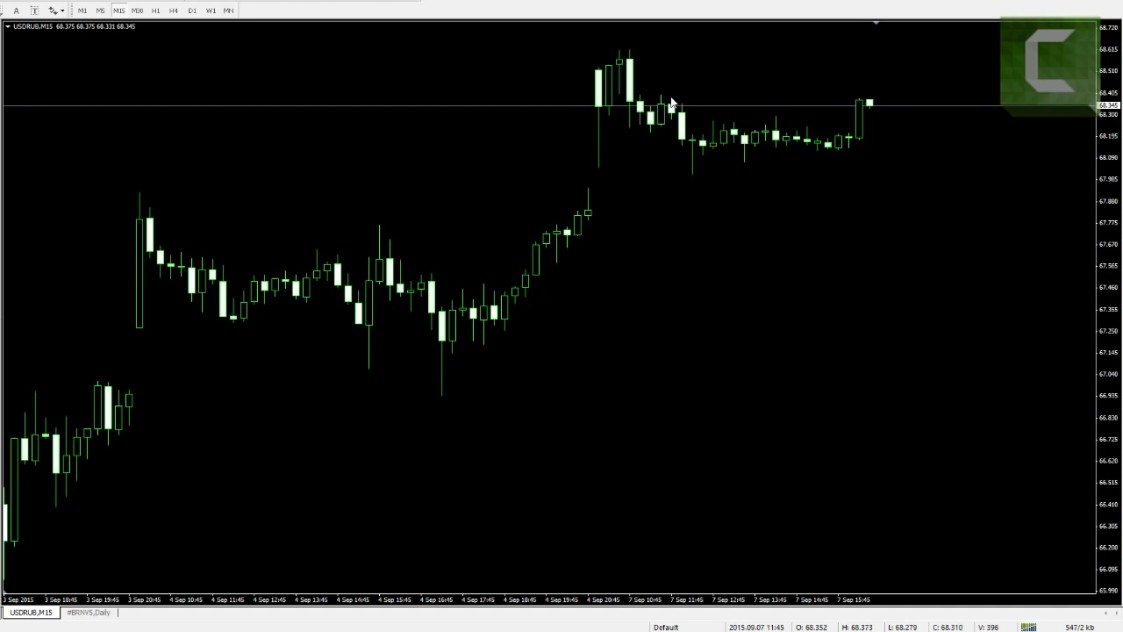
But the rise is usually short-term. Therefore, if the movement on Friday does not fade and no profit-taking is observed, then you can safely leave positions over the weekend and on Monday, after waiting a couple of hours, close them and take your profit. Such a strategy is quite likely to work once a week. Therefore, pay special attention to the currency chart on Friday.
Let us sum up
The economy of the Russian Federation ranks 7th in the world. However, it depends heavily on energy exports, namely oil and gas. Therefore, the Russian ruble depends very strongly on oil quotes, as well as on situations in foreign economic policy.
This pair is not for beginners. It contains a huge percentage of speculative trades. Gaps on this currency pair do not close, swaps are not very large. It is not worth paying much attention to that. Consider breakout strategies for breaking the range. It is best to use them at the market open, when strong movements are observed.
In the first two hours, deceptive moves often occur. You can leave trades in the direction of the current H1 trend, and close them during the morning move. It is also worth considering long-term buys with a duration of several months. Round psychological levels play a major role, namely 40, 50, 60, and so on. They are more significant here than on other currency pairs.
You can consider a strategy in which you need to short at these round levels, and also earn on swaps until the correction ends. But this strategy is not for beginners and will require solid experience from you.
I would not recommend intraday scalping on small timeframes. You should pay attention to the correlation with oil, namely to its movement. If some movement has not yet been reflected in the ruble, then it is the right time to enter a position.
Moves at the end of the day on Friday often show what the trend will be in the first hours of Monday. If there is no profit-taking and the trend that formed throughout the day continues, then it is quite possible that on Monday it will continue for several hours after the market opens.
You should track news that talks about oil prices and the foreign policy of the Russian Federation. All of this can be read on any news site, since most of us live in Russia or speak Russian. Therefore, we have unlimited access to this information.
In conclusion, I will repeat once again that this currency pair is not for beginners. You should constantly pay attention to the inflated spread and commission on this currency pair during periods of economic instability.
Best regards, Pavel Vlasov
TradeLikeaPro.ru