
How to Trade USDCHF After the Euro Peg Was Removed

Greetings, comrades and fellow Forex traders!
Today we will talk about the specifics of working with one of the major currency pairs, USDCHF. We will discuss the peculiarities of its behavior, seasonal patterns, volatility, correlation with other currencies, and, of course, which strategies are worth using when trading the Swiss franc.
We will also dwell separately on what changed in the currency's behavior after January 15, 2015, when the peg to the euro was officially abolished.
The Swiss Economy

Switzerland's economy is considered one of the most stable in the world. Reliable Swiss banks, as well as a policy aimed at long-term monetary stimulus, a highly developed service sector, business sector, and financial system as a whole, ensure an inflow of investment from all over the world. It is no surprise that Switzerland ranks fourth in terms of foreign investment volume. In 2013, GDP per capita was 84,815 USD, which is much higher than the average among European Union countries. This figure is 80% higher than in the United Kingdom and 64% higher than in France. In addition to the traditional financial sphere, a high share of economic activity is provided by exports to the EU (59% exports, 78% imports).
Switzerland GDP 1980-2015 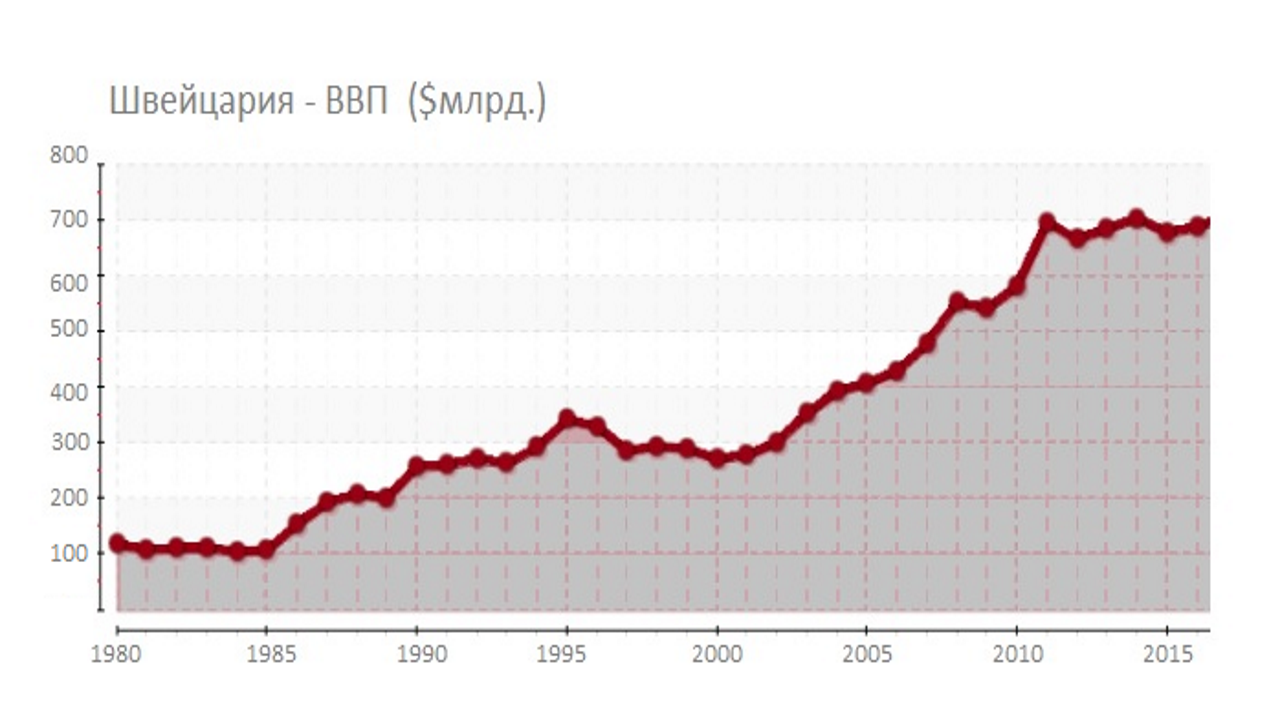
As can be seen in the chart, evidence of stable economic growth can be the confident growth of GDP, even taking into account the presence of global crisis events. Overall, not many major countries can boast such steady growth and such a quickly recovering economy. Switzerland also ranks sixth in the world in terms of direct investment volume.
The most important clusters of the economy are chemistry, pharmacology and biotechnology, then medical technology, machine-building and metalworking industry, financial services, the traditional watch industry, information technology, environmentally safe technologies, as well as commodity trading and the placement of corporate headquarters.
The Swiss Franc (Swiss Franc, CHF)
Next, let us talk about the factors that determine the growth of the Swiss currency, the Swiss franc. Chief among them are, of course, central bank policy, the labor market, exports, and consumer spending. It is also very important to take into account a number of external factors that determine investment interest in the region and the purchasing power of the currency. Among such factors, it is worth highlighting the policy of central banks in developed markets, as well as the general capital-flow environment in various regions and in the global market as a whole.
But first, a few words about the currency itself. The Swiss franc is the currency and means of payment of Switzerland, as well as Liechtenstein. Banknotes are issued by the Central Bank, and coins by the Federal Mint.
For the first time in history, the Swiss franc was introduced as an official monetary unit at the end of the 18th century in the Helvetic Republic, but the currency was issued only during the first five years, after which issuance ceased. The modern Swiss franc, however, was first issued in 1850, and its value corresponded to the rate of the French franc. At that time, the volume of issued currency amounted to only 15% of all that was in circulation, given that the other part of the money was distributed among foreign currencies. A little later, the Federal Government defined itself as the only legal issuer of Swiss currency.
After that there were about nine issues of the franc, each of which brought timely effective changes and improved monetary policy, starting in 1907 and ending with the release of a new fifty-franc banknote in 2016. The Swiss CHF has traditionally shown itself most effectively as the currency of offshore zones, implying zero inflation.
In trader slang, the USDCHF pair is called the franc, swissy, and chief.
Removal of the Euro Peg
Many still remember how, on January 15, 2015, the Swiss central bank removed the currency floor against the euro, and as a result the franc rose against all currencies by an average of 20-30%, renewing many historical highs. Moreover, such growth led to a general imbalance of the entire financial market, knocking the rates of many leading currencies off course for 10 minutes, both against CHF itself and against each other. In the end, the franc kept correcting for about two more days toward a fairer market price. Switzerland's stock market fell noticeably in those days, since export-oriented companies were unable to find any way to react to the sharp rise in the currency, losing an average of 6 to 8% the very next day, and the decline continued.
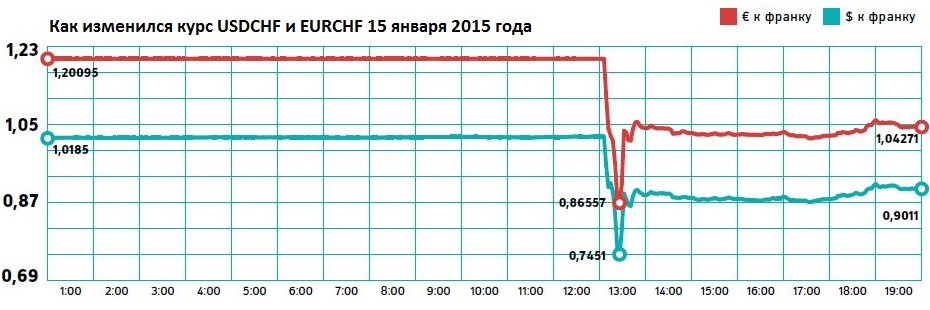
Movements in the currency's quotes turned out to be unpredictable, so many brokers suspended trading while holders of open franc positions were trying to close them.
SNB and US Fed Monetary Policy
The Swiss National Bank (SNB) was founded on June 20, 1906, and in 1907 the Central Bank officially began issuing the Swiss franc. The bank's sphere of competence is stipulated in Article 99 of the Swiss Constitution. But the most key tasks of the Central Bank are set out most fully in the Federal Act on the Swiss National Bank:
- Conducting monetary policy in the interests of the state, price stability, and economic development;
- Ensuring liquidity of the Swiss franc in the financial market;
- Providing and distributing cash;
- Managing foreign exchange reserves;
- Ensuring the stability of the national system;
- Participating in international financial cooperation;
- Providing banking services on behalf of the federal authorities.
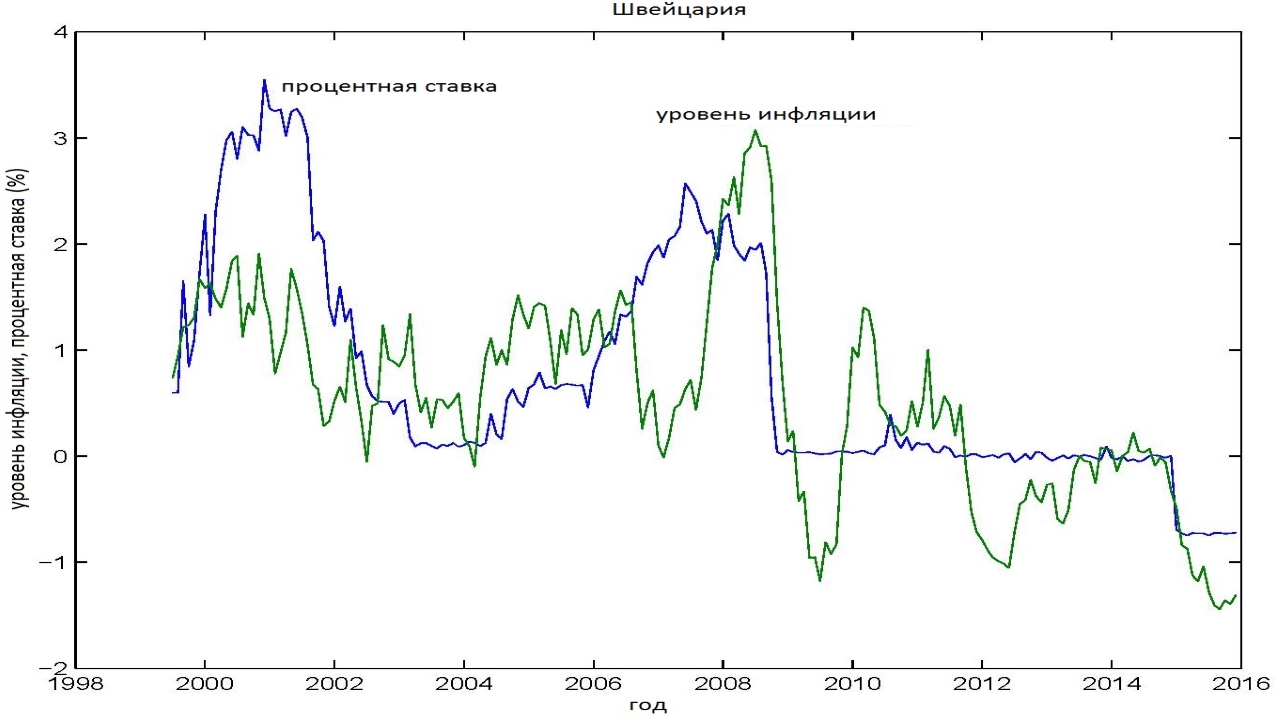
From the data above, one can conclude that for more than five years now the Swiss central bank has mainly adhered to a policy of zero or negative rates. Such a practice is popular among developed countries pursuing the goals of stimulating productivity and inflation.
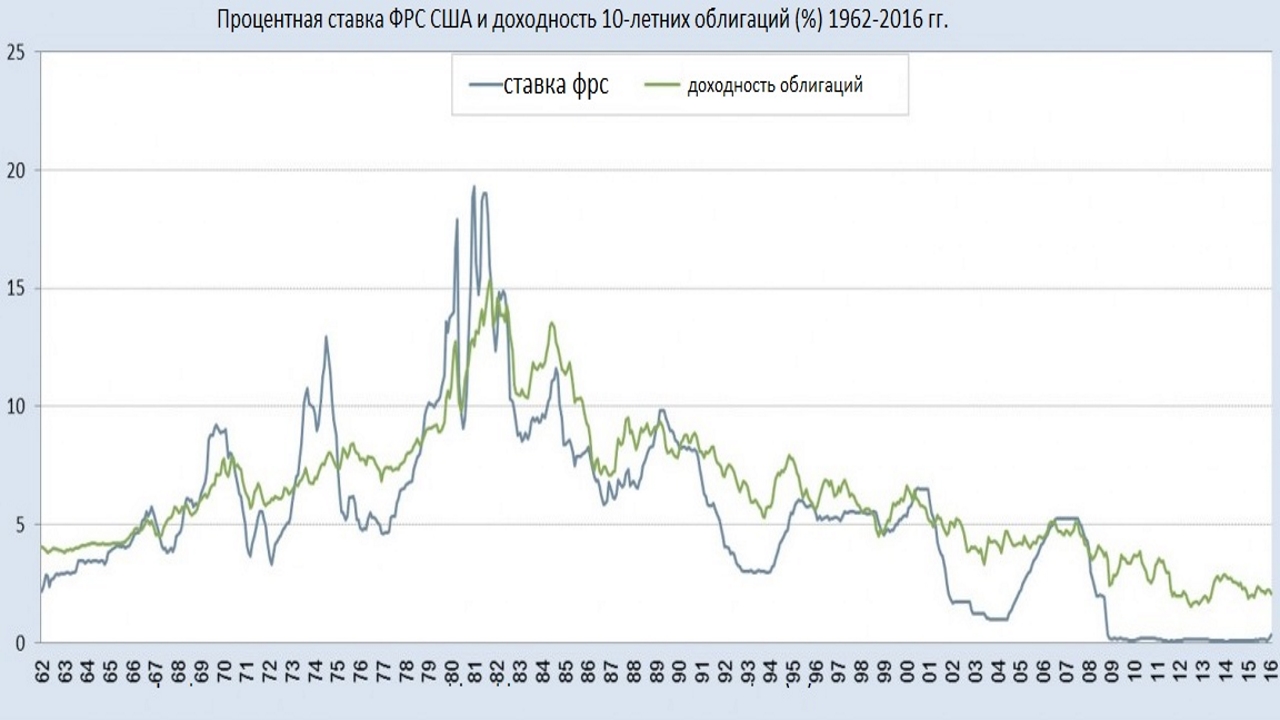
Meanwhile, the US Fed is pursuing a predominantly aggressive monetary policy, but as you can see on the chart, the trend implies an easing of monetary policy in the very near future, which may undermine the dollar exchange rate.
Global Trend
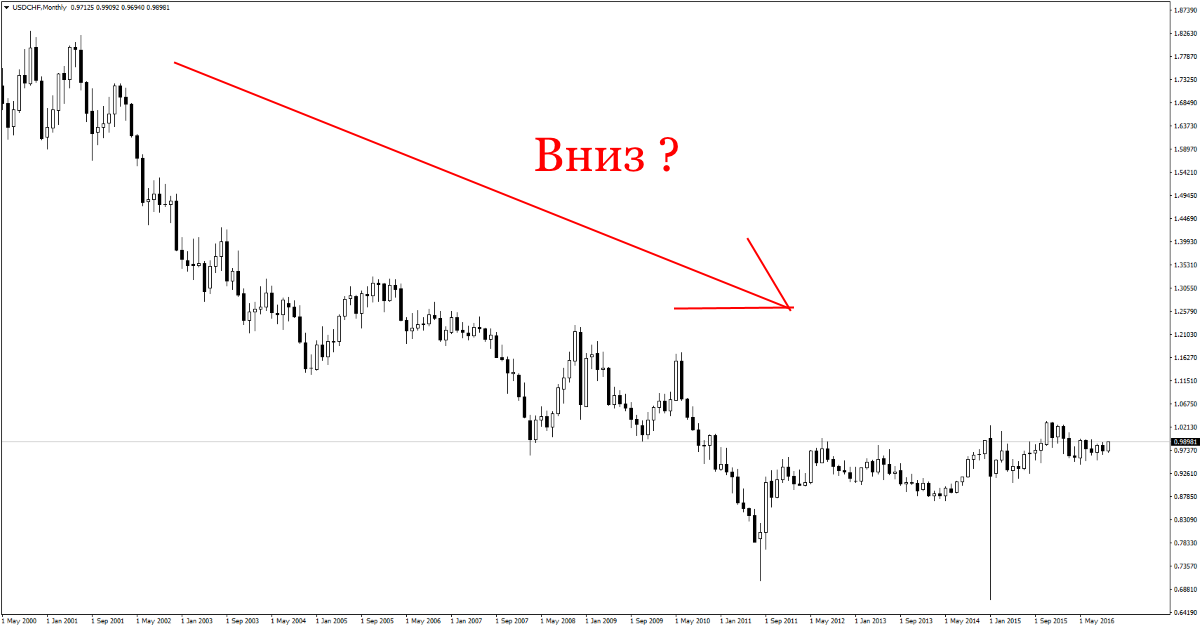
If you open the monthly USDCHF chart, it will seem obvious that the pair's global trend is downward.
But after the events of January 15, 2015, everything changed. Now the trend in USDCHF is upward, as indicated by the strong dollar policy as well.
Of course, this is only my opinion, but I believe that in the long term it is worth focusing on USDCHF growth.
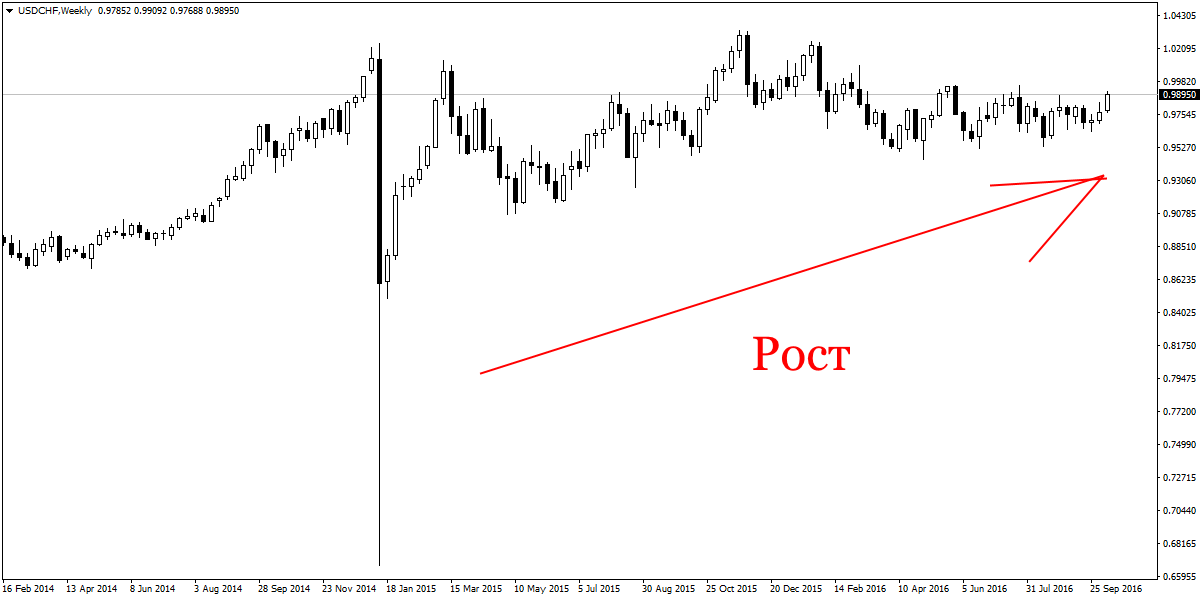
Volatility
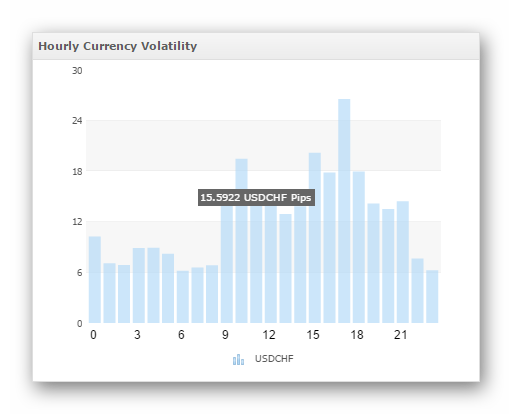
 The most volatile trading sessions, of course, are Europe and America. As they say, who would have doubted it)
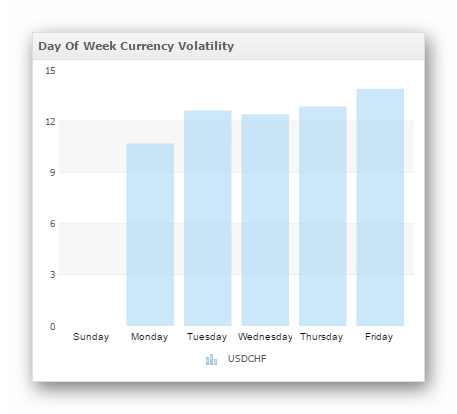
 The most volatile day is Friday. Monday, accordingly, is the least volatile. We can say that volatility builds up, and closer to the end of the week traders "remember" the franc amid the more popular EURUSD and GBPUSD. Friday's volatility stands out against the rest, and average volatility is about 70 points per day.
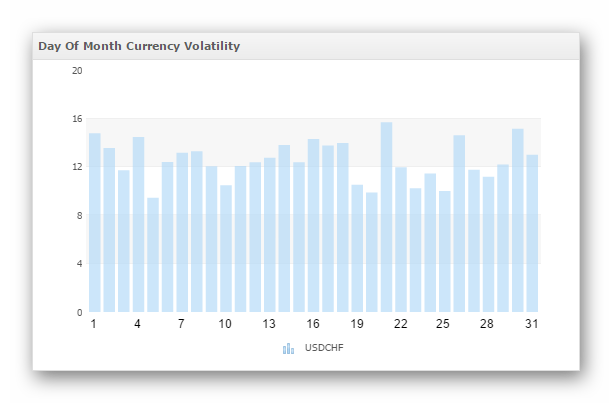
 Overall, as we can observe, volatility is cyclical. After the events of that same January 15, volatility rose sharply - everyone immediately became interested in the franc, while at present volatility is falling again - exactly, everything goes in circles.
Correlation
Everyone knows about the correlation between EURUSD and USDCHF. This is a textbook example that is always cited when the topic of correlation comes up. Therefore, almost any beginner forex trader knows about this relationship of "EURUSD down / USDCHF up". This pattern persists to this day, so it can be used for analysis.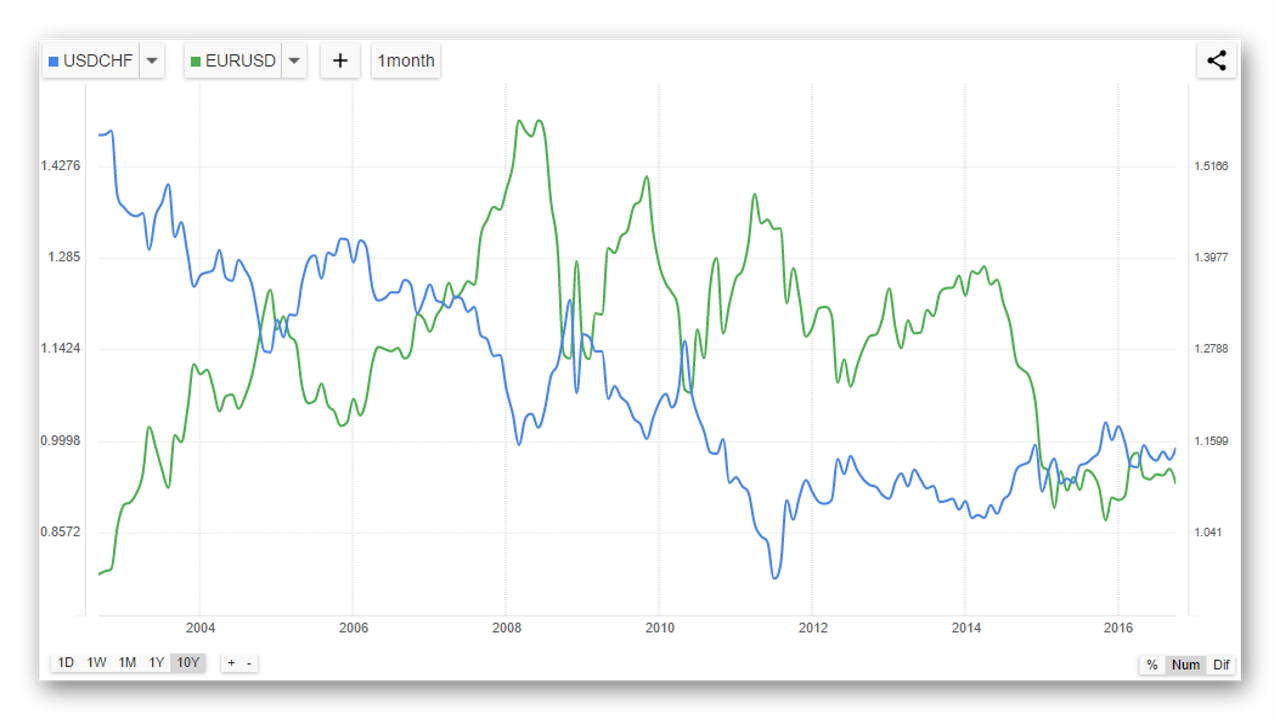 And here is a slightly less well-known correlation - that of USDJPY with USDCHF. They often move quite similarly. Here we have a direct correlation, not an inverse one as in the case of the euro. This can also be used in various strategies.
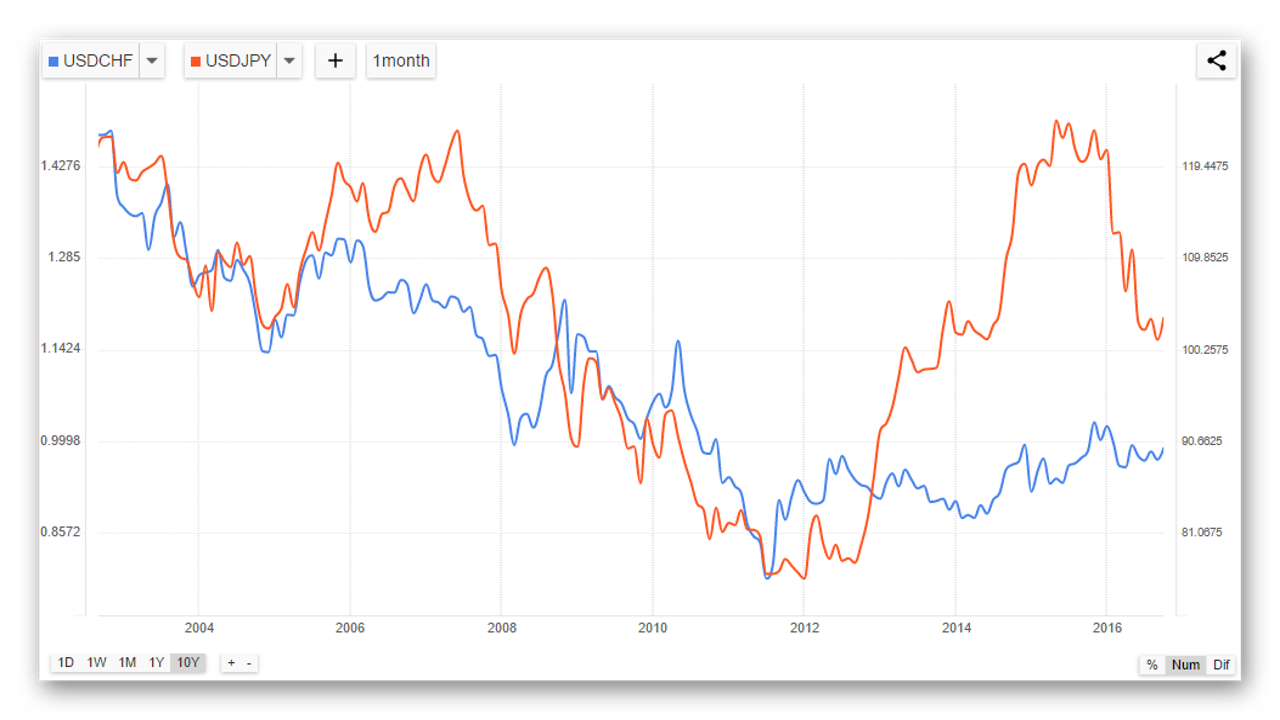
Also, a high level of correlation is observed with gold, financial policy, and geopolitics.
Overall Strategy

What news affects the franc? First of all, it is NonFarm Payrolls, FOMC, and politicians' speeches. That is, all red news affecting the dollar also affects USDCHF. There is very little significant news directly related to the franc, and as a rule it is difficult to track. These may be, for example, elections in Switzerland, or loud statements such as the January 15 case - that is, extremely rare events that are either impossible to predict, or everyone will know about them in advance. So, it is enough to watch dollar news.
As for swaps, they are very, very small. That is, it is not even worth trying to earn on swaps, nor trying somehow to avoid long trades because of large overhead costs. In other words, we simply do not pay attention to them.
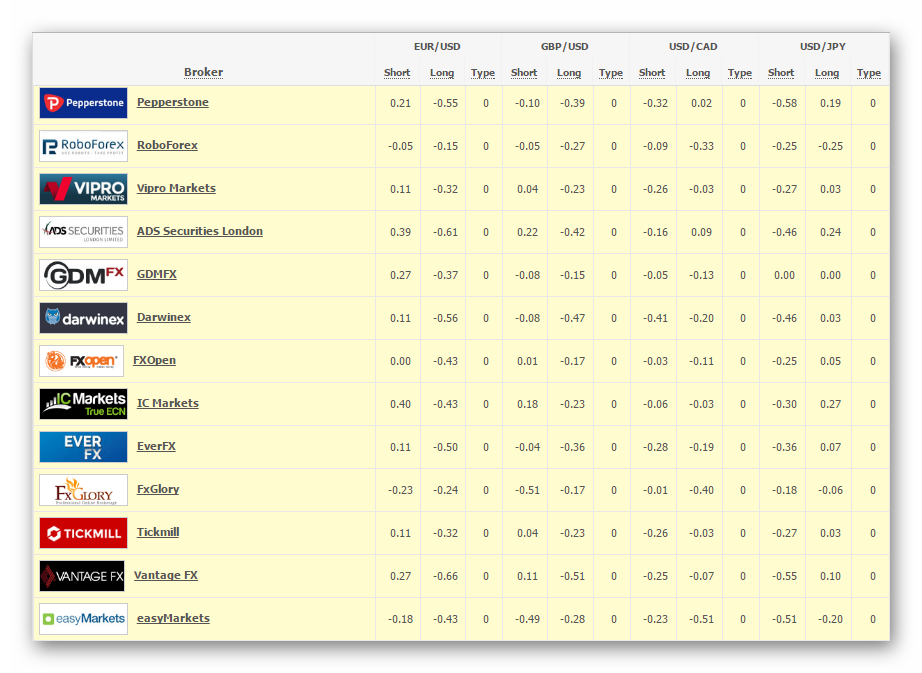
The value of one point is approximately 1 dollar, that is, about the same as for EURUSD.
Since the pair belongs to the group of major currency pairs, the same rules apply to it. Accordingly, the main trading sessions are London and the start of New York.
At the same time, note that on USDCHF smooth and steady trending movements are observed not only during the main trading sessions, but also during the Asian session. Therefore, strategies related to the Asian flat on the franc are definitely not worth applying. But any trend strategies can be traded almost around the clock.
Since the pair is one of the majors, in principle the entire standard arsenal of technical analysis works quite well. The pair's liquidity is considerable, trading volumes are as well - many people trade the currency all over the world. Therefore, there are not so many specific nuances.
So, what should be applied? First of all, trend strategies with small targets. Why? Because it is very easy to get caught in a flat. In general, you trade the franc according to your strategy and, if you get a signal and within 5 candles the price does not move anywhere, then you can safely exit.
Key Levels
After the repeatedly mentioned events of January 15, a channel formed, roughly from 0.9080 to 1.0200. And the price has been in this channel for almost 2 years already. When it will leave it is unknown. But in the coming months it is definitely worth using these boundaries of the indicated channel as a reference. If the price approaches one of the channel boundaries, then it is worth waiting for a rebound, since in the case of levels, as we remember, a rebound is always more likely than a breakout.
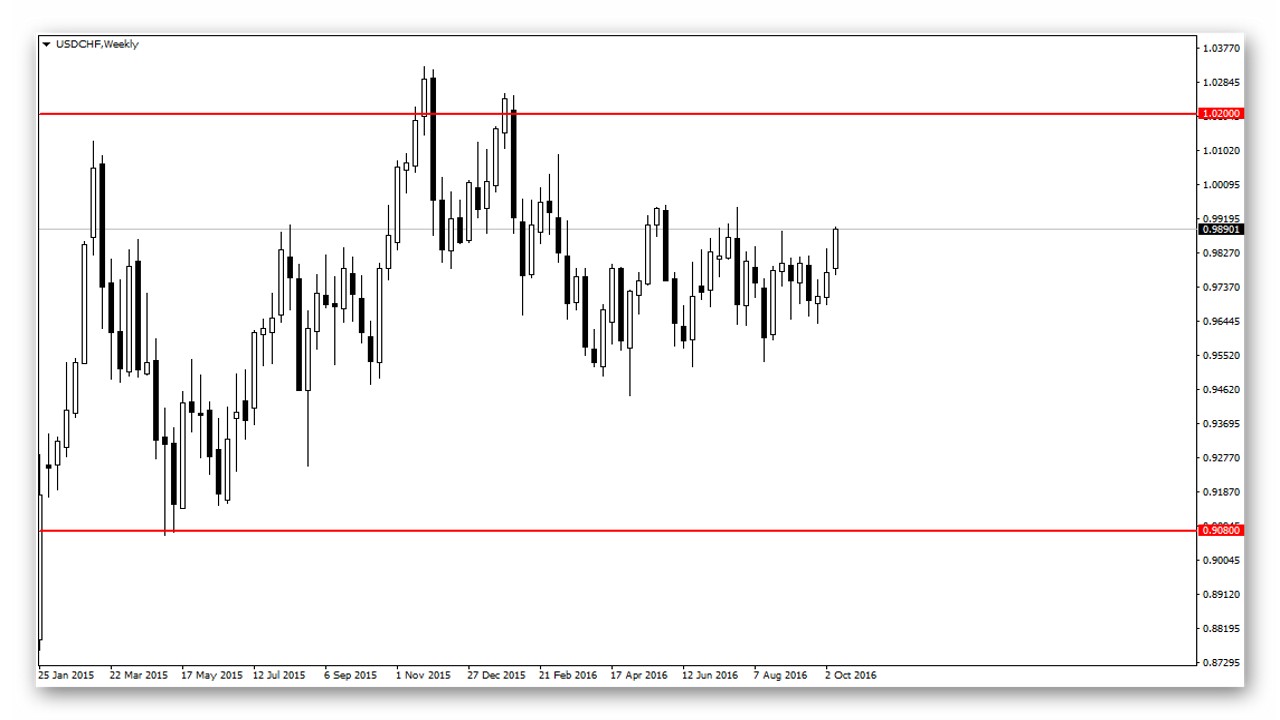
Among the important levels, this is, of course, 1.0000. Although the price did pass through it, parity with the dollar still remains a strong level, and when the price reaches it again, there will be a considerable struggle.
Another important level is 1.2000, the old limit that was set by the Swiss bank. If the price eventually reaches this level after some time, accordingly, it is also worth expecting a fierce struggle. But for now, these levels are still far away.
And finally, the scariest level is 0.666. This is the very bottom to which the USDCHF rate fell on that fateful day. I do not know whether there is some hidden meaning in this, but the fact remains a fact: the level below which the USDCHF price did not fall is 0.666. If the rate ever returns to this mark, traders will obviously be afraid of it.
Seasonal Patterns
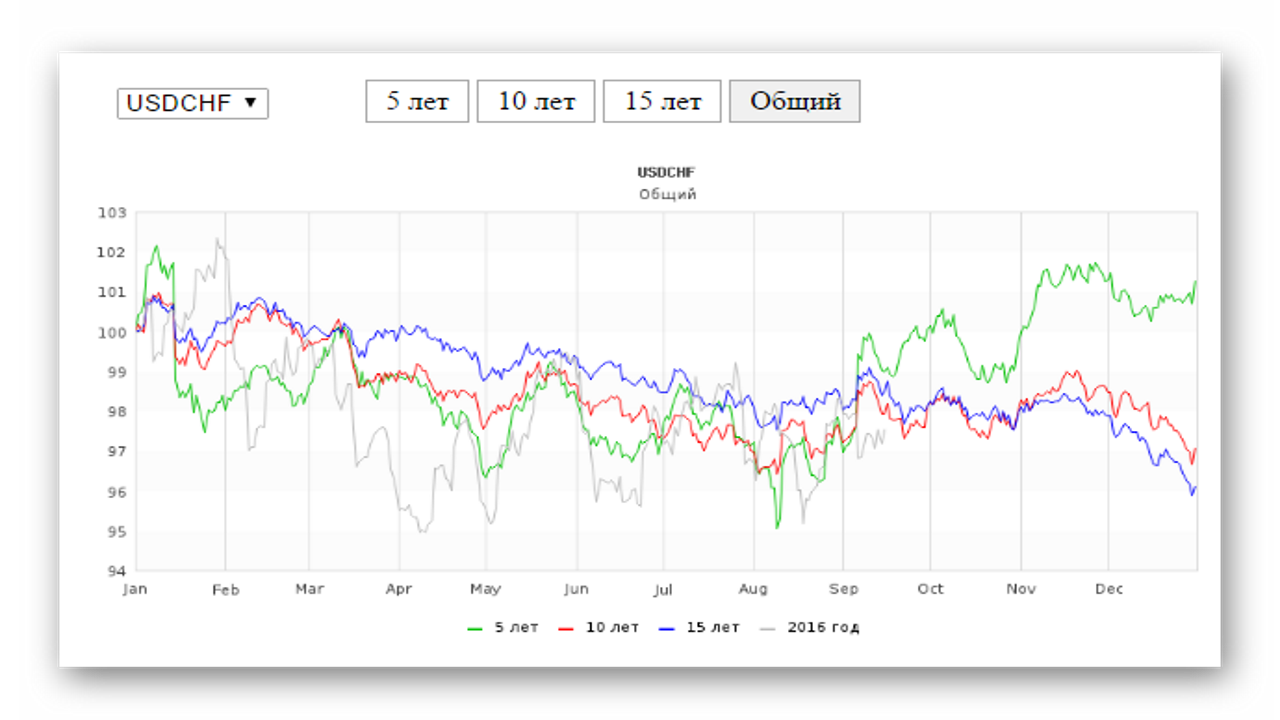
Our seasonal movements service for currencies allows you to identify patterns, that is, recurring currency movements over many years and, accordingly, use them in trading.
So, here there are curves of the average franc price movement over 5, 10, and 15 years, as well as the current year. First, we see a noticeable decline in April on all curves. Second, growth in May is noticeable, more in the first half. Third, we can pay attention to the decline in July and, in general, the last week is the most noticeable. We also see growth in August, starting from the second half. And fourth, growth in the first week of November. This is what we can highlight from the seasonal patterns for this pair.
This is worth taking into account for those who trade on daily charts and above.
Conclusions

Do not forget that many investors view the Swiss franc as an effective instrument for hedging financial risks even to this day, and in the appropriate situation this can provide a good trade.
In general, after the Franc was detached from the Euro exchange rate, we are observing fluctuations within a channel. When will the channel be broken? It is unknown, but the breakout will most likely be upward.
When trading the USDCHF pair, it is worth considering its relatively low volatility, remembering the high correlation with EURUSD, and using trend strategies with small targets. Also consider that a flat can begin at any moment, filtering out signals that do not bring profit. And of course, take seasonal patterns into account when trading on higher timeframes.
As for news, watch important events for the dollar, since very little news related to the franc that affects the exchange rate is released.
Forum Thread
Respectfully, Pavel Vlasov Tlap.io