
How to Trade the Chinese Yuan? Secrets of the USDCNH Currency Pair
 Hello, ladies and gentlemen Forex traders. Recently, Alpari introduced the opportunity to trade the US Dollar/Chinese Yuan pair, USDCNH. This caused considerable interest in this currency pair among Forex traders, because the Chinese economy is the second largest in the world. Interestingly, the Yuan, or as it is officially called in China, Renminbi, has quite a few interesting features that you need to know before you start trading this instrument. We will talk about the secrets and opportunities that USDCNH gives us.
Why is the Chinese yuan interesting to us?

First of all, China is the second largest economy in the world. Right after the USA. Then come Japan, Germany, and so on. Russia is currently in 8th place. China has a very developed economy. Huge manufacturing facilities of various companies from all over the world are located in China. And therefore a very large amount of money circulates precisely in Yuan. And for us, accordingly, as currency traders, this is interesting. In general, the official name of the Chinese yuan is renminbi. Literally, it is translated as "people's money." However, outside China, the currency is most often called the Chinese yuan.
The circulation of the Chinese currency, its exchange rate, development, and interest rates are controlled by the People's Bank of China. Which is essentially the central bank of China. In English, the People`s Bank of China. Or in abbreviated form, PBoC.
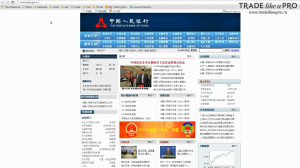
In the picture above you can see its official website. There is an English-language version here, so if you are interested, you can study it.
Every day, the People's Bank of China publishes the Central Parity Rate. This is the recommended price value of the Chinese yuan exchange rate against other currencies. Moreover, at the moment the price cannot move more than 2% above or below this value. Otherwise, the central bank will begin to intervene in the situation by carrying out intervention to buy or sell its currency.
This is done in order to keep the exchange rate within controlled limits. You can see the current price values published by the Central Bank of China on the website http://www.chinamoney.com.cn/
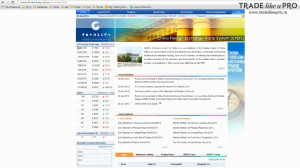
Here we find the USDCNY currency pair and see today's data. Why do we need this? We know that the price cannot go more than 2% higher or lower. Otherwise, the central bank will begin to intervene. But it is worth considering that the recommendation here is given for the USDCNY currency pair. We, however, will trade USD/CNH. There is a certain difference between them. Later on, we will look at it.
First, let's open the chart of the USD/CNH currency pair.
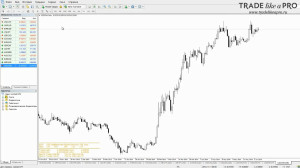
First we need to add this pair to the symbols. In the "Market Watch" window, right-click and select the Symbols tab.
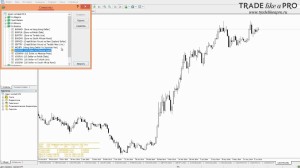
Here we find the "FxExotics" tab and select the USD/CNH currency pair. Please note that the last letter is different. In our terminal, the currency pair is USD/CNH, while the Central Bank of China controls the USD/CNY currency pair. So what is the difference?
The point is that USD/CNY is traded, as a rule, only inside China. And the USD/CNH currency pair is traded outside China. Mainly in Hong Kong. Their rates differ, but not much. The difference is usually about 10-15 points. They try to follow each other. And their main difference is that the Central Bank of China cannot directly control USD/CNH. It intervenes only in the USD/CNY pair. But since they follow each other, speculators accordingly watch the price and quote of the USD/CNY currency pair. In general, they are connected. They have common restrictions that apply to both currency pairs. Therefore, it is worth taking into account the 2% limitation on growth or decline for both the USD/CNY pair and the USD/CNH pair.
The Central Parity Rate is the average value over recent days. That is, the Central Bank of China cannot just take a price out of thin air. It is simply the average price that existed over recent days. And the price will not go above it or below it by more than two percent.
So, we found the currency pair and selected it by double-clicking the left mouse button. Close the symbols window. And right-click on our currency pair, then select open chart:
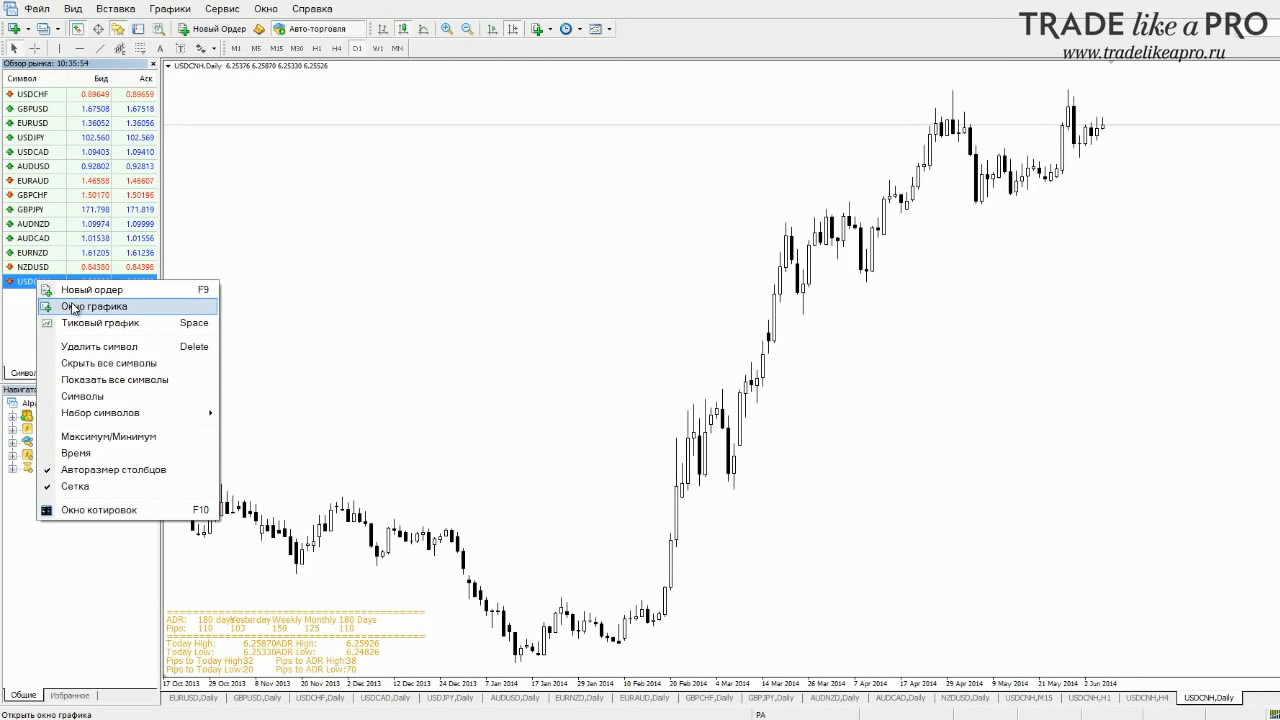 I get a daily chart. Our currency pair is USD/CNH. We will trade exactly it. Since we are located outside China.
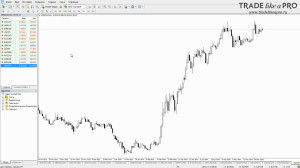
The offshore version of the yuan, CNH, has been traded only since 2010. Therefore, we have no data prior to 2010. This is not some kind of error or bug. The currency pair has been traded since 2010. There is simply no earlier data. If you need some historical research, then look on the internet for USD/CNY charts. That is, the pair that is traded inside China.
But it should be taken into account that previously there was a rigid peg of the dollar to the Chinese yuan, and for this reason the old quotes are not so interesting. The most interesting period from a speculative point of view begins in 2010. And later up to the present time.
First, let's zoom out the chart.
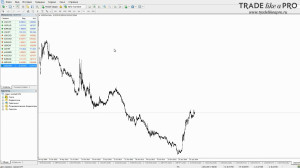
With the naked eye, you can see that the global trend is directed downward. Why? Because there are constant injections into the economy. That is, people need yuan. They buy yuan. And the USD/CNH pair falls. If we had the CNH/USD pair, then it would rise. But since everything is the other way around for us, with the US dollar first and then the Chinese yuan, the price accordingly falls.
Why Is the Chinese Yuan in Such High Demand?

Everything is very simple. Suppose you have a large company and you open factories in China. You will need millions, or even billions of dollars, which will have to be converted into Chinese yuan. You buy them up, which in itself affects the exchange rate. Every year more and more companies open factories and plants in this country. Plus, the economy inside China is developing. Therefore, we see a global downward trend.
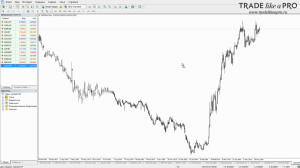
However, starting from 2014 up to the present day, an upward trend can be observed. Over the last 5-6 months. What is this connected with? The point is that the Chinese government is interested in the Chinese yuan being a convertible currency, on a par with the dollar and the euro. So that people do not try to speculate on it somehow, but use it for exchange without thinking about various speculations and changes in the exchange rate. And, accordingly, the government is interested in the dollar rising against the Chinese yuan. Or at least not falling too much. Therefore, today we observe this kind of situation.
If we consider the global trend as a whole, we will clearly see that the trend is moving downward.
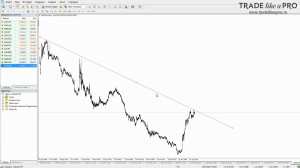
And it is possible that an upward correction is taking place now, and later the price will fall again for many months. Growth is also possible, but at the current moment the global trend of the currency pair is downward. Just as EUR/USD has an upward fundamental trend, USD/CNH has a downward fundamental trend. This should be taken into account. The volatility of the Chinese yuan is quite good. Over the last six months, this pair has moved an average of 110 points in one day. That is, the average candle size is 110 points. For comparison, for EURUSD this figure is 75 points. That is, it turns out that the yuan is more volatile than the euro.
What Time Should You Trade the USDCNH Currency Pair?

If you open the chart, periods of activity and periods of calm are visible quite clearly.
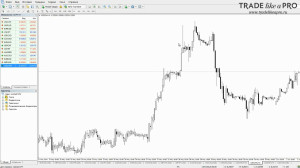
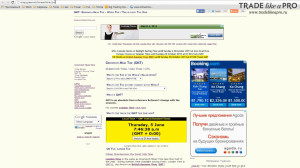
The active periods for this currency pair are approximately from midnight until 13:00 Greenwich GMT. That is, if translated into the language of trading sessions, this is Asia and London. You can easily see this on the chart and compare it with your broker's time. It is visible quite clearly. If you trade this currency pair, then do so from midnight until 13:00 Greenwich time. You can check Greenwich time on the website: greenwichmeantime.com.
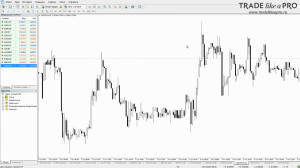
As for timeframes, I advise you to trade on charts from hourly (H1) and higher. You should not go lower. Because if we open the M15 chart, we will see that the situation here is not very pretty and not very clear.
Plus the spread, if we open a new order, we will see that the cost for day trading is too high.
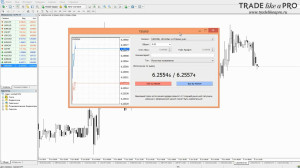
Also, note that closer to the night the spread widens to 10 points, which accordingly excludes lovers of night scalping. It is worth paying attention to the price of a point. It is significantly lower than on other pairs.
For example, let us open an order with a volume of 1.00
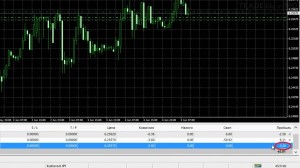
Initially we are at -3.20 points, the price is now 6.2557, and as soon as the price moves by two points:
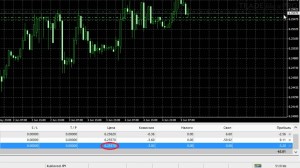
The profit becomes zero. That is, although our lot is 1.00, the profit changed only slightly. Because the price of one point for one lot is approximately equal to $1. For a 0.1 lot, one point costs about 10 cents. For a 0.01 lot, one point costs a little more than one cent. That is, the cost of a point is 10 times lower than, for example, on EUR/USD. This should also be taken into account. If you want to open a position with a 0.1 lot, then open a position with a 1.0 lot for this pair.
Another very important point, especially for those who trade on daily charts, is the swap. The thing is that here it is a noticeable figure. If on ordinary pairs you do not hold trades longer than a week, then you can pay little attention to this indicator. Because it is very small. In the USD/CNH currency pair, you will have to pay attention to the swap.
Why?
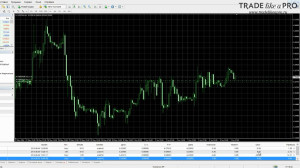
To show the swap, I have buy and sell positions open at the same time.
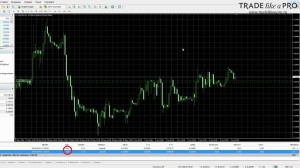
Please note, for buys the swap is negative. It is approximately 13 points in plus for sales on short positions. And 13 points in minus for purchases on long positions. Thus, if you hold a buy for three days and a swap is charged, then automatically, regardless of whether the price changed or not, you lose an additional 39 points.
But there is another side to this coin. If you hold a buy for 3 days, and the price has not moved from its place, then you will be up by 40 points. If you trade on daily charts or leave a position overnight, then you can act in two different ways. Either open only short positions and earn additionally on swaps, or use swap-free accounts, that is, without swaps. There are special account types where there are no swaps, but an additional commission is charged.
What Strategies Should Be Used to Trade the Yuan?

In my opinion, it seems interesting to develop a special strategy exclusively for short positions. Where only sell trades are opened and left for several days. Naturally, they are not opened just like that, but according to a trading system. But for this, everything needs to be worked out. The option is interesting because the swap on short positions is very large. The price will move only a little, but if you hold the position for a long time, you will be in profit.
Also, a rather interesting option is the development of a breakout strategy for the yuan on hourly charts. When at about midnight Greenwich time some pending orders are placed either on the channel boundaries, after the breakout of which we enter the market and take some position. Depending on where the price went. Such situations happen often. Let us mark them with shapes on the chart.
For example, when after a period of calm, before the Asian session, a breakout and an active increase or decrease in price occur.
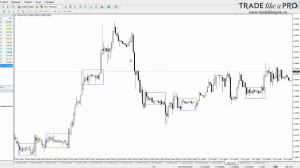
In the picture above I marked the periods of calm in recent days. They end at about midnight Greenwich time, and then a breakout and some movement occur. It is not always large. For example, in the photo below it is quite small:
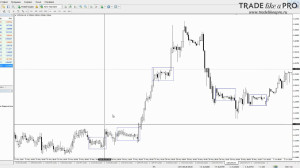
But it is quite realistic to develop a strategy and work through the options. Because on some days we can also see false breakouts.
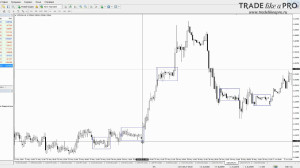
You can, for example, create a variation not based on a box breakout, but enter directly after the breakout candle. Place a pending order slightly above its high if the breakout is upward, slightly above its low if the breakout is downward. And in this way insure yourself against false breakouts. Add some other elements of technical analysis. But overall the idea seems very interesting and it lies on the surface. So breakout strategies on H1 on this pair should work quite well.
Conclusion

Let us summarize everything said above.
- The global trend of the USD/CNH currency pair is moving downward.
- It is not worth going below H1 for trading.
- On H1, the use of breakout strategies after periods of calm seems promising.
- The average volatility of the currency pair is 110 points per day at the current moment.
- The value of a point of price movement is about 10 times smaller than for EUR/USD.
- If you trade on daily charts, then you should use swap-free accounts, or open only short positions. It is also possible to develop a trading model specifically for short positions, since a rather large swap is credited for them.
- Overall, the pair seems quite interesting and promising.
I hope that this article was useful to you and helped you understand the nature of the USDCNH pair, how it should be traded, and what interesting opportunities it conceals.
Brokers Where USDCNH Trading Is Available

- Forex Club
- Tickmill
- Roboforex
Respectfully, Pavel TradeLikeaPro.ru
