
How to trade level breakouts?
 Hello, friends! Today we will talk about how to profitably trade breakouts of support / resistance levels. As we know, most Price Action setups are aimed at trading from levels. That is, in fact, we work with bounces off levels. Is it possible to make money on breakouts? After all, they also represent a tasty piece for a trader. You can work with level breakouts, but you need to know the right tactics and pitfalls. Watch the video lesson below and learn all the secrets of working with levels!
How to trade a level breakout in forex
Let us start with the fact that trading breakouts, rather than bounces off levels, as is the case with most Price Action setups, is not easy. And I want to warn you right away that if you are still a beginner, if you have been trading for a relatively short time, then it is better to trade only bounces off levels. Do not even try to trade level breakouts.
And only when you gain experience, when you feel confident trading bounces off levels, can you slowly begin to take some breakouts. Since in general it is harder to work with breakouts, the percentage of profitable trades is lower than in the case of bounces off levels. Therefore, it is better not to get into this business without experience.
Let us start with the classic model used when levels are broken, which can be found in most sources. Let us imagine that we have some level and we expect it to be broken:
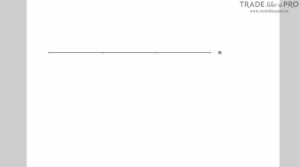
What do we do? Let us say we expect an upward breakout, that is, accordingly we will need to buy. In the classic approach, it is recommended to place a pending order slightly above the level and wait for the price to activate it.
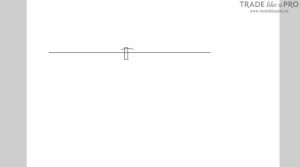
The logic is that when the level is broken, we will immediately enter the trade. Let us say the level was broken like this:
And then prices will continue to rise. There will be candles upward and we will be in profit:
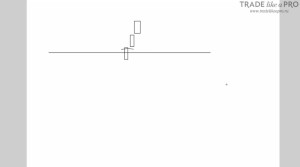
It would seem that everything is wonderful. But quite often this tactic is not the most successful and not the most effective. And I would not recommend using it.
Why? Because very often there are situations when you place a pending order above the level. The price rises, breaks the level with its upper wick, and activates your pending buy order:
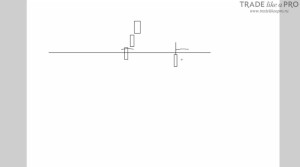
And then the following happens, the price falls and goes lower and lower. And as a result, your stop loss is triggered:
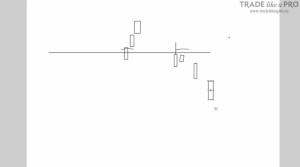
There is another approach that is not so widespread, but nevertheless is used. Let us imagine that there is some level. We expect that it will be broken, but we do not place a pending order and instead wait for this breakout to occur.
The breakout occurs, the level is broken by some candle with a small tail:
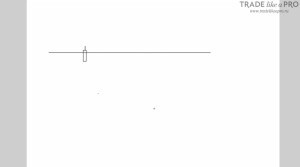
And then a pending order is placed slightly above the high point of the candle that made this breakout:
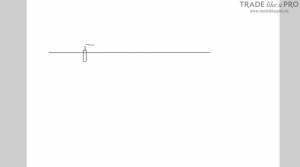
What is the logic here? If the price now reverses and goes downward, then we will not be in the trade and will lose nothing. This approach is generally more effective than simply placing pending orders. But it also has its drawbacks.
Let us imagine that we have a candle that broke the level. We place a pending order to buy slightly above its high point:
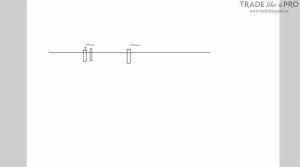
And then some small candle is drawn, which activates our order with its wick and sharply goes downward:
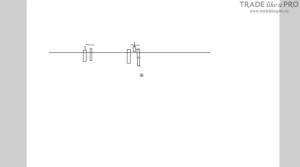
This happens. And it happens very often. Nevertheless, the tactic where we place a pending order above the high of the candle that made the breakout can be used. Such a tactic is viable. I use a somewhat different tactic, and now I will tell you about it.
Let us imagine that we have a level. In addition to the moment of the breakout itself, we also need to look at the candles with which the breakout was made. In order to trade breakouts, we need a large candle. One that shows that the market is making a considerable effort in order to move above the level.
We look at what kind of candle is forming as it approaches the level. It should be large relative to the previous candles, that is, exceeding the average candle on the chart by two times or at least one and a half. The candle should be full-bodied. Not a doji and not a pin bar.
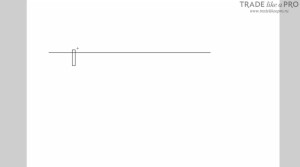
If the candle is full-bodied and it closed above the level, then we wait for one more candle that consolidates above the level. One that gives us justification that a breakout really occurred and that we have consolidated above the level.
At the same time, the candle should be small, and most importantly its closing point should not be below the level:
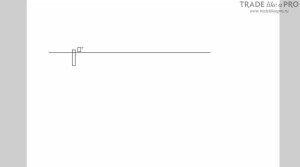
A candle after the breakout below the level does not suit us. After the breakout, we need a candle that consolidates above the level (in the case of buys) and at the same time its closing point will be above the level.
Next, if such a situation occurs, then we place our pending buy order close to the level. If the closing point of the candle that gave us confirmation, that consolidated above the level, is close to the level, then you can enter at market. If the candle closed far from the level:
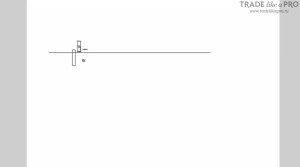
Then we place a pending buy order closer to the level. Not right next to it, but close to it:
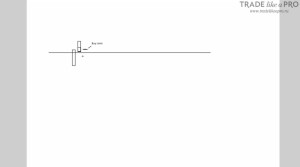
In the picture you can see this pending order. I marked it as Buy Limit. The stop loss will be small. It is very important to make sure that the stops are small, while the take profit is large.
When the stop loss is small, we place it beyond the level. If the candle that served as our confirmation has a small tail beyond the level, then we try to place the stop loss behind that tail. Slightly below it.
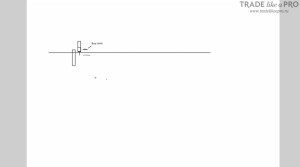
We have just looked at buys. For sells, everything is mirror-imaged in reverse. The take profit, the target, is as usual the next level. Or, if there is no reference point in the form of a level, then we multiply the stop loss by three or at least by two. And we set the take profit accordingly.
Let us imagine that our stop loss was 15 points. We multiply it by 3 and get that the take profit will be 45 points. And we place it from the entry point. This is how I trade level breakouts.
Next, you need to pay attention to the breakout candle itself. Because there are very often cases when the candle's closing point is below the level and it breaks it only with its shadow:
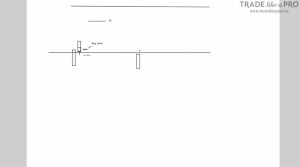
After such a candle, we do not consider it a breakout candle. And we do not jump into trades. If a large candle pressed against the level but closed below it, then, as a rule, it is worth expecting a pullback. But if a large candle broke the level and its closing point is beyond this level, then we wait for a candle that will confirm this for us, a candle that will consolidate above the level. The closing point of the second candle should also be above the level. And we try to enter the trade not far from the level with a small stop loss.
Someone may say: "Well, we placed a Buy Limit near the level, but the price can also run far away without returning to the level. And accordingly, we will not enter the trade"
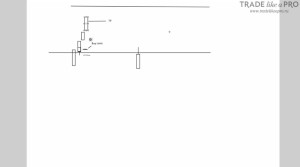
There is absolutely no problem with this. One of our goals when trading price action is to open trades with small stops. We do not strive to enter the market at any cost. We strive to enter the market with a small stop loss. So that if it is triggered, it would not morally demotivate us in the slightest, so that we simply would not pay attention to it. And the take profit would cover the stop loss at least three times over. Therefore, if it was not possible to enter with a small stop loss, then let it be so. This should not concern us.
There is one more tactic that I want to tell you about. It also relates to level breakouts, but with some changes relative to my technique, which I described above.
We also wait for the level to be broken by a full-bodied candle exceeding the average candle on the chart by two times, and we also wait for a candle that will confirm this breakout. That is, its closing point will also be above the level. Next, we place a pending order closer to the level. We set the stop loss just as I told you above. But at the same time, we place a sell order one point below our stop loss.
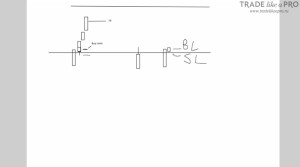
That is, if our buy order is triggered, but the price reverses and goes below the level and our stop loss is hit, then we automatically treat this situation as a false breakout and enter sells.
This is an interesting technique, but personally I do not use it. Since in general I do not like reversing a position immediately. It is easier for me to wait until the market situation becomes clearer and there are some specific setups. However, this tactic has a right to exist, and I know that quite a few people use it.
Now let us look at several examples on real charts to reinforce the theory. In theory we considered examples with buys, so let us examine an example for a sell.
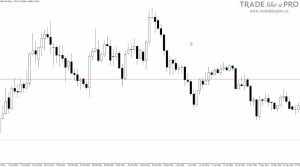
The chart above shows: USD/CAD
Pay attention to the marked level. We had a large candle. Larger than the average candle for this chart:
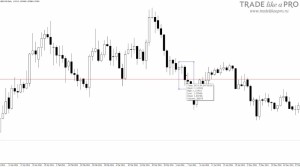
The closing point was below the level. We noted this for ourselves, paid attention to it, and wait to see what happens next:
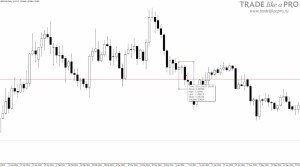
And then a doji candle appears. But we are interested only in the fact that it consolidated below the level, and its closing point is below the level. What does this mean? The price tried to go up, but it was not allowed to do so, and as a result of the day's close it remained below the level. This means that the breakout of the level really succeeded. It really happened and was confirmed. And now we can enter the market.
Since here the closing point was close to the level, it was possible to enter simply at market. Our stop loss is slightly above the level because the tail of the second candle is still rather large, and we would not have placed our stop loss behind it. Although if possible, this is worth doing if the tail is not too large.
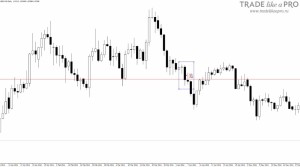
But in this case we simply placed a stop loss. It amounted to about 22 points:
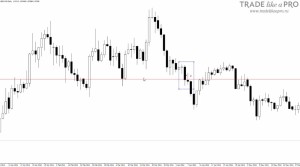
Here there were no reference points for setting a take profit, or rather there were, but very far away. The nearest level could be clearly seen at that moment lower on the chart:
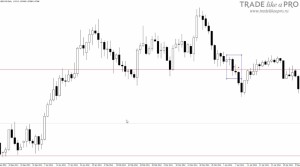
It is clear that such targets are too large for us. Therefore, we simply multiply our stop loss by 3:
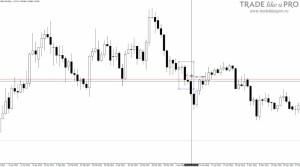
In this case it was 22 points. So we multiply it by 3 and get 66 points:
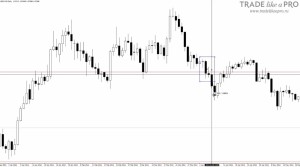
As we can see, the price covered this distance. Our take profit would approximately have been at the place where the check mark is marked:
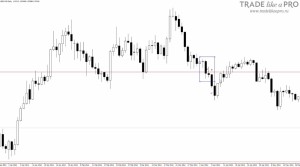
It would have been successfully taken. This is how level breakouts are traded in the case of sells. On this same chart we can see one more example, namely in the next period a correction upward occurs and once again the price went beyond the level upward:
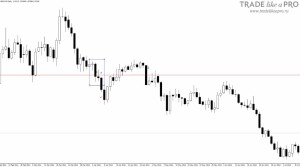
And then a breakout occurred with a large full-bodied candle:
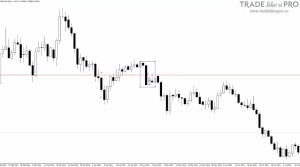
Next, the price consolidates below the level. The closing point of the second candle is below the level. Thus, we get confirmation. Entering at market would not have been desirable. Therefore, we would have placed the stop loss approximately closer to the level:
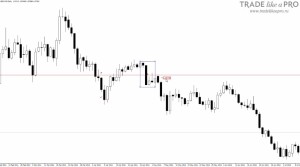
At this stage we would not yet have been able to see the third candle, so we would have placed the stop loss slightly above the level, approximately somewhere here:
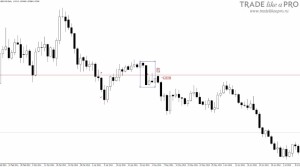
Our pending sell order was activated near the level. The price hovered around the level for some time, and then a downward move occurred:
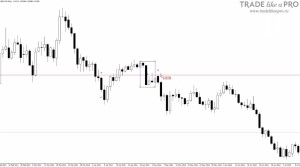
Here you can see that 3 stop losses were also taken. Let us verify that. Our stop loss was approximately 34 points:
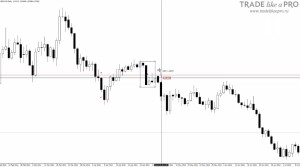
And downward the price went by 150; in any case, we would have taken three stop losses.
And lastly, let us look at a buy example:
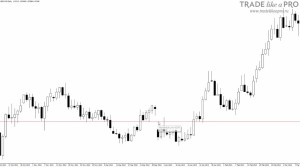
A level is marked on the chart. The level was formed in part by a gap. As we remember, gaps form levels. This candle draws attention here:
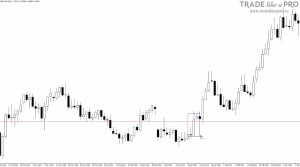
It broke through the level. After that happened, we do not enter. We wait for the second candle, which closed above the level and showed that the breakout really did occur and that it is not false:
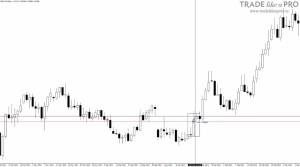
We could have entered here at market, or we could have placed a pending order closer to the level. But in any case, I think it is obvious that our pending order would have been activated. The stop loss would as usual have been slightly below the level:
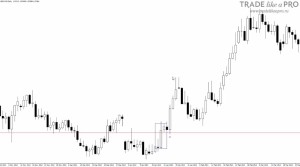
Accordingly, the price continued to rise.
One more important point that I always talk about is trading strictly with the trend. This is especially true for breakouts. Since trading breakouts against the trend is a very, very thankless task. The percentage of profitable trades is small. Therefore, there is absolutely no sense in trading a level breakout against the trend. We trade only with the trend. And no other way.
Best regards, Pavel
TradeLikeaPro.ru