
How to Trade Bitcoin?

Hello, fellow Forex traders!
As it recently became clear, in Russia you will not be jailed for operations with Bitcoins! And this means that we now have a completely legal opportunity to open Forex accounts in Bitcoins and, most importantly, trade on fluctuations in the rate of this cryptocurrency, which is rapidly gaining popularity and recognition all over the world.
In the review below, we will examine the basic characteristics of Bitcoin, what it is, why it is needed, and how it is used. And, of course, how we can profit by trading the BTCUSD currency pair (i.e. bitcoin against the dollar), consider the movement characteristics of this instrument, the nuances of trading, suitable strategies and tactics.
The currency market is the largest and most liquid market in the world. It operates 24 hours a day and 7 days a week worldwide. And today the already dynamic Forex market is expanding into yet another dimension, offering traders the opportunity to work with a fundamentally new class of currency assets known as so-called cryptocurrencies. Indeed, many Forex brokers already accept bitcoins as a trading currency, with the help of which one can confidently work in the currency market, assessing and forecasting their short-term and long-term trends.
So What Is Bitcoin?
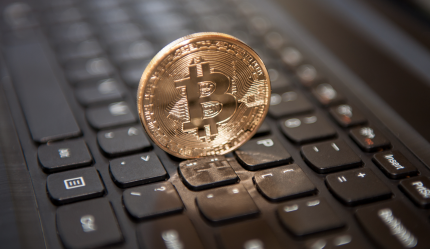
Bitcoin (BTC) is an electronic cryptocurrency (a type of digital currency distinguished by a deep degree of encryption of operations related to its circulation), which has proven itself through its decentralized, anonymous, and secure nature of storage, transfer, and acquisition. Today, bitcoin is the most popular cryptocurrency. BTC is used by many Forex companies, which in turn offer convenient cash-out and conversion mechanisms. It is important to note that bitcoin is the pioneer of a politically independent trading network offering a revolutionary and at the same time purely digital payment system. This is the first decentralized currency network in history that uses all of its users as regulatory bodies and implies no central authority or intermediaries whatsoever.
In other words, the bitcoin currency is the first implementation of the concept of a "cryptocurrency," first described in 1998 by a man calling himself Wei Dai in the mailing list of the so-called "cypherpunks," proposing the idea of a new kind of money relying on cryptography to manage and complete transactions as opposed to any centralized regulatory force. The first version of Bitcoin and the proof of concept were presented back in 2009 by a person calling himself Satoshi Nakamoto, whose real identity is still not reliably known despite numerous investigations by Interpol and journalists.
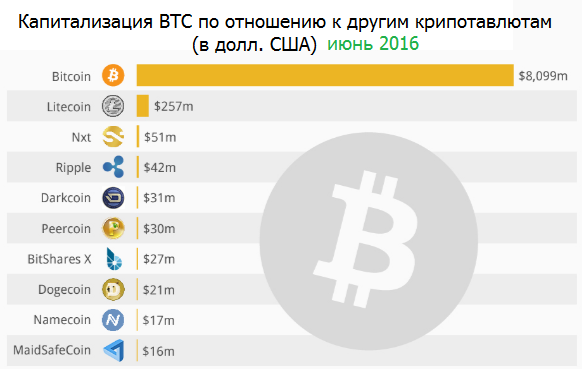
Since that very time, the exchange rate of the currency has grown exponentially, and its universal accessibility and openness to improvement leave no doubt: the open source code of such a financial and economic project and all accompanying materials can easily be found on the internet, and therefore many developers can easily make their own improved version of the software for their own cryptocurrency.
So Who Controls the Bitcoin Network?
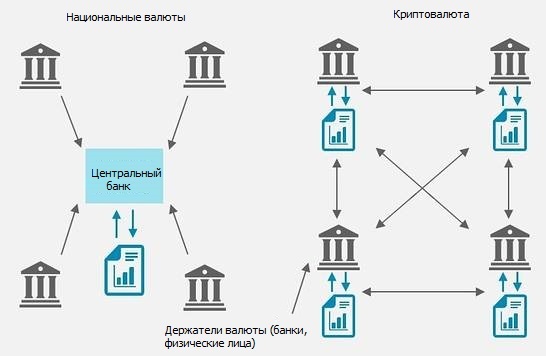
Fundamental differences between currency and cryptocurrency regulation
No one manages the Bitcoin project, just as no one owns the technology underlying the operation of email. Bitcoin is regulated and supported by all of its users around the world. Developers improve software solutions, however, it is not within their power to make changes to the currency's software protocol, since each user has the right to choose which software and support services to use. In order to ensure mutual compatibility, users need to use software that complies with the special Bitcoin protocol. Bitcoin can exist only on the basis of full consensus among all users. In other words, all users and developers have the strongest incentive to protect this consensus.
How does Bitcoin work?
From the user's point of view, bitcoin is no more than a mobile app or computer program that provides a personal bitcoin wallet and allows users to send and receive bitcoins. But behind the scenes of the user interface, the bitcoin network is a public ledger called the blockchain (Blockchain). This register contains records of all transactions ever made, which makes it possible to establish the authenticity of each transaction, and they are protected by digital signatures of the corresponding sending addresses.
So, Is Bitcoin Really Used by People?
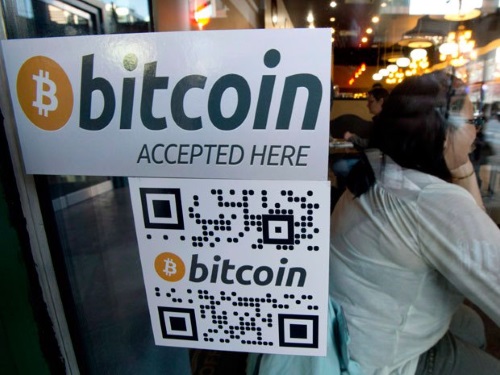
Yes. Moreover, the number of individuals and legal entities using Bitcoin is continuously growing. These include construction companies, restaurants, real estate agencies, law firms, and popular online services. The capitalization of bitcoins currently exceeds $8 billion. Bitcoins can be purchased on one of many competing exchanges, in accordance with the rate that is favorable to you relative to other currencies. These are exchanges such as BTCtrade, BTC-e, the Chinese BTCChina, and others - you can easily find a list of the largest ones on the Web.
Some establishments, such as Subway, accept payment in bitcoins, and in Moscow the first offline Bitcoin exchanger started operating just the other day.
How Does Working With Bitcoin Take Place in the Forex Currency Market?

Strictly speaking, when it comes to trading, there are two options:
- An account in bitcoins. Everything is clear here. Some companies allow you to open trading accounts in bitcoins. That is, your balance will be, for example, 1.523 bitcoins. You make some trades, say you trade EURUSD, and you receive profit/loss in BTC. When withdrawing funds, say into rubles, if the bitcoin rate has risen, you receive additional profit. And if it has not risen, a loss. This is completely analogous to the situation when you have an account in euros.
- And the second option is direct Bitcoin trading, earning on fluctuations in the rate of the cryptocurrency. The symbol is called Bitcoin, or BTCUSD. By default it is usually not shown, you need to find it yourself in "Symbols" by right-clicking in the "Market Watch" window in the terminal. See the list of brokers that offer bitcoin trading at the end of the article.
Where Can You Watch the Bitcoin Exchange Rate Chart?
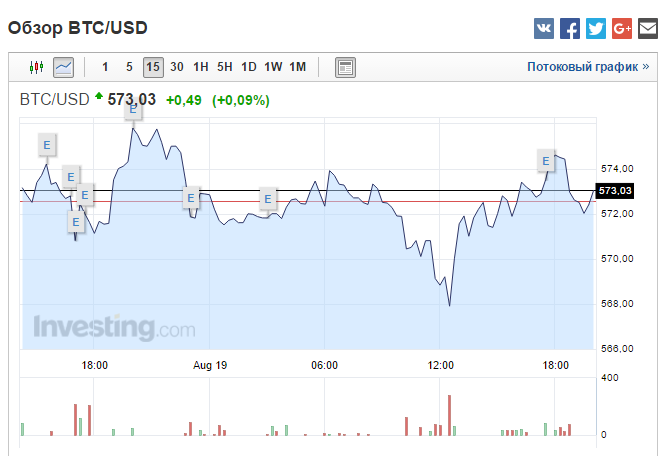
Due to the exotic nature of the cryptocurrency and the presence of several major exchanges, current quotes may differ slightly among different brokers. Which, by the way, creates opportunities for arbitrage.
You can view the Bitcoin chart "not from a broker" at the link below:
http://ru.investing.com/currencies/btc-usd
BTCUSD Trading Strategies

So, let's move directly to the nuances of trading BTCUSD, that is, bitcoin.
The global trend is upward
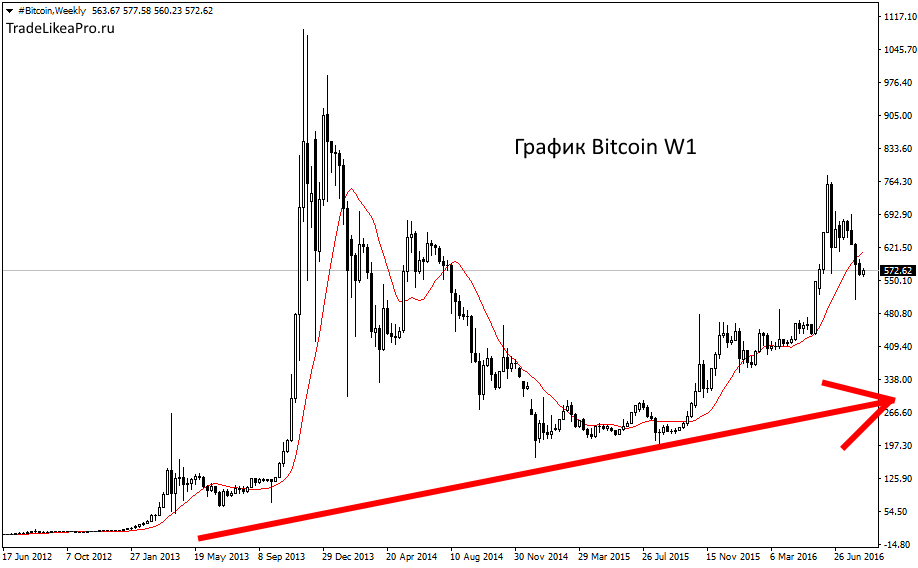
Of course, this currency pair is still too young compared with mastodons like USDJPY, but already now, without a doubt, as numerous analysts agree, we can speak of a global upward trend. This is worth considering when opening long-term positions.
Trading goes on 24 hours a day, 7 days a week
Due to the peculiarities of the currency, Bitcoin is indeed traded non-stop. Trading continues even on weekends. However, I still advise refraining from trades on non-working days.
Follow the news
Bitcoin is very susceptible to the influence of news. Fortunately, it has a longer-lasting effect than Non-Farms) Follow the news: if you see that some large fund has invested hundreds of millions of dollars in Bitcoin, then consider buys over the next few days. If, on the other hand, a major exchange was hacked (as happened recently) or BTC was banned in some country, then consider sells.
Technical analysis works
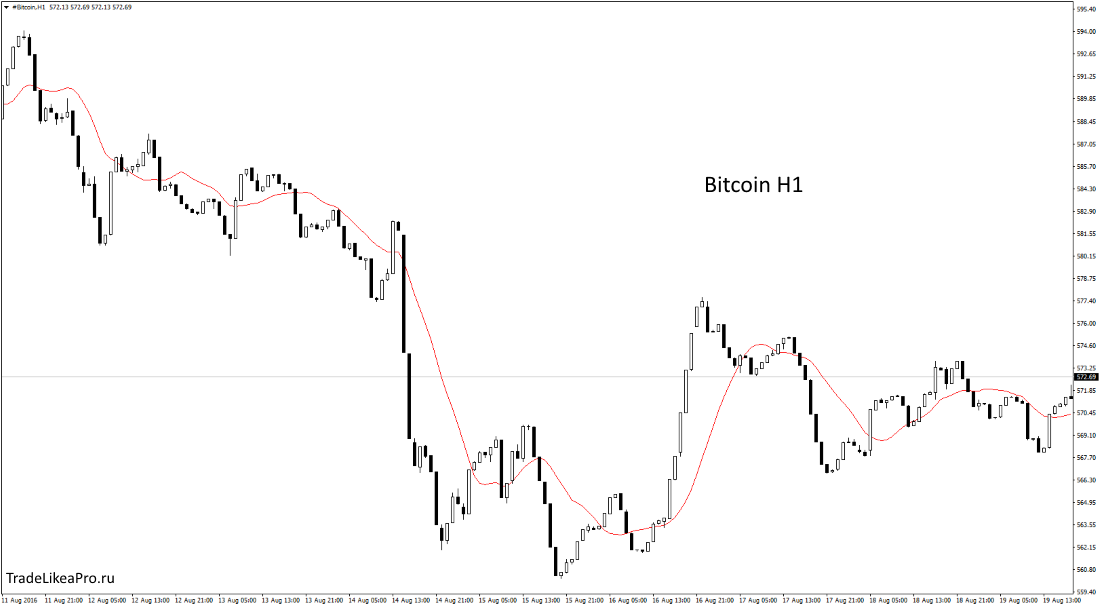
And it works well. You can trade even with the most ordinary moving average, which is visible to the naked eye on the chart.
Forget about scalping
Because of the high spread, trading on low timeframes is not recommended. Consider trades on H1 and above.
Gaps are possible
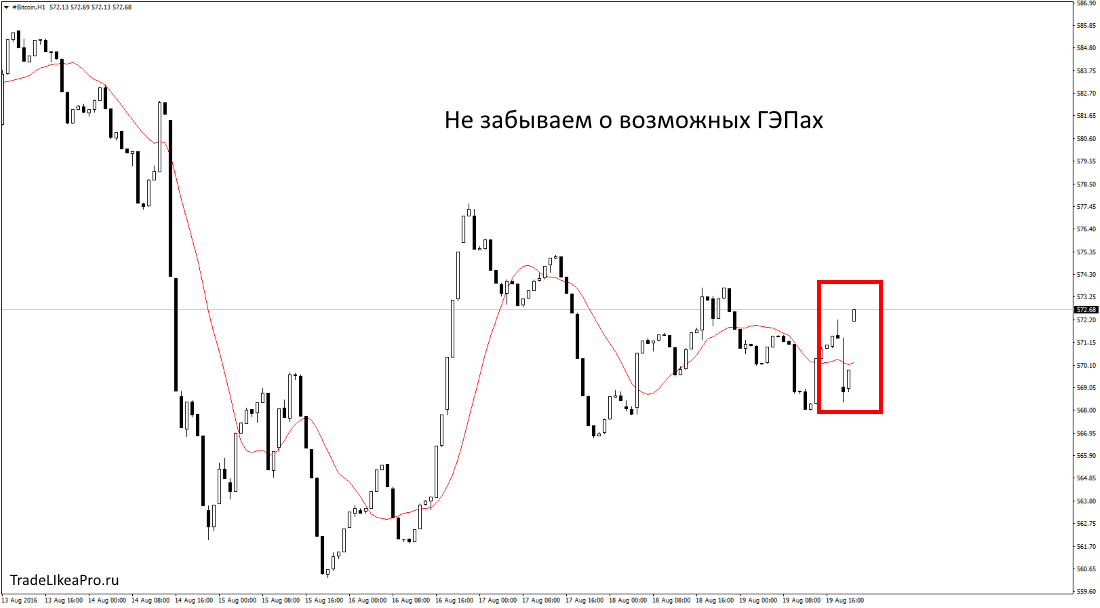
Despite the fact that bitcoin is traded without weekends, gaps are still possible when liquidity is lacking during the release of unexpected news.
Activity can happen at any time
Trading sessions do not apply to Bitcoin. Active moves can happen at any time of day, day or night. At any moment. Remember this.
What strategies should you trade with?
The simplest ones, trend-following trading systems with not overly large targets. Box and breakout strategies. Timeframe: from H1 and above. Due to the fact that bitcoin is still not too susceptible to speculation, it is relatively easy to trade, and there are few deceptive moves. Use the simplest "book" strategies and do not forget about stop losses and money management.
Conclusion

Today, cryptocurrency is one of the fastest-growing asset classes among all the others, guaranteeing vast prospects and threats for the development of the entire global financial system. Many national governments tend to see in cryptocurrencies a highly competitive potential capable of harming state sovereignty by displacing the national currency from the market. However, more and more companies, services, and manufacturers are turning to currencies such as Bitcoin in order to support the growing initiative and sometimes even finding in these assets highly profitable investment prospects, or prospects for diversification and hedging currency risks. And the question of whether cryptocurrency is a new global economic risk stands today more sharply than ever, but that is a completely different story.
As for trading the Bitcoin rate, everything here is not so difficult: the simplest technical analysis works, it is worth following the news and remembering the significant spread, so we try not to trade on small timeframes. Bitcoin is perfect for diversifying your trading portfolio, since it is practically not correlated with other instruments.
Brokers and exchanges where Bitcoin trading is available

- Forex Club
- InstaForex
- FxOpen
- Amarkets
- Alpari
- RoboForex
- Exness
- Tickmill
- Forex4you
- FortFS
- Yobit
- Exmo
Respectfully, Pavel Vlasov TradeLikeaPro.ru
