
How the Interest Rate Affects the Exchange Rate
 Good day, fellow traders!
The topic of interest rates often appears on the agenda of various media outlets, and many already know that it is closely connected with the global economy and finance and somehow affects the processes taking place in the currency markets.
But what do interest rates actually mean and why do they affect trends in Forex ?
Below is a brief breakdown of the forces that drive monetary policy and trends in the markets, including Forex.
The Official Interest Rate of the Central Bank (Key Rate, Refinancing Rate)

This is the rate at which the central bank issues loans to commercial banks. They, in turn, issue loans to commercial companies, guided by this official rate. If rates are high, then loans are more expensive, goods in the markets are as well, and therefore less competitive. Demand for loans falls, inflation slows down, and, consequently, the currency becomes more expensive.
And vice versa, if rates are low, then commercial banks and then companies take loans at lower interest rates (sometimes negative), which makes it possible to sell goods more cheaply, the central bank prints more money, and inflation accelerates, so the currency becomes cheaper.
Monetary Policy: Why and How Rates Are Regulated
Rates can be high and low. However, these values are always relative, and therefore it is more important to take into account the historical dynamics and the increase/decrease relative to their own historical values.
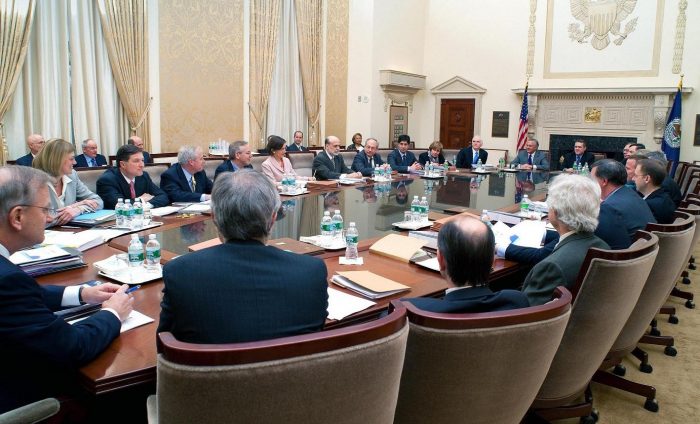 Photo from the March meeting of officials of the US Federal Open Market Committee (FOMC)
The central bank raises the rate to prevent the economy from overheating. This happens when there is no room left for growth in the economy and prices begin to rise without a real increase in the production of goods and services, which leads to accelerating inflation and a decline in the currency's exchange rate.
A rate increase slows inflation and makes the currency more attractive in the eyes of investors, while commercial banks place investors' funds on deposits at a higher rate.
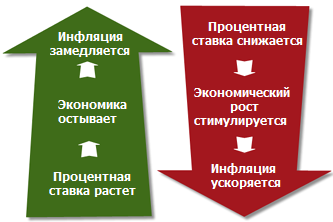 A rate cut, on the contrary, has a stimulating nature and serves to speed up economic processes, provide cheap loans for business, low taxes, lower unemployment, and increase business activity. This accelerates inflation and lowers the currency's exchange rate.
When and How Often Rates Are Regulated
Central banks independently determine the timing of interest-rate reviews. For example, in the US the rate is regulated by the Federal Open Market Committee (FOMC). And is it worth saying that the whole world watches their meetings. And usually special committees of national central banks adopt one monetary-policy course or another at the very beginning of the financial year, but if necessary they may change it later.
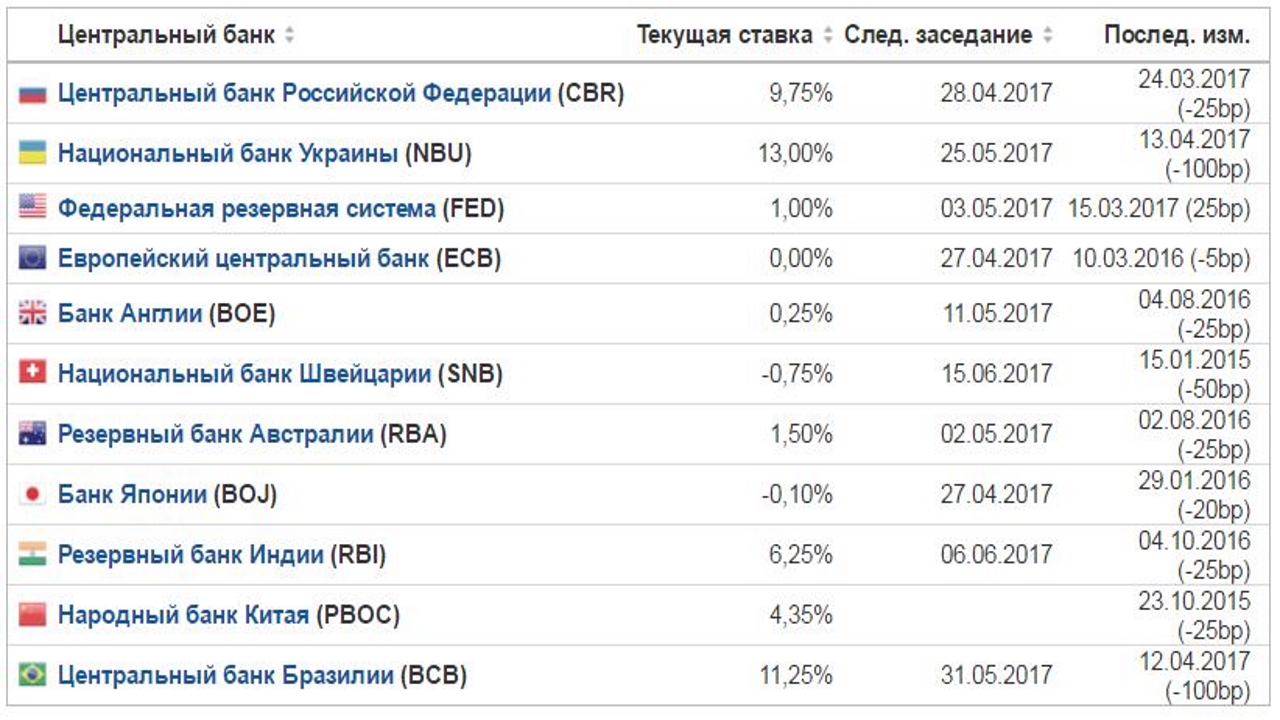 In the EU, the refinancing rate is regulated by the European Central Bank. In the UK, by the Bank of England. In Japan, by the Bank of Japan, and so on. The markets also take into account the rates of Switzerland, Canada, the RBA, Norway, China, India, Korea, and individual European countries such as France, Italy, Germany, Spain, and others.
You can learn more about the current interest rates of various banks here.
What Happens in the Forex Market

If you open the economic calendar and discover that officials of some national central bank are gathering to make a decision on interest rates, then the rates may change and alter the trend, depending on whether they cut them or raise them.
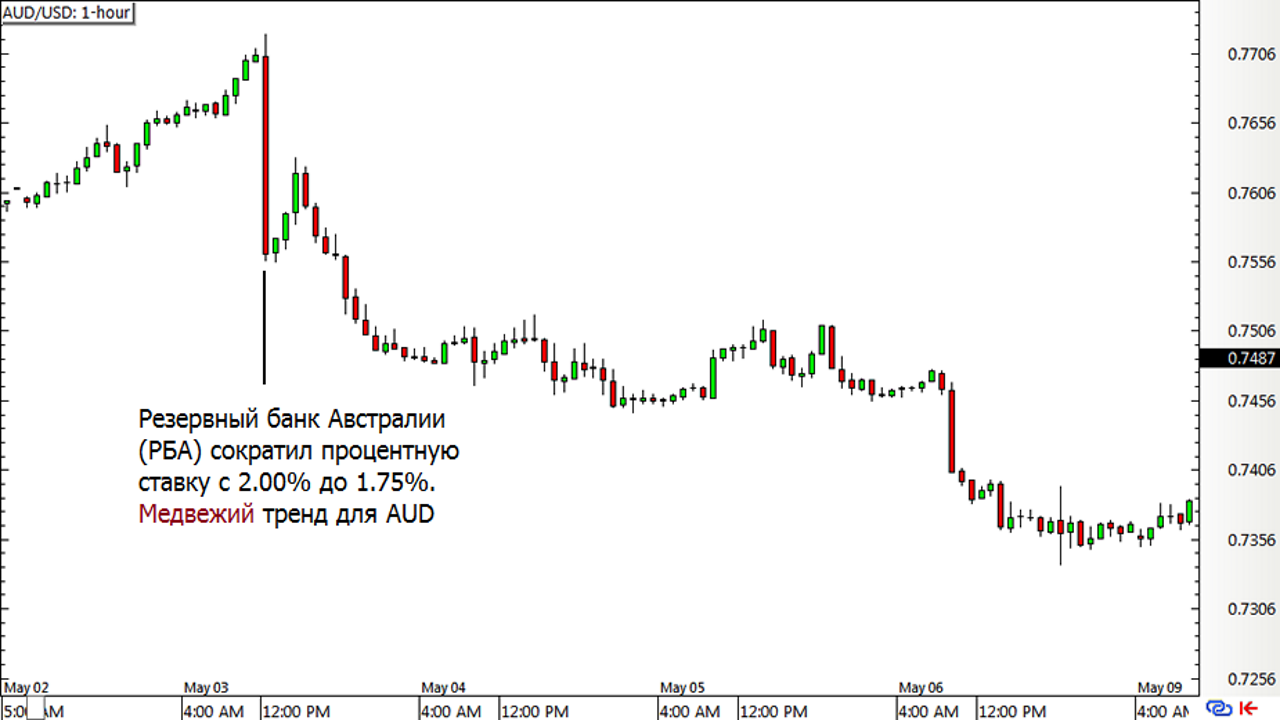 Or the rates may remain at the same level, and then the trend will be determined based on the current dynamics: if the rates were cut the previous time, then the trend will be bearish, and if they were raised, then bullish.
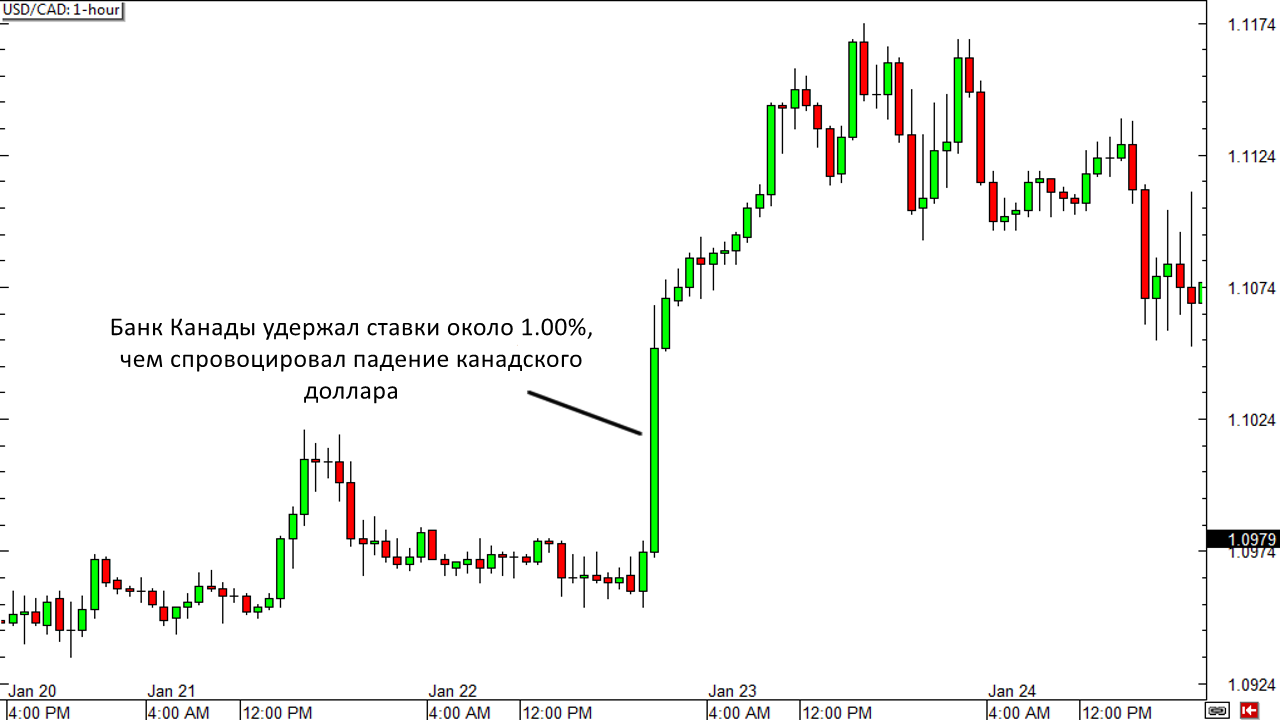
As a rule, the prospects for rate increases or decreases are announced repeatedly over long periods of time before they are changed. This is used by long-term investors and position traders to extract profit or, on the contrary, avoid risks.
Conclusion

- It is important to monitor interest rates in order to understand the global currency trend;
- Rate cuts stimulate the economy, while rate hikes cool economic growth;
- Interest rates rise, the currency strengthens, and if they fall, it weakens;
- You can track the dynamics of changes in the interest rates of the leading central banks here .
Best regards, Alexey Vergunov TradeLikeaPro.ru
