
Gold Stumbled Over Yields: Why Defensive Metals Failed to Hold Their Ground

Introduction
Precious metals spent the day in a way not usually expected from safe-haven assets amid an anxious agenda. Formally, the geopolitical backdrop around Hormuz should have supported demand for gold, but the market reminded everyone: even the most respected safe sometimes has to check in with yields and the dollar. The main intrigue now is not the fact of the pullback itself, but whether the decline becomes a reason to buy on fear or the start of a broader unloading of an overheated segment.

🟡 Gold: Protection Ran Into a Wall of Yields
Gold came under pressure after Comex futures fell below the psychological zone of $4000 per ounce, although the current TVC:GOLD quote at the time of writing is 4 030 USD, with a daily change of -0.75%. This is an important detail: the market is not simply reacting to a round number, but testing whether buyers are ready to defend dips or long positions have become too crowded. Gold's classic problem now is that it does not generate interest income, which means it loses out when real yields look more attractive. As long as yields and the dollar remain strong, gold's defensive story translates less effectively into aggressive demand. Geopolitics remains a support factor, but today it kept the market on alert rather than forcing buyers to purchase the metal at any price.
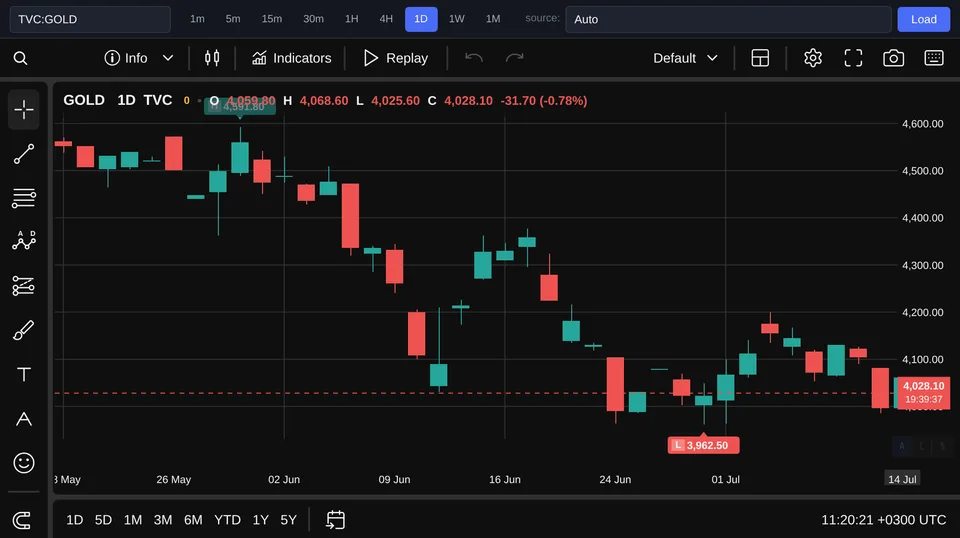
Gold chart (TVC:GOLD), 1D timeframe. Source: FCS Terminal / TLAP.
⚪ Silver: A Nervous Metal With an Industrial Tint
Silver also declined: GMC:XAGUSD is at 58.50 USD, with a daily change of -0.46%. The percentage move looks softer than gold's, but silver traditionally lives with higher volatility because it combines the role of a precious metal and an industrial commodity. This dual nature is exactly what makes silver sensitive to shifts in sentiment: in strong risk appetite it can accelerate faster, but when positions in metals are reduced it suffers among the first. Silver's weakness shows that the market is reducing not only defensive trades, but also riskier positions in precious metals. Simply put, today silver looked like an asset that came to the meeting with both a hard hat and a volatility chart.

📈 Rates, the Dollar, and the Fed Set the Rhythm Again
The key signal of the day is that macroeconomics has again become the main conductor for the metals market. If investors price in a longer period of high rates or a slower easing of policy, gold has to compete with instruments that provide yield here and now. The dollar adds a second layer of pressure: the stronger the US currency, the more expensive dollar-denominated commodity assets become for buyers from other currency zones. The market now sees monetary conditions as the main signal, and geopolitical risk as an important but secondary addition. This does not eliminate the risk premium, but it limits its strength if capital flows do not confirm sustained demand.

🧭 The Day's Fork: Buying the Dip or Deep Unloading
The main question for traders now sounds extremely practical: is this a local opportunity to buy the metal on fear around Hormuz, or the start of a broader correction after overheating. The answer will depend on whether yields stabilize, whether the dollar loses momentum, and whether signs emerge of long-term buyers returning through funds and futures positions. If geopolitical tension intensifies while yields cool at the same time, gold could quickly regain the status of a strong safe-haven asset. If yields remain high and expectations for rate cuts continue to be revised, metals may need a deeper correction before new sustainable demand appears. The $4000 zone is not a magic line now, but a stress test for positioning and buyers' patience..
Conclusion
The day's outcome is quite strict: precious metals remain sensitive to geopolitics, but right now the market is assessing them through the prism of yields, the dollar, and rate expectations. Gold at 4 030 USD after a -0.75% move and silver at 58.50 USD after a -0.46% change show that buyers have not disappeared, but have become much more selective. Until the macro backdrop softens, safe-haven demand alone may not be enough to turn the pullback into a sustained rally. Practical takeaway for a Forex trader: the rule should be tested on a demo account, written into the trading plan, and applied consistently before every trade. Practical takeaway for a Forex trader: the rule should be tested on a demo account, written into the trading plan, and applied consistently before every trade. Practical takeaway for a Forex trader: the rule should be tested on a demo account, written into the trading plan, and applied consistently before every trade. Practical takeaway for a Forex trader: the rule should be tested on a demo account, written into the trading plan, and applied consistently before every trade. Practical takeaway for a Forex trader: the rule should be tested on a demo account, written into the trading plan, and applied consistently before every trade.