
Swaps in Forex and Why You Shouldn't Be Afraid of Them
Very often, beginners in forex are discouraged from trading on daily charts by the presence of swaps (swap). They are frightened by the realization that they will be charged an extra fee for holding a position longer than a day. But swaps can also be positive. So what is a swap (swap)? An extra loss or an opportunity for additional profit? Is it possible not to pay a swap? Answers to these and other questions are below.
What Is a Swap in Forex

So, what is a swap (swap)? It is the difference in loan interest rates of two currencies, credited to the account or charged from the account when a trading position is rolled over to the next day. Moreover, a swap can be either positive or negative.
Why Do We Pay for Rolling a Position Over to the Next Day?
First of all, we do not want to receive actual currency delivery. Suppose we bought the EUR/USD pair. Our task is not to receive euros and sell dollars. We are only interested in some speculation with the currency pair. We care whether the price goes up or down depending on our position. We do not want to receive the actual delivery of some amount of currency. Since we are simply speculating and do not need real money, our position, our order, is simply rolled over to the next day without the delivery of real currency. And during this rollover, a swap is charged.
Let's look at this with an example. Suppose we buy the EUR/USD pair. In fact, we buy euros and sell dollars. If the interest rate on the euro is 2%, and on the dollar 1%, then during rollover (moving positions to the next day), you will receive a positive swap of about 1%.
2% - 1% = 1%
But if we sell the EUR/USD pair, then we buy dollars and sell euros. If the interest rate on the euro is 2%, and on the dollar 1%, then during rollover the swap will be negative and amount to about 1%.
1% - 2% = -1%
Why are these percentages charged?
When we sell the dollar, since we do not have it initially, we borrow it. Accordingly, we pay a 1% loan interest rate for it if we hold our position through the rollover to the next day. If we sell something we do not have, we pay an interest rate for using borrowed funds.
Why do we receive a certain percentage depending on the interest rate? Why, when we buy some currency, should we be paid extra?
The fact is that when we buy, for example, euros, we automatically agree that our position may be used to provide credit for euro sales to other players. Thus, when we buy something, we receive the interest rate. And when we sell something, we pay the interest rate for the provision of credit, because we were allowed to sell something we did not have. And this very difference in interest rates is called a Swap. Now I hope it has become clearer to you.
Where Can You Find the Swap in the Terminal?

In the terminal, the swap is reflected when you open some position. And if you hold it at the moment the position is rolled over to the next day, that is, usually for more than a day, then the swap is displayed in the same place where the indicators of profit, loss on current positions, opening price, and closing price are located. There you will also find the Swap column. It can be either positive or negative. And depending on how many times the swap was accrued or debited from the position, the profit column will also change taking the swap into account.
Please note that on the night from Wednesday to Thursday a triple swap is charged or accrued. This is because banks are closed on weekends, but we still pay or receive the loan interest rate. It is for this reason that a triple swap is charged. It is worth remembering this and paying attention to it.
As I already mentioned, swaps are charged at 17:00 New York time (USA). Or at 0:00 in the trading terminal time. In Moscow time, this is about one in the morning.
Where Can You View Swaps?
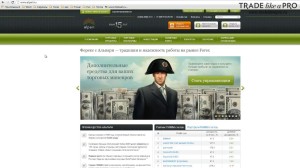
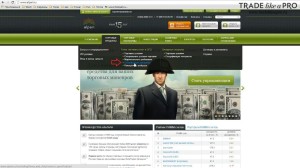
Swap data is written on your brokers' websites. For example, at Alpari it is available in the section: "Trading Products - Forex - Contract Specifications"
Below you can see a list of currency pairs and swap data:
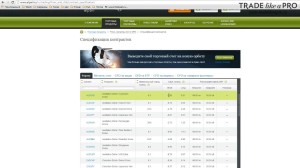
Swap for short positions and for long ones. If a value is shown with a minus sign, it means the swap is negative. And it is indicated this way for all currencies.
Please note that central banks have different interest rates, and for different currency pairs the spreads can be either insignificant or quite noticeable.
As, for example, for the US dollar/Chinese yuan:
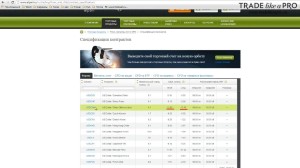
Swaps on short positions are almost 13 points in the plus. On long positions it is also 13 points, but in the minus. This can be quite substantial, especially if you hold a position for a week.
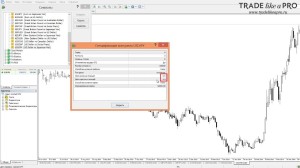
You can also view the swap in the terminal by hovering your mouse over the "Market Watch" window. Right-click, choose "Symbols", and select the symbol we are interested in.
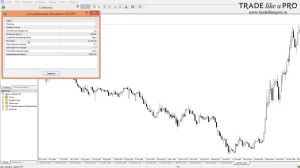
The swap for long and short positions will be indicated here. In the photo below you can see that the swap for USD/JPY is negative for long positions and also negative for short ones.
A logical question arises. Is it worth paying attention to swaps? One of the obstacles standing in the way of beginners who want to trade on daily charts, that is, open positions once a day and analyze positions on D1 charts, where one candle is one day, is swaps.
Beginners think that "since I will be paying swaps for carrying a position over to the next day, I will suffer some significant losses because of this". This opinion is completely wrong. If, of course, you trade the major currency pairs. If you do not trade some exotic currency pairs, then swaps can be ignored.
Personally, I trade on daily charts and do not pay attention to swaps. Since the interest rates of the central banks of the largest countries are very low, swaps, whether positive or negative, do not carry any significant burden. Because if we take the swap on the same EUR/USD, it will be a very small value and there is no point in paying attention to it. Even if you held a position for 10 days, you would be charged, for example, 5 points. On daily charts the targets are set from 100 points, so we understand that the swap is insignificant.
If you do not hold positions for more than 2 weeks, then you can ignore swaps. But if you are a position trader and are more like an investor, holding positions for several months, and possibly a year or more, then you should pay attention to swaps. Because if you hold a position for a year, a substantial amount can accumulate over that time.
How to Act If You Trade While Holding Positions for a Month or More?

In this case, swap-free accounts will be useful to you. At present, almost all brokers provide the option to create such an account. When opening it, you simply need to state that you want an account without swaps. But at the same time, it is worth remembering that a higher commission will be charged per position. Since the broker needs to compensate for its losses.
Thus, if you do not keep positions open longer than a month, then you can ignore swaps. If, of course, you trade not exotic currency pairs, but major ones.
If you consider yourself more of an investor and keep positions open for several months, then you should take a closer look at swap-free accounts.
For those who want to delve deeper into the issue of swaps, you can look up the table of central bank interest rates around the world on the internet. Type this phrase into a search engine. And it will return sites that have such information:
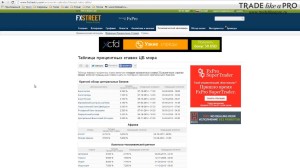
For example, I went to the FXSTREET website.
The table contains data from the European Central Bank, the Australian one, the Canadian one, Indonesia, and so on. All the data is here. You can look at the current rate, the previous value, as well as the date of the interest rate change.
Carry Trading

There are also strategies aimed specifically at working with swaps. In general, they are called carry trading (Carry Trade). The essence of carry trading is to hold a position as long as possible and receive a positive swap. In practice, the strategy is aimed at earning from swaps rather than from price movement in the direction of our position.
Such strategies are applied to currencies that have a substantial positive swap. Say, applying such a strategy to the same EUR/USD is pointless. Since the swaps are very small. For carry trading, you should select pairs with a high swap.
Again, you can choose them on the contract specifications page:
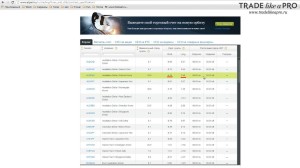
For example, take the AUD/DKK pair. Its swap on short positions is negative. That does not interest us. But the swap on long positions is 2.5 points. Accordingly, if we hold the position for a long time, we can make a decent profit on swaps. But this pair has a large spread of 23.9 points, and for this reason it does not interest us. The commission for opening a position is too high.
Let's consider other currency pairs with high positive swaps.
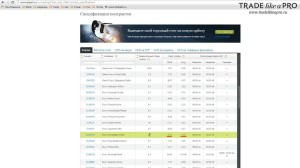
The EUR/NOK pair. On short positions the swap is 2.5 points. At the same time, the spread is small and amounts to 0.1. That works in our favor, since it will not interfere with opening positions. But does it make sense for us to simply open a short position and hold it for a long time? What if this currency pair has a global upward trend? In that case, it would be unprofitable for us to hold short positions for a long time. Because in the long term we would lose money from the price increase. Therefore, you need to find a pair with a high positive swap, while at the same time its long-term global trend, which lasts for years, should be in the direction of the position we are going to trade.
Let's look at the EUR/NOK pair. Does it have a global downward trend?
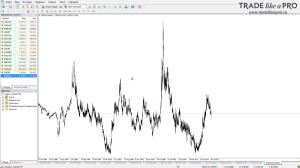
On the weekly chart, overall, the pair does not really have a trend as such. But if you switch to daily charts, an increased downward tendency is visible.
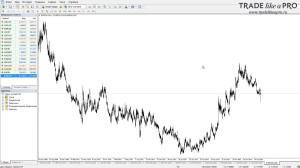
That means, in principle, this currency pair can be used for carry trading. We will open a short position and hold it for a long time. Possibly a month, or even a year or more. Naturally, we will not enter the position just like that, but I hope this example has explained the essence of carry trading to you.
Respectfully, Pavel Vlasov Tlap.io