
"Black Swans on Forex" - the webinar everyone was waiting for

"In all my professional life, I have never been in any accident worth speaking of. In all my years at sea, I have seen but one vessel in distress. I have never seen a wreck, never been wrecked, nor have I ever found myself in any situation that threatened disaster." E. J. Smith, captain of the Titanic, 1907 In 1912, Captain Smith's ship suffered the most famous shipwreck in human history
Events that no one expected: September 11, 2001, the 1987 U.S. stock market crash, the Swiss franc's break from the euro on January 15, 2015.
Nothing foreshadows trouble, and then the so-called "Black Swan" arrives, an anomalous event that stands out from the statistics. Such events happen rarely, but their consequences can be colossal.
On 15.01.15 even some brokers went bankrupt as a result of the jump in USDCHF. What can we say about ordinary traders like you and me.
How can you prepare for such events in Forex? How can you make your strategy capable of withstanding such events (and even profiting from them)? This is what the webinar "Black Swans on Forex" will be about.
What the webinar will cover

The author of the "Black Swan" concept is Nassim Taleb, a well-known scholar and economist, a former trader. The author of the bestsellers "The Black Swan: The Impact of the Highly Improbable", "Fooled by Randomness" and "Antifragile: Things That Gain from Disorder".
At the webinar, we will discuss how the ideas from his books can be applied to the field of Forex trading.
Namely:
- What "Black" and "Gray" swans are
- Can they be good?
- Why people blindly lose sight of "Black Swans"
- Swans in Forex and how to profit from them
- What Antifragility is, how to make your strategy Antifragile
Watch the webinar recording
Webinar transcript
Hello, ladies and gentlemen Forex traders! A black swan is an unexpected event that has a major impact. Where did the term come from? The fact is that before the discovery of Australia, the inhabitants of the Old World were convinced that all swans were white. Therefore, they were very surprised when they saw the first black swan, which became that very surprise for them, breaking the established stereotype. Accordingly, this metaphor is used to describe anomalous, unexpected, and major events.
The author of the black swan concept is Nassim Taleb, who not long ago came to Moscow with a lecture. For several years he was an options trader, but now he is listed as a scientific adviser to the investment hedge fund Universa Investments. If the Wall Street Journal is to be believed, in 2015 they earned more than 1$ billion amid a surge in market volatility.
The fund's strategy consists precisely in catching such rare events and making money on them. Accordingly, profit growth is far from smooth and occurs in sharp bursts. In general, Nassim Taleb refutes the usefulness of such well-known economic indicators as the Sharpe ratio and many others, thereby showing us that the role of randomness in all spheres of life is greatly underestimated, and the role of simple luck is very large.
What Is a Black Swan?

In general, there are 3 characteristics of this event:
- First, this event is anomalous, since nothing in the past foreshadowed it;
- Second, this event has enormous impact;
- Third, human nature makes us come up with an explanation for what happened only after the event, making it seem explainable and predictable. I think all of you have seen examples when the day after an event journalists invent justifications for it and explain what the cause was. Because of this, a false impression is created, as if it could have been predicted.
Examples of black swans
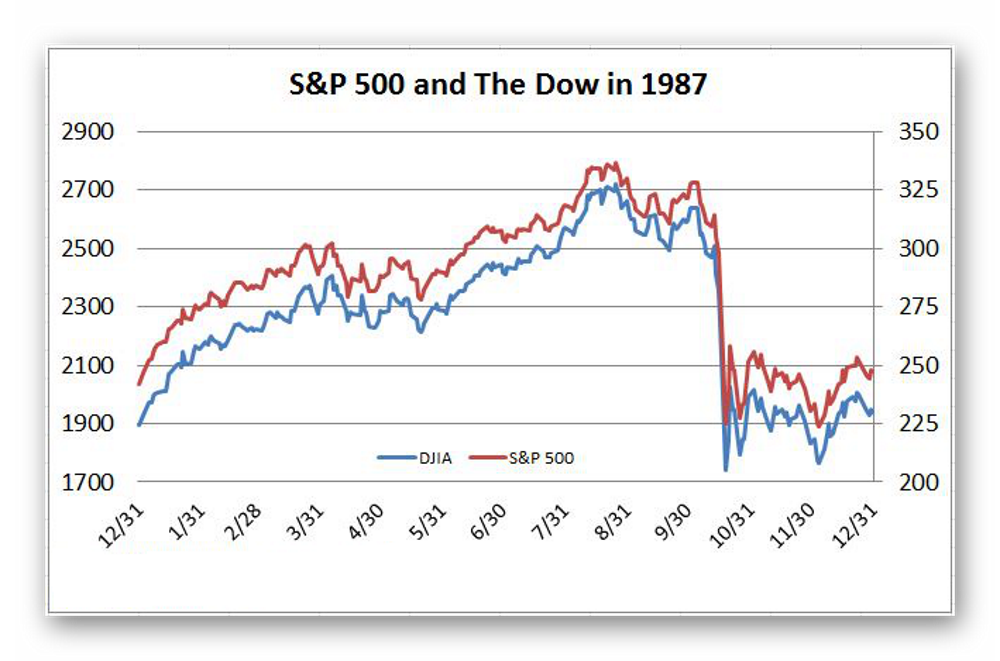
Let's start with the most famous stock market crash, Black Monday of 1987. The American stock exchange took a long time to recover after such a fall. This situation is very uncharacteristic of the U.S. stock market, and it is one of the most famous black swans in the history of economics.
 You may have heard the story of trader Nick Leeson, who in 1995 became responsible for the bankruptcy of Barings Bank, one of the largest banks of its time. He carefully hid enormous trading losses, but at some point it was no longer possible to conceal the losses.
In January 2008, a trader at the Paris bank Societe Generale placed almost 7$ billion on the market. As a result of opening positions that exceeded limits, the market collapsed by 10%, and the bank lost almost 6$ billion. For the bank, this event turned out to be that very black swan.
Now to events closer to us. Below is a GBPUSD chart where two key events are marked. The first event is Brexit; the second is October 7, which also happens to be Putin's birthday, where we observed the effect of a "fat finger" or, simply put, a technical malfunction.
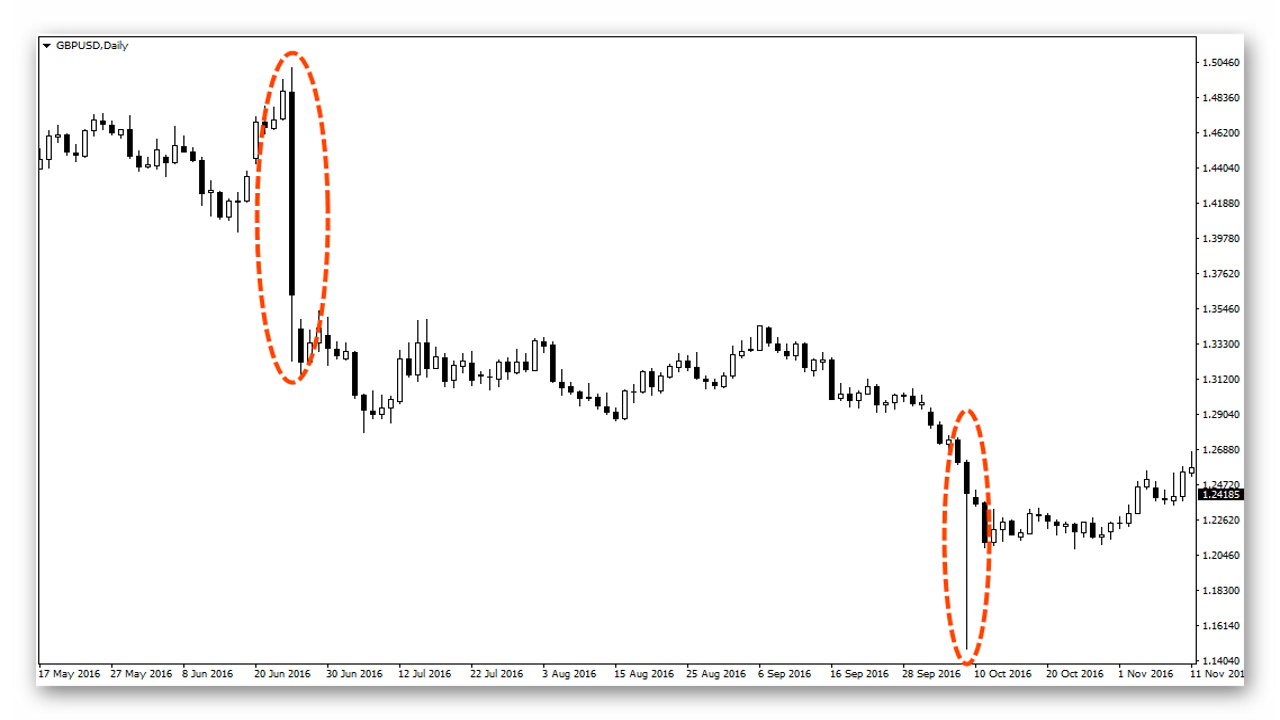 In fact, Brexit is more of a gray swan. A gray swan is the same black swan whose appearance is expected, but not the kind of strong impact it has. That is, it is a known event in advance whose outcome is difficult to predict.
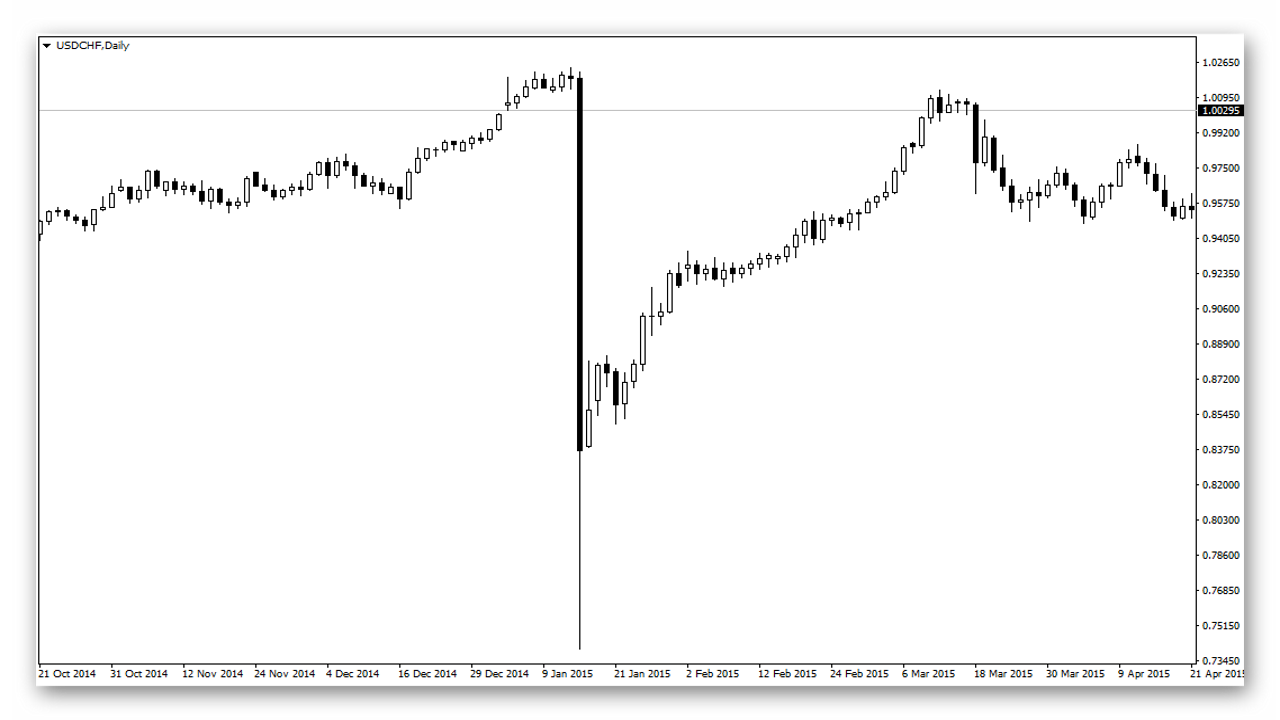
USDCHF, January 15, 2015, when that very detachment of the franc from the euro happened, is a pure black swan. In fact, no one expected such a strong market reaction, which in particular caused the closure of Alpari UK.
Why We Miss Black Swans
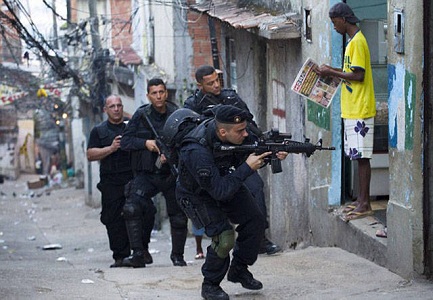
What is interesting is that many moments and technical failures will not even be remembered two years later. Over time, people lose sight of black swans, underestimating the role of chance both in life and in trading.
In Nassim Taleb's terminology, there is Extremistan and Mediocristan. Extremistan is where curves (returns) form strong fluctuations. Mediocristan is what all scientists, observers, and ordinary people strive for, that is, smoother lines and curves.
The rarer the event, the harder it is to manage, and the less we know about how often it happens. Remember that when you test a strategy, as a rule, you do not pay attention to some particular cases. In general, we strive to generalize and simplify everything. In fact, only a handful of major events had a decisive influence on history.
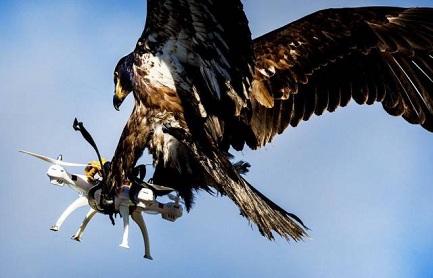
Like folk omens, when a trader sees some new pattern that has not been encountered before, he immediately tries to find some regularity and start using it in trading. Although in fact there may be no regularity at all.
In exactly the same way, we can draw conclusions based on data that are not decisive. Something complex also cannot be understood by looking at its parts separately. A system may be too complex for us to understand it fully while possessing only commonly known facts.
Human consciousness suffers from three problems that Nicholas Taleb calls the Triad of Opacity.
- The first is the illusion of understanding. As a rule, taxi drivers and hairdressers know much more about governing a country than those who are directly involved in it;
- The second is retrospective distortion. That is, when an event has already passed, it is much easier to explain it;
- The third is the tendency to exaggerate the significance of a fact.
Thus, in any sphere of life there are extremely dangerous zones that do not look like that because the risks in them are hidden and delayed. The closest example is the Martingale strategy, when we have a beautiful straight line that can continue for several years and at one moment go below zero.
Black Swans in Forex
What you need to remember is that in the future the price jump of any currency pair can be almost anything. As an example, inflation in Zimbabwe in 2008 amounted to 231% billion. That is, money turned into paper.
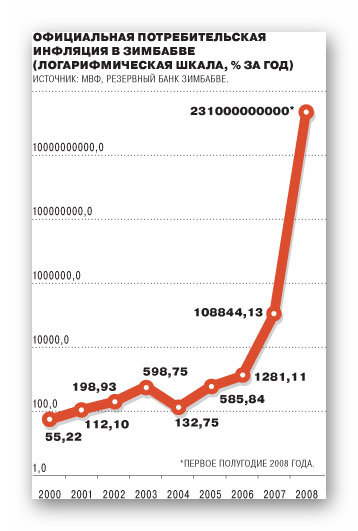 This means that you need to prepare for the worst events in advance and be ready for any unexpected situation at any time. At the same time, a black swan, usually a sharp drop, is almost always followed by a sharp and then prolonged correction. We can use this moment to our advantage. If everything has collapsed, it is worth taking a buy position and holding it for a couple of weeks. But after a black swan, some strategies on the pair stop working for about half a year.
Another black swan in Forex lies in PAMM accounts with an extremely smooth equity curve. A vivid example is the Trustoff account. On this subject we have a semi-humorous article on our website "How to make money on Forex?".
Antifragility

Nassim Taleb calls the book Antifragile his main work, since it brought the idea of the black swan to its logical continuation, providing concrete steps for action.
Antifragility is not at all the same as elasticity, flexibility, or invulnerability. Something antifragile, having passed through trials, becomes better than before. Evolution, political systems, technical innovations, a firm that survived a crisis, good culinary recipes, a developing city, the resistance of bacteria to antibiotics, and cockroaches to poisons possess this property. That is, the antifragile only gets better from change, shocks, and crises and, in essence, antifragility is a remedy against the black swan.
An example of creating antifragility is vaccination. That is, when a small dose of the same influenza strain is introduced so that the body gets rid of it and, as a result, immunity increases.
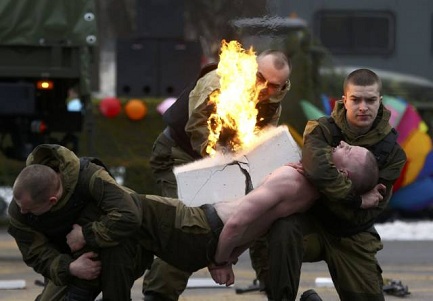
Another example is related to aircraft construction. Now planes crash very rarely, but before that they crashed many times. That is, work was done on mistakes, and the safety, autopilot, engine systems, and so on were improved.
Small forest fires, for example, also carry away most of the flammable material from the forest, preventing it from accumulating. That is, a small fire in the forest is normal. When we prevent fires from occurring, it seems to us that we are making the forest safer, when in fact this is not so.
For the same reasons, stability has a bad effect on the economy. During a long period of prosperity, firms forget what failure is, weaken, and become more vulnerable. The absence of fluctuations in the market also dulls attention, as a result of which caution decreases.
How to Make Your Strategy Antifragile

How can you make your strategy withstand those very black swans? The main thing you should understand is that everything fragile hates volatility. An antifragile system is able to earn thanks to uncertainty.
Remember one more of the keys: to live long, you need not to die. That is, in order not to blow up your account, you need to set stop losses and observe money management. Those very large fluctuations, like Brexit, are called market cleanouts and they cleanse the market of the so-called weaklings or unnecessary participants.
Also, when testing a strategy, pay attention to edge cases, so that at such moments the strategy may fail to earn, but survives. Therefore, if you test your strategy on the franc or the pound, you need to pay attention to Brexit and that very January 15th: the strategy must survive. There is no need to try to fit a strategy to a particular event, since the next black swan may be unpredictable.
If something becomes larger and more complex, at the same time it becomes more fragile. A mouse has a better chance of survival than an elephant. The more complex your strategy is, the worse it will work. Simple strategies are more durable and less sensitive to market changes, so excessive complexity should be avoided.
Taleb describes the so-called "Barbell" strategy, a method that consists of combining defensive and adventurous approaches. For example, you can put 60% of your deposit into a bank account and trade with the remaining 40%. Thus, if this were your entire trading account, you would risk 2-3%, but this way you can risk a larger part of the deposit. As an option, you can trade most of the deposit using some conservative strategy, and experiment with risky strategies using some small amount.
Ideally, it would be desirable to catch such large spikes as a black swan, at least partially. To do this, first of all, you need to change the way you use take profit. One option might be a trailing stop or a time-based exit.
Also, in order not to miss a large move, it can be morally useful to put the market on pause. This can be done using the technique of locking, positive or negative. This gives you time to think about whether it is worth continuing to hold the position, or whether it is worth closing part of it, leaving, for example, only the sell.
Different strategies mean different accounts. This is the rule I never tire of repeating. Merging different strategies into one account is highly undesirable. By the law of meanness, one strategy gives a plus, another a minus, and in the end you have no profit. But this way you could have received most of the funds from the profitable strategy.
Conclusion

Follow safety procedures: you need to be ready for anything. Still, try not to lose on uncertainty, but to profit from it. A basic rule is to keep an eye on the calendar and the news. It does not hurt to know on what date Brexit or the US elections will take place. And remember that the answer "I don't know" to the question "Where will the market go?" is a perfectly normal answer.
Respectfully, Pavel Vlasov TradeLikeaPro.ru
