
All Our Life Is a Game: overtrading, gambling, and the International Classification of Diseases
At least 95% of people trying their hand at speculation on the exchange are thrown out of the game immediately or almost immediately. It is precisely these 95% (and maybe all 98%) who are food for smart players, brokers, and bucket shops. The latter earn enough on the losers to pay income to those who succeed. A third or even half of unsuccessful speculators leave the market after a month or a year. Some do not return, others do it again and again.
Below are deep reflections on why this happens, several stories from life, and a medical description of gambling addiction. Enjoy the reading.
Endless stories that almost each of us can continue
One acquaintance of mine put his first 200 dollars into forex in 2003. Back then 0.1 fractional lots had just appeared, and you could enter the market with 1:100 leverage. A month later the funds in the account were gone. He quit the game in 2004 and did not return until 2014. Then it all started again. And it continues to this day with mixed success: credit limits and main income allow it. Overall, the game costs 1000–1500 dollars a year. Not that much, but it is a family trip to the sea for a week that never happened, or a fur coat not bought for his wife, or a kindergarten bill not paid, or... How many of these “ors” there are.
Another acquaintance of mine has been playing since 2001: he started with stocks on the Moscow Exchange. The principle is simple: put in 50, run it up to 500-5000, and lose it all. He put in 30 thousand dollars in 2020, bought oil from the lows, by autumn took back what he had put in and another ten on top. And then on the pound he bought the high: he was short by some 20-30 points to sit through the drawdown and take what he had counted on. Two days without a stop cost 30 thousand dollars. And that is not the limit, because the game goes on.
The third story. A close friend in 2010 for several months kept putting in 100 dollars and taking out 500. Confidence in his own abilities grew day by day. When it became clear that the time had come, he sold his car, rented a small office, and simply blew up within a week. He put everything on the kiwi with a 10-point stop-out. The market went 12. He keeps playing and believes that luck will smile on him again.
The fourth story. A man sold his apartment to buy bitcoin at 17 thousand, when that was the all-time high. He got out almost at the very lows, around 4 thousand. There were two years left until the recovery, but waiting was already unbearable: he had to take out at least something so as not to lose, as it seemed then, everything. I do not know what happened to him afterward: our paths parted.
Everyone has heard the fifth story. It is the story where a trader at one firm, after losing about a billion dollars, threw himself out of a window. Or maybe someone helped him, and for some reason law enforcement failed to notice.
Let everyone tell the sixth and subsequent stories for themselves. To themselves or in the comments.
Why does this happen?
There are many answers, but I will single out, as it seems to me, two main ones. It is overtrading, which leads to gambling. Or vice versa: it is gambling, which leads to overtrading. The Yin and Yang of every addict.
Initially, overtrading is the result of micro-scalping: each trade lives briefly, and the move is only a few pips. The number of trades grows, reaching hundreds a day in the worst case. The trader is sure that he can do anything. But the human brain is not a soulless algorithm and quickly gets tired of overload. The result: the broker earns more on commissions than the trader who was successful that day.
After several successful days or even weeks, a streak of failures begins. The deposit says, “Sorry, goodbye,” and the broker unobtrusively begins sending emails to the inbox about how good it is to keep trading.
Gambling addiction is an irresistible desire to be in the market. To be there always. Gamblers monitor quotes from morning till evening, even if they do not open positions. They have the terminal installed on all computers, tablets, and phones. It stays open in the background while they work in the office. Family evenings are not so interesting if there is no chance to sneak a glance at the terminal.
Dizziness from success after payout

An experienced or not-so-experienced trader-gambler sooner or later gets the long-awaited profit. It may be a big score hit the day after opening the first account. It may be the result of a successful game over some stretch of time.
The withdrawal request has been submitted and processed. The money has arrived in the bank account. It would seem, this is it. All the effort was not in vain. And unexpectedly, one-two-three days later, you blow the trading deposit. And so pointlessly that you do not even want to remember it.
Withdrawing funds is a colossal endorphin rush. The player begins to be overwhelmed by a sense of his own omnipotence. He can do anything, the market is under his control. Right now he will take another grand. And in just a minute he can open a three-lot trade instead of one. Because the quote obeys him.
And quite often all this happens against the backdrop of an unrestrained spree with friends and girlfriends. Easy money should also be spent easily, should it not?
This is that very dizziness from success, after which the hour of reckoning comes. And the reckoning is stop out and the need to put new funds into the trading account.
Why dreams come
The scariest thing is when dreams come. Some people dream nightmares, and some dream quotes. A trader-gambler wakes up to open the terminal and enter a position. Usually this happens in two cases.
The first variant: after the weekend sleep goes away at one or two in the morning. Not opening the terminal and not looking at how trading started after the weekend is almost impossible. Positions opened at this time almost always lead to serious losses by the opening of the European session.
The second variant implies overtrading already in the first half of the week. By Wednesday or Thursday close to a hundred trades or more have been accumulated, and the result is not so important. What matters is that quotes come in dreams, sleep is shallow. And even if you do not start playing on the night from Wednesday to Thursday, the day after a sleepless night almost always begins with a violation of money management, inappropriate opening or closing of trades. All this leads to losses, often catastrophic.
Night is for sleeping. The terminal is for trading with sense and proper arrangement in free time away from other matters. Quotes must not be let into sleep. But they do not ask, they are already there. Like Freddy Krueger from the film “A Nightmare on Elm Street.”
And what comes after blowing up?

After a loss come release and catharsis. But soon the game begins again. And again all that you have is the terminal where numbers and charts flicker, and there is only you in front of the screen and the choice between buy market or sell market right now.
After another pointless blow-up you tell everyone that it was pure accident and that this time everything will be different. And so year after year, until at some point you see yourself gray-haired, tired, red-eyed, and buried in debt up to your ears.
What to do about it: one gambler's experience
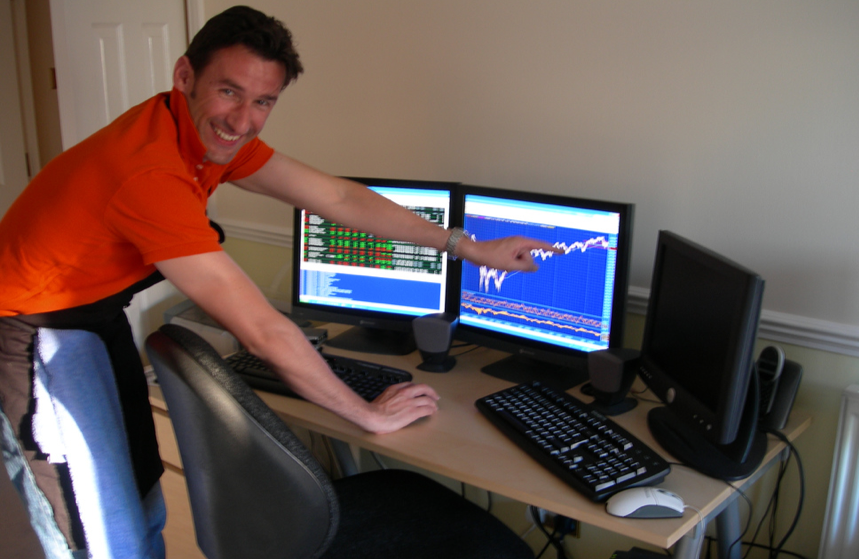
You can quit the game. Quit forever. But it is just as difficult as quitting drinking and smoking. For an acquaintance, quitting drinking turned out to be easier than stopping playing.
My friend found a partial solution to the problem of gambling addiction. It is simple. Here is his advice.
If it is impossible to control trading, but there is a desire to defeat yourself and become a trader, then you need to start with controlling the monthly expense. This is quite manageable. A pack of cigarettes a day is 3 dollars, an inexpensive restaurant once a week is 50 dollars, the game is 200 dollars a month. With the game, of course, there are excesses: sometimes the expense reaches 500 if an irresistible desire to win it back urgently kicks in. After that his brain turns on anyway, and the game stops until the next period. Sometimes he withdraws a couple thousand bucks and balances income with expense over some period. But overall the game is not in his favor, although the figures are improving.
And he also accepted one fact inside himself: he is a gambling addict. He stopped lying to himself and to others. The family scandals over budgets and promises disappeared. His wife knows that the expense has become stable and that the game will not take more than planned. By the way, he spends even less on the game than he used to spend on alcohol before he stopped drinking. And in those years the game also ate up much larger sums.
Realizing this simple truth made it possible to reduce the number of trades. If he forgets that he is a gambling addict, first the dreams start, and then come a relapse and overtrading. The result is always the same: the loss of the deposit. But relapses are becoming rarer, deposits live longer, and simple trading rules are observed more and more often.
He believes that someday he will defeat himself and become a profitable trader. But he no longer promises anything to anyone, not even to himself. His soul has become calm. And is that not the most important thing?
Afterword
In the International Classification of Diseases, gambling addiction is included in the section “Mental and behavioral disorders.” Signs of the disorder:
- Absorption in the game: a constant return in thoughts to infrequent successful gaming experiences, anticipation and the search for a chance to play again, obsessive thinking about how to find money for the game. This also includes a deliberate temporary refusal to play.
- Continuation of play with constantly increasing stakes in order to achieve intense sensations.
- Repeated unsuccessful attempts to stop or at least control the addiction to the game up to complete cessation.
- The appearance of anxiety and irritability when attempting to reduce the frequency of play or to give it up completely.
- Play as a way to escape problems and relieve feelings of helplessness, guilt, anxiety, and depression.
- Returning to the game the next day after a loss in order to win it back, since the very thought of the loss causes acute discomfort.
- Lying to others about the degree of involvement in the game.
Above, of course, we are talking about those who are addicted to gambling: cards, slot machines. But we bear the proud name of traders and convince everyone around us that exchange trading has nothing at all to do with gambling, and that we follow trading rules. Or maybe we should be honest and admit that some points on this list concern many of us?
Respectfully,
Ivan Rusin