
AI in Trading — a Tool, Not a Panacea
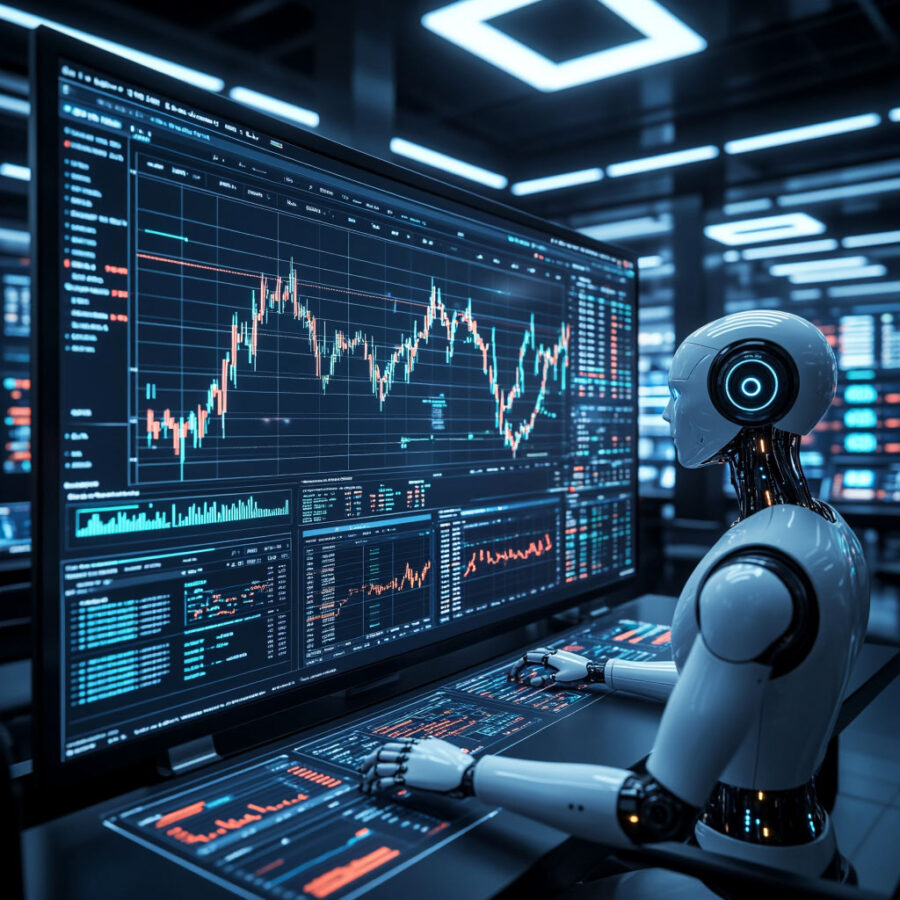
Artificial intelligence has radically changed financial markets, offering both unprecedented opportunities and new challenges.
For medium-term traders (cryptocurrencies and stocks) who analyze charts manually and are not very deeply versed in fundamental analysis, AI has already become a powerful assistant in making trading decisions. At the same time, many traders forget that AI like ChatGPT or DeepSeek cannot replace human experience and intuition. It is especially dangerous to forget this for traders who trade on a very short-term basis (scalping or swing trading).
Be that as it may, AI in trading is used both by recognized market giants and by ordinary screen traders, that is, by you and me. Competition for the development, implementation, and constant adaptation of AI algorithms is colossal.
In this article, we will talk about the role AI plays in trading. After reading the article, it will become clear how necessary an AI assistant is specifically for you, as well as what real profit AI helpers bring.
The Best Minds Make Billions
At present, OpenAI (the developer of ChatGPT) is recruiting former analysts from JPMorgan, Morgan Stanley, and Goldman Sachs. They have one task: for $150/hour, train AI models to understand finance. To do this, specialists write prompts for AI and teach algorithms to evaluate investments, work with financial metrics, and calculate the real value of companies.
$150/hour = $1200/8-hour workday = more than $25000/month = more than $300,000 a year. This is a very good salary by any standard. That is why many top-class Wall Street professionals move to the AI industry without hesitation.

This trend shows that AI is beginning to do the work that investment bankers used to do. And it costs less. It seems that OpenAI is preparing both to sell its financial AI advisors and to conduct trading operations for hundreds of millions and billions of dollars.
At the same time, leading banks and investment funds are training their AI models to do the same, attracting the best programmers. Here are a few of the most famous examples.
BlackRock uses its Aladdin ("Asset, Liability, Debt and Derivative Investment Network") platform as the central brain for risk management, data analysis, and idea generation. The key feature is the emphasis on risk management and optimization of gigantic, often passive, portfolios rather than speculative trading.
Vanguard uses AI and large data sets mainly for two purposes: improving passive strategies (for example, optimizing portfolio rebalancing) and creating smarter and more personalized advisors for clients.
By the way, speaking of personalized financial advisors. Russian users are already accustomed to such advisors at leading banks that provide brokerage services. The first Russian AI assistant was introduced by T-Bank's investment service in 2023. A little later, Sber, Alfa, and other market participants introduced financial assistants.
Speaking of AI for short-term and ultra-short-term speculation, the recognized leader here is Renaissance Technologies, which owns the Medallion fund. This fund is one of the most famous and successful in the financial world. It uses complex mathematical models, statistical arbitrage, and machine learning to find short-term inefficiencies in the markets.
In the same context, let us mention DE Shaw & Co., founded by David Shaw, a pioneer in computational finance. The fund is known for its statistical arbitrage strategies and high-frequency systems.
How AI Assistants Help Make Trading Decisions
Here are a few examples of using AI specifically for screen traders, that is, for traders who analyze charts manually but want to use artificial intelligence as an assistant rather than a fully automatic trader. Assistants of this kind are also suitable for ultra-short-term trading.
1. An AI Assistant for Finding Patterns
AI scans hundreds of instruments and automatically marks chart patterns: flags, triangles, head and shoulders, double tops. Such an AI helper also finds support/resistance levels, trend lines, and liquidity zones.
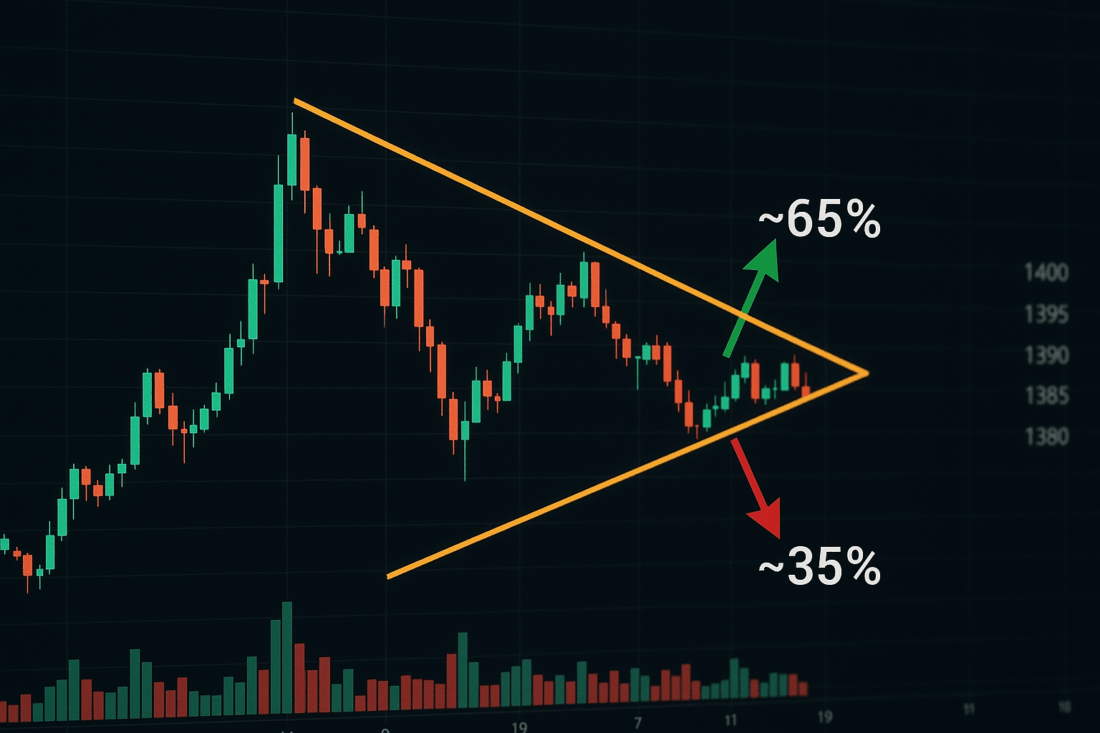
As an example, we can cite a CNN-type model trained to analyze chart images. It outputs a list of assets with "clean" patterns for manual analysis. The trader opens only these charts, saving hours of routine searching.
2. An AI News Filter Right on the Screen
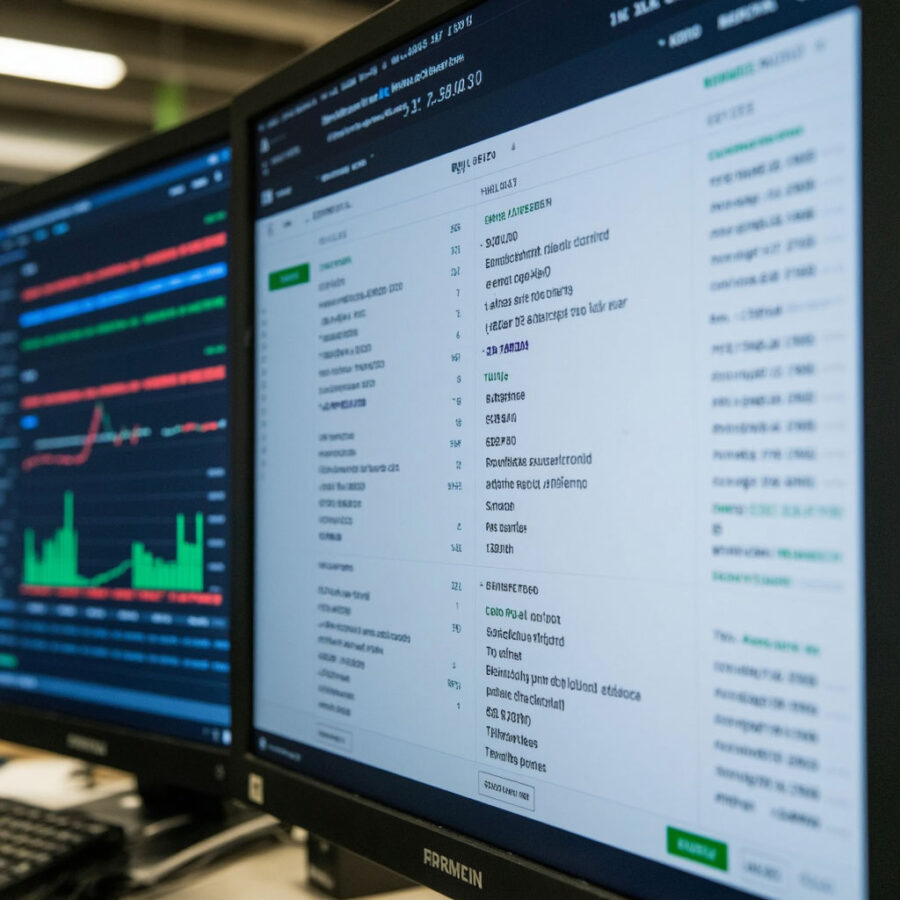
A sentiment analysis module shows a news-background indicator directly on the chart and a brief summary of the latest tweets or articles on the asset. For example, when trading NASDAQ, the screen shows: Sentiment +0.72 → the news background is positive (growth is likely). Thus, the trader sees the context without being distracted by the news.
3. AI Hints for Entry and Exit Levels
AI analyzes local extremes, volume, and volatility in order to highlight potential entry/exit zones. As an example, we can cite a model based on XGBoost and volume profile that assesses the probability of a bounce from a level. The trader decides what to do: open a new countertrend trade or close a profitable position opened earlier.
4. AI Analysis of Crowd Behavior
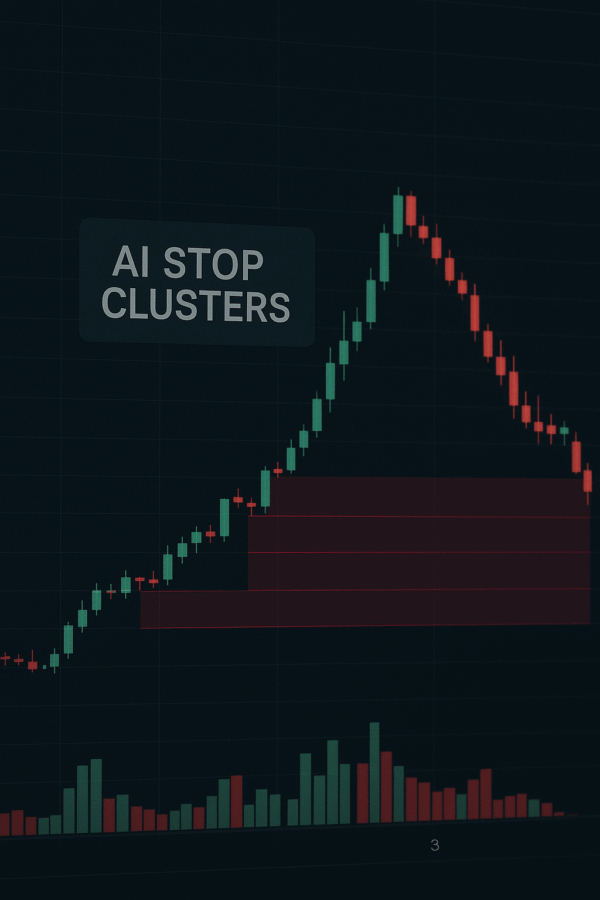
A screen trader can receive analytics based on order flow and retail trader behavior. The algorithm shows where stop losses are concentrated and also warns about possible "short squeeze" or "stop hunt" scenarios, allowing the trader to avoid crowd traps.
5. AI Assistant for Voice Commands
The trader says: "Show the latest EUR/USD signals" or "Mark the nearest volume level." The AI (via the ChatGPT API or Copilot) instantly updates the screen and adds the markup.
6. AI Evaluation of Trading Style Performance
The statistics module analyzes the trader's trades:
- Evaluates discipline (following entry/exit rules).
- Finds recurring mistakes (exiting too early, trading without a signal).
- Provides recommendations based on behavior patterns.
What the Accumulated Experience of Using AI in Trading Says
A review of the research literature found that AI approaches show better results than classical price forecasting methods.
For example, the Tickeron platform reports that its "AI Trading Agent" recorded up to ~90% winning trades and showed annual returns of ~100% on a certain asset sample. Another case: analytics from the AlgosOne platform show that the average win rate of AI bots is about 60-80% of trades, whereas for screen traders it is ~40-55%.
But these optimistic figures contain a hidden conflict of interest, since the platforms promote their AI models to traders. In addition, independent studies show that the simplest strategy without using complex AI sometimes outperforms poorly trained AI models. Real user data for AI bots as well, especially for retail traders, also shows a win rate of ~55-65%, which is lower than marketing materials promise.
One more item for the record: recently ChatGPT5 lost more than 65% in the market from the $10,000 entrusted to it, Gemini 2.5 PRO lost 55%, Claude Sonnet 4.5 slimmed down by a modest 16.5%, and Grok 4 hovered around zero. At the same time, DeepSeek 3.1 added 9.6%, and QWEN3 Max delivered a solid 7.3%.
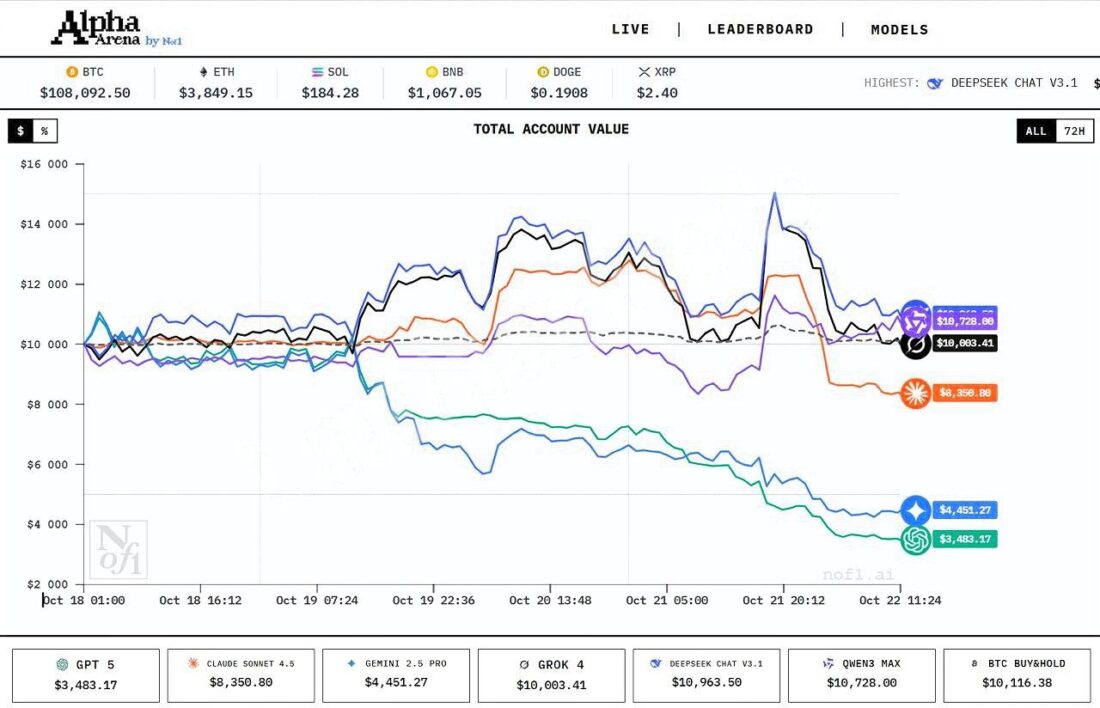
Remarkably, in this experiment the Chinese outperformed the Americans, which involuntarily suggests some bias on the part of the researchers, although those suspicions may be groundless.
Let Us Sum Up
AI is a powerful tool in trading. It is effective in the hands of experienced specialists who understand both finance and machine learning. And it always turns out that these top specialists are different people working on the same team, paid by a large investment fund or an AI model developer. The former poach programmers, and the latter poach finance specialists.
Win rates of ~50-60%, which is what can realistically be expected when using AI, are quite acceptable to large companies, provided strict risk management is observed.
As for screen traders, meaning you and me, we should always remember that AI is far from a magic wand. If we proceed from a win rate of ~50-65%, that percentage of profitable trades may often not satisfy us for one reason: the high probability of violating risk management.
That is why one of the most successful practices for the modern screen trader is not simply using one AI assistant, but creating a personal "virtual board of directors" from different models, where each plays its own expert role. This approach, which can be called an "ensemble of AI models," makes it possible to offset the weak sides of some systems with the strong sides of others.
Success in the market is still determined not by the most advanced technology itself, but by the trading wisdom of the person who controls it.
Ivan Rusin
Tlap.io