
9 Reasons Why You Trade Too Much

Hello, fellow Forex traders!
Excessive trading is the most common problem, especially for traders who trade on shorter timeframes. It can arise for a number of reasons, so if you do not know what the main goal of your trading is, i.e., what instruments you trade, how you trade, what your trading strategy is, your motives, personal styles, and your trading and personal history, I will give several explanations for why traders become addicted to trading and provide some possible solutions to this problem, hoping that among them you will find your own solution.
One of the main aspects that you must understand is to distinguish when you are trading excessively and when you are not. It is unlikely that you are addicted to trading all the time, therefore it would be useful to determine the times when you are not trading excessively and to see the clues: what happens in such situations and can you act in a similar way for more time? By identifying those moments when you trade rationally, and trying more and more often to act as you do in such situations, you can also reduce the number of cases of your excessive activity.
To determine when you become excessively active, you need to have some kind of baseline criterion from which you can work and, thus, can determine the magnitude of the deviation from that value, for example, this may be the number of trades made or your trading volume. Of course, there may be situations when a high trading frequency is acceptable, for example, when the markets are volatile and there are significantly more trading opportunities in them than usual.
Below I will give some reasons why traders, and possibly you as well, may trade too much, and some possible solutions to this problem.
Passion and Emotionality

This happens when a trader trades Forex filled with feelings of excitement and pleasure, rather than for profit. Just like most people who gamble in a casino. If your goal is solely to have fun and get emotionally excited, then you should also realize that in the long run you are likely to develop an addiction to trading, and you are unlikely to make a profit. If, however, you want to profit from your trading, then you need to change your motives and goals, forget joy and excitement, moving to a more professional and structured approach, the desired result of which would be trading productivity expressed in monetary or percentage terms.
Lack of a Clear Trading Strategy

When a trader does not have a defined strategy and, consequently, any parameters for determining when to trade and when not to, then any price movement in the market tempts him. In this situation, traders are very prone to chasing trends and often find that they enter buys when a downtrend begins, and sells when an uptrend begins. They get the impression as if they are doing everything in vain, as if the market is watching their actions.
Does this situation sound familiar to you? The most important direction you can focus on is developing your trading strategy, which clearly defines the presence of a particular trading opportunity, fundamental data, technical analysis, or combinations of both. This will help you become more selective in your trading.
Boredom

In calm market conditions, when a trader spends a lot of time in front of the computer screen, such periods will periodically arise when the market has weak trading opportunities or none at all, and at these moments traders may develop a feeling of boredom.
These are natural periods in trading. For some traders this can cause great difficulties, especially for beginners, traders whose trading activity is based on emotional excitement, who work on enthusiasm, or who are in acute need of money. Below I have presented more detailed information about them. An important question that you should ask yourself is the following: "Am I trading to get rid of boredom or to make money?"
You Need Money
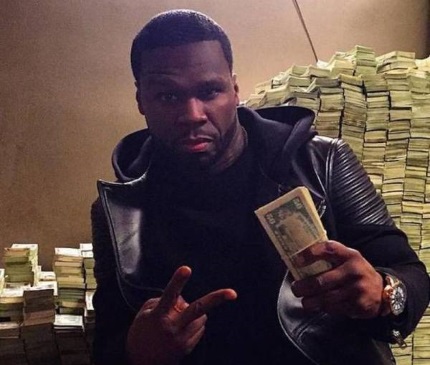
This is one of the worst situations in trading. It is a strong and powerful state, but it will not contribute to good trading overall if your decision-making is focused solely on making money rather than on your trading strategy.
Assessing your financial needs and the effectiveness of your trading is very important. And there is no need to adapt the search for entry signals to the fact that you are short of money for beer.
Any action you can take to soften your acute need for money will be a big step forward for you.
Enthusiasm

Beginner traders are filled with enthusiasm. Traders who enter new markets and use new trading methodologies are also prone to greater enthusiasm and passion. Although this enthusiasm is undoubtedly a positive quality, it also has a dark side that sees it as excessive eagerness and the search for any opportunity to open a trading position.
Maintain your enthusiasm, but direct it toward developing your trading strategy and discipline. If you have certain trading ideas, work them out on a simulator/demo account, where the costs are obviously much lower. It is also recommended to use your enthusiasm to create any reports or technical developments that may be required, or any other specific trading tasks.
Lack of Patience

Traders suffering from a lack of patience become addicted to trading because they will use opportunities that are not part of their trading strategy, and thus they will naturally make a greater number of trades than is necessary.
Develop patience in yourself, look for opportunities to analyze markets, find time to simply look at them rather than act. You might want to try practicing self-awareness to help identify and work on overcoming the desire to relieve the feeling of impatience.
Learning patience is a great skill, it contributes to your development as a trader, therefore do not interpret periods when you did not make trading operations as time wasted, but rather treat this as time well spent on cultivating patience in yourself.
Revenge Trading

This is when traders have lost money in losing positions, by making mistakes, or by accidentally opening positions, etc., and usually burn with the desire to "win back their money." Despite the fact that the goal of such behavior/thought is positive, the subsequent behavior usually is not. Simply put, it is the banal desire to "get even".
Traders chasing their losses will deviate from their trading strategy, opening positions that may be profitable, regardless of whether they align with their trading strategy or not, because according to their psychological mindset, their goal now will come down to making money, not to following their trading strategy. If you have suffered large losses or have lost a large amount of money in a series of trading operations, you should, as a rule, take a time-out. This time-out will allow you to get time to redirect your trading state and reorient yourself, and, most importantly, it will break the behavioral model of "loss of money → feeling of anger → desire to get your money back." A time-out breaks this behavior pattern and allows you to reorient yourself, use breathing and relaxation techniques or take a slow walk, which will help dilute your emotions and reduce the desire to take revenge in trading.
Fatigue

When you are tired, physically or mentally, your brain lacks the energy to function fully, and at a low level of "fuel" your work will have a low level of self-control.
It is self-control, not trading strategy, that is necessary to engage the brake in your brain in order to stop your trading, and this requires a source of energy. When you are tired and the fuel level is low, your self-control will also be low, there will be more chances for excessive and unjustified trading. Rest and glucose (which we get from food and sweets) are the two main factors in optimizing brain functioning at the energy level. When you trade, you must be firmly sure that you are alert and full of energy.
Concentrating on Not Trading Too Much
You should not focus your attention on periods when you are not overactive, because this may be ineffective: as it turned out, if you constantly think about periods when you are not overactive, then you naturally begin to think about those periods when you are overactive too, and internal resistance is also born in your brain, "try not to think about a white bear."
Focus on calmness. Recall the periods when everything worked out for you, recall your trading on demo. When you were calm and confident.
Less Is Better

Thus, there are several reasons why traders trade excessively, and I have provided you with some possible solutions to help You overcome them. Analyze which of them may be the most suitable in your situation, test them, and write about it in the comments.
Sincerely, Pavel Vlasov
TradeLikeaPro.ru