
7 Ways to Combat Order Slippage

Forex trader Ivan sits down at the computer. He opens Metatrader and sees an upward trend on EURUSD. Without thinking twice, he presses the coveted Buy button at the price of 1.1515. The trade opens, but what does Ivan see? The trade was opened not at 1.1515, but at 1.1518!
What happened? The evil machinations of the broker? The impact of overseas sanctions? Intervention by the Fed? No, nothing of the kind. Your order was simply exposed to a phenomenon called slippage. What it is, why slippage occurs, and how to deal with it, you will learn below.
What is slippage?

Slippage is the difference between the price at which you intended to enter a trade and the price at which it was actually executed.
Suppose you see an opportunity to buy at the price of 1.0607:
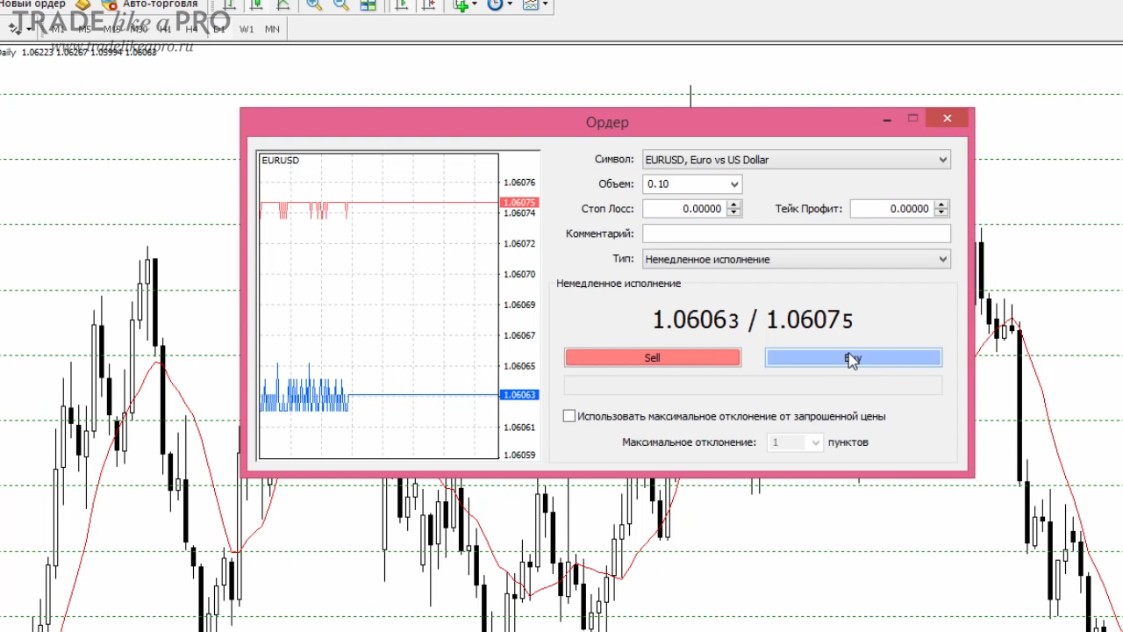
You press the "buy" button, but the trade ends up being executed at the price of 1.0610.
The difference between the price at which we bought and the price at which the trade was executed is 3 points. Those 3 points that we lost while opening the position are called slippage.
Slippage can be either positive, when the order is executed at a more favorable price for you, or negative, as in the example above.
It is noteworthy that stop losses and take profits can also slip and be executed at a price somewhat different from the one you specified when placing the order.
Pending orders can also slip, but they have some slight differences; we will talk about that a little below.
The difference
Now let us try to sort out the concepts that many people very often confuse and do not fully understand.
Slippage is the execution of an order at a price different from the one you specified when placing the order.
Requote is when there is no longer a price at which you sent your request for order execution.
Imagine that a message about new prices appears. You press the buy button, and a message appears telling you that this price is no longer available and offering to buy at a new price. This is called a requote.
By setting slippage parameters in trading, you can avoid requotes.
Is slippage good or bad?

I think that while reading the article, many people had a logical question: "Is slippage bad? Does this mean that my broker is somehow being tricky and doing something bad to my account?"
The answer is simple.
The presence of slippage is good, because it is a sign of a real market. This confirms that you are truly trading on the interbank market.
As a rule, slippage is present on ECN-type accounts. That is, on accounts that are routed to the interbank market, or at least routed there partially, depending on the size of your position.
If you see slippage, it is neither bad nor good. It is normal.
Slippage can occur on market-type accounts: ECN, NDD, STP, but it can also be present on Standard-type accounts.
The presence of slippage is a normal situation that can and should be worked with.
Why does slippage occur?

Slippage is the result of market execution.
Market execution is a queue of orders, requests to buy and sell.
So what happens when we place a buy order?
Let us imagine the so-called "order book".
You are about to take a buy position. The market has the following offer: 100 lots at the price of 1.3145. And at the price of 1.3146 there are 50 lots. And so on:
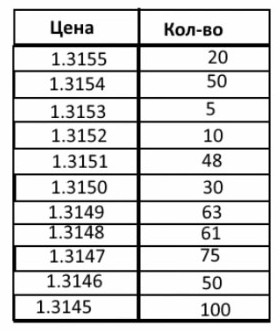
Suppose we want to buy at the price of 1.3146.
We press the buy button. But since we are not alone, there may be many requests for this position, and those 50 lots were snapped up very quickly by other buyers.
Thus, because there is high demand in the market for this price, there was no lot left for us. But the broker tells us that this is not a problem. We have a new price of 1.3147. And we can either agree and buy the lot at the new price, or, if we have a market-execution account, they will agree for us.
Thus, we can take a position at the less favorable price of 1.3147 for us, but it is worth remembering that if the lots at this price are also sold out, then we will receive an offer with a different price, 1.3148, 1.3149, and so on.
Liquidity problems
Such a presence of supply and demand indicates the presence or absence of liquidity.
Therefore, the first cause of slippage can be described as Liquidity.
In this case, several options are possible.
Let us imagine that the order size is larger than the top layer of liquidity. It is also possible that there is very little liquidity left, or that you requested some very large-volume order.
Your order is split into parts and sent to several of the broker's liquidity providers. As a result, the trader gets a weighted average price, which may be worse or better than the price he specified. In such a situation, the order slips partially.
If the liquidity provider sends an execution refusal, then perhaps there was a delay, and your order was sent to another liquidity provider. Some time passed, and the market offer at your desired price disappeared. As a result, there is a different price and a corresponding refusal by the broker to execute your order.
Very often during news releases there is a liquidity problem and orders slip heavily.
Why does this happen? Many banks and institutions that act as liquidity providers leave the market in order to protect themselves from sharp price swings and possible losses. At the same time, spreads widen, because brokers want to protect themselves from possible losses.
That is why traders run into problems during major news releases. Spreads are wide, slippage is heavy, and it becomes much harder to make money.
Insufficient liquidity also occurs when trading exotic currency pairs. For example, with Turkish liras, African rands, or Russian rubles.
Those who traded during strong jumps in the Russian currency should remember a certain period when many brokers simply disabled the ability to trade the ruble. The reason for everything is the lack of liquidity.
Technical Problems

There is another reason for slippage: Technical problems.
These include network delays between your trading terminal and the server, the aggregator and liquidity providers, as well as a banal reason: weak internet.
In this regard, I would like to tell you that especially large dealers from Wall Street rent buildings near the center so that orders reach the trading servers as quickly as possible, while saving the tiniest fractions of a second.
For us, it will be quite enough to have fast and stable internet. After all, we live very far from Western servers. And the trading servers of our brokers are often located outside Russia.
How to Deal with Slippage?

At the very beginning, I want to say an important thought. There is no need to fight slippage, but you do need to work with it.
First of all, let us start with the technical part. You need good internet. Remember that a wired connection is much better and more stable than the same Wi-Fi.
When we start working in the terminal, we try to disable programs that use the network.
If you are some kind of mega-scalper, this is the most relevant for you. Close various programs such as torrents, Viber, Skype, ICQ, and the like. We need a good connection, or the location of a VPS server closer to your broker if you trade with expert advisors.
If you are not some kind of mega-scalper, then it is enough to have a good and stable internet connection.
The second point in working with slippage is Settings in MT4.
When you click on the new order window, it has a parameter: "Use maximum deviation from quoted price":
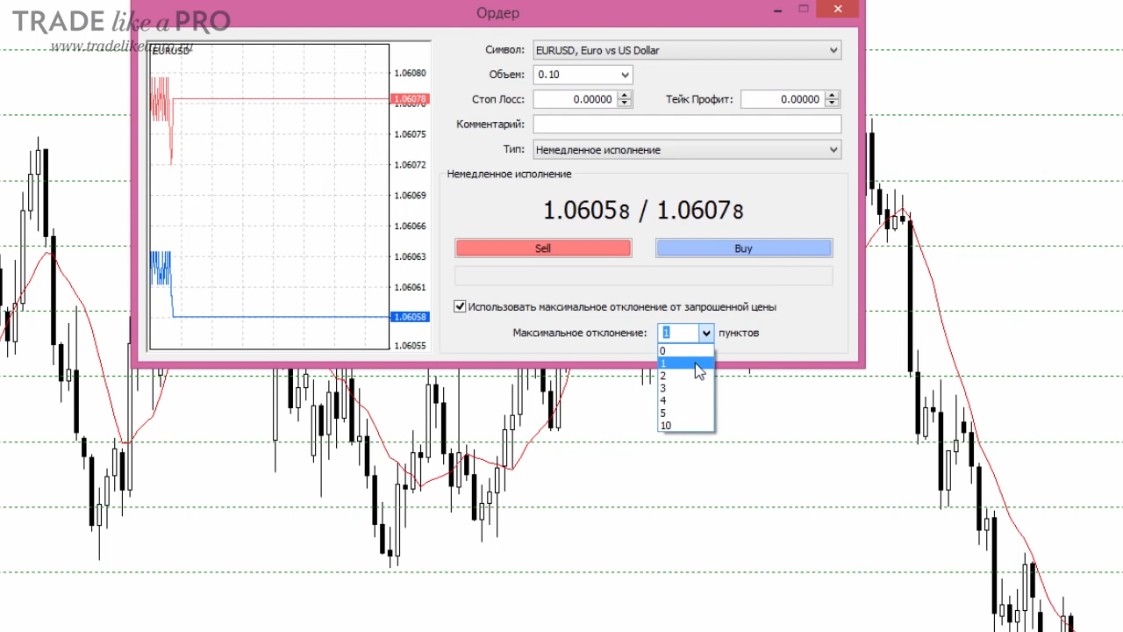
You can choose the maximum slippage value in points that will be allowed. In theory, if the price differs by a greater amount than that set in this parameter, the order will not be executed.
Unfortunately, in practice this does not always work. This is due to the technical peculiarities of brokers' servers and the Metatrader 4 trading terminal.
You must understand that this setting does not always work the way we want it to.
Similarly, the slippage parameter is also configured in expert advisors.
The third point is the use of limit pending orders.
As we remember, there are several types of pending orders.
These are Buy stop/Sell stop and Buy limit/Sell limit. Let us recall that a pending order ending with Stop is placed in anticipation of a breakout and the activation of the pending order, whereas an order ending with limit is placed with the aim of entering the market on a pullback at a better price. But there is a fundamental difference in the execution of Stop and limit orders.
With a placed order, say a Sell stop, it is actually activated only at the moment when the price reaches it.
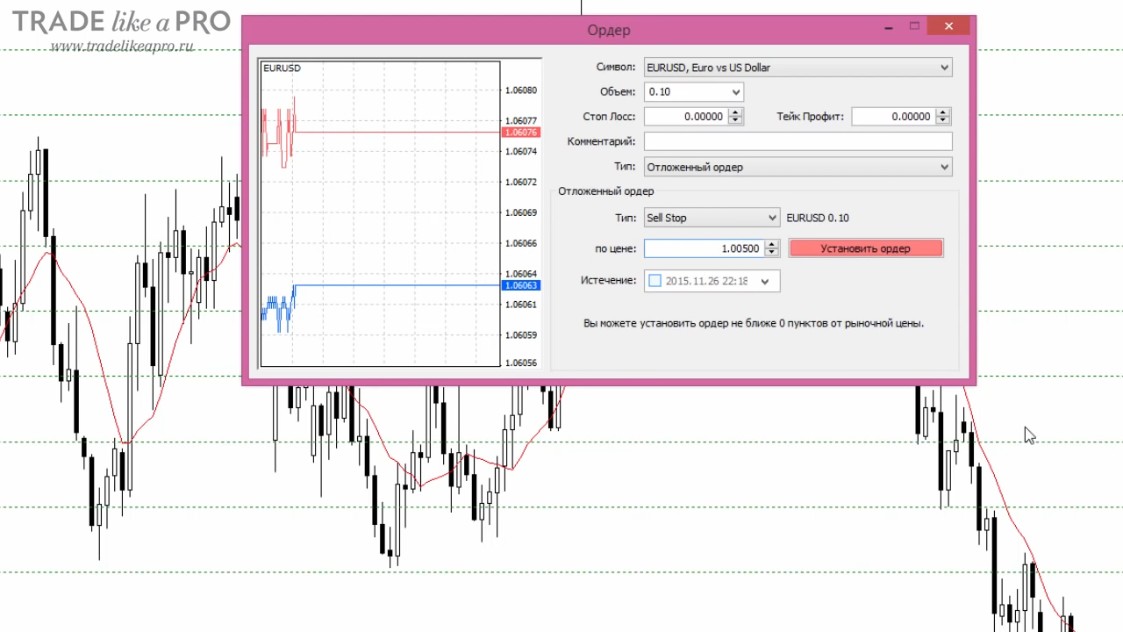
But if we place a Buy or Sell limit at a price, the order is sent to the market in advance and has a greater chance of being filled at exactly the price we specified.
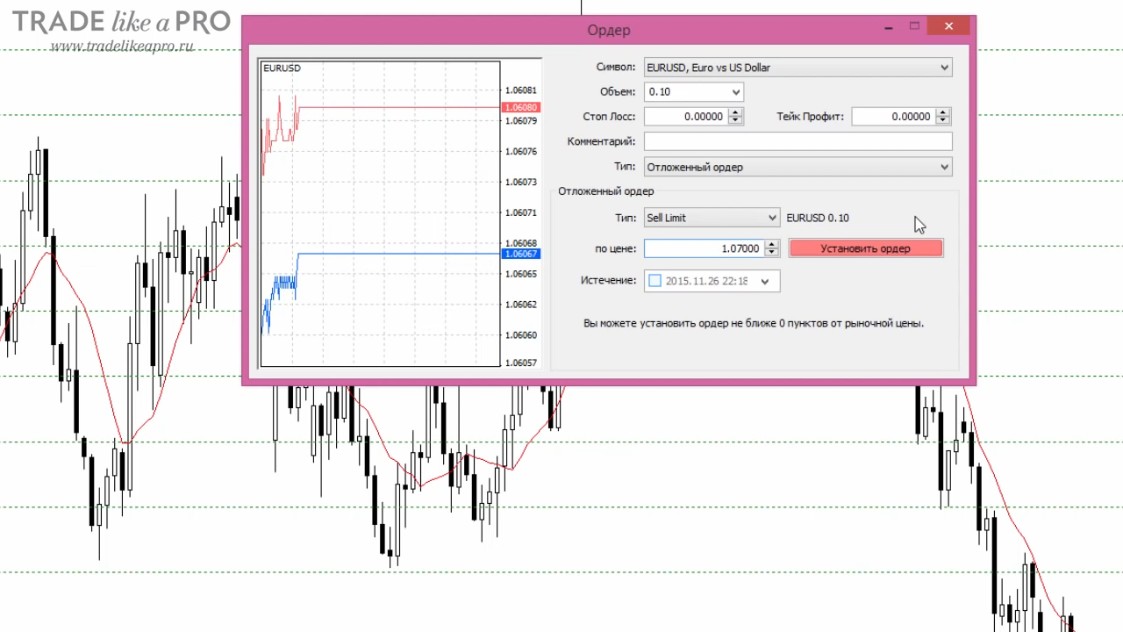
Thus, limit orders reserve a certain portion of liquidity for us, but only if your account type routes orders to the interbank market.
Of course, even such orders can slip, but the probability of this is much lower than with market and stop orders.
The fourth point is Trading on higher timeframes.
If you trade on the M5 timeframe, then slippage of 1 point is noticeable to you, but if you trade on daily charts, then slippage of 5 points does not make any big difference for you.
Therefore, you can fight the problem, or you can simply eliminate it and make it insignificant by moving to a higher timeframe.
The fifth point is Not trading on the news.
I have already repeatedly mentioned that the liquidity problem arises, as a rule, when various news is released. This includes economic data, speeches by politicians, and so on.
Therefore, about half an hour before the news release and half an hour after it, we try not to trade. This way we eliminate the liquidity problem.
The sixth point is Changing the account type/broker.
Of course, you can replace your broker or change your account type, but frankly speaking, this is a chase after some unattainable dream. And besides, it is usually shifting responsibility for losses from your beloved self onto the broker, execution, market makers, villainous fate, and so on.
Therefore, this point should be approached with a sound mind and a certain degree of skepticism. Because if you start changing brokers and account types, this can drag on for a long time and, as a rule, leads to nothing good.
The seventh point is a volatility filter.
Imagine that you like trading an active market. You know that the average slippage during news releases is 10 points. And your average profit on such trades is 30 points. It turns out that slippage takes about 30% of your profit.
Suppose you trade some news, but at the same time you know that some news gives an average move of 30 points, while other news gives an average move of 60 points.
If you take trades with an average move of 60 points, then slippage will eat not 30%, but only 17%.
Thus, by using only high-volatility news, you can reduce the damage inflicted on your profit.
Similarly, if you know that the average slippage in an active market, but without news, is 2 points. In this case, you can trade only on those days when volatility is elevated, in order to increase profit and reduce the losses caused by slippage.
Conclusion

In conclusion, I would like to remind you that today we found out that slippage is a sign of real market trading with the corresponding routing of orders to the interbank market.
You should not fight it, but starting to work on it is probably worth it. If you trade on higher timeframes, slippage does not play a big role for you.
If, however, you trade on small timeframes, then you can take a number of measures in order to reduce slippage:
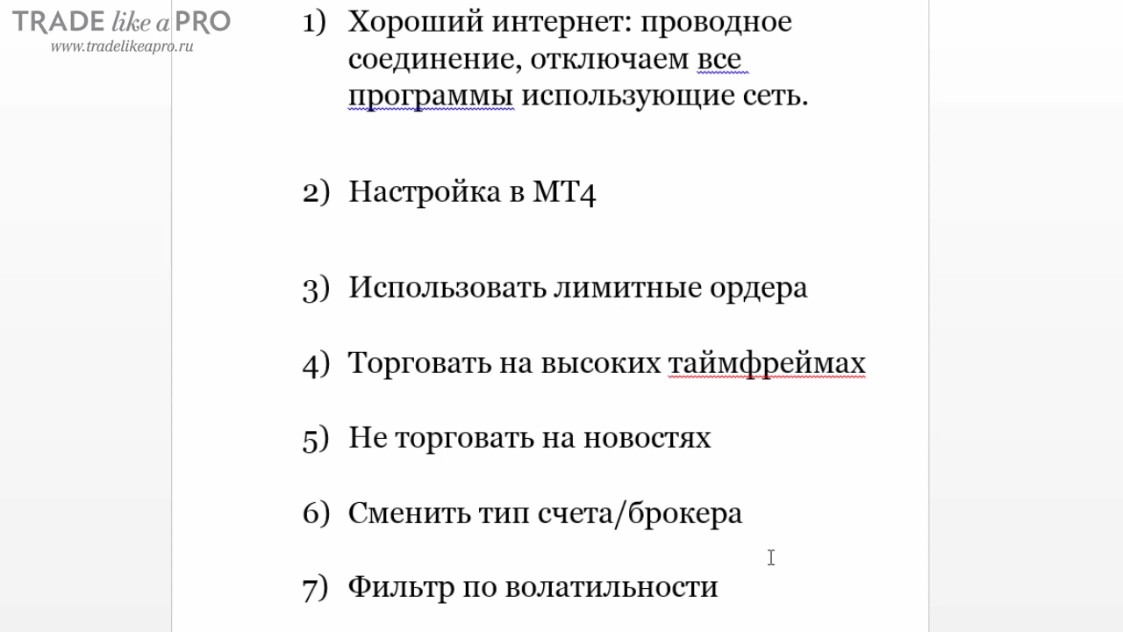
- Good internet, a wired connection, and disable all third-party programs that consume traffic.
- Settings in MT4
- Using limit orders
- Trading on higher timeframes
- Do not trade during news releases
- Change the account type / broker
- Volatility filter
That is all from me. Thank you for your attention and see you again soon!
Respectfully, Pavel Vlasov TradeLikeaPro.ru
