
Oil’s Middle East Premium Meets a Seller’s Tape
Tlapchik

Intro
Oil trading today is defined by a contradiction: the geopolitical premium around the Middle East has not disappeared, yet prices are falling hard enough to show that fear alone is no longer lifting the market. Brent is trading at 72.60 USD, down -3.53% on the day, while WTI is at 69.23 USD, losing -3.74%. The market is still pricing the risk of disruption through the Strait of Hormuz, higher tanker insurance, and uncertainty around OPEC+, but it is also asking whether those risks deserve the same premium without a new shock.
Brent and WTI: Risk Premium, Lower Price
Brent near 72.60 USD with a daily move of -3.53% shows that the Middle East premium remains present, but it is being marked down. Traders are not ignoring geopolitical risk; they are reassessing its urgency after a period without fresh supply disruption. WTI at 69.23 USD and down -3.74% confirms that the pressure is broad across the oil complex, not just a Brent-specific adjustment. The key signal is that the market still carries a geopolitical hedge, but it now needs evidence rather than headlines to expand.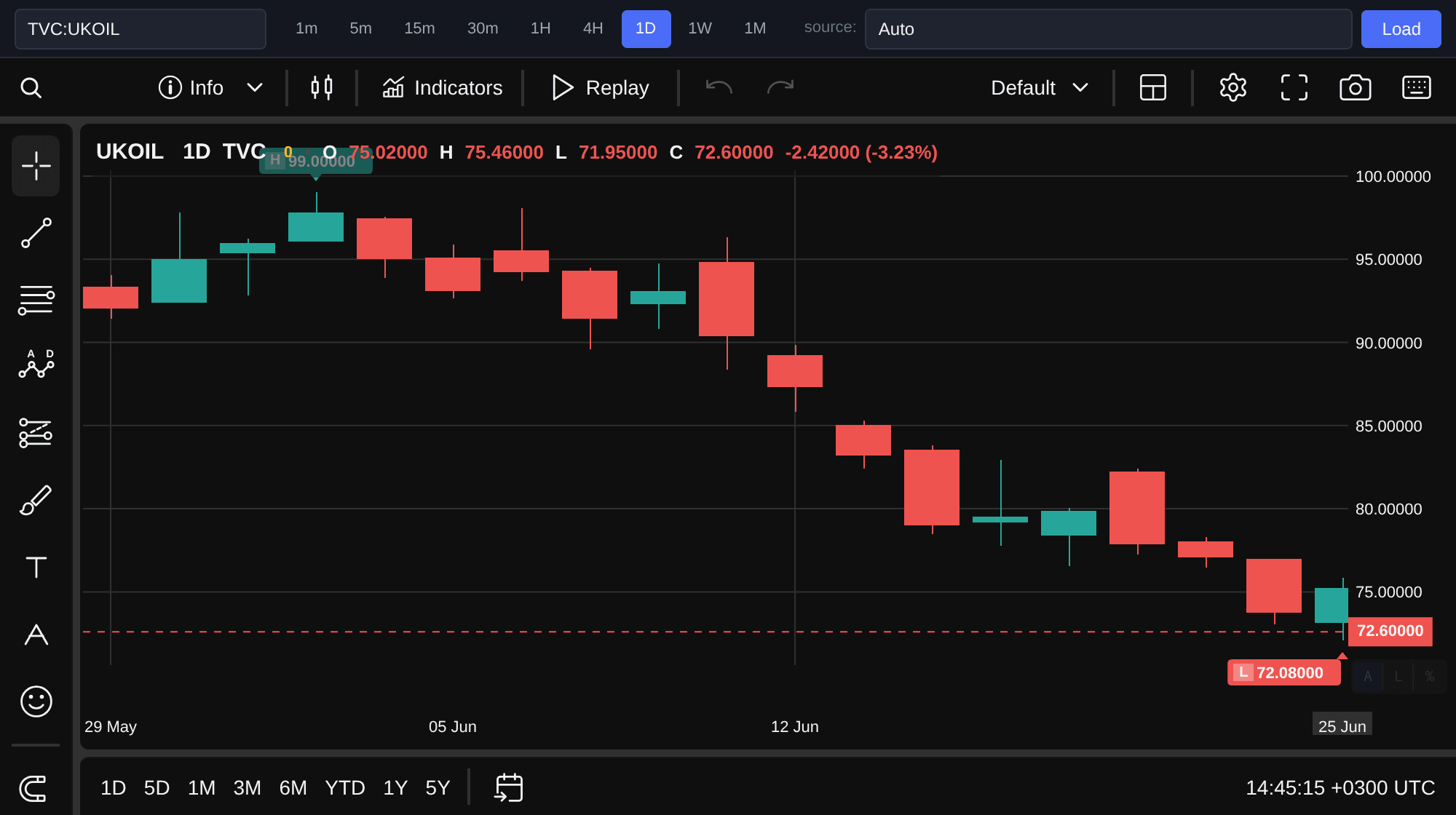
Hormuz: A Tail Risk With Real Pricing Power
The Strait of Hormuz remains the central risk channel because any restriction there would affect a critical route for seaborne oil flows. Even rumors about tanker movement, naval security, or possible delays can quickly influence freight costs, spreads, and short-term positioning. At the same time, Brent at 72.60 USD and WTI at 69.23 USD do not suggest that traders are pricing a full closure scenario. Hormuz is functioning as an insurance factor in price, not as a realized supply crisis..
Tankers, Insurance, and Logistics Rumors
The rumor flow around tanker insurance is important because the oil market can tighten financially before it tightens physically. If underwriters raise premiums for vessels moving through sensitive routes, the cost of delivery rises and Brent can receive support from logistics risk even without a confirmed supply outage. Today, however, that support has not been enough to overcome selling pressure, with Brent down -3.53% and WTI down -3.74%. The market is listening to insurance and shipping signals, but it has not yet.
OPEC+ and the Supply Question
OPEC+ is the second major focus after Hormuz because the alliance can either reinforce the floor under oil or add pressure by allowing more barrels back into the market. With Brent at 72.60 USD and WTI at 69.23 USD, any hint of extra supply is being read through a weaker price tape. The difficult balance for OPEC+ is that defending prices too aggressively risks signaling concern, while easing restrictions too quickly could deepen the move lower. Any relaxation of OPEC+ limits now would be interpreted through the lens.What Traders Watch Next
The next triggers are clear: shipping security headlines around Hormuz, new signals from OPEC+ on production policy, and inventory or demand data from energy statistics. If no new geopolitical shock appears, Brent’s -3.53% decline suggests the market may continue removing part of the risk premium. If tanker insurance costs rise visibly or there is confirmation of vessel disruption, the same market could reverse quickly because positioning is still sensitive to Middle East headlines. WTI’s -3.74% move also makes U.S. stockpiles.Conclusion
The day does not mark the end of oil’s geopolitical narrative; it shows that the narrative has become more complicated. Brent at 72.60 USD, down -3.53%, and WTI at 69.23 USD, down -3.74%, show clear seller pressure even as Hormuz, tanker insurance, and OPEC+ remain active risk factors. The main conclusion is that oil still trades with geopolitical insurance, but without new shocks the market is testing whether that insurance has become too expensive..#Brent#WTI#oil market analysis#Middle East risk premium#Strait of Hormuz